The Vatican announced this week that an ultraconservative Catholic splinter group has fallen into schism, and that six of its bishops, along with any lay members who “formally adhere” to the group, are excommunicated. The declaration marks the second time in less than forty years that the same organization, the Society of St. Pius X, has broken from Rome over the identical offense: consecrating bishops without the pope’s permission. The group, known as SSPX, brings with it a documented record of Jewish conspiracy theories, Holocaust denial, and rejection of the Catholic Church’s own repudiation of the deicide charge against the Jewish people.
For readers unfamiliar with Catholic structure, the story raises a basic question. How does an organization split off from a church that claims one billion members worldwide, and what actually happens to the people involved when it does?
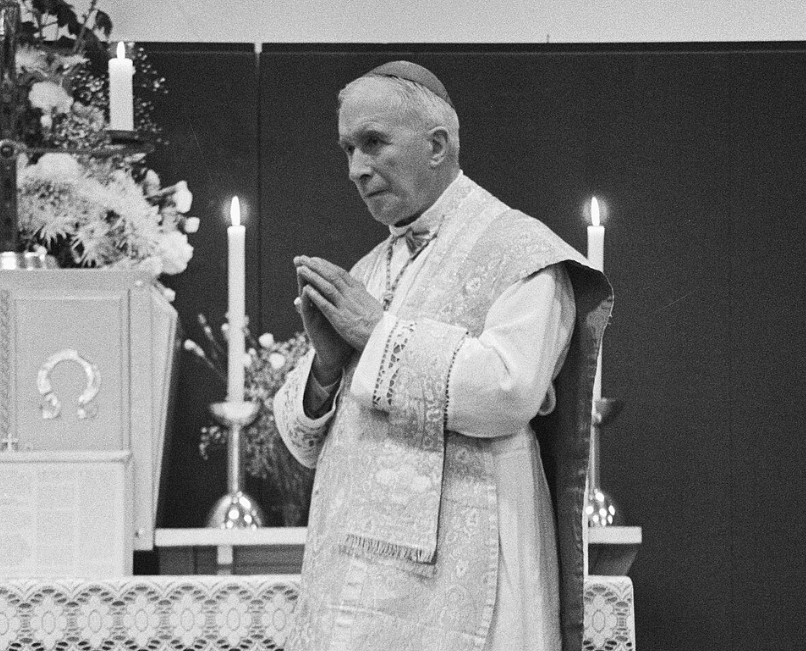
The Society of St. Pius X, founded in Switzerland in 1970 by French Archbishop Marcel Lefebvre, rejected the liturgical reforms adopted by the Catholic Church’s Second Vatican Council in the 1960s. The Society kept the old Latin Mass, priests facing the altar rather than the congregation, and a set of socially conservative practices its members regard as authentically Catholic. It counts roughly 750 priests and claims 600,000 worshippers across 77 countries, a fraction of the global Catholic population but a real and organized movement with its own seminaries and chapels.
In Catholic law, a bishop cannot ordain another bishop without the pope’s mandate. Lefebvre broke that rule in 1988 when he consecrated four bishops against a direct personal warning from Pope John Paul II. Rome ruled the act schismatic and excommunicated Lefebvre and the four men on the spot. Excommunication in Catholic practice removes a person from the sacramental life of the Church. They cannot receive confession, and marriages performed by an excommunicated priest are considered invalid.
Twenty-one years later, in 2009, Pope Benedict XVI lifted those excommunications in an attempt at reconciliation. Pope Francis went further, granting SSPX priests special permission to hear valid confessions and witness valid marriages. The Society remained in a legal gray zone, neither fully inside the Church nor formally cast out.
That arrangement collapsed on July 1, when the Society’s two remaining bishops, both in their late sixties, consecrated four new bishops to secure the group’s future, again without papal approval and again after Pope Leo XIV personally appealed to them to stop. The Vatican’s doctrine office, headed by Cardinal Victor Fernandez, responded the next day with a decree stating that the bishops involved had excommunicated themselves and that the group was in schism. Crucially, the Vatican went further than it did in 1988 by warning that lay Catholics who formally adhere to the Society, meaning those who consciously choose it over obedience to the pope and worship exclusively within its chapels, are themselves excommunicated.
The reaction within the movement has been defiant rather than repentant. Georg Kopf, a Society priest speaking in Switzerland, told worshippers that a future pope would reverse the ruling just as Benedict XVI once did. Marc-Andre Mabillard, a lay organizer of the consecration ceremony, said plainly that he now considers himself excommunicated and does not regard that as a defeat. Father Michel Rion, who organized the event, insisted that ordinary parishioners remain, in his words, sons of the pope regardless of what Rome has declared.
The SSPX makes a strikingly similar case. Its leaders insist they are the ones remaining faithful to unchanging tradition, while the institution above them has drifted. That claim may be sincere. It is also, structurally, the same claim Korah made against Moses, and Judaism’s verdict on that model of dispute has never been ambiguous. An institution cannot function, and a covenant community cannot hold together if every man convinced of his own righteousness is entitled to act as though authority does not apply to him.
Catholic officials who have commented on the schism describe the same danger in institutional terms. Father Gerald Murray, a canon lawyer in New York, said continued defiance will only deepen what he called the separatist spirit among SSPX clergy and laity, driving greater hostility toward Catholics who remain in communion with Rome. That is the long-term cost of every schism, Catholic or Jewish, ancient or current. It does not end with one act of defiance. It hardens into a permanent alternative structure that competes with, rather than answers to, legitimate authority.
Whether Pope Leo XIV’s successors ever reverse this excommunication, as Benedict XVI reversed the one in 1988, remains to be seen. What is already clear is that the Society of St. Pius X has chosen, for the second time in less than forty years, to place its own reading of tradition above the authority it claims to serve. History, both Catholic and biblical, suggests that choice rarely ends the way its defenders expect.
The Second Vatican Council reforms that SSPX was founded to oppose in 1970 were not limited to the Latin Mass. They included Nostra Aetate, the 1965 declaration in which the Catholic Church formally repudiated the ancient charge that the Jewish people bear collective responsibility for the death of Jesus, and committed the Church to dialogue with Judaism rather than contempt for it. SSPX has never accepted that document, and its record on the subject goes beyond mere theological disagreement.
The Anti-Defamation League has documented that SSPX publications have promoted the deicide charge against Jews, endorsed the Protocols of the Elders of Zion as a legitimate historical source, and given credence to the medieval blood libel accusing Jews of ritual murder. The Society’s American magazine, The Angelus, published material describing Jewish history as a story of persecuting Christendom and pursuing what the article’s authors termed a plot for world dominion, framing Jews as a rebellious and corrupting influence on host nations.
Bishop Richard Williamson, one of the four bishops Archbishop Lefebvre consecrated in 1988, became the Society’s most notorious figure on this front. Williamson denied that the Nazis operated gas chambers and minimized the death toll of the Holocaust in a Swedish television interview broadcast the same week the Vatican lifted his excommunication in January 2009, a coincidence of timing that triggered international outrage and forced Pope Benedict XVI to personally denounce Holocaust denial as intolerable. Williamson also promoted the Protocols of the Elders of Zion by name and accused Jewish financial interests of controlling American foreign policy toward Israel. SSPX leadership eventually distanced itself from Williamson, restricted him from public commentary, and expelled him from the Society in 2012, though critics noted that other SSPX-affiliated writers had published similar material for years without consequence.
The problem did not end with Williamson. Bishop Bernard Fellay, who led SSPX for decades after Lefebvre’s death, told a French radio audience in 2013 that the historic opponents of formal Vatican recognition for the Society were, in his words, the Jews, the Masons, and the modernists, grouping Jews with the Church’s enemies. The Vatican’s own spokesman at the time called the remark unacceptable. A Southern Poverty Law Center report in 2006 and reporting by veteran Vatican journalist John L. Allen Jr. both concluded that antisemitic material within SSPX circles was not confined to one rogue bishop but reflected a broader current inside the movement’s publishing arm.
Cardinal Kurt Koch, who has led the Vatican’s commission for relations with Jews, addressed these concerns directly during an earlier round of SSPX reconciliation talks. He stated plainly that reintegrating the Society would not mean Vatican endorsement of antisemitic positions, and he reaffirmed the Church’s binding commitment to Nostra Aetate. That reassurance did not resolve the underlying issue. SSPX has continued, as an institution, to treat the Vatican II document repudiating the deicide charge as a mistake rather than as settled Catholic teaching, which means the theological foundation for the antisemitism documented in its literature was never actually renounced by the Society itself, whatever individual leaders have said about Williamson’s personal excesses.
This detail belongs in any honest account of the current schism. A group that consecrated bishops in defiance of Pope Leo XIV is not simply a nostalgic faction attached to Latin liturgy. It is an organization whose official record includes the deicide libel, the Protocols of the Elders of Zion, Holocaust minimization, and a founding rejection of the Catholic Church’s own postwar reckoning with antisemitism. The Vatican’s decree this week addressed a canonical crime, the illicit consecration of bishops. The older and deeper crisis, the one the Church has spent sixty years trying and failing to fully extract from this particular movement, is theological, and it is aimed at the Jewish people.