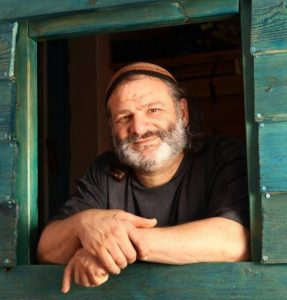

A red heifer calf born last month in the hills of the Galilee has drawn renewed attention to a coordinated national effort to restore ritual purity after two thousand years. Discovered by a team member of the National Red Heifer Institute at a breeding farm using semen imported from the United States, the calf emerged from a black-coated mother yet appeared fully red at birth. Yehuda Ben Tzvi, who oversees programming at the Mikdash Educational Center and lives in Jerusalem with a direct view of the Temple Mount from his balcony, described the find in detail during a recent interview. The calf received the name Tamima, meaning whole or unblemished. Experts removed her ear tags immediately upon discovery.
“She is disqualified for the current rite due to the ear tag blemish.”
Rabbi Azariah Ariel and others determined the calf is disqualified for the current rite due to the ear tag blemish, as I outlined in my earlier halakhic analysis. At only weeks old, she stands far from the required two years of age and remains ineligible to produce ashes. She could serve in future breeding programs if she maintains her red coat without further blemish. This birth still represents tangible progress in the national program, even if she herself cannot supply the ashes now.
This development arrives amid broader momentum. A recent survey showed fifty-five percent of Israeli Jews support rebuilding the Beit HaMikdash on Har HaBayit. Government-backed training programs have reached one hundred fifty thousand Israelis toward a target of two hundred thousand students, with youth forming the largest contingent, though the effort remains open to all. The emphasis falls particularly on kohanim and Leviim who will perform the actual service. Ben Tzvi outlined a six-point national strategy developed over the past year to turn these elements into a historical event for the entire people rather than isolated activism.
“We are small people partners of a great and almighty God.”
What does the birth of this calf and the accompanying national framework mean for the ability of both Jews and the nations to draw near to Hashem through offerings in the Temple? The Hebrew Bible provides the answer through the laws of purity that enable proper service. Without the ashes of the red heifer, the necessary purification cannot occur for those who have encountered corpse impurity, which affects the entire nation today. This blocks the priests from presenting any individual offerings. Only the most obligatory offerings could proceed under strict limitations. Individuals from the nations who fear God may present their offerings to a priest who can then bring them in the Temple. Without the ashes the priest remains unable to do so.
The first component of the strategy is securing a qualified red heifer. Ben Tzvi explained that while red-coated cattle exist in places like Canada, practical requirements make a qualified parah adumah extraordinarily rare. The animal must remain without blemish, including no ear tags, and retain a one hundred percent red coat until at least two years of age. Most red Angus develop white hairs by eighteen months. Rabbi Azariah Ariel, whose father has led Temple scholarship since 1987 and participated in the 1967 liberation of the Temple Mount, has advanced both laser and electrolysis methods. The electrolysis uses a probe so small it treats individual hair follicles, leaving no damage or blemish, causing no bleeding, preventing regrowth, and requiring no healing. The current calf, though disqualified, demonstrates that breeding efforts are advancing. National teams continue the search and monitoring.
“A pure kohen is even more rare than the red heifer.”
The second component requires a pure kohen. This proves even rarer than the heifer. A pure kohen must be born at home to avoid hospital impurity from potential contact with death, the most severe form of tumah. Throughout life, he avoids graveyards, funerals, and any area with possible corpse impurity. Families pursuing this path consult experts constantly. Ben Tzvi noted that one family lost purity for all four sons when someone died in their building. The National Red Heifer Institute maintains a candidate in careful secrecy. A recent incident saw the kohen drive into a hospital parking lot to allow his wife to visit family. Scholars immediately examined whether the lot counted as part of the impure zone. Thank God the area proved clear, but the episode illustrates the constant risk.
Because the priest who burns the red heifer and sprinkles its blood becomes impure himself, the strategy must include an additional clean kohen to gather the ashes afterward. Halakha does not explicitly detail two priests for this rite, yet situational logic drawn from the requirements of purity demands it. The first kohen cannot gather what he has rendered impure for others. A second pure priest ensures the ashes remain available for the water of purification that cleanses the nation. Training programs therefore prioritize additional kohanim and Leviim to fill these precise roles within the two-hundred-thousand target.
“The correct place for the burning of the red heifer remains undisclosed.”
The third component is the precise location for burning the heifer. The rite must occur outside Jerusalem on ground east of the Temple that allows the kohen a clear line of sight to the Foundation Stone beneath the current golden dome. This points to the Mount of Olives. A location recently purchased by a Christian group for the burning of the heifer does not meet the exact requirements. The actual suitable site remains undisclosed for security reasons. One proposal involves constructing a balcony on the eastern side of Har HaBayit itself to serve as a platform without entering the holy precinct. Ben Tzvi affirmed that experts have identified viable areas meeting the criteria.
The fourth component builds halachic consensus. The institute has assembled twenty scholars deeply versed in Temple law and purity to resolve ten or more key dilemmas left unaddressed for two millennia. They proceed by democratic resolution and have already decided three issues in the first month and a half. One addressed whether a reconstituted Sanhedrin is required. The panel concluded it is not obligatory at this stage, yet the entire effort must carry national weight. Expanding this body to twenty-three scholars would align more closely with traditional judicial structures and strengthen authority as decisions go before leading sages for agreement. This provides the practical guidance needed for the program.
“We are spreading the word via media, via newspapers, via internet.”
The fifth component focuses on national awareness. Ben Tzvi called for spreading accurate information through media and education. He contrasted this with a widely publicized rehearsal last July that fell short on multiple halakhic grounds. In previous articles, I have detailed those deficiencies, including improper location, lack of full purity, transportation issues, and timing that extended past sunset. My halakhic rebuttal upholding tradition appears at blogs.timesofisrael.com/halakhic-rebuttal-to-red-heifer-claims-upholding-tradition-integrity/. The current effort avoids such pitfalls through careful planning. Educational initiatives include expansion at the Mini Israel park between Tel Aviv and Jerusalem, featuring life-size Bible scenes, a Temple model, and a planned red heifer purity center. Teams travel throughout the country teaching about the Beit HaMikdash.
I serve on the research team that developed the current virtual reality system used in priest training programs and has been widely demonstrated. The VR platform has proven effective for initial instruction, yet it requires several updates to repair remaining halakhic problems in the present release and to expand access for wider audiences. These improvements will strengthen preparation for kohanim and Leviim within the two-hundred-thousand target.
“This national historical event begins with Jewish support.”
The sixth component addresses funding. Ben Tzvi stated clearly that this national historical event begins with Jewish support rooted in the covenant relationship with Hashem. Funding from non-Jewish sources comes only at later international stages once the inner circle stands firm. Educational programs through the Mikdash Educational Center welcome partners. Donations for the VR updates and broader training can be directed to https://jerusalemtemplestudy.com/vr-upgrade-donations/. This supports the research team’s necessary repairs and expansions.
The Temple functions as a home for the intimate connection between Hashem and His people, with the Holy of Holies compared in the Bible to the private chamber. Its courtyards extend to encompass all humanity. Isaiah foretold the nations coming to Jerusalem to pray.
“Then I will sprinkle clean water upon you, and you shall be clean; from all your uncleannesses, and from all your idols, I will cleanse you.” (Ezekiel 36:25)
Without the red heifer ashes, however, the full spectrum of individual offerings remains blocked. Only the strictly obligatory service could occur. Restoration of purity through this rite opens the way for complete service and the dwelling of the Divine Presence in the midst of the nation.
The birth of Tamima, even with her unfortunate disqualification, and the six-point national strategy mark a concrete advance. With dedicated kohanim and Leviim, resolved halakha, public awareness, and proper training tools, the Jewish people stand ready to move forward. The government-backed training programs that have reached one hundred fifty thousand Israelis demonstrate the scale of commitment. This is the moment to support the necessary updates to the VR system and the training of additional pure priests so that purity can return and offerings can ascend fully to Hashem from Jerusalem once more.
Be sure to receive the latest updates by joining the insider’s newsletter at:
https://perfectingtheworld.com/newsletter