
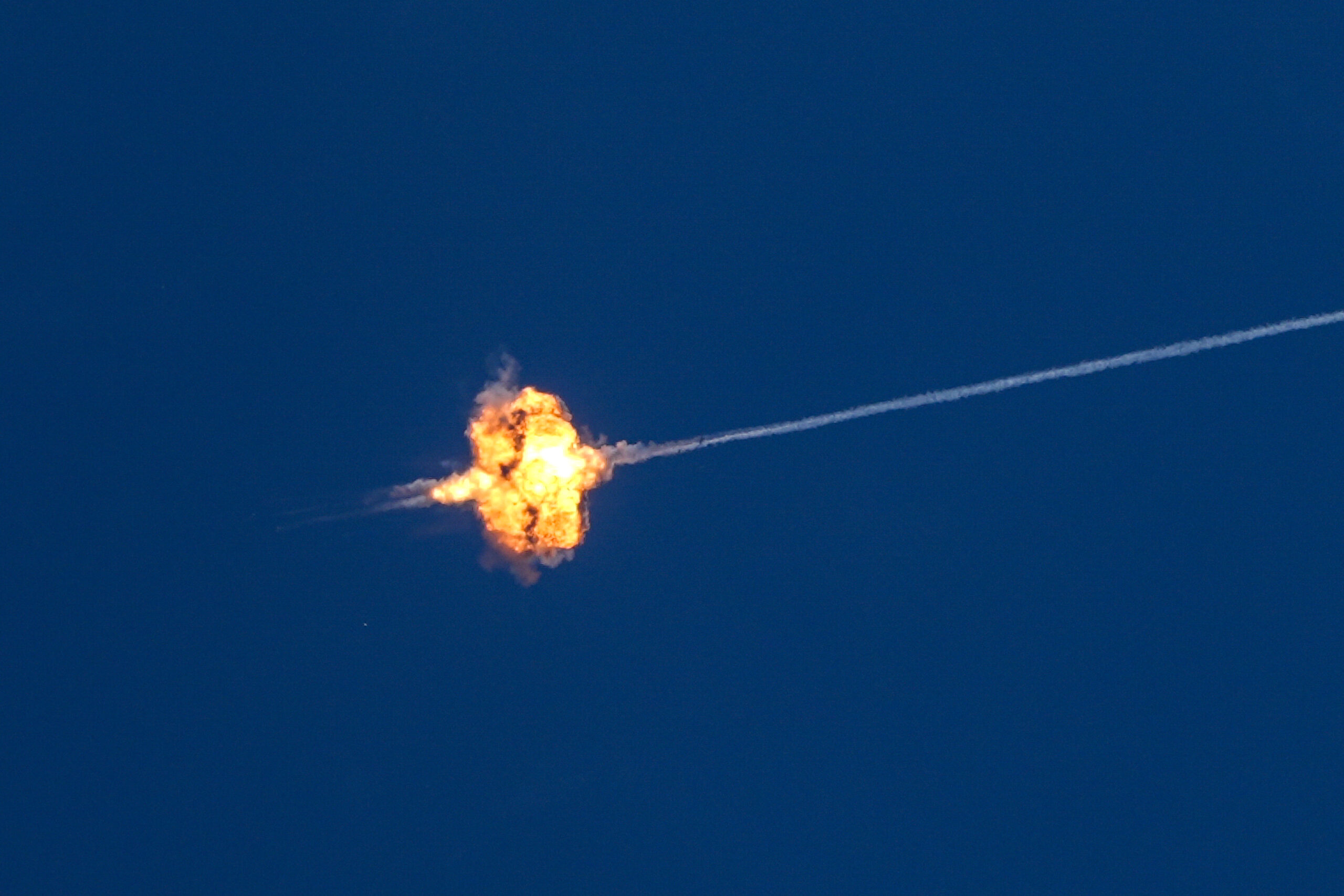
While diplomats gathered in Washington for another round of Israel-Lebanon peace talks, the rockets kept flying. Since March 2, 2026, Hezbollah has launched more than 7,000 rockets, missiles, and drones from Lebanese territory into Israeli cities, towns, and communities in a sustained campaign of terror that Foreign Minister Gideon Sa’ar says the international media has largely ignored.
Speaking on June 24 at the international session of MUNI EXPO in Tel Aviv, a municipal innovation conference attended by governors and mayors from around the worldm Sa’ar told the assembled officials, “Since March alone, Hezbollah has launched more than 7,000 rockets, missiles and drones from Lebanese territory into Israel. What country can accept this and not act to restore security to its citizens?”
The number is staggering. At the current pace, that is more than 233 projectiles per day aimed at Israeli civilians, a rate of fire that dwarfs the worst months of rocket terror Israel endured from Gaza.
Sa’ar was blunt about who bears responsibility for the war: not Israel, not Lebanon, but Hezbollah, and behind it, Tehran. “Very few in the international media mention the fact that Hezbollah started this war on March 2, after receiving instructions from Tehran to do so. Just as Hezbollah started the war on October 8, 2023, one day after Hamas’s attack on Israel,” he said. Iran transferred $1.2 billion to Hezbollah since the November 2024 ceasefire, and continues to play a direct role in training the group’s fighters and guiding its senior leadership, according to IDF officers.
Sa’ar’s message to the world’s local leaders was equally direct on the nature of the common enemy. “We do not have any serious dispute with the government of Lebanon beyond a few border points that can be resolved in short negotiations. We and Lebanon have a common enemy. This is the enemy of Lebanon’s future, sovereignty, and independence, and it is also the enemy of Israel’s security. That enemy is Hezbollah,” he said. Lebanon and Israel, in other words, share an enemy, and pretending otherwise costs both countries lives.
Targeting Civilians, Hiding Behind Them, War on Christians
Hezbollah does not merely fire at Israeli civilians — it fires from behind Lebanese ones. IDF officers confirmed that Hezbollah had embedded itself in civilian areas of Tyre, from which it launched approximately 120 rockets since the current fighting began. On March 31, the IDF revealed that Hezbollah had taken control of the Christian village of Qawzah in southern Lebanon as a base to launch rockets and anti-tank missiles at Israel and IDF troops, operating from civilian infrastructure on the explicit assumption that doing so “grants it protection from IDF strikes.”
Hezbollah also circulated false rumors that IDF soldiers were hiding in a church in the Christian village of Dibil, which then became a pretext for shelling and rocket fire against the Christian community. A resident of Dibil described the aftermath to Lebanese television: “They attacked us the first time, then the next day they came back and spat on us. They attacked us a second time, and the next day they went out in protests, on motorcycles, shouting ‘Zionist, Zionist.’ Now they should leave. We don’t want them in our areas.”
In March 2026, the IDF released drone footage showing Hezbollah fighters entering a building in a Christian village in southern Lebanon, shortly before an airstrike eliminated them. The IDF has documented the group’s systematic exploitation of proximity to Christian villages to establish military positions, in violation of UN Resolution 1701.
Lebanese Christian MP Ghassan Hasbani of the Lebanese Forces party put it plainly: “Hezbollah decided single-handedly to reenter the war triggered by the events in Iran. This is a suicide action by Hezbollah, taking the whole country, the whole of Lebanon, into a regional conflict, into the unknown.” His party, staunchly opposed to Hezbollah, has watched as the terrorist organization has dragged Lebanon’s Christians into a war they never chose and never wanted.
The human cost to Lebanese Christians has been severe. In Qlayaa, an Israeli strike targeting a Hezbollah cell killed Maronite priest Pierre al-Rahi and injured five others on March 9. Israel maintained that the site harbored terrorists; local sources said the priest had refused to evacuate in order to prevent Hezbollah infiltration of his village. Villages such as Marjayoun and Alma al-Shaab defied Israeli evacuation orders precisely to prevent Hezbollah from moving in and occupying their homes. Christians in these villages are not caught in the crossfire by accident; Hezbollah put them there deliberately.
The Absurdity of Blaming Israel
Here is the central perversity of the international response to this war: Hezbollah fires 7,000 rockets at Israeli civilians, embeds its terrorists in Lebanese churches, and uses Christian villages as launch pads, and it is Israel that stands accused of violating the ceasefire.
Lebanon filed a formal complaint with the United Nations documenting 2,036 Israeli breaches of sovereignty in the last three months of 2025 alone. UN experts condemned Israel’s military operations in Lebanon as “illegal aggression,” calling on all member states to suspend arms transfers to Israel while accusing it of violations of the principles of distinction and proportionality. The same UN experts who spent years ignoring Hezbollah’s systematic rearming in violation of Resolution 1701 now demand Israel halt operations against the very infrastructure that Resolution 1701 was supposed to eliminate.
The UN human rights office issued findings suggesting that Israeli attacks on Lebanon, and Hezbollah rocket fire into Israel may both constitute serious violations of international humanitarian law, carefully placing Israel and Hezbollah in the same moral category. The organization that cannot bring itself to formally designate Hezbollah as a terrorist organization has no trouble drafting condemnation letters to Jerusalem.
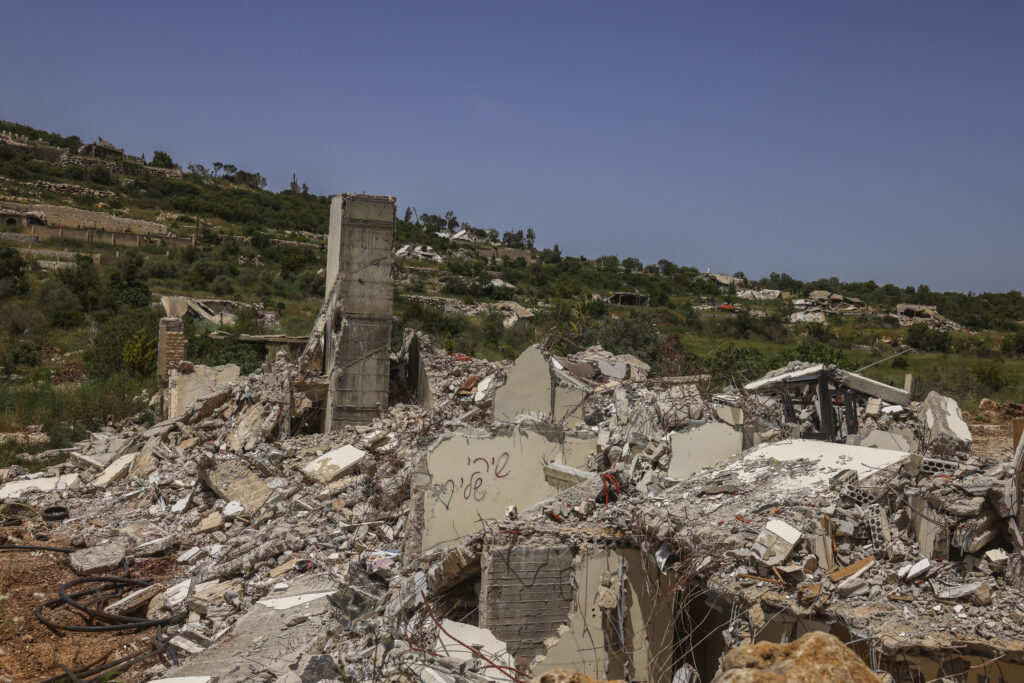
Israel’s position is straightforward: every strike it conducts in Lebanon is a response to the terror infrastructure Hezbollah built there while the world looked away, and which Lebanon’s army claims to have dismantled but demonstrably did not. The IDF launched its operations precisely because the ceasefire framework that was supposed to disarm Hezbollah was never enforced. Holding Israel to a ceasefire while Hezbollah rebuilds its arsenal is not neutrality; it is complicity with a different name.
Sa’ar Calls on the UN to Act
On March 25, Sa’ar formally called on the United Nations Security Council and UN Secretary-General Antonio Guterres to officially designate Hezbollah as a terrorist organization, demand that the Lebanese state disarm the group, and recognize Iran as a “threat to international peace.” In a letter addressed to then-UNSC President Michael Waltz and shared publicly, Sa’ar wrote that Hezbollah’s attacks “constitute a violation of international law, as well as United Nations Security Council resolutions 1701 (2006) and 1559 (2004), and represent a direct continuation of Hezbollah’s disregard for the November 2024 Cessation of Hostilities Understandings.” He asked that the letter be distributed as an official document of the Security Council.
Sa’ar was equally direct about Lebanon’s failure: “The failure of the Government of Lebanon to act against Hezbollah’s military infrastructure demonstrates a lack of will, insufficient effort, and inability to effectively address Hezbollah.”
On the military front, IDF officers told Israeli media that the Lebanese Armed Forces had deceived Israel about disarming Hezbollah. “The Lebanese army lied to the IDF. They deceived Israel. They claimed they had enforced the decision to demilitarize southern Lebanon,” one officer told Walla. “They shared intelligence and reports on entire regions, but based on what we found, it’s clear that nothing was done.”
Despite the overall degradation of Hezbollah’s arsenal — the IDF estimates it has destroyed 85-90% of the group’s rocket capabilities — the terror organization has surprised Israeli commanders by sustaining a pace of approximately 100 rockets or drones per day. On February 26, before Hezbollah resumed firing at Israel, the Alma Research and Education Center estimated the group still possessed roughly 25,000 rockets and missiles, a stockpile substantially reduced since but still lethal enough to keep northern Israel’s residents in shelters night after night.
Defense Minister Israel Katz, also speaking at MUNI EXPO, drew a hard line on any withdrawal. “The IDF is prepared… and we are not retreating,” Katz said, adding that 200,000 Lebanese residents who evacuated southern Lebanese communities will not be permitted to return, because in past security zones where civilian populations remained, soldiers faced roadside bombs and attacks.
For the first time since the collapse of the May 17 Agreement in 1983, Israel and Lebanon are engaged in direct negotiations, with the goal of reaching a peace agreement and the disarmament of Hezbollah. A trilateral framework agreement between Israel, Lebanon, and the United States was signed late last week, prompting Prime Minister Benjamin Netanyahu to declare, “This agreement strengthens Israel and Lebanon, and weakens Iran and Hezbollah.”
But agreements are only as strong as the will to enforce them. Hezbollah has broken every ceasefire it has ever signed. Iran has funded every weapon it has ever fired. Hezbollah has given the world thousands of clear examples of what to expect from them.