


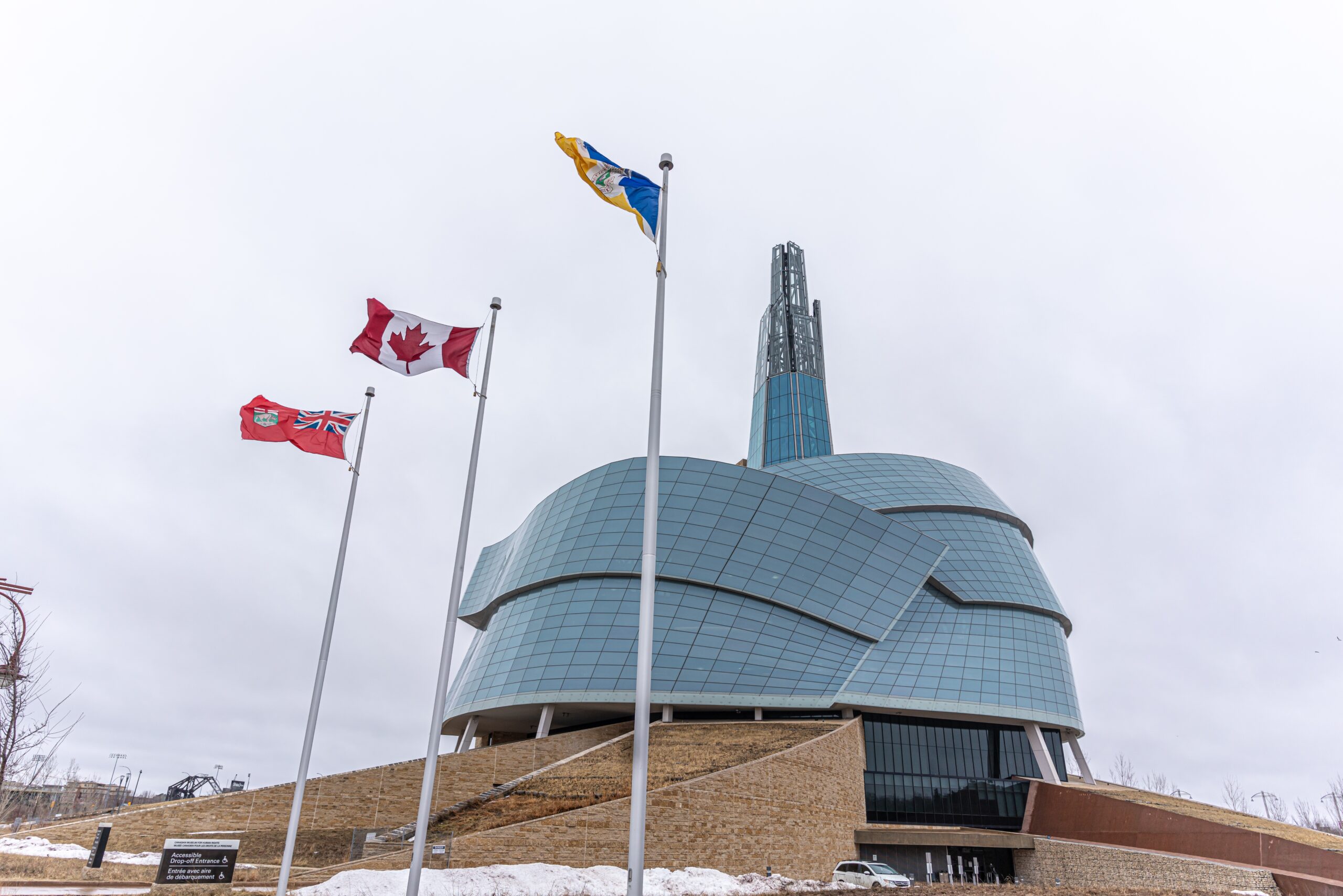
A federally funded Canadian museum is set to open a permanent exhibit this Saturday in Winnipeg that presents one of the most contested and deliberately distorted narratives in modern history as established fact. A growing chorus of Jewish scholars, legal experts, and community organizations is sounding the alarm. The exhibit, Palestine Uprooted: Nakba Past and Present, opening at the Canadian Museum of Human Rights (CMHR) on June 27, 2026, is built around a term whose very origins have been systematically erased from public consciousness. To understand what is wrong with this exhibit, one must first understand what “Nakba” actually meant before it was turned into a weapon.
What the CMHR exhibit refuses to address is the complete historical context that makes the events of 1948 comprehensible. The United Nations offered both Arabs and Jews a partition plan in 1947. The Jewish leadership accepted it. The Arab Higher Committee, the Arab League, and every Arab government rejected it — not reluctantly, but absolutely, announcing their intention to prevent its implementation by force. Five Arab armies invaded the newly declared State of Israel on the day it was born, May 14-15, 1948. The displacement of Palestinian Arabs was the consequence of a war their own leaders chose to launch. The CAEF letter to CMHR CEO Isha Khan asked the obvious question: Will the exhibit acknowledge any of this?
The exhibit also omits what followed. As Jewish Israelis fought for survival, approximately 850,000 Jews were expelled from Arab countries, such as Iraq, Egypt, Yemen, Morocco, Libya, and elsewhere. These communities had existed for centuries, and in some cases millennia, before Islam arrived. Mark Berlin, who until Monday was the only Jewish member of the CMHR’s Board of Trustees and a professor of human rights law at McGill University, resigned over the exhibit, writing that “it is difficult to understand how telling the story of Palestinian displacement in 1948 while omitting the simultaneous expulsion of 850,000 Jews from the Arab states can be viewed as anything other than politically motivated.” He added: “The stories are not severable; they occurred at the same historical moment.”
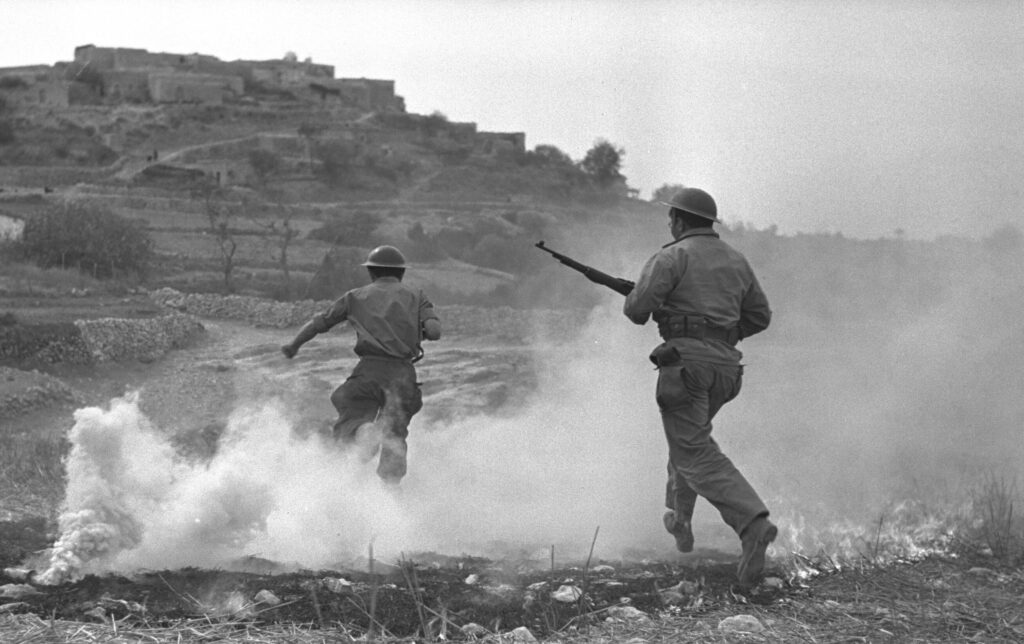
(By Government Press Office (Israel) via Wikipedia
Berlin was direct about the institutional failure: “The museum has a statutory and moral obligation to tell the full truth, not to sacrifice it at the altar of politics.” After his resignation, Noah Shack, CEO of the Centre for Israel and Jewish Affairs, noted that “the lack of transparency in the exhibit’s development, including the prominent role played by political activists, one of whom has described our community’s identity as ‘a disease to be destroyed,’ has severely undermined confidence in a publicly funded institution.”
The word Nakba, Arabic for “catastrophe” or “disaster”, was not coined by Palestinians mourning their displacement. It was coined in 1948 by Constantin Zureiq, a Syrian-Christian historian and professor at the American University of Beirut, in his book Ma’na an-Nakba (The Meaning of the Disaster). Zureiq described the Nakba as the catastrophic failure by the Arabs to stop the establishment of the State of Israel. His words were directed not at Israel but at the Arab world itself. Zureiq wrote: “Seven Arab states declare war on Zionism in Palestine, stop impotent before it, and turn on their heels.” In his telling, the nakba Zureiq described was the failure of the Arabs to defeat the Jews, far removed from the misleading history now promoted by institutions like the UN.
This was the opposite of the term’s original meaning when it was first applied to the Arab-Israeli conflict. In a later book, The Meaning of the Catastrophe Anew, published after the June 1967 war, Zureiq defined that defeat as a Nakba as well, since, just as in 1948, it was a self-inflicted disaster emanating from the Arab world’s failure. At that time, the term Nakba was glaringly absent from Arab and Palestinian discourse.
Despite its appearance in Zureiq’s 1948 book, popular use of the word Nakba was short-lived until the end of the 1980s. Though widely invoked today, it was not part of the Palestinian political narrative for almost 40 years. The transformation of the word from an Arab intellectual’s self-critique into a Palestinian political rallying cry came decades later, driven not by historians but by political operatives. In three-plus decades as Palestinian leader, Yasser Arafat failed to accomplish anything constructive for his people, but Nakba Day advanced his goal of prolonging the struggle against Zionism. The key element of his Nakba Day speech was his claim that there were five million Palestinian refugees who had a sacred “right of return” to their homes in Jaffa, Haifa, and dozens of formerly Arab cities, towns, and villages in Israel. The Palestinian Authority now claims there are seven million refugees.
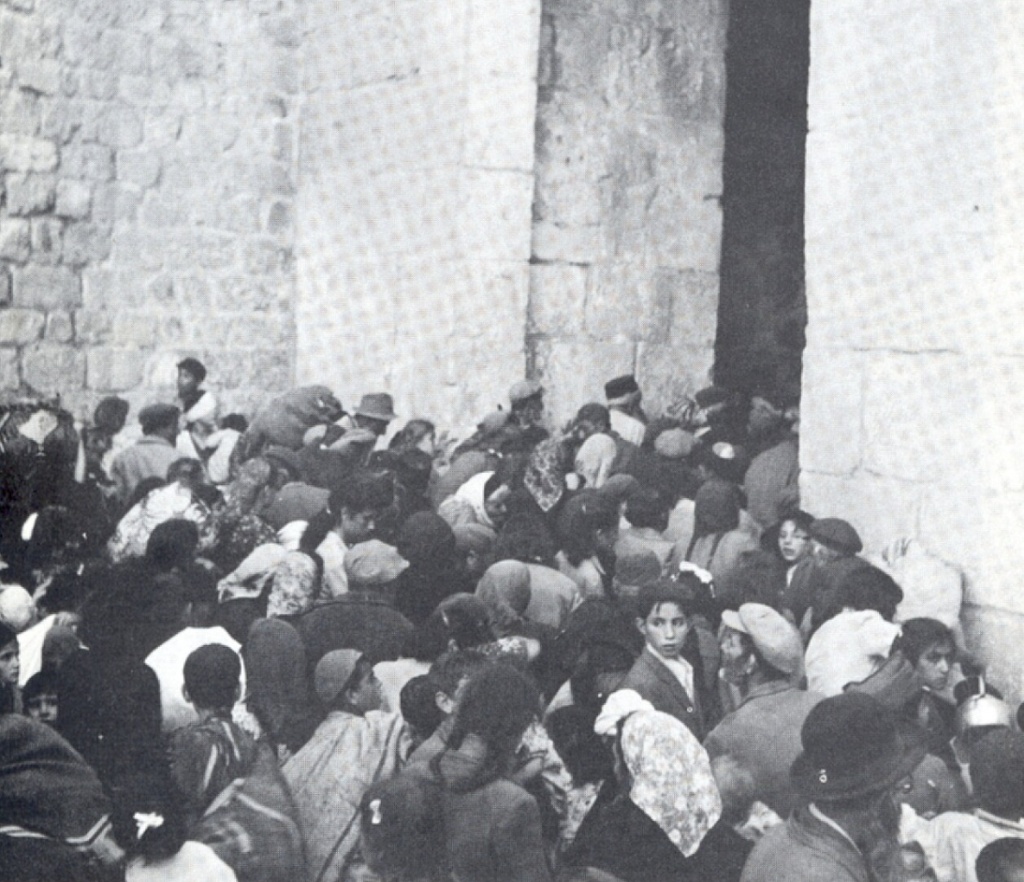
Source: Wikipedia
That “right of return” language is not a humanitarian plea. It is an eliminationist demand. No serious analyst disputes that the “return” of millions of descendants of 1948 Arabs, the vast majority of whom have never set foot in Israel, to a state of eight million Jewish citizens would mean the end of the Jewish state. Hamas has regarded the “right of return” as a tried and true means to sabotage any peace process, and as a mechanism that would eventually change Israel into a non-Jewish state, leading to the establishment of an Islamist Palestinian state on all the territory of Israel. When Nakba Day marches wave Hamas flags, as they do routinely, the connection between the narrative and the violence is not incidental; it is structural.
The politicization of the Nakba narrative is playing out simultaneously in the United States, where New York City Mayor Zohran Mamdani used his official government platform on Nakba Day in May to post a video declaring that Palestinian displacement “continues to this day.” The UJA-Federation of New York shot back: “Mayor Mamdani: the refugees you post about exist because 22 Arab states launched a war to destroy Israel. In its aftermath, 800,000 Jews were expelled from Arab lands. Your post mentions none of this. And you chose 5:40 PM on Friday to post it, as Jewish New Yorkers prepare to light Shabbat candles. We noticed.”
Mark Treyger, CEO of the Jewish Community Relations Council of New York, warned that the Mayor’s decision exacerbates an already volatile climate in a city dealing with surging antisemitism. “Referencing this chapter of history without acknowledging the full history, including the post-World War II UN Partition Plan supporting two states for two peoples, which Jews accepted, does nothing to advance understanding,” Treyger said. Mamdani had already caused an uproar on his first day in office when he cancelled executive orders related to Israel issued by his predecessor, including one formally recognizing the IHRA working definition of antisemitism.
The pattern is not coincidental. The Nakba narrative, stripped of its actual origins as an Arab intellectual’s criticism of Arab failure, has been rebuilt into a political instrument with a single function: to frame Israel’s existence as the original crime and Jewish self-defense as perpetual aggression. Every time that narrative is laundered through a government platform, whether a New York mayor’s office or a Canadian federal museum, it moves one step closer to the mainstream. The Canadian Antisemitism Education Foundation warned CMHR that the exhibit “seeks to further a narrative, not teach historical facts, and therefore only serves to invite more pain and suffering to all parties concerned.”
The CMHR has responded by insisting the exhibit falls “squarely within our mandate” and that “focusing this one exhibit on the human rights violations faced by Palestinian Canadians does not negate the human rights violations faced by Jewish people.” That defense is precisely the problem. An exhibit that buries the full history — the rejected partition plan, the Arab invasion, the Jewish refugees from Arab lands, the explicit aim of the Arab armies — is not educating Canadians. It is recruiting them into a narrative whose endpoint is the delegitimization of the Jewish state.
History cannot be presented as a crime scene when the investigators have discarded half the evidence. Canada’s Jewish community deserves better than a federally funded museum that has turned history into advocacy and advocacy into a call for Israel’s undoing.
