

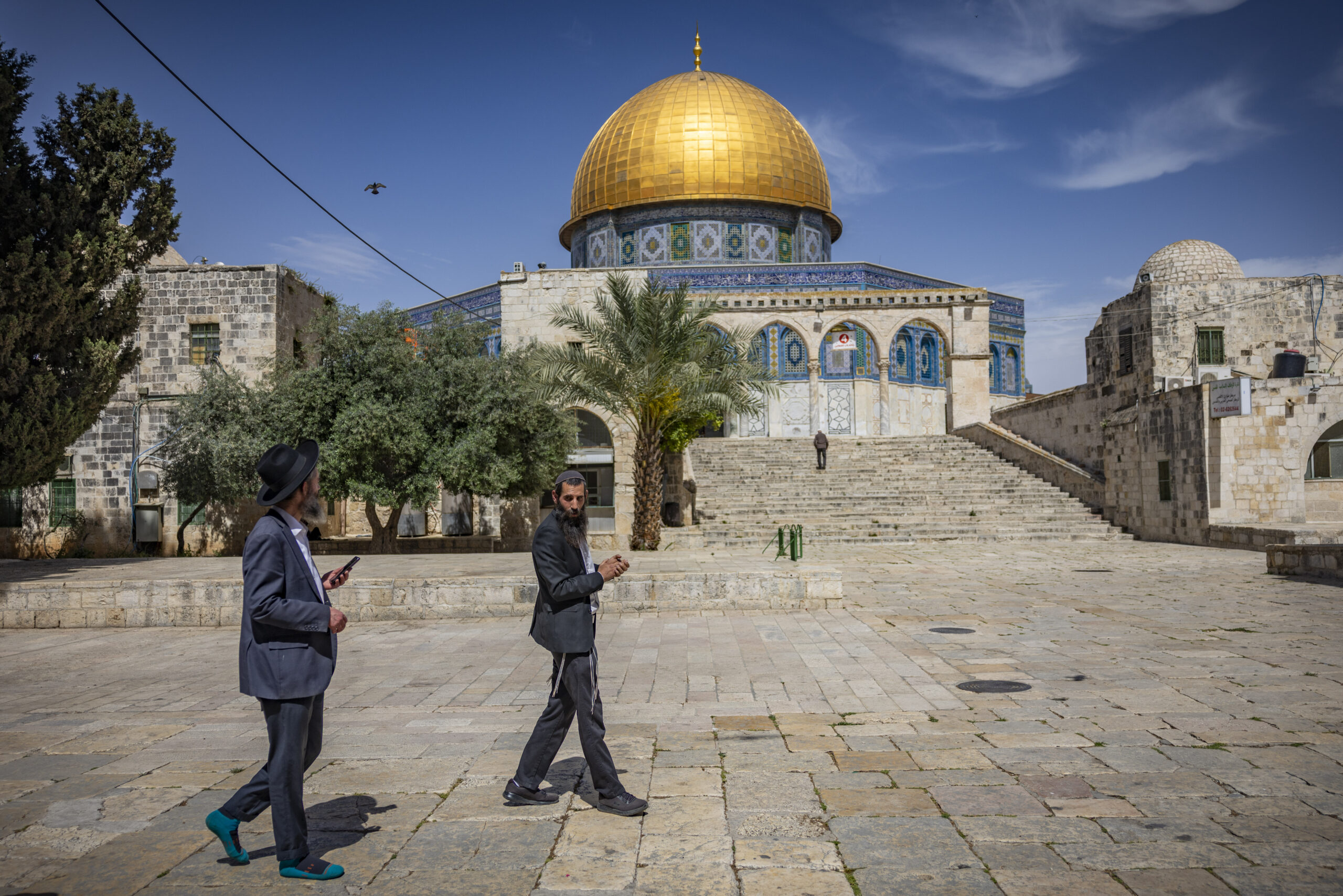
Twelve years ago, only 30% of Israeli Jews supported rebuilding the Beit HaMikdash, the Holy Temple, on Har HaBayit, the Temple Mount. Today, that number stands at 55%. The shift did not happen gradually or quietly. It happened on October 7, 2023, when Hamas terrorists massacred 1,200 Israelis and shattered whatever remained of the Israeli public’s assumptions about security, sovereignty, and the spiritual stakes of this conflict. A new survey commissioned by the Temple Mount Heritage Foundation and conducted by the Direct Polls Institute under pollster Shlomo Filber reveals a nation whose relationship to its holiest site has been transformed by trauma and war.
The survey, drawn from a representative sample of 1,010 Israeli adults aged 18 and older, found that 55% of Jewish Israelis now support the establishment of the Third Temple, with only 29% opposed and 16% undecided. Among those who support it, 38% regard the Temple as having both religious and national significance, 21% as purely religious, and 16% as primarily a national and historical matter. Just 13% called the Temple Mount too politically sensitive to pursue, a striking drop from the defensive posture that has governed Israeli government policy toward the site for decades.
The October 7 effect is written clearly in the numbers. Fully 42% of respondents said they feel a stronger connection to the Temple Mount and the aspiration to rebuild the Temple since the massacre. Among right-wing Israelis, that figure rises to 56%. Among those who identify as Religious Zionists, 71% said their connection to Har HaBayit had grown stronger since October 7. Only 7% of right-wing respondents said their connection had weakened.
The survey also asked which place best represents the strongest Jewish, national, and historical feeling. The Temple Mount came first, chosen by 52% of respondents. The Western Wall (Kotel) came in second at 16%, followed by Jerusalem as a whole at 15%, and Masada at just 8%.
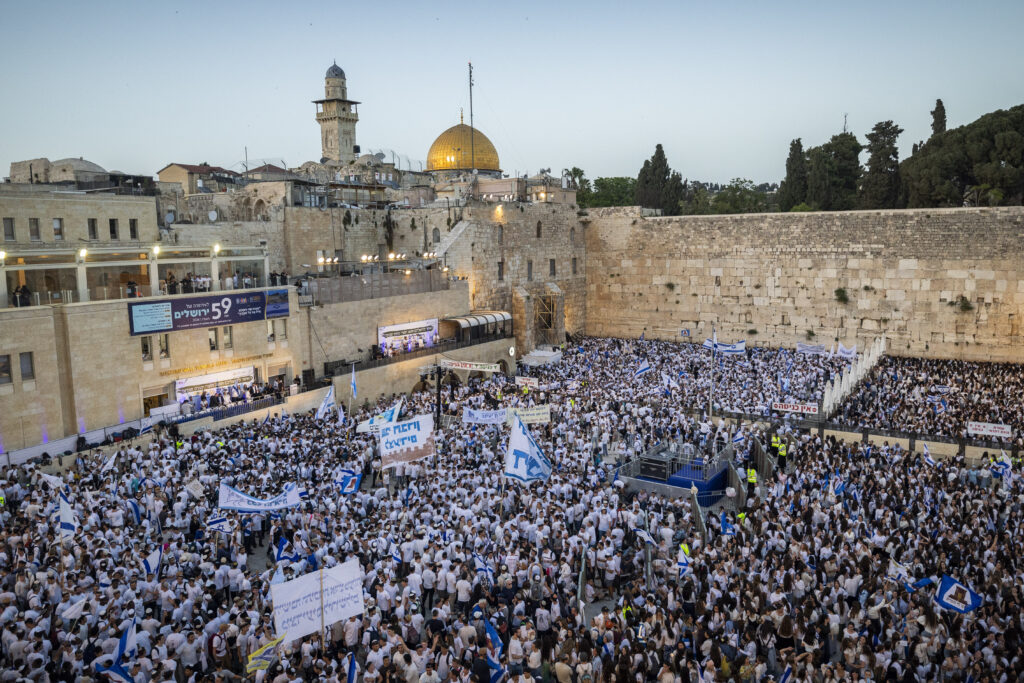
That ranking represents a seismic reversal from the picture that emerged in a Ynet poll published on July 11, 2013, just days before Tisha B’Av. In that survey, conducted by the Maagar Mochot Institute for the Nachalat Azma’ut Israel Foundation and the Joint Headquarters of Temple Mount Organizations, with 523 respondents, 66% of Israeli Jews named the Western Wall as the holiest place in the Land of Israel. Only 29% named the Temple Mount itself. At that time, a mere 30% supported building the Third Temple, while 45% opposed it.
The contrast between 2013 and today is not a small statistical fluctuation. It is a transformation in national consciousness. In 2013, roughly half of all Israeli Jews believed the Muslim Waqf, the Islamic religious authority that administers the compound, was the de facto sovereign on the Temple Mount. Only 19% believed Israel actually controlled the site. 59% of respondents in that earlier poll supported dividing the Temple Mount between Jews and Muslims by zones and times, along the lines of the arrangement at the Cave of Machpelah in Hebron. There was, in the pre-October 7 Israeli mainstream, a resigned acceptance of Muslim dominance over Judaism’s holiest site.
That resignation appears to be eroding. The new survey’s finding that 52% of Israelis now identify the Temple Mount, not the Western Wall, as the place that best embodies the Jewish national spirit marks a fundamental reassessment. The Kotel, it is worth remembering, is not itself a sacred site in biblical terms. It is a retaining wall built by Herod the Great around the base of Har HaBayit. Its centrality in Jewish life since 1967 reflected the political impossibility of accessing the Mount itself, not a theological preference for the wall over the Temple. When Israelis shift their emotional identification from the wall back to the Mount, they are in effect demanding what was always, from a Jewish standpoint, the real thing.
There is a notable gender gap in the findings. Among men, 39% said they feel a stronger connection to building the Temple “to a great extent” since October 7, rising to 49% when combining “to a great extent” and “to some extent.” Women expressed lower levels of support across the same measures, with 22% selecting “to a great extent.”
The Sages taught that the Temple was destroyed because of sinat chinam, baseless hatred, among Jews. The prophet Ezekiel recorded the divine promise that reverses that exile: “I will take you from among the nations, and gather you out of all the countries, and will bring you into your own land.” (Ezekiel 36:24) The gathering has happened. The land has been restored. The question the surveys across twelve years are now answering, one polling cycle at a time, is whether the Jewish people are ready to reclaim the one piece of their inheritance they have yet to assert.
October 7 did not create this desire. But it stripped away the comfortable denial that had allowed Israelis to treat the Temple Mount as someone else’s problem. When Hamas launched its invasion with the declared aim of destroying the Jewish state, it forced a reckoning that went deeper than any military calculus; it reached back to the bedrock of Jewish identity. The numbers in this survey are the Israeli public’s answer.


