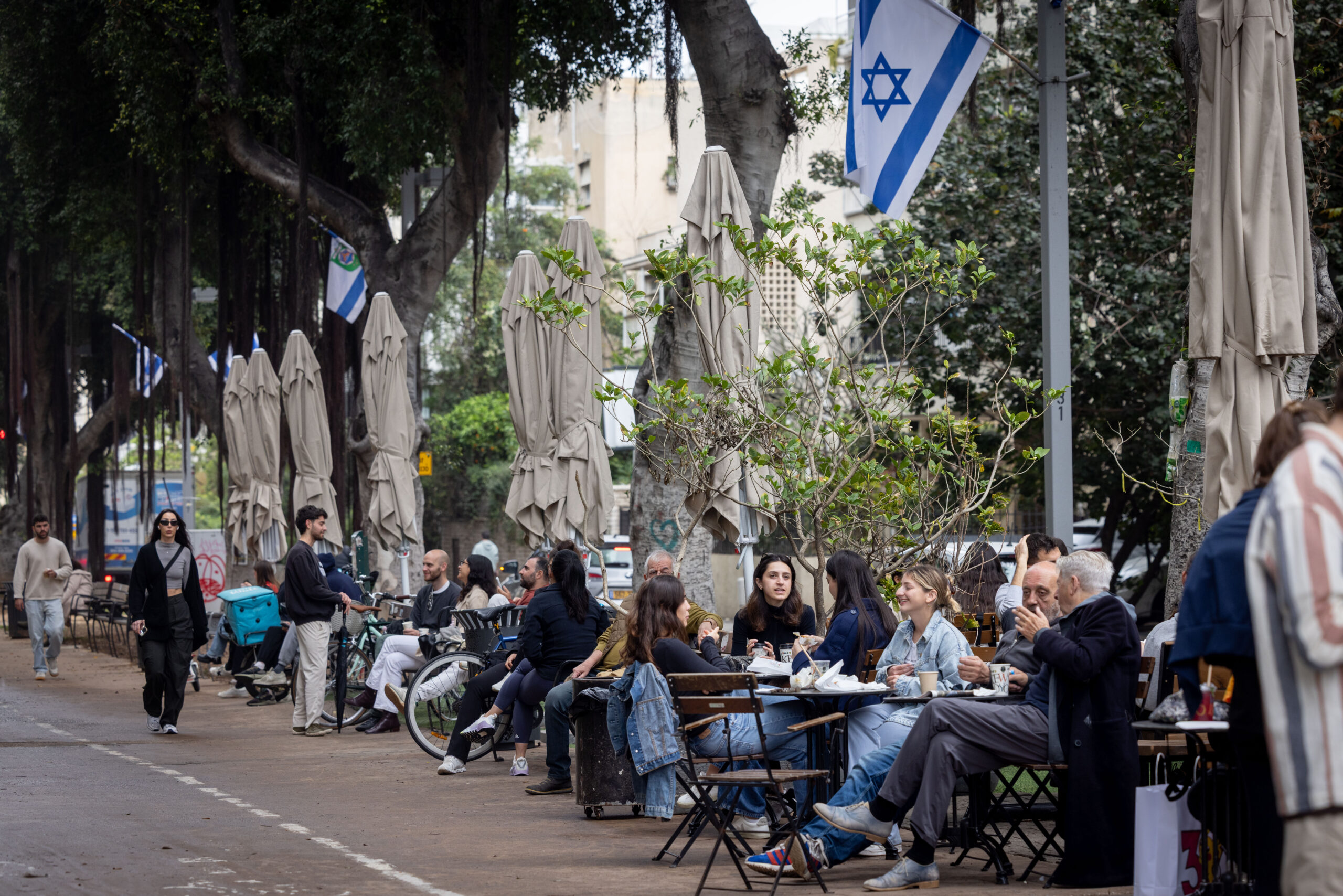
A few months ago, in a café in the heart of Tel Aviv, Rabbi Chaim Navon overheard a conversation he did not expect.
Navon — a rabbi, author, columnist, and research fellow at the Tikvah Fund — was sitting with his coffee in one of the most secular corners of Israeli life. At the next table sat three young Israelis who did not look, at least from the outside, like they were on their way to a Torah class.
Then one of them turned to her friends and said, almost casually: “Before I forget — send me the names for prayers today. I’m baking challah, and I’m separating challah.”
Separating challah is not a baking ritual. It is a biblical commandment, rooted in the Temple service and still observed in Jewish kitchens today. “Of the first of your dough you shall set apart a cake as a gift” (Numbers 15:20). In Temple times, that portion was given to the priests. Yet even after the destruction of the Temple, the commandment remained. Across the generations, Jews continued to set aside a small piece of dough, and that quiet moment became a special time of prayer — for children, for healing, for marriage, for soldiers, for the people of Israel.
That is what Navon heard in a Tel Aviv café: a young woman, without drama or self-consciousness, asking her friends for the names of people to pray for before she baked challah.
Navon later described the moment in Olam Katan, a Hebrew weekly in Israel. His conclusion? Something big is happening in Israel. “I do not think this is a passing trend,” he said.
The evidence is not only anecdotal. A Channel 12 survey found that 53 percent of Israelis between the ages of eighteen and twenty-nine now say they keep Shabbat according to Jewish law. That number is astonishing. Across much of the Western world, young people are moving further from faith. In Israel, something different is taking place. Not everywhere. Not uniformly. Not always with the labels that religious people expect. But the movement is real – and it is not limited to cafés.
Rabbi Yigal Levinstein, a prominent Religious Zionist educator and co-founder of the Bnei David pre-military academy in Eli, has spent much of the war close to soldiers in the field. He described a scene he has witnessed repeatedly before troops enter Gaza.
The soldiers gather — companies, battalions, entire formations — and together they cry out the Shema: Shema Yisrael, Hashem Elokeinu, Hashem Echad. “Hear, O Israel: the Lord our God, the Lord is One.”
Not only the religious soldiers – everyone.
Young men who did not grow up in Bible-observant homes and who may not keep Shabbat, stand at the edge of battle and declare the oneness of God with their whole hearts. “It is growing stronger,” Levinstein said. “I see it very strongly in the field.”
The woman separating challah in Tel Aviv and the soldier saying Shema before entering Gaza are not separate stories. They are two signs of the same thing.
To understand it, we have to return to the valley of dry bones.
In Ezekiel 37, the prophet is carried by God to a valley filled with bones — “very many” and “very dry.” God asks him, “Son of man, can these bones live?” Ezekiel answers, “O Lord God, You know.”
Then God commands him to prophesy over the bones. Ezekiel speaks, and the bones begin to move. They rattle and come together, bone to bone. Sinews appear. Flesh grows. Skin covers them. The bones are reformed into a body.
But then the verse adds: “but there was no breath in them” (Ezekiel 37:8). The bones come together and the body is whole, but it is not yet alive.
Only afterward does God command Ezekiel to call the breath from the four winds. The breath enters them, and they stand on their feet, “an exceedingly great army” (Ezekiel 37:10).
Then God explains the vision: “These bones are the whole house of Israel” (Ezekiel 37:11). They are a people scattered, broken, and certain that their hope is lost. God promises to open their graves, bring them back to the land of Israel, and place His spirit within them.
For two thousand years, the Jewish people were those dry bones, scattered across the earth. Then, against every law of history, the bones began to move. Exiles returned to the Holy Land and Hebrew came back to life. They planted fields and built cities. Survivors of the Holocaust were quickly given guns and became soldiers. In 1948, after the ashes of Europe and the long night of exile, the body of Israel stood again on its land.
But Ezekiel teaches that the return of the body is not the final stage. The bones come first, then the flesh and the skin. And only afterward comes the breath.
The State of Israel is the body rebuilt. What we are seeing now is the breath returning.
That is why the usual Israeli labels – secular, religious, ultra-orthodox – are starting to feel outdated. Something is stirring beneath them — a deep Jewish instinct reawakening after generations of exile, war, and confusion. It does not always express itself through formal observance of the Bible’s commandments. But it is real, and it is happening as we speak.
A few years ago, I devoted an entire chapter of The War Against the Bible: Ishmael, Esau and Israel at the End Times to this very phenomenon: the religious awakening now stirring among Jews in Israel and America. Jews who were raised far from observance are reaching again for Shabbat, prayer, Bible, commandments, and the language of faith. In Israel, that awakening is bound up with the return to the land itself. The body of the nation has been restored; now, as Ezekiel foresaw, the spirit is beginning to return.
The dry bones are breathing. Hear, O Israel: the Lord our God, the Lord is One.