




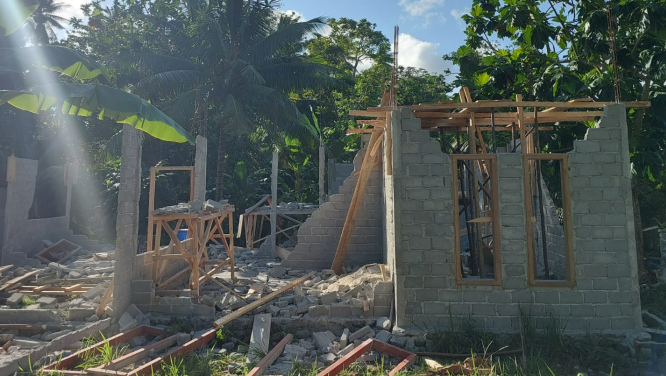
From the fault lines beneath Los Angeles to the Syrian-African Rift running through the heart of the Holy Land, tectonic stress is building toward a breaking point, and today, the earth gave a preview of what that breaking point looks like. A 6.7-magnitude earthquake struck Indonesia’s Sulawesi island, centered 43 kilometers east-southeast of Palu, a city of 400,000 people, sending hospital patients fleeing into the streets with IV drips still in their arms. The tremor lasted more than a minute and was followed by aftershocks reaching 5.2 magnitude. For residents of Palu, the shaking triggered haunting memories of 2018, when a 7.5-magnitude quake, a 3-meter tsunami, and a liquefaction event that swallowed entire neighborhoods killed more than 4,000 people. Tuesday’s quake carried no tsunami risk, but the psychological wound it reopened was real.
Against that backdrop, two separate scientific findings, one centered on Southern California, one on Israel, are raising alarms that the world is entering an era of intensifying seismic activity. The prophets of Israel said exactly this would happen.
A research team led by Dr. Liliane Burkhard of the University of Bern has modeled 1,000 years of earthquake history along California’s San Andreas and San Jacinto fault systems and reached a stark conclusion: tectonic stress in the region is now at its highest level in at least a millennium. The study, published in the Journal of Geophysical Research: Solid Earth, found that the San Jacinto-Bernardino segment has reached 3.6 megapascals of stress, exceeding any value recorded anywhere in the entire 1,000-year simulation. The neighboring Mojave South section of the San Andreas Fault registered 2.8 megapascals. Both segments are critically stressed in tandem, a condition the researchers specifically associate with large joint ruptures that jump from one fault system into the other. It is a scenario with, in Burkhard’s own words, “much larger consequences for the region.”
The danger zone runs through some of the most densely populated infrastructure in the United States: the greater Los Angeles basin, San Bernardino, Riverside, and the Coachella Valley, with major highways, rail lines, and energy infrastructure threading through a critical junction northeast of Los Angeles called Cajon Pass. The M7.9 Fort Tejon earthquake of 1857, the last major rupture to affect the wider Los Angeles region, ruptured more than 330 kilometers of the San Andreas Fault and stopped at Cajon Pass. The researchers warn that under current stress conditions, the next major earthquake may not stop there.
“The study is not a prediction of when an earthquake will occur,” Burkhard said. “What we can say is that the system is critically stressed and that physics-based models like ours give a clearer picture of the range of scenarios we should be prepared for.”
Israel Sits on Its Own Time Bomb
Half a world away, the seismic clock is also ticking. Israel straddles the Syrian-African Rift, the transform boundary where the African Plate meets the Arabian Plate. The Jordan Rift Valley, part of the Great Rift Valley stretching from eastern Lebanon to Mozambique, has produced some of history’s most destructive earthquakes: the catastrophes of 31 BCE, 363 CE, 749 CE, and 1033 CE.
A Tel Aviv University study found that 7.5-magnitude tremors strike the Dead Sea region every 1,300 to 1,400 years, and not every 10,000 years as previously believed. The last such event struck in 1033 CE. The last major earthquake to hit Israel was the 6.5-magnitude Jericho quake of 1927, killing hundreds across Jerusalem and Shechem. By the study’s own timeline, Israel is overdue.
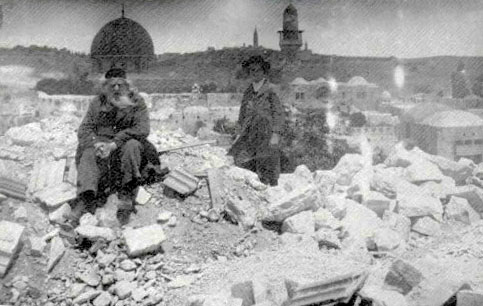
The National Emergency Authority’s earthquake master plan projects that a major quake would leave 7,000 dead, 8,600 badly injured, 9,500 trapped under rubble, 28,600 buildings badly damaged, and 170,000 people newly homeless. About 60 percent of Israeli homes remain unprotected against earthquakes or collapse. State Comptroller Matanyahu Englman warned last summer that 80,000 buildings of three or more stories, housing over 810,000 apartments, were built before Israel’s 1980 seismic resistance standards and remain unreinforced. Over two decades of an urban renewal program meant to incentivize retrofitting, only 3,900 buildings, roughly five percent of those eligible, have been reinforced.
Defense Minister Israel Katz has declared 2025 and 2026 “critical earthquake preparedness years.” But at a recent Knesset Internal Affairs Committee hearing, officials described plans that exist largely on paper, constrained by funding that has been promised for 26 years and never delivered. The National Emergency Authority is an advisory body and has no legal authority to compel ministries or municipalities to act.
Into this vacuum has stepped Elad Blumental, a 38-year-old father of three from Rishon Lezion who, after a seminar two years ago on the threats facing Israel, concluded that his previous fears about earthquakes “were nothing compared to the fears I ought to have.” Through his organization OneDay, Blumental has trained ten volunteer rescue teams, 350 physically fit men and women aged 20 to 40, across Haifa, Tel Aviv, Kiryat Shmona, Safed, Herzliya, and other cities. Each volunteer carries a kit of helmet, boots, gloves, and first aid supplies; each team has a trailer packed with disc saws, generators, and heavy extraction equipment.
“Each volunteer has a bag with a helmet, boots, gloves, kneecaps, and first aid,” Blumental said. “Each team has a nine-square-meter trailer packed with heavy equipment, such as hammers, disc saws, and generators… They know how to break, dig, and make their way through rubble to reach people.”
When Iranian missiles struck Israel over the past two years, those teams deployed alongside Home Front Command rescuers to comb through the rubble of struck buildings. “Our teams worked during both Iran wars, last year and this year,” Blumental said. “Now, we want to create dozens of additional teams across the country.”
Geologist Ariel Heimann, a senior researcher at the Institute for National Security Studies who has spent 26 years pressing decision-makers on earthquake preparedness, calls it “the biggest threat to Israel today,” and not a question of if, but when. “Israel invests many billions against the threat from Iran, which endangers national security,” Heimann told The Times of Israel. “How can it be that not even one billion is found for earthquake preparedness? It’s less than 1% of the defense budget and about 0.13% of the annual state budget.”
“Mountains Shall Be Overthrown”. The Prophets Spoke of This
Here is where the convergence of California, Israel, and Sulawesi carries a meaning that science alone cannot capture, and where the distinction between earthquakes inside the Land of Israel and outside it matters enormously.
The Prophet Ezekiel, describing the cataclysm that precedes the final redemption, wrote specifically of earthquakes in the Land:
“Mountains shall be overthrown, cliffs shall topple, and every wall shall crumble to the ground.” (Ezekiel 38:20)
This was not a general observation about geological activity. Ezekiel placed these earthquakes in the context of the War of Gog u’Magog; the end-of-days conflict in which the nations of the world converge against Israel, and God intervenes through the forces of nature itself. The quakes Ezekiel described are not random disasters. They are divine weapons.
Rabbi Yosef Berger has explained that the War of Gog u’Magog is not a conventional conflict between armies. “Zechariah describes a conflict in which nature plays an active role,” Rabbi Berger told Israel365 News. “Earthquakes wrack the land, the sun and the moon change, water flows in different manners, and disease will play a major role. God will take an active role in the war and thunder and lightning will announce His presence.”
Rabbi Yekutiel Fish, author of the Hebrew Torah blog Sod HaChashmal, frames earthquakes and volcanic activity as manifestations of din, divine judgment, expressed through the name Elohim, the aspect of God governing justice and nature. The Prophet Jeremiah captured this directly:
“But Hashem God is the true God, He is the living God, and the everlasting King; at His wrath the earth trembleth, and the nations are not able to abide His indignation.” (Jeremiah 10:10)
The critical distinction the Sages draw is geographical. Earthquakes outside the Land of Israel, in California, Indonesia, and Turkey, are understood as the shaking of a world being prepared for transformation, the global turbulence that precedes and accompanies the redemptive process. Earthquakes within the Land of Israel carry a different weight entirely. They are part of the specific prophetic script for the end of days, the trembling of the earth as God enters the theater of history in the land He chose.
Rabbi Fish, citing the 18th-century commentator Rabbi David Altschuler, known as the Metsudat David, noted that the casualties of Gog u’Magog will be split between those killed in the war between nations and those killed by the natural disasters attending it. “Prominent among these disasters will be unprecedented earthquakes and volcanoes,” Rabbi Fish said.
The Psalmist, writing millennia before seismology existed, described the scene:
“Therefore we are not afraid though the earth reels, though mountains topple into the sea. Its waters rage and foam; in its swell mountains quake. Selah.” (Psalms 46:3-4)
That same chapter ends with the assurance that war itself will cease from the earth — that the natural upheaval leads not to annihilation but to redemption.
Tuesday’s earthquake in Sulawesi, the building stress beneath Los Angeles, and the unfinished seismic preparations in Israel are, in the prophetic framework, part of a single story. The earth is being shaken. The question for Israel is not whether it will experience a major earthquake, but whether it will be found ready, and whether those who understand the prophetic context will recognize the moment when it arrives.


