

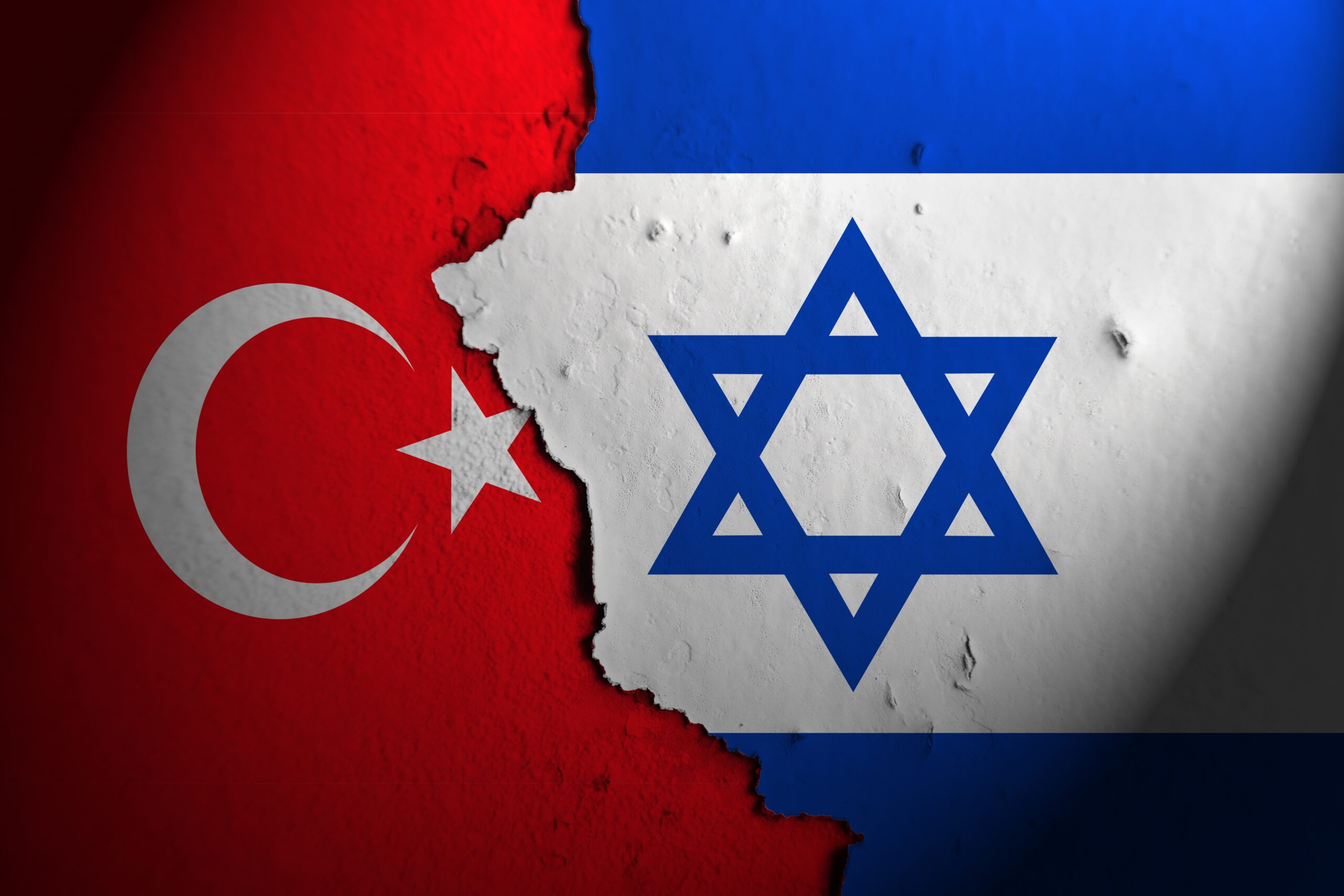
When Turkey’s Interior Minister Mustafa Çiftçi declared last week that Jerusalem would one day return to Turkish sovereignty, “just as in the past,” he was speaking as a senior official of a NATO member state, at a ruling party conference, invoking the name of Allah and the example of his president, Recep Tayyip Erdoğan. The Ottoman Empire, he promised the crowd, is not finished with Jerusalem.
Şam'ın, Halep'in, Karabağ'ın özgürlüğünü gördüğümüz gibi inşallah bir gün Kudüs'ün de özgürlüğünü göreceğiz.
— Mustafa ÇİFTÇİ (@mustafaciftcitr) June 6, 2026
Benim valiyken Cenabı Hak'tan bir niyazım vardı. Malum burada beş sene valilik yaptıktan sonra Erzurum'a tayin oldum. İki buçuk sene de orada görev yaptım. İçten içe… pic.twitter.com/8Ybw4tJH4g
Israel’s Foreign Ministry responded directly. “The corrupt Ottoman Empire is gone. Forever,” it posted on X. Defense Minister Israel Katz addressed the minister directly in Turkish: “Jerusalem is not Constantinople, and the State of Israel is not a crumbling Crusader Empire.”
Çiftçi’s speech was a window into how Erdoğan’s Turkey now sees itself. The minister compared the coming “liberation” of Jerusalem to Turkey’s role in the fall of the Assad regime in Damascus and to Azerbaijan’s recapture of Nagorno-Karabakh, both achieved through Turkish-backed force or Turkish-aligned power. The message was clear: Turkey sees itself as the engine of a new regional order, with Jerusalem as its crown.
This is not a new posture for Erdoğan. On March 30, 2025, at a prayer service marking the end of Ramadan, he called on Allah to “destroy and devastate Zionist Israel.” On May 14, 2026, he accused Israel of “trampling on humanity’s shared values” after Israel stopped yet another flotilla attempting to break the naval blockade of Gaza. Turkey regularly hosts Hamas leaders, and Erdoğan has praised the organization’s terrorists as freedom fighters.
What was once the strongest bilateral relationship Israel had in the Muslim world, built over decades, formalized in military cooperation and trade, has collapsed into open hostility. Turkish air carriers no longer fly to Israel. Trade has been suspended. And from the podium of his own party, the interior minister now speaks of governing Jerusalem.
Wake up and smell the coffee.
— Israel Foreign Ministry (@IsraelMFA) June 7, 2026
The corrupt Ottoman Empire is gone. Forever.
Jerusalem DC (David’s capital) shall remain the eternal capital of Israel.
Forever. https://t.co/FRSR7ue1gP
Israel’s response drew the correct historical line. Defense Minister Katz reminded Çiftçi that Jerusalem has been the capital of the Jewish people for 3,000 years. That number is not hyperbole; it anchors Jerusalem to King David, to the Beit HaMikdash (the Temple), to a national memory that predates the Ottoman conquest by two and a half millennia. The Ottomans ruled Jerusalem for four centuries, from 1517 to 1917, a brief chapter in the city’s three-thousand-year history.
For the first several decades of Israel’s existence, Turkey stood apart from the Arab world’s rejection of the Jewish state. Turkey recognized Israel in 1949, just months after independence, making it the first Muslim-majority country to do so. Through the 1950s, 1960s, and into the 1990s, the two countries built one of the most substantive bilateral relationships in the region. They shared intelligence, conducted joint military exercises, and signed a landmark defense cooperation agreement in 1996. Israeli pilots trained in Turkish airspace. Turkish officers studied in Israeli military academies. The relationship was the envy of Israeli diplomats trying to break out of the region’s isolation.
The partnership extended well beyond the military. Trade flourished, tourism boomed, and Israeli companies invested heavily in Turkey. At its peak, Turkey was one of Israel’s most important trading partners. There was a genuine warmth between the two peoples, and Israeli tourists flooded Turkish coastal resorts by the hundreds of thousands every year.
The first serious fracture came in 2009, when Prime Minister Erdoğan stormed off a panel at the World Economic Forum in Davos after a heated exchange with Israeli President Shimon Peres over the Gaza war, declaring, “you know well how to kill.” It was a theatrical moment that signaled something real: Erdoğan’s Islamist AKP government had no interest in inheriting the secular, strategically pragmatic relationship that Turkey’s military and foreign policy establishment had built with Israel.
The break became formal in 2010. The Mavi Marmara flotilla, organized by a Turkish Islamist organization with ties to the AKP government, attempted to breach Israel’s naval blockade of Gaza. Israeli commandos boarded the vessel and, in a violent confrontation with activists who attacked them, killed nine Turkish nationals. Turkey recalled its ambassador, expelled Israel’s, and downgraded relations to the lowest level. Despite a 2016 reconciliation agreement, in which Israel paid compensation to the families of those killed, the relationship never fully recovered. When the Gaza war erupted after Hamas’s October 7, 2023 massacre of Israeli civilians, Erdoğan used it as a platform for the most extreme rhetoric yet, comparing Israel to Nazi Germany, calling Prime Minister Netanyahu a new Hitler, praising Hamas terrorists as freedom fighters, and demanding the United Nations authorize military force against Israel. Turkey suspended all trade and closed its airspace to Israeli carriers.
What makes the collapse so striking is the distance traveled. The country that was once Israel’s most important Muslim ally, the country whose military and intelligence services coordinated with Israel against shared regional threats, is now a state that hosts Hamas leadership, cheers for Israel’s enemies, and whose interior minister publicly prays to become the governor of Jerusalem.
The Ottoman Empire is, as Israel’s Foreign Ministry stated, gone. The British Mandate is gone. Every power that ruled Jerusalem is gone. Israel is here, and according to every covenant in the Hebrew Bible, it is not going anywhere.