



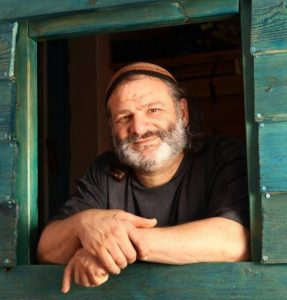

A Pashtun man from Afghanistan’s Kunar Province walked into a meeting with the Sanhedrin in Jerusalem this week and introduced himself as a son of Yusuf, son of Yaakov, of the nation of Bani Israel. His name is Yusufzai Afridi. He is from the tribe of Ephraim. And he just may be the beginning of the return of millions of Pashtun as the prophesied return of the lost tribes of Israel.
The Pashtun, an Iranic ethnic group of 50 million Muslims living, refer to themselves as the “Bani Israel,” very similar phonetically to the Hebrew term for the “children of Israel,” Bnei Yisrael. They say their families have known this for 2,700 years. They never forgot and have retained a strong tradition, passed down for countless generations, that they are from the nation of Israel. And despite being forcibly converted to Islam 1,500 years ago, they have retained more than fifty traditions based on the Torah in a code that is called Pashtunwali. And they have even retained the Torah itself.
This is genealogy, preserved through fire, maintained through empire after empire, passed from father to son across millennia in the mountains of one of the most hostile and unconquerable territories on earth.
Who Is Yusufzai Afridi?
Yusufzai Afridi grew up knowing exactly who he was. His family is originally from the Kunar Province of Afghanistan, where the Yusufzai, whose name literally means “sons of Yusuf” (Yosef, the Biblical Joseph), have lived for generations. His father served in the Afghan military before fleeing the Soviet invasion and bringing the family to Australia.
“We are originally from the Kunar Province,” Afridi said, “where a lot of the Yusufzai are — basically in Pashto it means the sons of Yusuf. When it comes to dealing with the lost tribes, it’s a passion that I’ve been carrying on for years, with a lot of our Yehuda and Levi brothers who have been actually obsessed with this. I’ve also been very obsessed from a young age.”
Afridi is from the tribe of Ephraim, from the family of Yusuf, which produced both Ephraim and Manasseh. He knows this, as all Pashtuns know their lineage: through the father, generation by generation, in an unbroken oral chain. “For me, for example, I would go to a Pashtun and say, as far as tribe is concerned, that I’m bin Rahim, bin Isaak, bin Yapu, bin Yusuf from the nation of Bani Israel, this is how we actually identify ourselves to each other.”
This is genealogy with names attached, traced link by link back to Yusuf ben Yaakov. Every Pashtun does this. Every Pashtun must.
The Largest Tribal Society on Earth
The Pashtun are the largest tribal society on earth. There are over 65 million of them, some estimates put the number at 100 million, native to southern and eastern Afghanistan and northwestern Pakistan. They speak Pashto. They are Sunni Muslim. And they have a social and ethnic code called Pashtunwali that governs every dimension of their lives, a code that predates Islam by over a thousand years.
The Pashtun tribal structure maps directly onto the twelve tribes of Israel. The Yusufzai believe they descend from Joseph (Yosef). The Lewani trace themselves to Levi. The Rebbani to Reuben (Reuven). The Afridi to Ephraim (Efraim). The Gaghai to Gad. The Benyamin to Benjamin.
“When we do actually talk to each other,” Afridi explained, “if you’re a Pashtun, the first thing I would ask is, ‘Which tribe are you from?’ So you have to actually name your tribe, so we can know one another. If I’m a Yusufzai, you might be an Afridi, or you might be from Lewani, which is Levi. We’ve got Levi as well, and Gadun, from Gad, from all different, not all the tribes, but most of them.”
Mehra Halevi, spokesman for the reconstituted Sanhedrin in Jerusalem, himself a Levite who traces his family genealogy to Mount Sinai, with eleven ancestors ordained in the Sanhedrin, participated in a recent recorded conversation with Afridi alongside Israel365News. He made an important distinction: not every Pashtun is necessarily from Bani Israel. Some speakers of Pashto have assimilated into the broader Pashtun community without Israelite lineage. But for the core of the Pashtun people, the Bani Israel identity is not a metaphor. It is a fact of daily life.
Pashtunwali: A Code From Sinai
Pashtunwali is the code by which the Pashtun live. When its contents are examined closely, the conclusion is inescapable: this is Torah law, preserved in the mountains of Central Asia.
Pashtun men wear four-cornered fringed garments reminiscent of the Jewish tallit (prayer shawl). Many Pashtun light candles on Friday evening — Shabbat candles — at the onset of the day of rest. This practice is entirely absent from Islamic law and entirely absent from the Quran. Yet Afridi noted it as one of the core Pashtunwali traditions, one that has persisted for generations even as the surrounding Muslim world looked on in bewilderment.
Pashtun circumcise male infants on the eighth day, exactly as Jewish law mandates, and unlike the surrounding Muslim populations, who do not observe the eighth-day timing. Many Pashtun maintain the prohibition against mixing milk and meat, a dietary law based on rabbinic interpretation of the Torah and with no basis in Islam. They refuse to eat crustaceans. They refuse to eat camel meat or drink camel milk, which are entirely permissible and popular among neighboring Muslim communities.
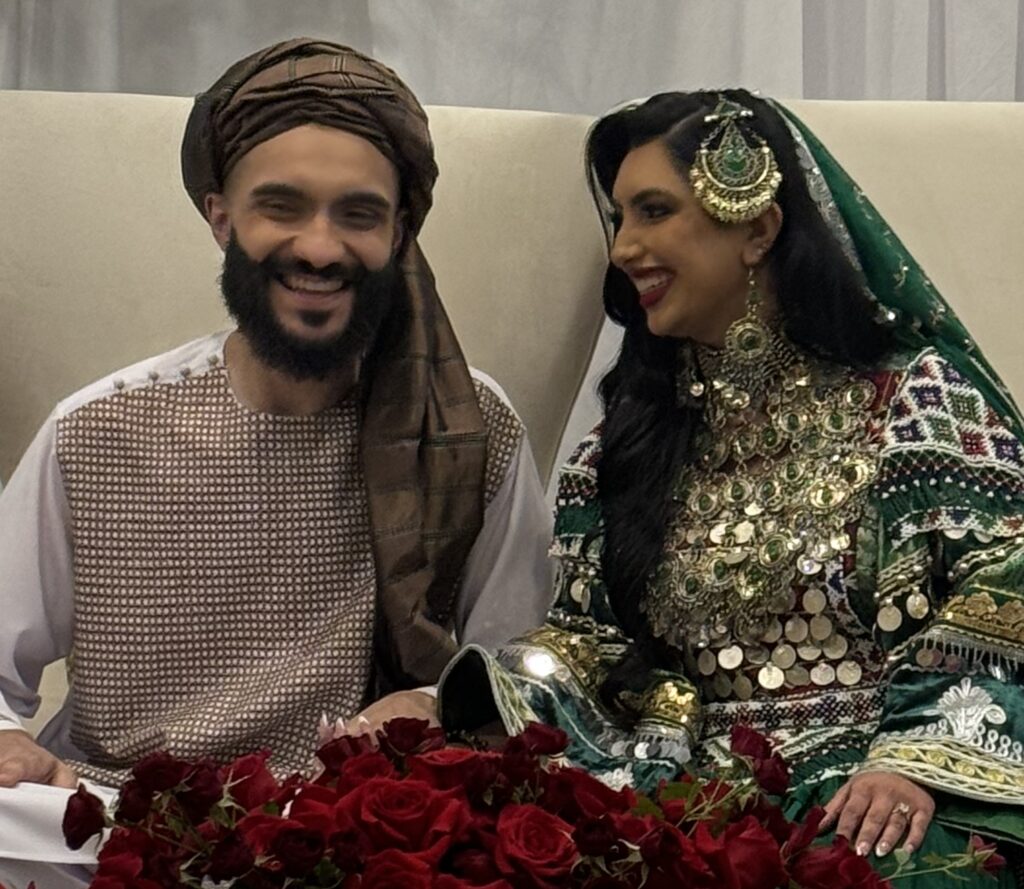
On ritual slaughter, Afridi was specific: “A lot of people don’t understand that when it comes to slaughtering animals, the Pashtun do it in a very specific way. And purity of women when it comes to marriage or menstrual cycles, those things are very, very important.”
Some Pashtun even cover the blood from slaughter with sand, a Jewish practice with no Islamic parallel.
When challenged on the origins of these traditions, traditions that appear nowhere in the Quran, Afridi’s answer is unequivocal: “A lot of the Muslims turn around and laugh at us and say, ‘What are you doing? What’s wrong with you? This is not a commandment in the Quran.’ And we, as Pashtun, say, ‘This is something that has been passed down our generations from father to father to father, and it’s our identity. You don’t have to follow it, because you’re not part of us. We do.'”
When pressed further, Afridi acknowledged the full weight of the question: “It’s not even in the Quran either. That’s the way we think. Where are we getting all this from?”
Meir Halevi, the spokesperson for the Sanhedrin, added a detail that has received far too little attention: the Pashtun elders possess Torah scrolls, the same Torah scroll tradition preserved by Yemenite and Iraqi Jews, written on parchment (gvil) in the ancient style. “They have the Torah scroll that the Yemenite and Iraqi Jews have, not the Ashkenazi version, not in Hebrew script as we know it today, but the same scroll. The pronunciation is a bit different, but they have the same scroll that we have, exactly the same thing.” The Pashtun, Halevi said, are preserving “over 56 mitzvot from the Torah, 56, which is a lot. Although they did not preserve everything, they did preserve major, major mitzvot.”
Yibum: The Law That Locks the Land in the Family
Of all the Torah practices preserved by the Pashtun, perhaps none is more revealing, or more legally specific, than yibum (levirate marriage). This is the Biblical commandment found in Devarim (Deuteronomy 25:5–6): if a man dies childless, his brother is obligated to marry the widow, so that the firstborn son of that union carries the name and inheritance of the deceased.
The purpose is precise: to keep ancestral land within the tribe. The nachalah, the tribal land inheritance, does not pass out of the family. The widow, once married in kiddushin, is part of the family. If her husband dies, she cannot remarry into another tribe and take the land with her.
Afridi confirmed the Pashtun practice without hesitation: “Levirate marriage — if your brother passes away, then you marry his wife. Yes, because it stays in the family continuity.”
On the tribal significance of this law, that a brother’s land cannot pass to another tribe, Afridi was clear: “Exactly. Yes.”
Halevi deepened the point: “It’s not only the land. By the Kabbalah, the neshamah (soul) of the person who died, the firstborn baby carries the same neshamah. It’s not only the land. the neshamah will not get lost.” The Pashtun are preserving not merely a land law but the principle, articulated in Kabbalistic terms they themselves do not use, that the soul of a man must continue through his lineage.
This is a particularly significant aspect of the marriage structure surrounding it. Pashtun do not intermarry with non-Pashtun. Marrying outside the tribe is strongly discouraged. The question of genetic contamination, whether centuries of intermarriage with non-Israelite populations undermines any claim to Israelite descent, is far less problematic for the Pashtun than for any other group making similar claims. Pashtun endogamy has been preserved precisely because the tribal framework gives it a reason: if you marry outside the tribe, the land breaks.
Nobody Could Conquer Them
For a claim of tribal continuity spanning 2,700 years to be credible, one thing is required: the people must have stayed together, in one place, long enough for the chain of memory to hold.
The Pashtun did exactly that.
The British tried to conquer them. The Soviets tried. The Americans tried. Alexander the Great tried. Genghis Khan tried. None succeeded. And through every invasion, every occupation, every attempt to absorb or destroy them, the Pashtun did not scatter, did not assimilate, did not surrender Pashtunwali.
“We’ve had the British try it, the Americans tried it, the Russians tried it, Alexander tried it as well,” Afridi said. “So we’ve had a lot of invaders come. And what’s protected us is Pashtunwali. Every other Muslim group around us; they buckled under pressure. But the Pashtun said, ‘No way. We are not going to abandon Pashtunwali.'”
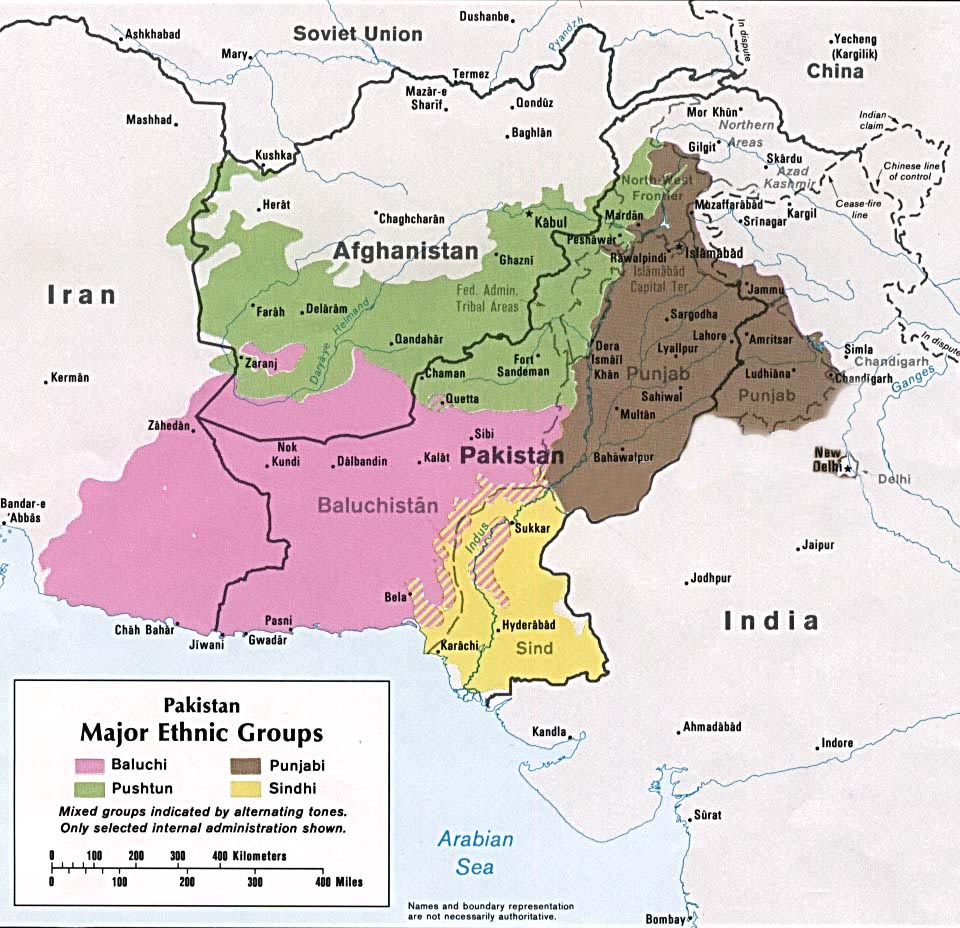
Halevi made the crucial genealogical observation: “The Pashtun, they stayed in one place. They did not move, they did not spread all over the world, like after the Second Temple. They went, they did not move. That is the difference.” He contrasted this with his own Levitical family, which remained in Babylon for 2,500 years, never moved, and thus maintained its genealogy intact through a documented chain.
The geographical explanation for the exile itself came from Afridi: “When the Assyrians attacked at around 722 BCE, they actually took us all the way to Afghanistan, and they enslaved us. They got us to come into the military, and they started to make us do the labor. So actually, as a group community, we were enslaved again, just like at the time of Pharaoh. So we didn’t really have much of a choice.”
This is the Assyrian exile, recorded in II Melachim (Kings) 17. Shalmaneser V besieged Samaria. His successor, Sargon II completed the conquest. The northern tribes were deported to Assyria, to the regions of Halah, Habor, the Gozan River, and the cities of the Medes. Afghanistan sits squarely along those deportation routes. The Pashtun never came back because, for twenty-seven centuries, no power was able to move them.
“We’ve Been Muslim for 1,500 Years, Pashtun for 5,000”
Afridi explained how Pashtun answer when asked whether they are Pashtun or Muslim first. He described the standard response given throughout Afghanistan, known to every Pashtun: “We’ve been a Muslim for 1,500 years, and we’ve been a Pashtun for 5,000 years.”
That response encodes the understanding that the Bani Israel covenant identity is older, deeper, and more fundamental than the religion imposed by Arab conquest. Islam came by sword, 1,500 years ago. Pashtunwali — Israel — goes back 5,000 years, before Egypt, before the exodus, before Sinai.
He was equally direct on what lies beneath the Muslim surface: “The side of me that is a Muslim, and every Pashtun is, it’s just a thin mask. And underneath the mask is a Yehudi.”
Afridi was blunt about the impostors making comparable claims: “I take a lot of great offense when I see people around the West claiming to be Israelites from everywhere. Because we, despite being converted to Islam, made sure, under all the pressure, with all the people around us trying to influence us to let go of Pashtunwali, we bled for that, we died for that. And we didn’t have any missionaries coming to Afghanistan. We didn’t have any Zionists come over there and teach us all this. If you will do the research, the maximum length of their whole claim goes not more than 250 years. But with us, it goes for 2,700 years.”
The Conversion: Forced Islam Over Israelite Bedrock
The Pashtun conversion to Islam was involuntary, a choice between conversion and death.
“This is when the Arabs invaded those certain areas,” Afridi explained. “They actually, to a certain extent, post-conversion, either you had to convert, or you die. So a lot of my people actually converted under those circumstances. But at the same time, even though they did convert, they kept Pashtunwali, which had the oral traditions from the Torah that were going on for the last 2,700 years.”
Even as Muslims, the Pashtun have maintained the argument among themselves about what they actually are. Afridi described the internal debate he has with fellow Pashtun Muslims: “I say that the Pashtun are actually not the Muslims. I say that you can’t keep one foot in Islam and one foot in Judaism. Because who, who were Bani Israel? We were the followers of the Torah, we were the followers of Musa (Moshe), we were the followers of all the prophets and all the sages and all the literature and scholarship that was left. When Islam came, we adopted it. Before that, our identity was based on the Torah. It was based on being Israel.”
Afridi even argued that the Quran itself supports the return: “I shared with the rabbi a scripture from the Quran where it says to the people of Bani Israel: ‘Come and fulfill your covenant with Me, and I’ll fulfill Mine with you.’ That’s a commandment that even the Muslims believe in their book. So the Pashtun don’t have a choice. If we’re going to be accepting the way of Bani Israel, then we have to accept the covenant. We have to accept the God of Abraham. We can’t escape from that. We can’t hold two watermelons in one hand.”
The personal cost of speaking openly is real. “I’ve been excommunicated from all mosques,” Afridi said. “I’m not allowed to walk into any mosque, I’m not allowed to walk into any gathering, because they think that I’m an Israeli spy or an agent, just because I claim to be from Avraham and from Bani Israel.”
The Sanhedrin Weighs In
Mehra Halevi is the spokesman for the reconstituted Sanhedrin, the body working toward the halachic and prophetic preparation for the Third Temple; his engagement with Afridi is itself a statement of institutional seriousness.
Halevi has a framework for evaluating claims of Israelite identity, and the Pashtun satisfy it at the highest level. There are, he explains, three categories: those with very strong signs that they are Israelites; those with some clues; and those with no credible claim. “The one that has very strong and very strong signs are the Pashtun, because again they have the Torah scroll, they have the Pashtunwali, and they are preserving over 56 mitzvot from the Torah. And although they were forced to be Muslims, they still kept Pashtunwali.”
Halevi compared this to other groups claiming Israelite identity: “For instance, people that came from Africa to the US, they don’t know. You ask each one of them which tribe they’re from. Nobody knows. And now they’re saying, ‘Oh, we are the Israelites. Why? Because we decided.’ But they have no clue, nothing.”
To illustrate the contrast, Halevi told the story of an Israeli intelligence officer named David, sent to Kenya after the 1976 Entebbe rescue operation to help train the Kenyan military. At a celebratory feast, a Maasai general, drunk and furious that the Israeli refused to eat non-kosher food or drink alcohol, threatened him. The Israeli’s response cut to the heart of the matter. He said to the general, “200 years ago, the Arabs hunted people from Africa and sold them as slaves to the United States. After 200 years, I went there and asked people who looked like Maasai: ‘From which tribe?’ Nobody knew. So how come you were out of your country for 2,500 or 2,700 years, and everybody still knows if he’s an Afridi, or a Rabbani, or a Gadun? How can it be?”
The Maasai general’s answer: “This is only God’s work.”
Halevi’s conclusion: “Nobody could steal the Pashtun’s identity. Although there are many claims that they are Israelites, nobody could steal their identity. And this is only God’s work. This is not something beyond any social scientists.”
The Sanhedrin has now directly engaged with Afridi. Halevi arranged a meeting on the Temple Mount, Har HaBayit, with Afridi and Rabbi Yisrael Ariel, one of the most prominent halachic authorities working toward Third Temple preparation. When the Pashtun stand on the Temple Mount discussing the return of the Ten Tribes, the prophecy of Zechariah 10 ceases to be theoretical.
Two Kinds of Exile
In the most theologically significant exchange of the conversation, Halevi introduced a distinction that illuminates the entire situation of the Lost Tribes.
“There are two kinds of exile,” he said. “The first exile is when we moved from the land of Israel to other countries, this is exile of place. There is an exile of identity, when somebody loses part of their identity. They did not lose all their identity, but they lost the Torah side, the mitzvot side. So it is like another exile.”
The Pashtun are in both types of exiles, but they are far ahead of most lost tribes on both counts. They know who they are. They maintained the practices. What has been lost is the full brit, the covenant understanding, the theological framework that explains what Bani Israel means before God, with its obligations and its promise of the land.
The path forward, as Halevi laid it out, has a clear sequence: “First they have to come back from the identity exile. This is the first step. Then comes the physical exile. Then they’ll come back from the physical exile.”
Afridi accepted this framework entirely. “My mission is to try to actually awaken the Pashtun people, that this is who we are. We have to stand with our Yehudi and Levi brothers, no matter what, thick or thin, and we have to protect our land and protect our traditions and unite.”
The personal cost of the mission was starkly demonstrated at Ben Gurion Airport, where Afridi was held for several hours upon arrival. He described the interrogation: “I actually tried to tell them that I’m from the tribe of Ibrahim, and that I’m here on a historical religious heritage tour, and I’ve got to ask questions and discuss a few things with a few rabbis to learn a bit. But unfortunately, that just went in one ear and out the other.” Only Halevi’s intervention, explaining to airport security that Afridi was an expert in Islamic affairs needed for religious dialogue, secured his entry. Without it, he would have been deported.
The secular Israeli state is the obstacle. “I tried to contact the Israeli government from Australia,” Afridi said. “I tried to contact the consulate. They’re too secular for this.” Berkowitz, writing about the encounter, noted that the Sanhedrinm, not the government, is the institution proving itself capable of rising to the prophetic moment.
The Scientific Evidence
The traditional and oral evidence is already substantial. Science is now beginning to catch up.
In 2006, Dr. Navras Jaat Aafreedi, an Indian historian conducting research at Tel Aviv University, studied possible Israelite descent among certain Muslim Indian groups. His findings: approximately 650 out of 1,500 members of the Afridi Pathan clan in Malihabad, India, may carry genetic material shared by nearly 40 percent of Jews worldwide. If confirmed, it would be the first genetic evidence directly linking the Afridi Pathan to the ancient Israelites.
The connection is not new to Israeli scholarship. Israel’s second president, Yitzhak Ben-Zvi, addressed it in his 1957 book The Exiled and the Redeemed, identifying the Pashtun as “the exiles from Samaria.” He wrote that the Afghan tribes “retain to this day their amazing tradition about their descent from the Ten Tribes. It is an ancient tradition, and one not without some historical plausibility… if the Afghan tribes persistently adhere to the tradition that they were once Hebrews and in the course of time embraced Islam, and there is not an alternative tradition also existent among them, they are certainly Jewish.”
A president of Israel said the Pashtun are certainly Jewish. A Mossad operation in the 1980s confirmed their existence and their practices, and then sent them home because the secular government found them too threatening. In that operation, the Mossad brought a group of Pashtuns to Israel for evaluation alongside a group of Ethiopian Jews. Halevi described what followed: “They saw that with the Ethiopian Jews, they could make them settle very fast because they’re very modest. But they saw that the Pashtun are very fundamental, very strong.” When microphones planted in the Pashtun delegation’s quarters picked up their frank discussions about how they would handle Israel’s secular government upon arrival, the delegation was sent back to Afghanistan. The reported verdict of the Mossad chief: “To bring here 56 million Kahanists from Kahana? We don’t need them here. It’s better they stay there.”
A people who preserved Torah law for 2,700 years, who maintained their tribal identity through every conquest in human history, were turned away by Israel’s secular intelligence establishment. The irony is total.
What the Bible Says: The Prophetic Framework
The return of the Lost Ten Tribes is a major theme in Biblical prophecy, central to the prophetic vision of the Final Redemption. The prophets return to it with an insistence that refuses to be explained away.
Yechezkel (Ezekiel) set out the master prophecy of reunification: “Thus says the Lord God: I will take the children of Israel from among the nations to which they have gone, and will gather them from every side and bring them into their own land. And I will make them one nation in the land, upon the mountains of Israel; and one king shall be king to them all. And they shall no longer be two nations, neither shall they be divided into two kingdoms any more at all.” (Yechezkel 37:21–22)
Two kingdoms, the kingdom of Judah and the kingdom of Israel, were divided after the death of Shlomo HaMelech (King Solomon). Both went into exile. Only Judah came back. The prophecy of Yechezkel is that the full reunification of all twelve tribes under one king is the definition of the completed geulah (redemption). Not a partial return. All of them. On the mountains of Israel.
The prophet Hoshea (Hosea) spoke directly to the northern tribes , to Ephraim, the leading tribe of the northern kingdom, which is precisely the tribe to which Yusufzai Afridi belongs: “Yet the number of the children of Israel shall be as the sand of the sea, which cannot be measured nor numbered. And it shall come to pass that in the place where it was said to them, ‘You are not My people,’ there it shall be said to them, ‘You are the children of the living God.’ And the children of Judah and the children of Israel shall be gathered together.” (Hoshea 2:1–2)
Ephraim is the symbol of the northern tribes throughout prophecy for a reason. It was the leading tribe of the northern kingdom. Its territorial allotment sits in the heart of the ancient land of Israel. Halevi cited Zechariah directly: “In Zechariah chapter 10, it says very clearly that Ephraim will own the Gilead. Nowadays, it’s Jordan, Syria, and Lebanon. And it says they will also have the Lebanon.”
The Zechariah passage reads: “I will strengthen the house of Judah, and the house of Joseph I will save. I will bring them back, because I have mercy on them. Those of Ephraim shall be like a mighty man, and their heart shall rejoice as if with wine. I will whistle for them and gather them, for I have redeemed them; and they shall increase as they once increased. I will sow them among the peoples, and they shall remember Me in far countries; they shall live, together with their children, and they shall return.” (Zechariah 10:6–9)
God will whistle for them and gather them. The Pashtun of Kunar Province are remembering, in far countries, exactly what this verse describes.
Isaiah goes further. Chapter 11 describes the ingathering as following the revelation of the Messiah: “And it shall come to pass in that day that the Lord will set His hand again the second time to recover the remnant of His people that shall remain, from Assyria, from Egypt, from Pathros, from Cush, from Elam, from Shinar, from Hamath, and from the islands of the sea. He shall set up a banner for the nations, and will assemble the outcasts of Israel, and gather together the dispersed of Judah from the four corners of the earth.” (Yeshayahu 11:11–12)
From Assyria. The ten tribes were exiled to Assyria. Their descendants are in Afghanistan and Pakistan. Halevi extended the geographic reading of the verse: “God will bring all the descendants of Israel — from Asher, from Elam, from all over — and from the far islands, which is Japan, Ireland, Scotland, and from the US, and from all over the world.”
Amos frames the entire restoration in terms of David’s fallen kingdom: “In that day I will raise up the tabernacle of David that is fallen, and close up its breaches; I will raise up its ruins, and rebuild it as in the days of old.” (Amos 9:11) The tabernacle of David, the united monarchy, cannot be rebuilt with two tribes. It requires all twelve. It requires Ephraim coming home.
Halevi situated the current moment in this prophetic sequence precisely. He pointed to Israel’s military performance against Iran, a nation nine times larger in population, seventy times larger in territory, as a visible sign of divine engagement: “Now, when people see that, then they ask questions. How come Israel is winning? How come Israel is prospering? And when they answer that, it is because of the connection to God, and that changes everything. So now many, many Pashtun are coming back to their original identity, which is Beni Israel.”
Identity Is the Battlefield
A thread runs through the entire story that goes beyond genealogy, beyond Torah practice, beyond prophecy. It is the question of identity itself, and who is trying to steal it.
In the West, identity is dissolving. Borders are erased. Histories are rewritten. Children are raised without knowing what they are. But in the mountains of Afghanistan, fifty million people can answer in seconds which tribe they come from, going back 2,700 years. “Every Pashtun knows who their tribe is,” Afridi said. “They have to know. If they don’t, and if they don’t practice Pashtunwali, they’re not considered to be a Pashtun.”
Halevi was direct about what this contrast demands: “God wants everybody to be themselves. We say to the Pashtun: be Beni Israel the way God wants you to be Beni Israel. Not the way we’ve decided. We want God’s kingdom. We want God to rule. And the moment that will happen, everybody will prosper and thrive.”
The corollary is equally important: anyone standing in the place of a tribe of Israel without genuine descent from Israel is blocking the true heir from returning to his land. The prophetic inheritance is not transferable. It cannot be claimed by declaration, by religious affiliation, by sympathy, or by political alignment. It passes through the father, generation by generation, the way Afridi’s identity passes through his father’s line from Yusuf ben Yaakov.
Afridi drove the point home with an incident from his own airport interrogation. Held for twelve hours by a Yemenite Israeli security officer who kept using the word “Jews,” Afridi interrupted him: “I said: ‘You’re not, you’re Banu Hashim. You can be Jewish, but you’re Arab. But when I talk about Beni Israel, I’m talking about the children of Yaakov.’ And he looked at me, stunned. I told him, because it’s reality. We’re not afraid of who we are. I’m proud of being the son of Yaakov. I’m proud of being the son of Israel, and belonging to the nation of Bani Israel. And this is what I really don’t like, when other people try to steal our identity. Because for a minute, I felt that I’m sitting in my land. This is my forefathers’ land. This is what we should live for. And I’m being asked by someone, ‘What are you doing here?'”
The Awakening
Something is moving across the region. Israel’s wars have cracked open questions that generations of silence had suppressed. Iranians are identifying as Parsim — Persians, descendants of Cyrus — and rejecting the Islamic Republic as a foreign imposition on their true identity. Lebanese are turning toward Israel after decades of Hezbollah domination. And Pashtun across Afghanistan and Pakistan are asking, with increasing urgency, what their Bani Israel identity actually demands of them now.
“Many, many Pashtun are awaking right now,” Halevi said. “They are awaking to know that the miracles that Israel has, now it’s very obvious to everybody why. Because when we have the war against Iran, Iran is seventy times bigger than Israel in landscape, nine times bigger in population, and yet Israel is winning, and yet Israel is strong. Why is that? Because these are miracles from God.”
The Wahhabis are fighting back. Afridi described the social cost for Pashtun who openly identify with Israel: “The ones that I’ve been doing a lot of discussion and talking to, they do want to come back to their land and reunite with their brothers. But the Wahhabis make it very difficult. They actually put targets on people’s backs. Even me, in Australia.”
The awakening is happening anyway. As Halevi put it: God has already signed the check. When He cashes it is a question of prophetic timing, not prophetic certainty. “It doesn’t matter what everybody will do,” Halevi said. “This will happen.”
Afridi’s Mission
Asked what he wants to do now that he stands openly as Bani Israel, Afridi’s answer was direct.
“My mission is to try to actually awaken the Pashtun people, that this is who we are. We have to stand with our Yehudi and Levi brothers, no matter what, and we have to protect our land and protect our traditions and unite.”
On the theological position, he was equally clear: “I don’t believe in creating new movements, new religions. I believe in whatever we had originally, what the Levites taught at Mount Sinai. We should go back to that, because that’s what was given. What we were given on Mount Sinai is exactly what we have to come back to. We don’t have the authority to make up anything new.”
On the land question, Afridi knows where Ephraim is. He can point to it on a map. The land has been waiting twenty-seven centuries for its rightful heirs.
His answer on timing: “God willing, it’s all up to Hashem. At the end of the day, it’s God’s plan. He’s already written the check. And when the check is going to come due, that’s up to Him.”
The prophet Zechariah wrote that Ephraim would be like a mighty warrior, that their hearts would rejoice, that God would whistle for them and gather them, because He redeemed them. Yusufzai Afridi sat in Jerusalem. He stood on the Temple Mount. He is from the tribe of Ephraim.
God is whistling. And Ephraim is listening.
