
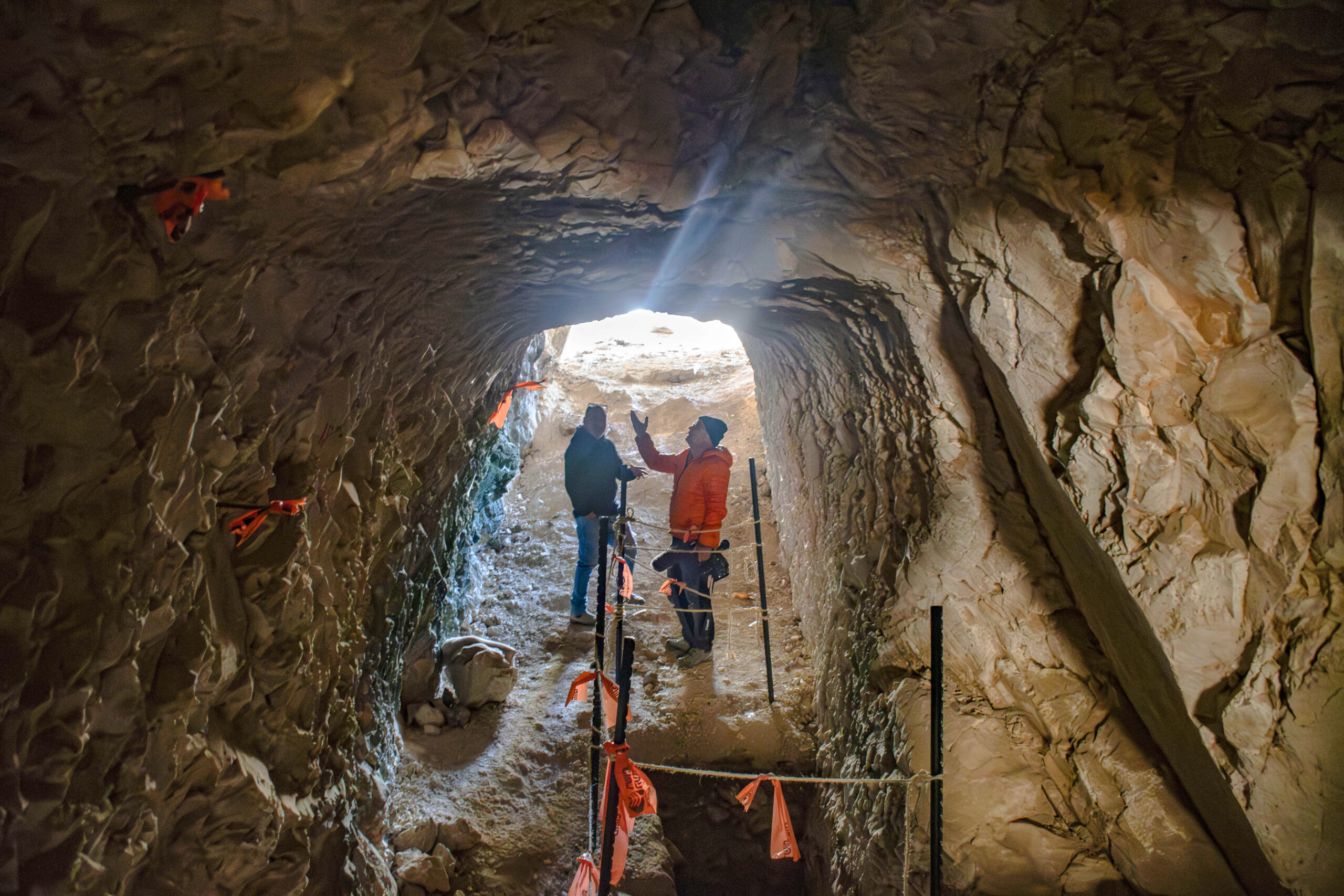
Workers breaking ground for a new Jerusalem neighborhood near Kibbutz Ramat Rachel got more than they bargained for. Archaeologists from the Israel Antiquities Authority, conducting excavations ahead of construction promoted by the Israel Lands Authority, uncovered a massive ancient tunnel hewn through bedrock — 50 meters long, up to 5 meters high, and 3 meters wide — and after examining every possibility, they still cannot say who built it, when, or why.
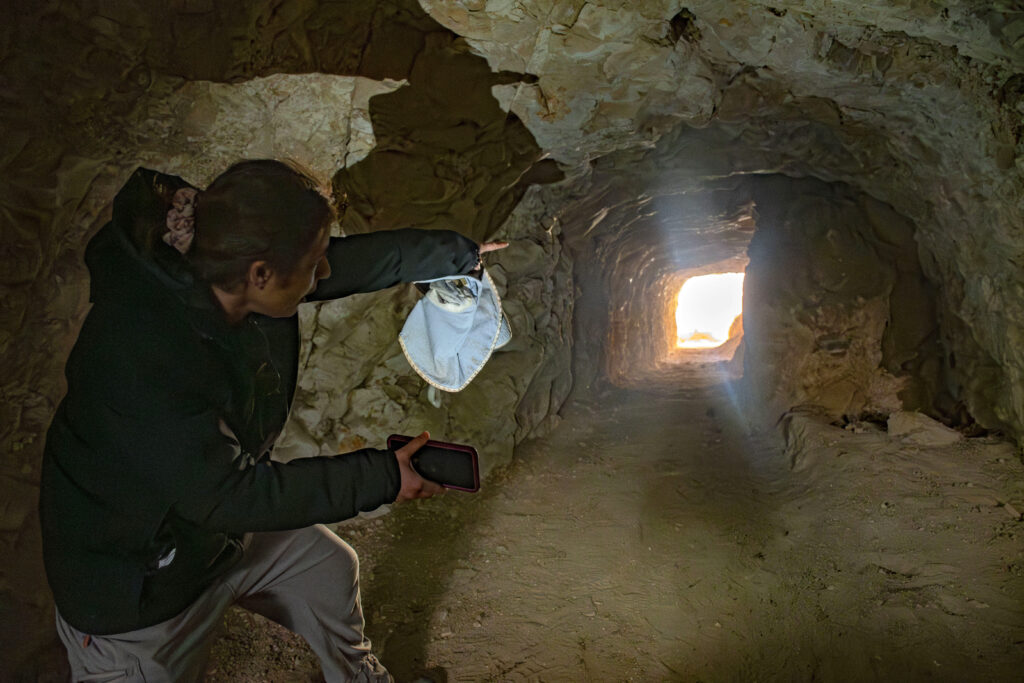
“We were excavating in relatively rocky and exposed terrain when suddenly we discovered a natural karstic cavity,” said excavation directors Dr. Sivan Mizrahi and Zinovi Matskevich. “To our amazement, as the excavation progressed, this cavity developed into a long tunnel. Parts of it are still collapsed, so the tunnel has not yet revealed all of its secrets.”
The Talmud Yerushalmi (Jerusalem Talmud) teaches that Yerushalayim — Jerusalem — is a city whose secrets are inexhaustible. The prophet Jeremiah wrote: “Thus said the LORD: Let not the wise man glory in his wisdom, neither let the mighty man glory in his might, let not the rich man glory in his riches; But let him that glorieth glory in this, that he understandeth and knoweth Me.” (Jeremiah 9:22-23). Jerusalem has a way of humbling the scholar and the engineer alike.
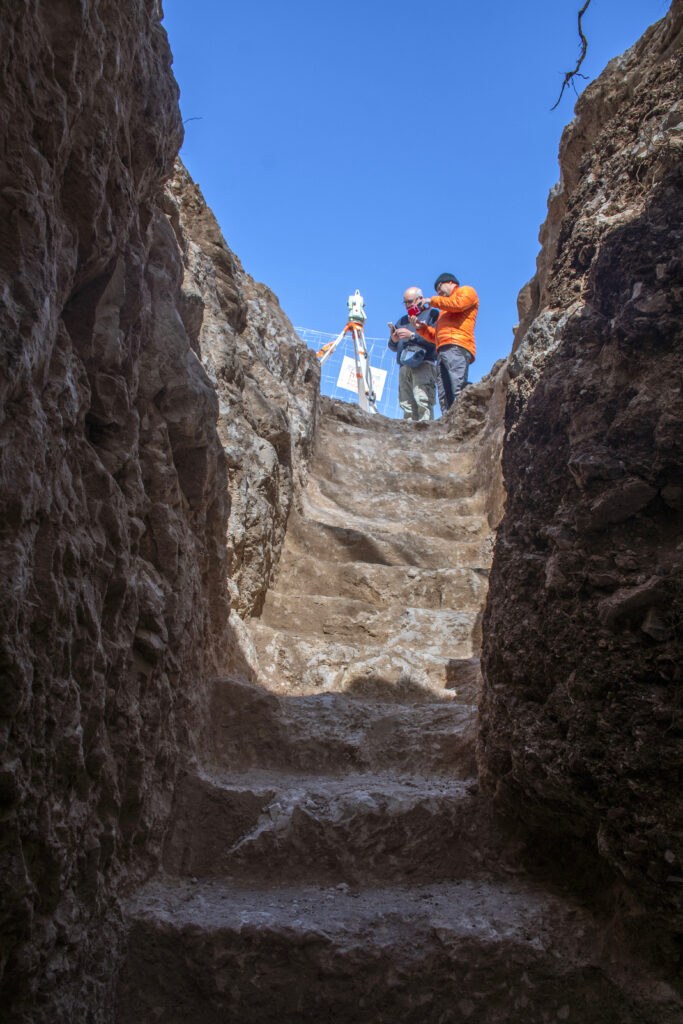
The tunnel entrance was accessed through a staircase descending from the surface to a hewn opening. Inside, the tunnel was packed with layers of soil accumulated over what researchers estimate could be hundreds — or thousands — of years. The quarrying, according to the excavation directors, “was executed meticulously,” showing that whoever built this invested tremendous resources, careful planning, and significant manpower.
Every explanation the archaeologists have proposed has been ruled out. It could not have served as a water installation, as the walls are not plastered and no underground water sources are known in the area. It is unlikely that it served as an underground agricultural or industrial installation, as nothing comparable exists nearby and the scale is far too ambitious for such a purpose. The current working theory is that the builders were after chalk suitable for quarrying building stones or producing lime. A ventilation shaft carved into the ceiling and quarrying debris on the floor point in that direction — but even this remains uncertain. It is also possible that the project was simply abandoned before completion, leaving its purpose permanently buried.
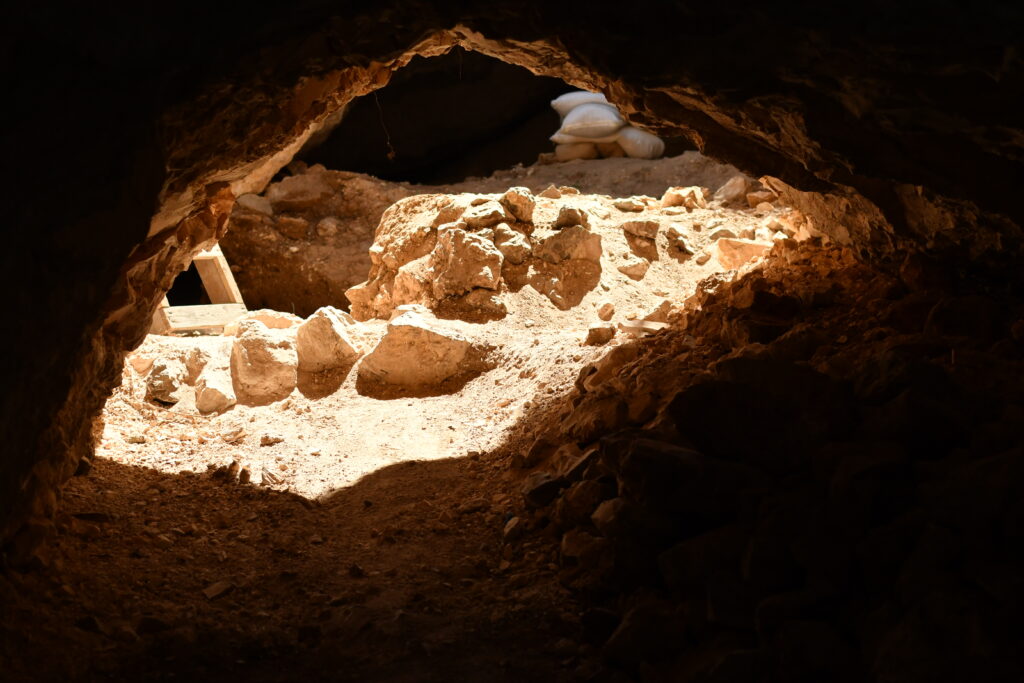
The dating is equally elusive. “Not even the smallest find was uncovered that could indicate when it was created,” said Dr. Mizrahi and Matskevich. What the archaeologists do know is that the tunnel sits just a few hundred meters from two major ancient sites: a public building from the Iron Age — the period of the First Temple — in the nearby Arnona neighborhood, and Tel Ramat Rachel, where settlement remains span from the Iron Age through the Islamic period.
Dr. Amit Re’em, Jerusalem District Archaeologist at the Israel Antiquities Authority, was direct: “Usually we have explanations for the discoveries we uncover, but sometimes, as in this case, we stand astonished and amazed.”
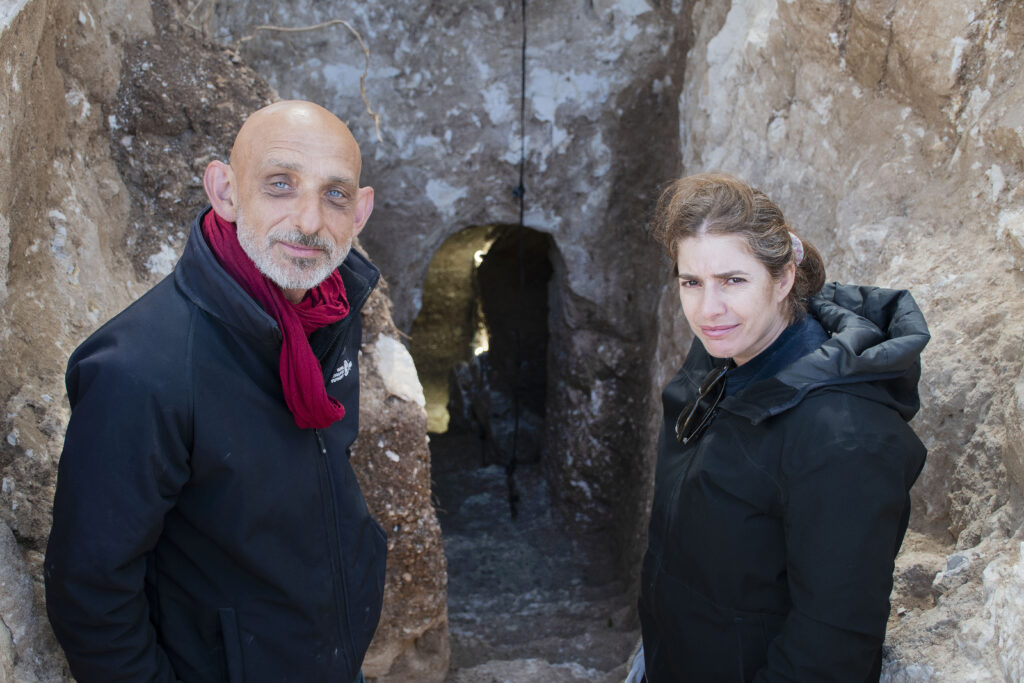
The excavation directors of the Israel Antiquities Authority at the entrance to the ancient complex. Photo: Yoli Schwartz, Israel Antiquities Authority
Shikma Sig, Jerusalem Region Planner at the Israel Lands Authority, said: “The Israel Lands Authority promoted the plan north of Ramat Rachel, which includes a residential quarter alongside a unique archaeological park that will be established for the benefit of residents. The neighborhood offers a rare combination of modern urban development and preservation of historical heritage, providing the future community with a green open space that makes the treasures of history accessible just beneath their homes. The Israel Lands Authority is proud to advance sustainable urban development for the benefit of Jerusalem residents and the citizens of Israel as a whole.”
According to Israeli Minister of Heritage Rabbi Amichai Eliyahu, “During Jerusalem Day week, this special discovery reminds us of the deep and ancient connection of the Jewish people to Jerusalem. Beneath the city’s soil, extraordinary enterprises of life, creativity and construction are revealed time and again, testifying to generations of people who lived and worked here and left their mark. Jerusalem is not only the present-day capital of the State of Israel – it is also the heart of the historical story of the Jewish people, which continues to be uncovered before our eyes.”
The discovery is planned for incorporation into an archaeological park as part of the new neighborhood, which will include 488 housing units, commercial space, a school, and kindergartens across approximately 58 dunams north of Ramat Rachel.
Jerusalem has been conquered, destroyed, rebuilt, and excavated for millennia — and it still keeps its secrets. Every shovel that goes into its soil is a reminder that the story of this city is longer, deeper, and more layered than any living civilization fully grasps. The tunnel under Ramat Rachel is not just an archaeological puzzle. It is evidence that the people who walked this land before us — whoever they were — did not do so lightly. They carved into the mountain. They left their mark. And Jerusalem, faithful as ever, kept it waiting.