




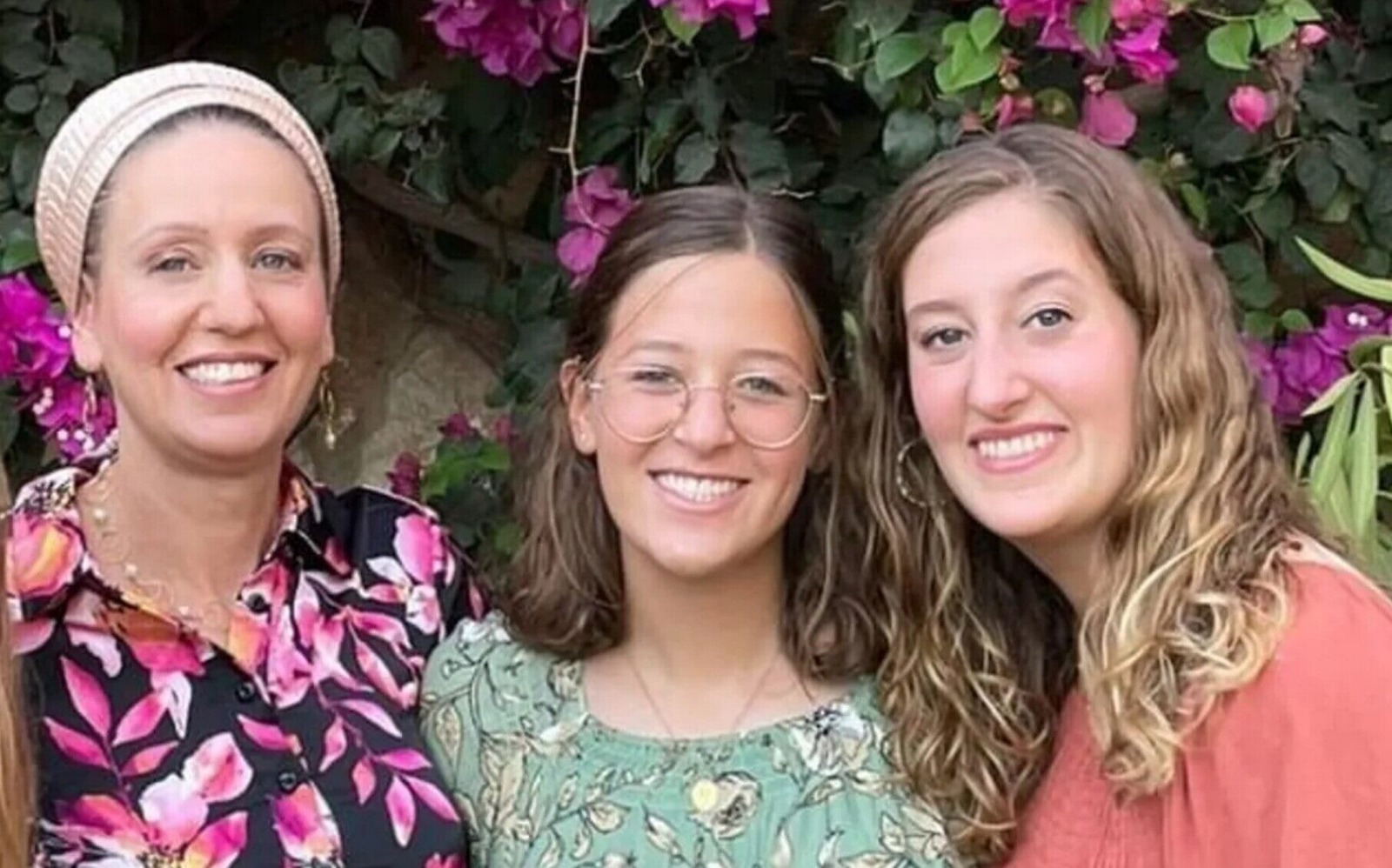
Lucy Dee was British. She didn’t have to come.
In 2014, she and her husband, Rabbi Leo Dee, made a decision that most people in their position never make. They had a life in London. They had community, family, roots. They packed it up and moved to Efrat, a small town in the biblical heartland of Judea. Lucy found work teaching English. Their children grew up in Israeli schools, joined Israeli youth groups, and built Israeli friendships. The Dee family planted themselves in this land and called it home.
On the second day of Passover 2023, Lucy drove north with her daughters Rina, fifteen, and Maia, twenty, to celebrate the holiday with family. Near the Hamra junction in the Jordan Valley, terrorists opened fire on their car. Rina and Maia were killed at the scene. Lucy, critically wounded, was airlifted to Jerusalem. She died two days later.
Before she died, her organs were donated. Five people are alive today because of that decision.
The Dee family left London for a land they chose rather than inherited, planted roots in its soil, and died on its roads. If that story sounds ancient and biblical, it’s because it is.
The book that tells their story
Three thousand years before the Dee family chose to plant their lives in this land, another woman made her own version of that choice.
Ruth was a Moabite. Her husband was dead. Her mother-in-law, Naomi, was releasing her from any obligation, sending her home. Ruth’s sister-in-law kissed Naomi and walked away. The text never mentions her again.
Ruth stayed. And the words she spoke to Naomi have echoed across every generation since:
“Where you go, I will go. Where you die, I will die. Your people will be my people, and your God will be my God.” (Ruth 1:16)
The entire Book of Ruth turns on a single Hebrew word: chesed. Most translations render it as “kindness,” but that loses something. Chesed is loyalty that keeps showing up when it has every reason to walk away. Boaz praises Ruth directly: “You have shown more chesed at the end than at the beginning” (Ruth 3:10). And when Naomi learns Ruth has been in Boaz’s field, she says: “Blessed be he of the Lord, who has not forsaken his chesed” (Ruth 2:20). In the Hebrew, “his chesed” is deliberately ambiguous — Boaz’s loyalty and God’s loyalty occupy the same phrase, and the text doesn’t resolve it. That ambiguity is the point.
When a human being chooses chesed, this book is saying, they participate in something divine.
Lucy Dee chose Israel when she didn’t have to. She taught its children, walked its hills, and died on its roads. “Where you die, I will die” was not poetry for the Dee family. It was a life they actually lived.
Read it with that in mind
The Israel Bible edition of Ruth was built to open this kind of reading: English translation, commentary, and full Hebrew transliteration, so you can follow every word of the original text and catch what the English alone doesn’t show. This edition is dedicated to Lucy, Rina, and Maia Dee. All proceeds support the memory of Israeli terror victims.
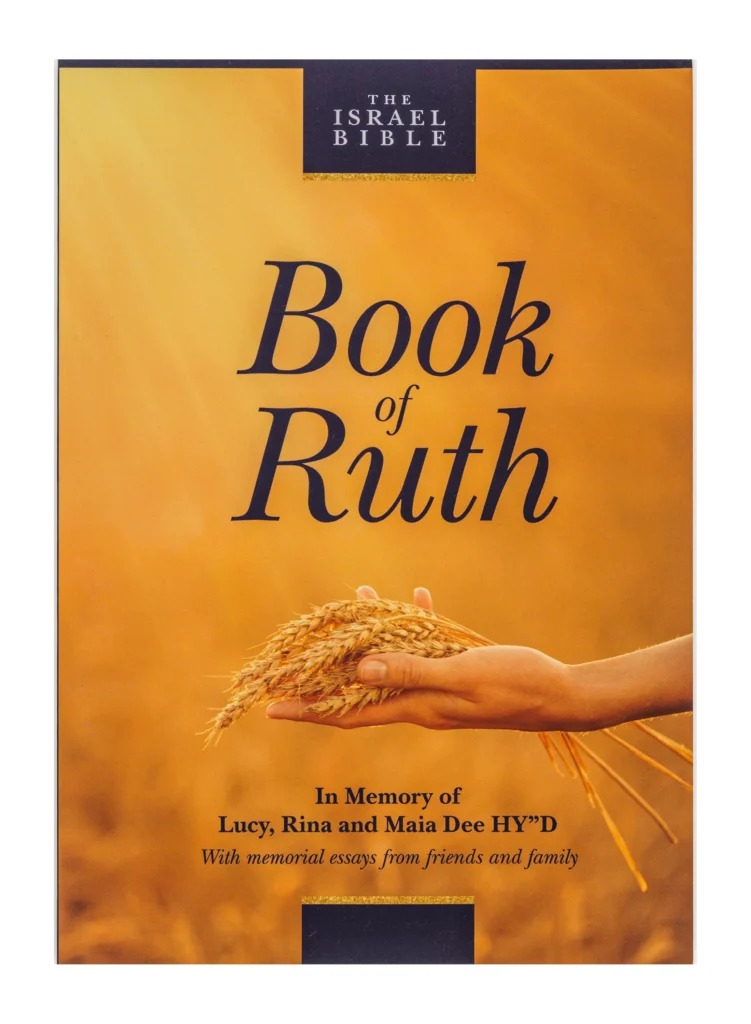
Shavuot begins next week. Order now to receive your copy and a free Shavuot Study Sheet in time for the holiday.
If you’ve read Ruth before, you’ve read a great story. Read it now, and you may find you’re reading something closer to a witness account.
