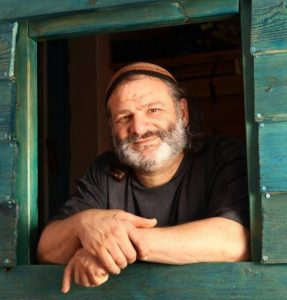

Ethan Castleberry spent most of his adult life training himself to be the person who shows up for others in crisis. He went to Iraq at 17, came home and built a real estate portfolio, returned to the military as a chaplain, worked emergency rooms and ICUs at a hospital in College Station. Showing up for people in their worst moments was what he did. It was, in a certain sense, his whole identity.
Then in 2020, his wife was diagnosed with cancer. The surgery ran fourteen hours. COVID restrictions kept him out of the hospital, so he found himself alone in a hotel room next door, sneaking past nurses just to reach her. Her employer paid for the hotel and sent gift cards for food. The church rallied around them. “I’m supposed to be the pastoral person,” he told Rabbi Rami Goldberg on a recent episode of Biblical Money, the podcast exploring faith, finance, and business. “But now suddenly the church is ministering to me.” A year later, he woke up one morning and couldn’t hear out of his left ear. A brain tumor.
What he took from those two years wasn’t bitterness. It was the recognition that he had been living a divided life. For years, faith and work sat in separate compartments, fighting each other constantly without his fully understanding why. The chaplaincy, the real estate, the pastoral work at his father’s church – he moved between them as though they belonged to different people. The illness forced a reckoning. “I wish I would have had a more integrated life,” he said. “I kept those separate and they were fighting each other constantly.”
Getting knocked flat, it turned out, was what it took to finally put them together.
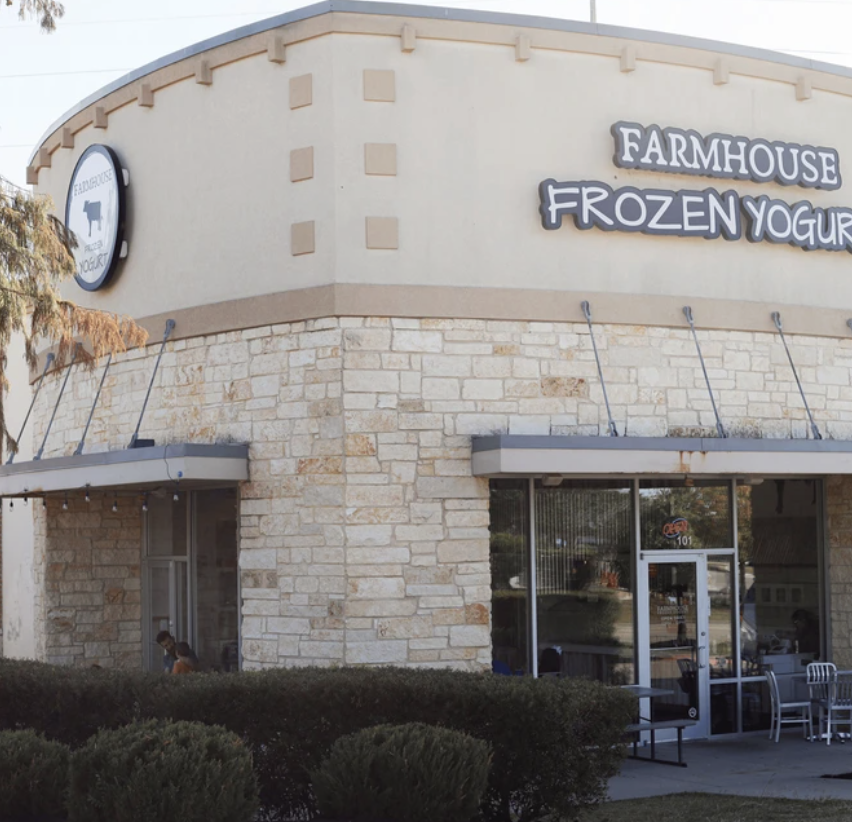
Ethan and his wife sold the house, the cars, and a mobile home park he’d been running in East Texas, and moved onto eleven acres outside College Station to build a house from scratch and raise chickens, goats, and cows. Then a phone call came about a couple of frozen yogurt shops for sale. He didn’t know much about the yogurt business. He jumped in anyway, and Farmhouse Frozen Yogurt now serves the overflow of 80,000 Texas A&M students up the road and is heading into franchising.
The yogurt shop sounds like an unlikely destination for a story about faith and vocation, but it’s actually where the integration he was always searching for finally shows up in practice. Sixteen-year-olds come in for their first job and learn what it means to show up on time, follow through on a commitment, and take pride in something as unglamorous as mopping a floor correctly. Kids ride skateboards past the window with no money and get waved in for free yogurt and a real conversation. “Hard skills anyone can get,” Ethan said. “Soft skills have to be developed.” He learned that in the army. Now he passes it on across a frozen yogurt counter, as a pastor, a mentor, and a business owner – roles that no longer fight each other because he finally stopped treating them as separate things.
The word Ethan keeps returning to is stewardship. Not ownership, not success, but stewardship – of the business, of the young people who walk through his door, of whatever God places in his hands for this particular season. It’s a different posture than the one he carried in his earlier years, when he was determined to be the strong one who never needed anything from anyone. Those two years in 2020 and 2021 burned that out of him. He’s grateful for it.
Rabbi Rami noted the parallel in Jewish tradition. The Talmud teaches that illness is an invitation to examine your life honestly and ask what needs to change. Ethan didn’t need the Talmud to arrive at that conclusion. He learned it alone in a hotel room, sneaking past nurses, finally understanding that the divided life he had been living was always meant to be one thing.
Watch the full episode at Biblical Money: Exploring Faith, Finance, Bible & Business with Rabbi Rami Goldberg.