



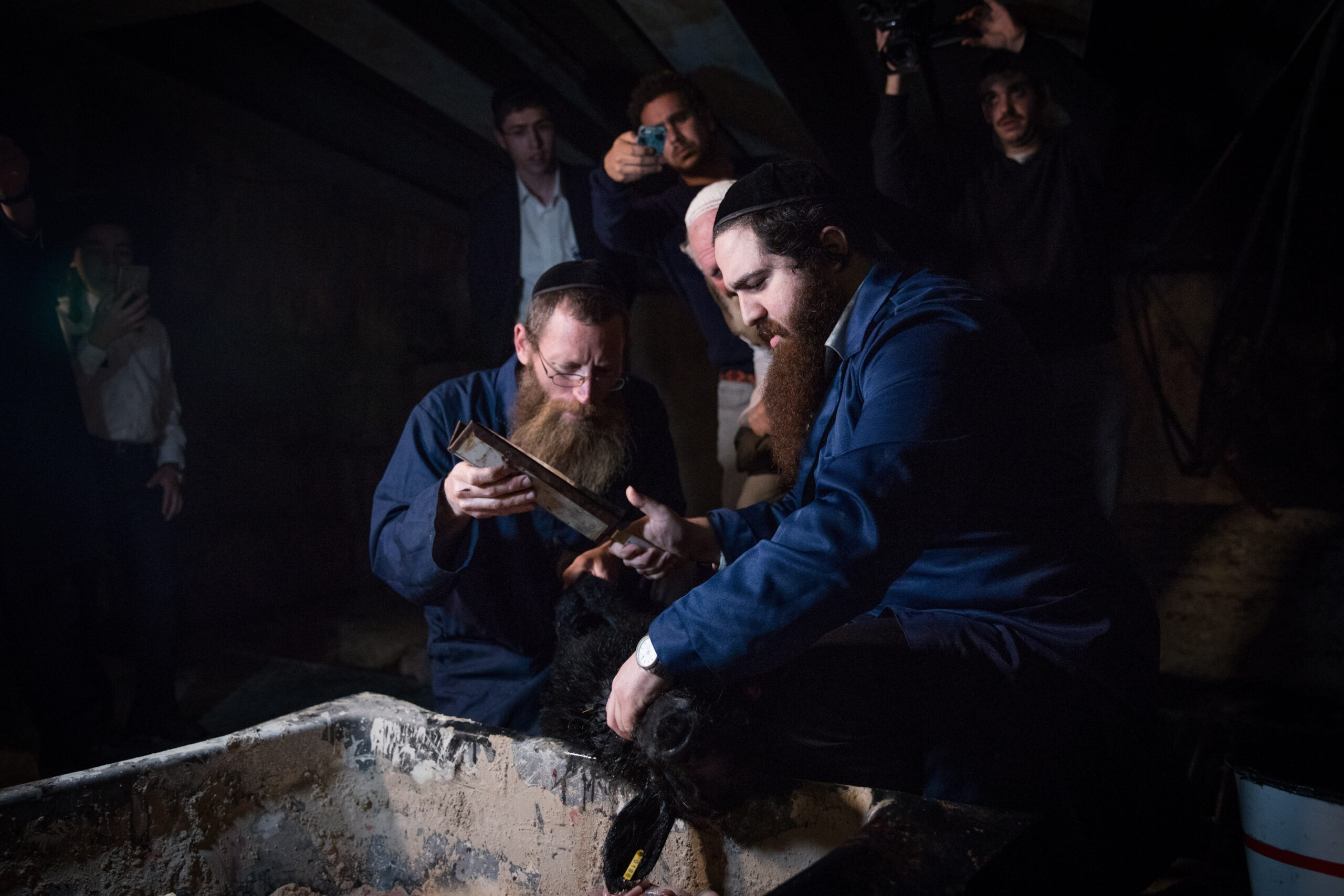
Israeli police moved quickly at the gates of the Temple Mount on Friday, stopping a group of 21 Jewish activists who attempted to force their way into the compound carrying a young goat intended for ritual sacrifice of the Pesach Sheni (Second Passover). The incident, which unfolded amid heightened security ahead of Muslim Friday prayers, ended with 21 suspects detained, only to be released shortly afterward by the courts, underscoring the ongoing tension between religious aspiration and security policy at Judaism’s holiest site.
According to Israel Police, officers identified a group of youths approaching one of the gates to the Mount, some carrying a goat and a slaughtering knife. The group reportedly bypassed a checkpoint and attempted to breach the compound. Police and Border Police forces blocked their advance and detained or arrested the suspects for questioning, citing disruption of public order and the sensitivity of the site.
The attempt is rooted explicitly in the Bible’s account of Pesach Sheni, a moment born not from command alone but from human insistence on participation in divine service:
“But there were some men who were unclean by reason of a corpse and could not offer the Pesach sacrifice on that day. Appearing that same day before Moshe and Aharon… they said, ‘Unclean though we are… why must we be debarred from presenting Hashem’s offering at its set time with the rest of the Israelites?’” (Numbers 9:6–7)
The Hebrew phrase “Lama nigara”, “Why should we be excluded?”, has become a rallying cry for activists today. The group involved in Friday’s incident explicitly invoked this verse, stating that the ancient plea remains relevant and that Jews should be permitted to bring offerings on the Temple Mount.
In biblical times, Pesach Sheni, observed on the 14th of Iyar, provided a second opportunity for those who were tameh (ritually impure) or who were distant from Jerusalem during the original Passover offering. The Sages explain that this was not a marginal allowance but a direct response to human demand for inclusion in sacred service. The Talmud records that those who first raised the issue were individuals who had become impure while performing a mitzvah (commandment), carrying the bodies of Nadav and Avihu. Their claim was accepted, and the law was established for generations.
🚨🇮🇱 Arrests at the Temple Mount
— Conflictory X (@Conflictory_X) May 4, 2026
21 people were reportedly arrested on the Temple Mount last Friday after allegedly attempting to carry out an animal sacrifice.
▫ 21 individuals were detained by authorities
▫ The group was allegedly attempting to sacrifice a baby goat
▫ All… pic.twitter.com/0v0T8V673v
Police, however, treat modern attempts to reenact the Temple service as a serious security threat. Freedom of religion is mandated by Israeli law, and Jews should be allowed freedom to worship and practice as the Torah dictates, but the police are allowed to make temporary restrictions based on security concerns of Palestinian violence.
After their detention, the suspects were brought before the Jerusalem Magistrate’s Court, which ordered their release. A subsequent appeal by police to the District Court was rejected. Attorneys Nati Rom and Daniel Shimshilashvili, representing the activists through the Honenu legal organization, sharply criticized the police response. Shimshilashvili argued that claims of regional escalation were exaggerated, while Rom said police repeatedly bring inflated requests to court that are ultimately dismissed.
Similar attempts have occurred repeatedly in recent years, particularly around Passover. In 2024, police arrested 21 individuals suspected of planning sacrifices, including minors found with goats concealed in bags and strollers. In 2023 and earlier, activists were detained before reaching the Mount, while in 2017, arrests followed organized calls to bring animals for sacrifice.
Police reiterated Sunday that they would continue to act “with determination” to maintain order in the Old City and at holy sites, emphasizing firm enforcement against any disruption.
The tension surrounding these incidents is not merely political or security-related. It reflects a deep and unresolved religious question: whether the longing expressed in the Bible for participation in Temple service can find any expression in the present reality.
The account of King Hezekiah, who observed Pesach Sheni in the first year of his reign after purging Jerusalem of idolatry, demonstrates that this second opportunity was not a minor adjustment. It was a national reset. The restoration of the offering came only after a broader return to God.
The activists’ actions, the police response, and the court’s rulings all point to a single undeniable reality. The question of “Lama nigara” has not faded. It has returned to the center of Jewish life in Jerusalem, pressing against the limits imposed by modern sovereignty, security concerns, and the absence of the Temple itself.


