

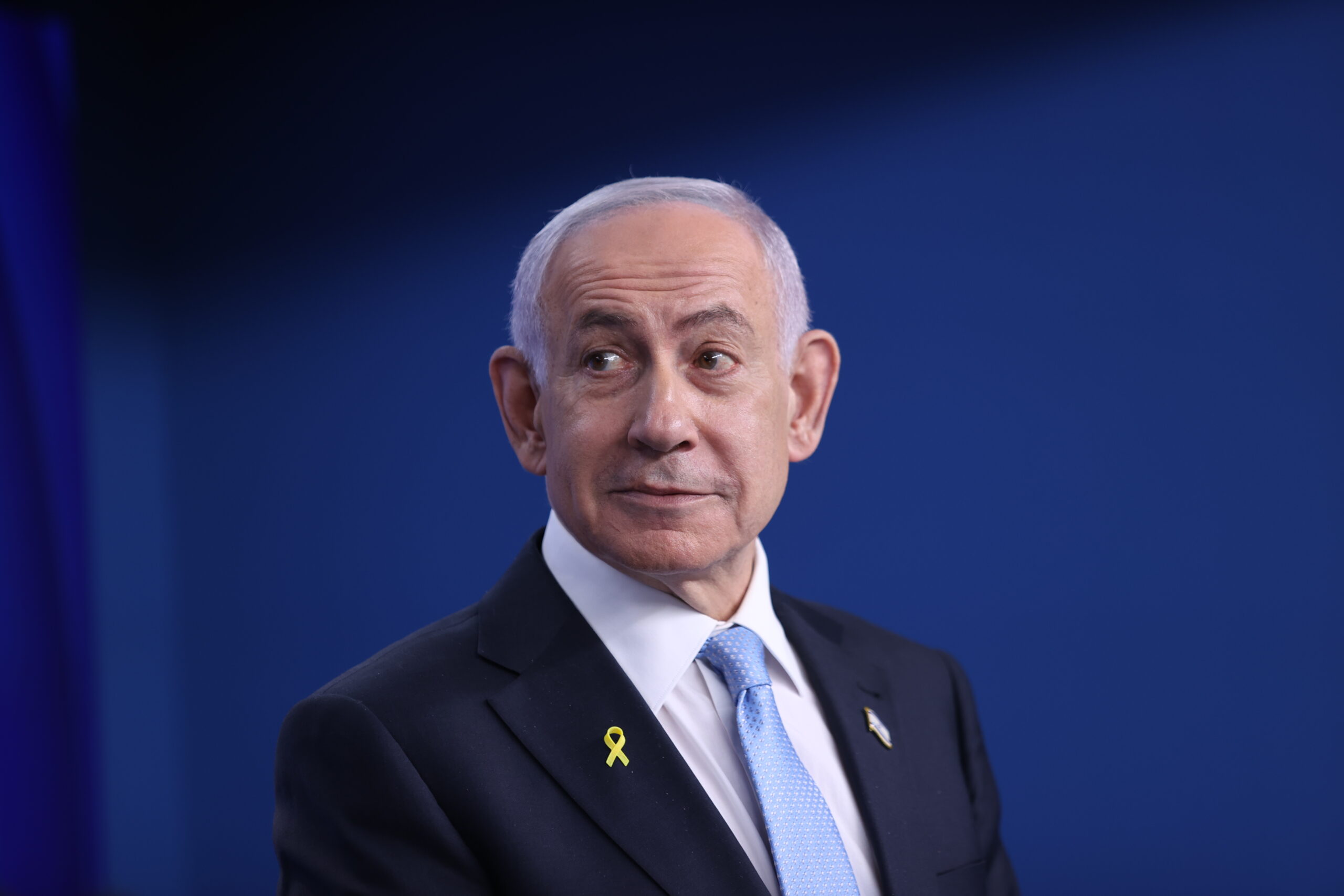
Prime Minister Benjamin Netanyahu disclosed on Friday that he recently underwent successful treatment for early-stage prostate cancer, revealing for the first time a medical condition that had not been previously publicized. The announcement came alongside the release of his annual health report and a social media post in which the 76-year-old prime minister said the issue had been fully resolved. “Thank God, I beat this, too,” he wrote, framing the disclosure as part of a broader update on his physical condition.
The revelation immediately drew attention not only because of the diagnosis itself, but because of Netanyahu’s explanation for delaying the announcement. He said he withheld the information for approximately two months in order to prevent what he described as Iranian exploitation of his medical condition for propaganda purposes during the ongoing regional conflict. “I chose to delay the report’s publication so it would not come out at the peak of the war and be used by Iran for propaganda,” Netanyahu said in a statement released by his office.
In a televised medical briefing, Prof. Aharon Popovtzer of Hadassah Medical Center confirmed that Netanyahu had been diagnosed with a 0.9-centimeter tumor identified as early-stage prostate adenocarcinoma. The discovery, according to the hospital, was made during routine follow-up monitoring after Netanyahu’s December 2024 prostate surgery. Popovtzer said the prime minister was presented with two options: continued monitoring or immediate radiation treatment. Netanyahu chose radiation therapy.
“Two and a half months ago, the prime minister underwent targeted radiation treatment,” Popovtzer said. “Following subsequent imaging and laboratory tests, we can say the disease has disappeared.”
The treatment was conducted at Jerusalem’s Hadassah Medical Center, where Netanyahu has been treated for multiple medical episodes in recent years, including prostate surgery in December 2024, hernia surgery in March 2024, and the implantation of a pacemaker in July 2023. Hospital officials stated that his most recent annual evaluation showed no abnormalities in blood work, physical fitness testing, or cardiac function.
Netanyahu’s health report described the treatment outcome as complete remission with no evidence of metastasis. The report also noted ongoing routine monitoring, a standard procedure following oncological treatment of this type. Hospital physicians emphasized that prostate cancer of this stage is commonly detected in men of similar age and is often highly treatable when identified early.
In his written statement, Netanyahu described the sequence of events as part of a broader principle he applies to both personal and national decision-making. “When I am informed in a timely manner about a possible danger, I want to address it immediately,” he wrote. “This is true on a national level as well as a personal level.” He also thanked the medical staff at Hadassah Hospital in Jerusalem and urged Israelis to undergo routine medical screenings.
The announcement comes at a politically sensitive moment, with national elections expected within months. If reelected, Netanyahu would become the oldest individual to serve as prime minister in Israel’s history.
The report also reignited discussion about transparency regarding the health of senior officials, following previous controversies related to Netanyahu’s pacemaker implantation and earlier surgical procedures.
Netanyahu’s public framing of his treatment in national security terms reflects a recurring theme in Israeli political life, in which personal biography and national narrative frequently intersect. His reference to Iranian propaganda underscores how even private medical developments are viewed through the lens of regional conflict and strategic communication.
The medical team at Hadassah emphasized that Netanyahu’s recovery is complete for now, though continued monitoring remains standard practice. His office stated that his overall health is good and that all recent evaluations were within normal ranges.
As Israel moves toward another election cycle, the disclosure adds a new layer to an already complex political landscape, where questions of leadership endurance, transparency, and national stability remain central.