
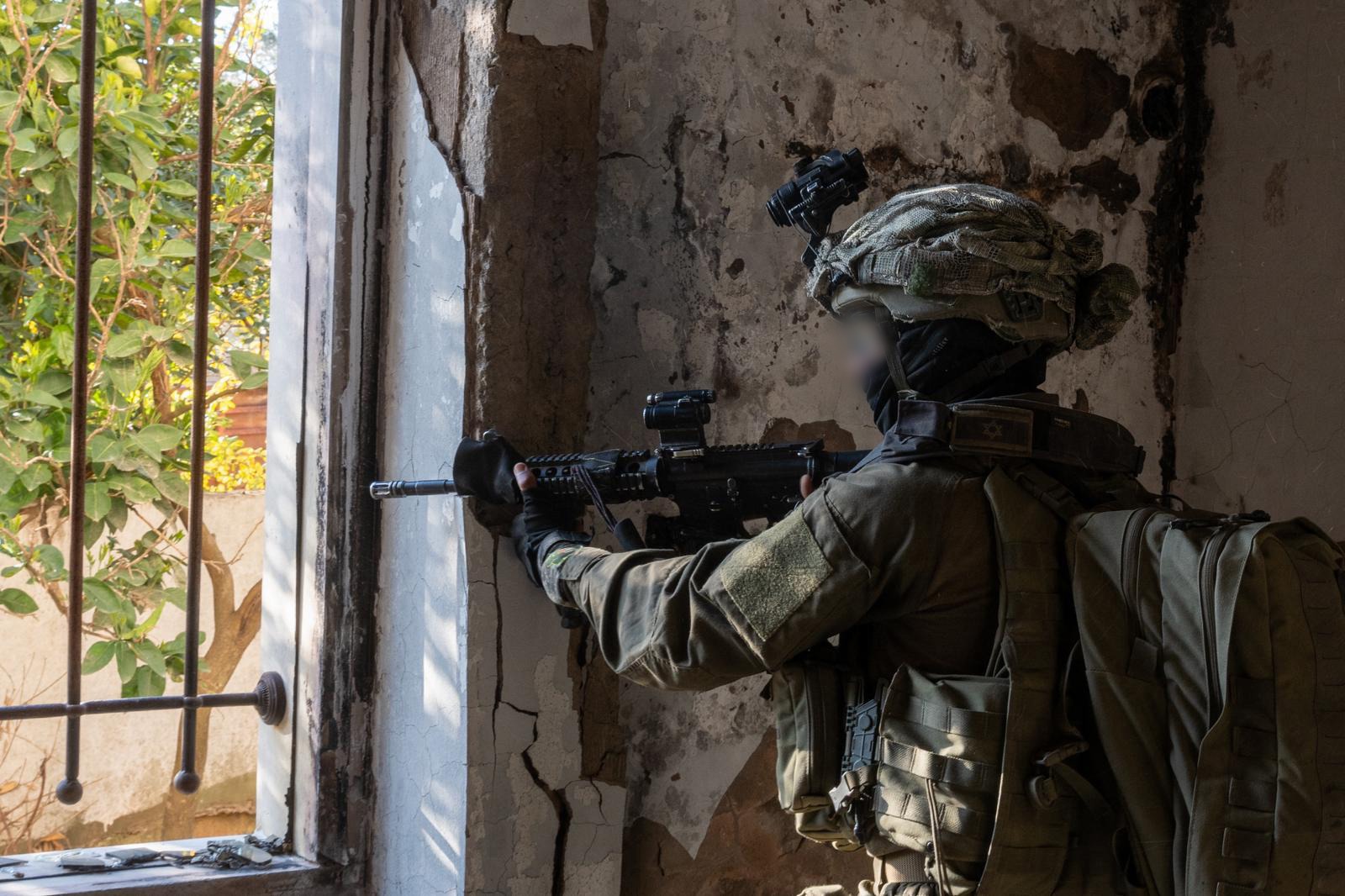
Two Israel Defense Forces (IDF) soldiers have been dismissed from combat duty and sentenced to 30 days in military prison following an investigation into the destruction of a statue of Jesus in the Christian village of Debel in southern Lebanon. This act drew condemnation from Prime Minister Benjamin Netanyahu, IDF Chief of Staff Lt. Gen. Eyal Zamir, and Jewish communities worldwide.
The soldier who smashed the statue with a sledgehammer and the soldier who photographed the act received identical punishments. Six additional soldiers who witnessed the incident and neither intervened nor reported it have been summoned for “clarification discussions,” after which further disciplinary measures will be determined.
The IDF was unequivocal in its judgment: the soldiers’ conduct “completely deviated from IDF orders and values.”
The Incident
The photograph that ignited the controversy was posted on social media by Younis Tirawi, who identifies himself as a Palestinian reporter and has previously published footage alleging IDF misconduct in Gaza. Tirawi has faced accusations of ties to terrorist organizations, a factor that adds a layer of scrutiny to the timing and intent behind the post’s release. Regardless of the messenger, the IDF confirmed the image was authentic.
Following the completion of an initial examination regarding a photograph published earlier today of an IDF soldier harming a Christian symbol, it was determined that the photograph depicts an IDF soldier operating in southern Lebanon.
— Israel Defense Forces (@IDF) April 19, 2026
The IDF views the incident with great… https://t.co/U6P3x8KWBb
Reuters verified the location as Debel, one of the few villages in southern Lebanon where residents remained throughout Israel’s military campaign against the Iranian-backed Hezbollah terror organization. The statue, according to local priest Fadi Falfel, was part of a small shrine in a private family garden, not a public monument, not a Hezbollah installation. A family’s shrine.
The image spread rapidly. By Sunday, it had gone viral. By Monday, Netanyahu was on X/Twitter calling himself “stunned and saddened.” By Tuesday, the IDF had announced criminal charges.
The Investigation
The military’s investigation was conducted through Northern Command and presented to Brig. Gen. Sagiv Dahan, commander of the 162nd Division, which is responsible for the sector in southern Lebanon where the incident occurred. Dahan accepted the findings and the commanders’ recommendations in full.
IDF Chief of Staff Lt. Gen. Eyal Zamir condemned the incident in the sharpest terms, stating it “constitutes unacceptable conduct and a moral failure, far exceeding any acceptable standard and contradicting IDF values and the expected conduct of its troops.”
The investigation concluded that procedures regarding conduct with religious institutions and symbols had been reinforced to the troops before they entered the area, meaning the soldiers acted in knowing violation of explicit orders. Those procedures will now be reinforced again for all troops operating in the region.
The findings were also presented to Northern Command chief Maj. Gen. Rafi Milo.
Replacement of the Statue
IDF Arabic Spokesperson Lt.-Col. Ella Waweya announced that the military had “erected a new statue in place of the one that was damaged.” The Northern Command coordinated the replacement from the moment it received the initial report of the incident, the IDF said, describing the move as carried out “in full coordination with the local community.”
قبل قليل، وبالتنسيق الكامل مع أهالي قرية دبل في جنوب لبنان، قامت قوة من جيش الدفاع بنصب تمثال جديد بدل التمثال الذي تضرر. وقد عملت قيادة المنطقة الشمالية على تنسيق استبدال التمثال منذ لحظة تلقي البلاغ عن الحادثة.
— Lieutenant Colonel Ella Waweya | إيلا واوية (@CaptainElla1) April 21, 2026
يعرب جيش الدفاع مرة أخرى عن أسفه على الحادثة، ويعمل على عدم… pic.twitter.com/iIukMDdxl5
Netanyahu and Sa’ar Respond
Netanyahu’s statement on X placed the incident in a broader regional context: “While Christians are being slaughtered in Syria and Lebanon by Muslims, the Christian population in Israel thrives unlike elsewhere in the Middle East. Israel is the only country in the region where the Christian population and standard of living is growing. Israel is the only place in the Middle East that adheres to freedom of worship for all.”
Foreign Minister Gideon Sa’ar called the act “grave and disgraceful.”
Netanyahu’s broader point is factually supported. Christian communities across the Middle East, in Syria, Iraq, Egypt, and Lebanon itself, have faced systematic persecution, displacement, and murder. In Israel, the Christian population has grown. Churches operate freely. The contrast is not subtle.
The Larger Picture
The IDF operates under a code that explicitly prohibits harm to civilian religious sites and symbols. That code was violated. The military’s response, including investigation, dismissal, imprisonment, and physical restoration of the damaged statue, was precisely what accountability looks like.
The incident occurred days into the ceasefire between Israel and Hezbollah, the Lebanese terror organization backed by Iran, and joined other documented cases in which footage of IDF soldiers destroying or looting property has been published, often by the soldiers themselves. Each such incident hands Israel’s enemies a weapon, and the IDF knows it.