


When an injured U.S. Air Force colonel, bleeding and hunted by Iranian forces in the Zagros Mountains, finally made radio contact after 36 hours behind enemy lines, he transmitted three words: “God is good.” Those three words nearly derailed his own rescue, but then became the defining miracle of one of the most dramatic American military operations in recent memory.
Defense Secretary Pete Hegseth laid out the extraordinary timeline at a White House press briefing Monday: “Shot down on a Good Friday, hidden in a cave, a crevice all of Saturday, and rescued on Sunday. Flown out of Iran as the sun was rising on Easter Sunday. God is good.”
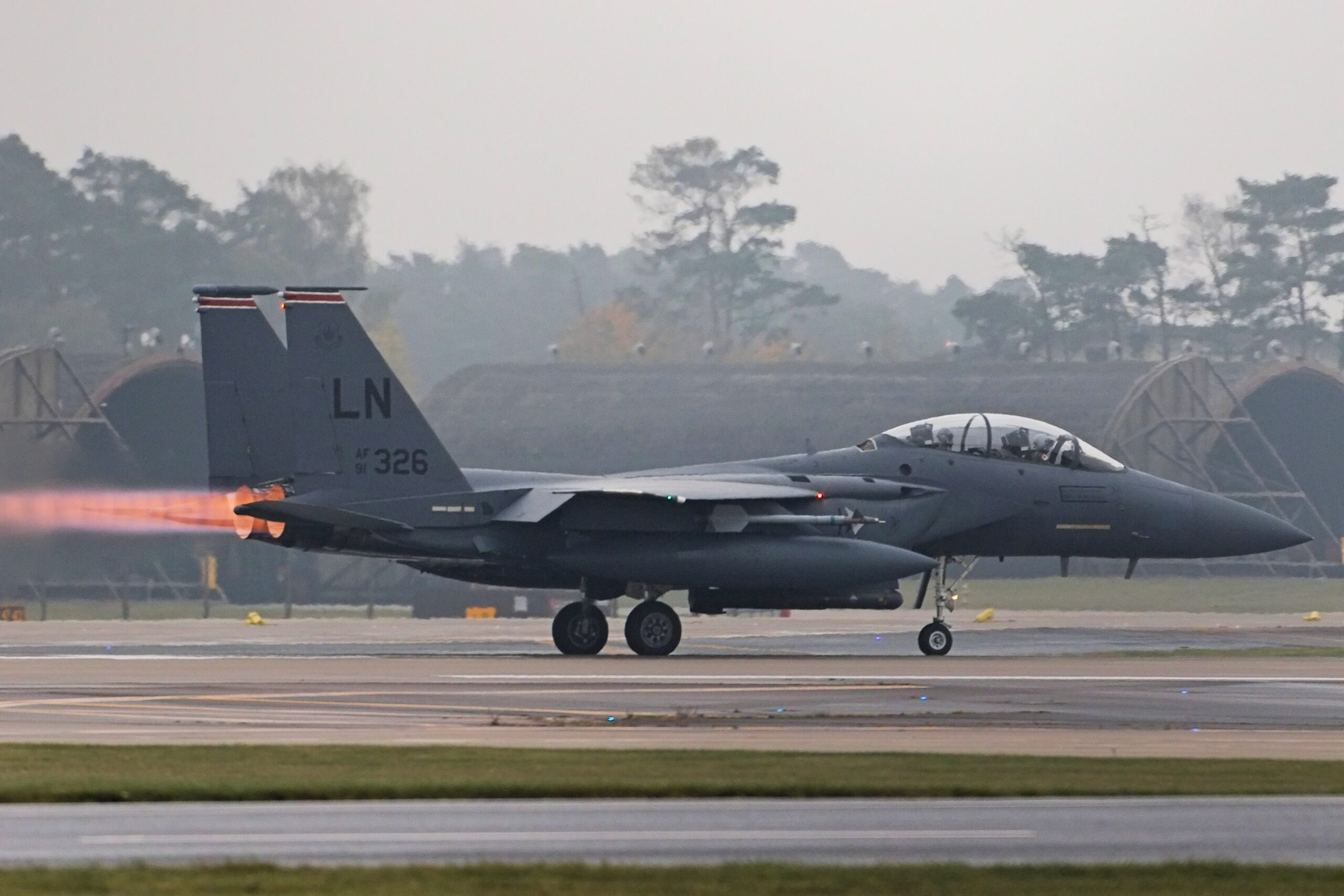
The story began on Friday when a U.S. F-15E Strike Eagle was shot down over Iran during ongoing American combat operations. Both the pilot and the weapons systems officer ejected. The pilot was recovered within hours in a daylight operation, but the weapons officer, a colonel with call sign “Dude Bravo 44”, was still out there. He was badly wounded, scaling 7,000 feet of cliff face in the Zagros Mountain range, while Iranian Revolutionary Guard Corps forces and civilians, who were offered a reward by Iranian state media, closed in around him.
“He was injured quite badly,” President Trump said Monday. “He scaled cliff faces, bleeding rather profusely, treated his own wounds.” For nearly 48 hours, the colonel used his SERE — Survival, Evasion, Resistance and Escape — training to stay one step ahead of his hunters, hiding in a mountain crevice while Iranian forces searched.
The CIA launched a deliberate deception campaign to convince the Iranian regime they had already located the colonel and were moving him for extraction, keeping IRGC forces confused and off-balance. At the same time, CIA Director John Ratcliffe said the agency deployed “human assets and exquisite technologies” to locate a man Ratcliffe compared to finding “a grain of sand in the desert.” A CIA camera spotted the colonel from 40 miles away. For 45 minutes, operators watched a motionless shape in the dense mountain brush. Then it moved. “It was the head of a human being,” Trump said on Monday.
When the colonel finally activated his emergency transponder and made radio contact, his message was: “God is good.”
The transmission triggered an immediate alarm. Trump told Axios: “What he said on the radio sounded like something a Muslim would say”, a reference to the Islamic phrase Allahu Akbar, “God is great.” American commanders feared a trap. The U.S. military had already deployed more than 150 aircraft into Iranian airspace, taking what Trump called “very, very heavy enemy fire.” The stakes for getting it wrong were catastrophic.
But those who knew the colonel told commanders he was a man of deep faith, and that those words were exactly what he would say. Intelligence confirmed his location. The rescue went in.
The colonel’s words echo the level of faith expressed by King David, words that have been repeated by religious people for millennia:
“Even if I walk in the valley of the shadow of death, I fear no evil, for You are with me; Your rod and Your staff, they comfort me.” (Psalms 23:4)
The Sages teach that faith is the act of clinging to the truth of God’s presence in the moment when every circumstance argues against it. The colonel, bleeding on a 7,000-foot ridge in hostile territory, surrounded by enemies, transmitted his faith in three words. Those three words brought 150 aircraft and the full force of the United States military to his coordinates.
The rescue itself was staggering in scale. Navy SEALs, Air Force Special Operations, Army Special Operations Aviation, combat search-and-rescue teams, and combat medics all took part. Rescue helicopters came under Iranian small-arms fire during both extractions. An A-10 Thunderbolt providing close air support was hit by enemy fire; its pilot later ejected safely over Kuwait. Two transport planes developed problems on a makeshift Iranian farm runway and were destroyed rather than left behind. Between the two rescues, U.S. B-2 bombers dropped bunker-buster ordnance on an IRGC headquarters.
General Dan Caine, chairman of the Joint Chiefs, said simply: “This was an incredibly dangerous mission, an incredibly dangerous undertaking.”
No Americans were killed. Both airmen are now receiving care at Landstuhl Regional Medical Center in Germany.

