

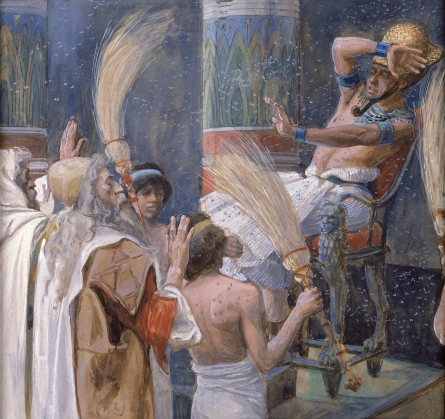
As Jews remember the Exodus from ancient Egypt, accomplished through miraculous plagues, modern-day Egypt is suffering as its glittering cities grow dark and are dimming, and its people are being stung. For those who read the Bible, the timing is difficult to ignore.
In the weeks since the United States and Israel launched massive airstrikes against Iran on February 28, the shockwaves have reached far beyond the battlefield. Egypt, the most populous Arab country, is among the most affected by the war’s far-reaching repercussions, including higher oil prices and disrupted shipping routes. It is not a combatant in the conflict, but one of the most vulnerable bystanders, and the country is reeling. Cairo, a city famous for its round-the-clock commerce and street life, is being ordered dark. Restaurants and cafes must close early. Streetlights have been dimmed. The Egyptian government, scrambling to conserve electricity amid soaring global energy prices, has imposed nationwide curfews on businesses in a desperate bid to manage the fallout of a war it did not choose.
The ninth of the ten plagues visited upon ancient Egypt was choshech, darkness. Not ordinary darkness, but a darkness the Bible describes as tangible, palpable, a darkness that could be felt. “And the Lord said to Moses, stretch out your hand toward the sky so that darkness spreads over Egypt, darkness that can be felt.” (Exodus 10:21) The Sages teach that this was not merely the absence of light, it was a spiritual condition made physical, a plague targeting Egypt’s ability to function, to move, to see what was directly before its eyes. Today, the lights of Cairo are going out, and the Egyptian government has no solution in sight.
And that is not the only plague. While Cairo dims, hundreds of miles to the south in Aswan, one of the driest cities on earth, averaging just three millimeters of rain per year, the skies opened. Intense thunderstorms and hail deluged the desert city last weekend, killing three people, flooding streets, and cutting power. And then came the scorpions. The storms forced the fat-tailed scorpion out of its burrows and into the streets and homes of the region. Five hundred and three people were hospitalized from stings in a single event. Snakes, too, were unearthed by the floods, according to Egyptian media.
The fat-tailed scorpion is Androctonus in Latin, “man killer.” It is one of the most dangerous scorpion species in the world, and it is found in Egypt. It stays hidden under rocks, debris, and inside homes, waiting. It takes a catastrophic, unnatural event to drive it into the open on a scale like this. What happened in Aswan was catastrophic and unnatural.
Rabbi Yosef Berger, the rabbi of King David’s Tomb on Mount Zion, sees in this infestation something more than a meteorological curiosity. He connects it directly to the fourth plague, the swarm that struck Egypt before the Exodus. The Hebrew word for that plague is he’arov, meaning a mixed group. “Some sources suggest it may have been mixed beasts while others claim it was massive swarms of stinging insects,” Rabbi Berger said. “Though this plague is usually thought to be insects, the real question is what kind.”
In the final Redemption, Rabbi Berger explained, the answer becomes clear. “The plagues that presage the final days are going to be even worse than those that struck Egypt in the days of the Exodus. In this case, there will be swarms of scorpions instead of flies.”
Rabbi Berger’s interpretation is grounded in Jewish sources going back centuries. The Midrash Tanchuma, homiletic teachings collected around the fifth century CE, states explicitly that “just as God struck the Egyptians with 10 plagues, so too He will strike the enemies of the Jewish people at the time of the Redemption.” And the Prophet Micah gave this promise the voice of God himself: “I will show him wondrous deeds as in the days when You sallied forth from the land of Egypt.” (Micah 7:15)
In Jewish thought, the scorpion is not a random creature. Rabbi Berger points out that the Hebrew word for scorpion, akrav, is composed of two words: av kar, meaning “the father or archetype of cold.” While snake venom causes a high fever, scorpion venom causes the body temperature to drop, producing a sensation of bone-deep cold. “Coldness is also the evil trait of Israel’s perennial enemy, Amalek,” Rabbi Berger said. The Torah writes of Amalek, in Deuteronomy 25:18, using the Hebrew word korcha, from kar, meaning cold, which the Sages translate not only as “they met you” but as “they chilled you.” Amalek’s defining spiritual weapon is not fire but ice: the cold of apathy, the chill that makes people indifferent to evil. “Apathy to evil is the tool of Amalek,” Rabbi Berger said, “and this is taking over the world today.”
The Prophet Ezekiel made the same connection between the scorpion and a specific kind of evil: the evil of speech. “And you, mortal, do not fear them and do not fear their words, though thistles and thorns press against you, and you sit upon scorpions.” (Ezekiel 2:6) Rabbi Berger sees this verse playing out in the age of the internet, where words, transient, unwritten, endlessly multiplied, have become one of the most destructive forces on earth. “The strongest weapon against social evil is when people speak out,” he said. “Today, we see so many people speaking out in defense of evil. Their words are like the sting of scorpions, cooling off righteous anger.”
There is a lesson embedded in Jewish law itself about the nature of the scorpion. Halacha, Jewish law, teaches that a person does not interrupt prayer even if a snake approaches, because the snake attacks only when provoked. But if a scorpion appears, prayer must stop immediately. The scorpion attacks without provocation. It wields its sting even when it derives no benefit from killing its victim. It destroys because destruction is its nature.
Israel is currently facing enemies of precisely this character, enemies bent on destroying the Jewish state who share no border with Israel, who have never been threatened by Israel, who gain nothing material from its destruction. They attack because that is what they do.
Meanwhile, the skies across the region, above Egypt, across North Africa, over Greece, and even as far as Australia, have been turning blood red. Massive Saharan dust storms, born from the weather system sweeping the Mediterranean, have blanketed the region in iron-rich particles that refract sunlight into deep crimson. “The reason specifically for the red sky,” explained lead international forecaster Jason Nicolls, “is that Saharan dust is rich in iron, which results in the reddish hue.” The same phenomenon struck Australia, where iron-rich sand in Western Australia produced nearly identical apocalyptic scenes.
NO, that's not a filter! ☁️🔴 The sky turned an eerie shade of red in Western Australia as dust filled the air ahead of Tropical Cyclone Narelle. pic.twitter.com/dCQ2hjFluI
— AccuWeather (@accuweather) March 28, 2026
The prophet Yoel, Joel, saw this: “The sun shall be turned to darkness and the moon to blood, before the great and terrible day of the Lord comes.” (Joel 2:31) That verse has been cited by preachers for centuries. It is being photographed today and posted to social media.
“Insects normally are not a threat to man, like predatory beasts,” Rabbi Berger noted. “Similarly, the real threat to Israel today is spiritual and not military.” The darkness spreading over Egypt’s cities, the Androctonus swarming from the ground, the blood-red skies over the region—all of it unfolding on Passover, all of it unfolding as Israel fights for its existence—is no coincidence the Hebrew Bible would recognize.
The Sages long ago taught that the God who struck Egypt does not change. The plagues were a demonstration, not a historical footnote. Micah said they would return. The Midrash Tanchuma said they would be worse. Rabbi Berger said the scorpions are already here.