




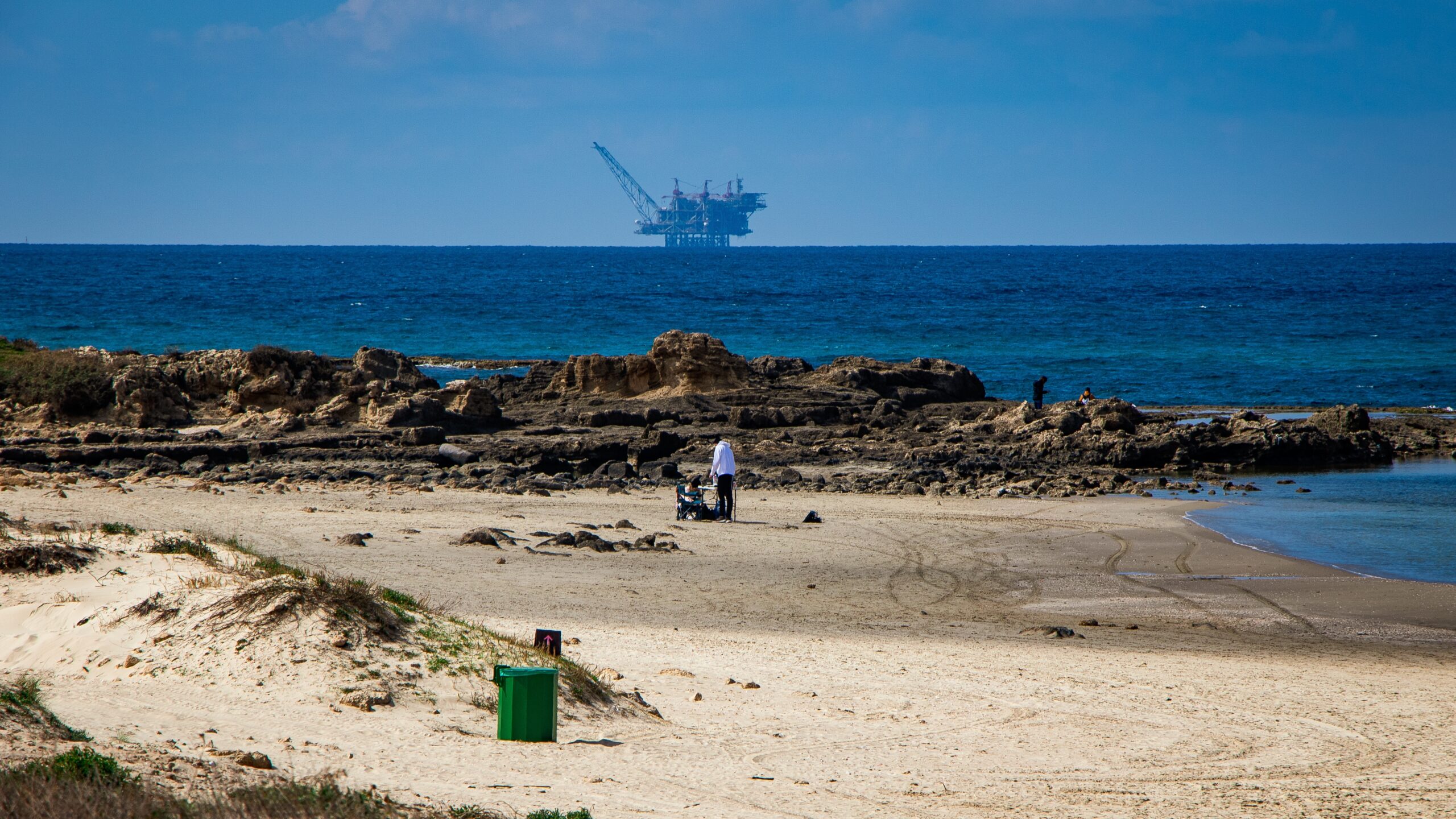
Divers working in the shallow waters of the Dor Lagoon, on Israel’s Carmel Coast, pulled something remarkable from the seabed: nine iron masses, each weighing between five and ten kilograms, encrusted with shells and sand, looking for all the world like ordinary rocks. They were anything but. These artifacts, just published in the journal Heritage Science, are changing what archaeologists thought they knew about Iron Age metallurgy and trade. And they carry implications that reach directly into the biblical world.
The ancient world’s iron trade, it turns out, was far more sophisticated, far more connected, and far more strategically significant than we knew, and a sunken cargo from 2,600 years ago is proving it.
The nine iron objects are called blooms, which are the raw, spongy masses produced when iron ore is heated with charcoal to roughly 1,200 degrees Celsius in a bloomery furnace. Until now, archaeologists assumed that smiths processed blooms immediately after smelting, hammering them while still hot into billets or bars for transport. Finding intact, unworked blooms, still jacketed in their protective slag crust aboard a ship at sea, was not supposed to be possible. Yet here they are.
Dr. Tzilla Eshel of the University of Haifa, one of the paper’s authors, told the Times of Israel that the iron inside one bloom, cut open after more than two and a half millennia on the seafloor, was “fresh as if it were produced yesterday.” The slag encasing the bloom had acted as a natural preservative, shielding the metal from corrosive saltwater. This was not accidental; the researchers conclude the slag casing was left on deliberately, a “shipping-ready” state that made long-distance maritime transport viable.
Radiocarbon dating of a charred oak twig embedded in the bloom’s slag, combined with grape seeds and resin found in pottery aboard the same vessel, places the cargo in the late 7th or early 6th century BCE, precisely the period when the Assyrian Empire was withdrawing from the region, Egyptian forces under the Saite Pharaohs were briefly reasserting control over the northern Land of Israel, and the Babylonians were on the march. Within a few decades, Nebuchadnezzar would destroy Jerusalem and the First Temple.
Tel Dor itself changed imperial hands repeatedly in this period, from Neo-Assyrian control since approximately 733 BCE, through a brief Egyptian interlude around 630–605 BCE, and then into the Babylonian sphere. Whoever loaded those blooms onto that ship was operating in the middle of one of history’s most turbulent power transitions.
Dr. Eshel did not soften the strategic dimension of the find. “This was a tense period of constant conquering of the Southern Levant, and iron was a very important resource,” she said. “If you produce blooms, that means someone is waiting for them on the other side, and has the technology and the ability to make them into something that is worthwhile the effort, first and foremost, weapons.” Iron in this period meant arrowheads, daggers, and swords.
The discovery also resolves a longstanding debate in Iron Age archaeology over whether smelting and smithing occurred in the same locations or were spatially separated. The Dor blooms settle the question: smelting happened at remote or rural sites, and the raw bloom, not the finished bar, was the traded commodity. Urban centers like Dor served as smithing workshops, importing raw iron and working it into tools and weapons. The limited slag and hammer scale found at Iron Age Dor fit exactly this model.
Prof. Aren Maeir of Bar-Ilan University, excavation director at Tell es-Safi (biblical Gath), called the paper “very interesting,” telling the Times of Israel that researchers had faced precisely this question at Gath. “Now we know that it was possible that these two stages of production happened separately.”
The trade network implied by the Dor blooms connects the Land of Israel to Cyprus, the Aegean, and Egypt, a maritime commercial web operating beyond the reach of the great land empires. The Phoenicians, who dominated Dor’s commercial trade under each successive imperial master, likely served as middlemen. An Egyptian customs document known as the Ahiqar scroll records a Phoenician ship arriving in Egypt carrying Sidonian wine alongside two categories of iron, which is direct textual confirmation that mixed cargoes of iron and amphorae were standard practice.
The Dor blooms are the earliest securely dated assemblage of multiple iron blooms ever found anywhere in the world. They’re a missing link in the chain of iron production, from furnace to ship to urban smithy to weapon or plow. They are a reminder that the biblical Iron Age, the era of the later kings of Israel and Judah, the prophets Isaiah and Jeremiah, the Assyrian exile, and the Babylonian destruction, was not a primitive backwater. It was a world of sophisticated international commerce and advanced metallurgical knowledge, all of it operating and sinking just meters from an ancient Israeli shore.
