
It was Saturday night in Israel. Shabbat was already over.
But across America, the sun hadn’t set yet, and 500 Christians were still in the middle of it, gathered on a Zoom webinar hosted by Israel365. They were celebrating a day that God gave as a gift to Adam and Eve and all mankind, long before there were Jews or Christians.
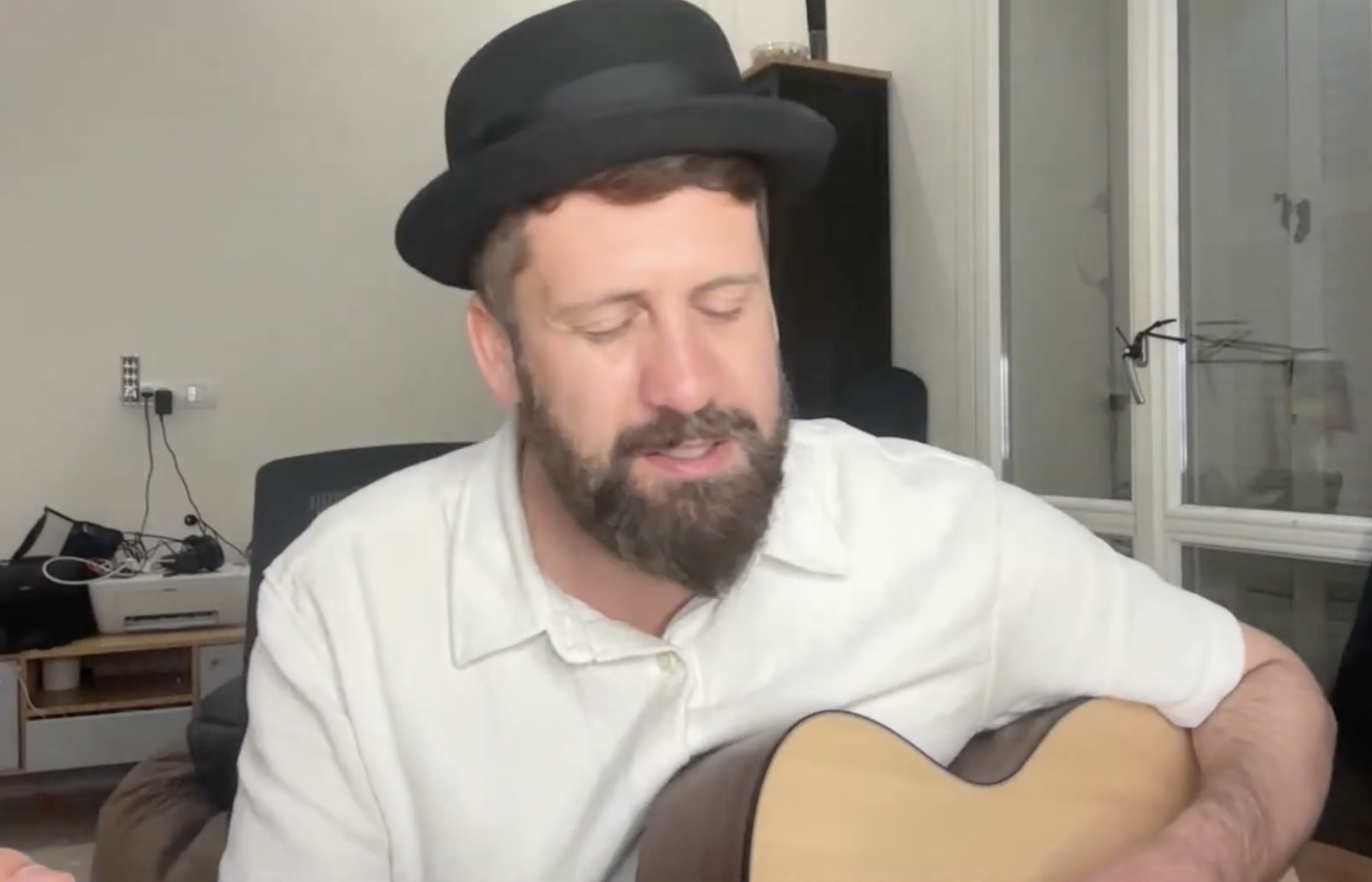
The evening featured one of Israel’s most beloved musicians: Yair Levi. A singer and performer who has crisscrossed America, sharing stages with artists like Big Daddy Weave and leading worship at churches and communities across the country, Levi has become a bridge between the Jewish world and the Christian one, bringing the sound and spirit of the Holy Land to audiences hungry for something real.
He joined the webinar from his home in Jaffa. Three weeks earlier, he and his family — four children, including a baby — left their home because they had no bomb shelter and nowhere safe to go. He came back to the house that night to be with the audience.
He opened with his new song, “Back to You (Sabbath),” built around the layered Hebrew meanings hidden inside the word Shabbat — to sit, to cease, the number seven, abundance, return, answer. Woven together, they tell a story: when you stop, you return to yourself, you return to God, and you find the answers and the abundance you were chasing all along by never stopping. Then he led the audience in Refa Na — a prayer for healing built around the simple words Moses cried out for his sister Miriam — praying for wounded soldiers, displaced families, and a fractured world. He closed with the Priestly Blessing in Hebrew, the audience singing along.
The evening also included a powerful short film on Shabbat’s role in sustaining Israeli families through the current war, including the story of Yosi Fierstein, a Jerusalem reservist who made kiddush for his family on October 7th and then drove straight to base, not returning for months. His wife Ally described how they responded to the long separation by doubling down on Shabbat when he finally came home.
But what they heard that night from Rabbi Elie Mischel may be the most underappreciated secret in all of Jewish spiritual life.
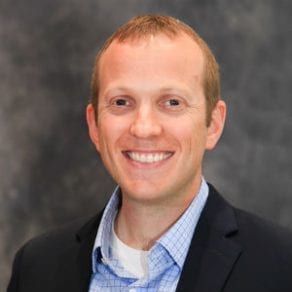
Rabbi Mischel, Israel365’s Director of Education and author of Shabbat Revolution: A Practical Guide to Weekly Renewal, opened with a question that most people who observe Shabbat have never seriously asked: what is the holiest moment of the entire day?
Not Friday night. Not the kiddush, not the candles, not the family gathering around the table — as beautiful as all of that is. In Jewish tradition, the holiest moment of Shabbat is the last hour. That quiet, darkening stretch of late Saturday afternoon that most people have never heard of: Seudah Shlishit, the third meal.
“It’s a completely different feel than Friday night,” Rabbi Mischel told the audience. By that point in Shabbat, you’ve been in the zone for nearly 24 hours. The light is fading. The candles are gone. There’s a stillness that doesn’t feel like exhaustion — it feels like arrival. “It’s a longing, a yearning for God, because we know that Shabbat is going to be over very soon.”
He reached for an analogy that landed: your college kid is home for break. It’s been wonderful. And now it’s the last night. The laughter at dinner is real, but there’s something different underneath it — a tenderness, a heightened attention to every moment, because you know that tomorrow they’re gone. That, Rabbi Mischel said, is what the third meal of Shabbat is.
And then he brought in a teaching from Rabbi Nachman of Breslov that reframes everything. King David’s famous verse in Psalm 84, “my soul yearns, indeed faints, for the courts of the Lord,” uses the word for yearning twice in the original Hebrew. Most readers assume David is simply emphasizing intensity. But Rabbi Nachman reads it differently. The double yearning means: I yearn to yearn. “I may not be feeling fired up and connected and really close to you right now,” Rabbi Mischel explained. “But I yearn to be close. I want to want that.” And according to Rabbi Nachman, that is enough. That desire to desire, that prayer to become the kind of person who longs for God, is itself a form of prayer that God accepts.
He ended with an image that stayed in the room long after he finished speaking. The Piaseczner Rebbe, Rabbi Kalonymus Kalman Shapiro, one of the great Chassidic masters of the early twentieth century, murdered at Treblinka in 1944, spent those final hours of Shabbat surrounded by a hundred children. And he would ask them: “While you’re sitting among your close friends, how is it possible that during at least one song or even one verse you do not feel the embers of your soul beginning to catch fire?”
If you missed the event, watch the full recording here. And if this is the first time you’re hearing that Shabbat might be the answer the West is looking for — not just as rest, but as resistance against a culture that has traded God for busyness and family for screens — Rabbi Mischel’s book is the place to start.Shabbat Revolution shows how one day a week has preserved the Jewish people for millennia, and how that same wisdom can help Jews and Christians together rebuild what is being torn apart.
As Rabbi Mischel put it: “The world is a healthier, happier, and more Godly place when Shabbat is at the center of our lives.”
He’s not wrong. And somewhere in that last quiet hour before dark on Saturday, there are embers waiting to catch fire.