
Rabbi Elie Mischel
Before we dive in: if this whets your appetite, Passover from the Inside: A Jewish Guide for Christian Readers takes you through the entire Seder with the depth and authenticity that only comes from within the tradition. It’s the book Christians have been waiting for — written by a Jewish scholar, for you.
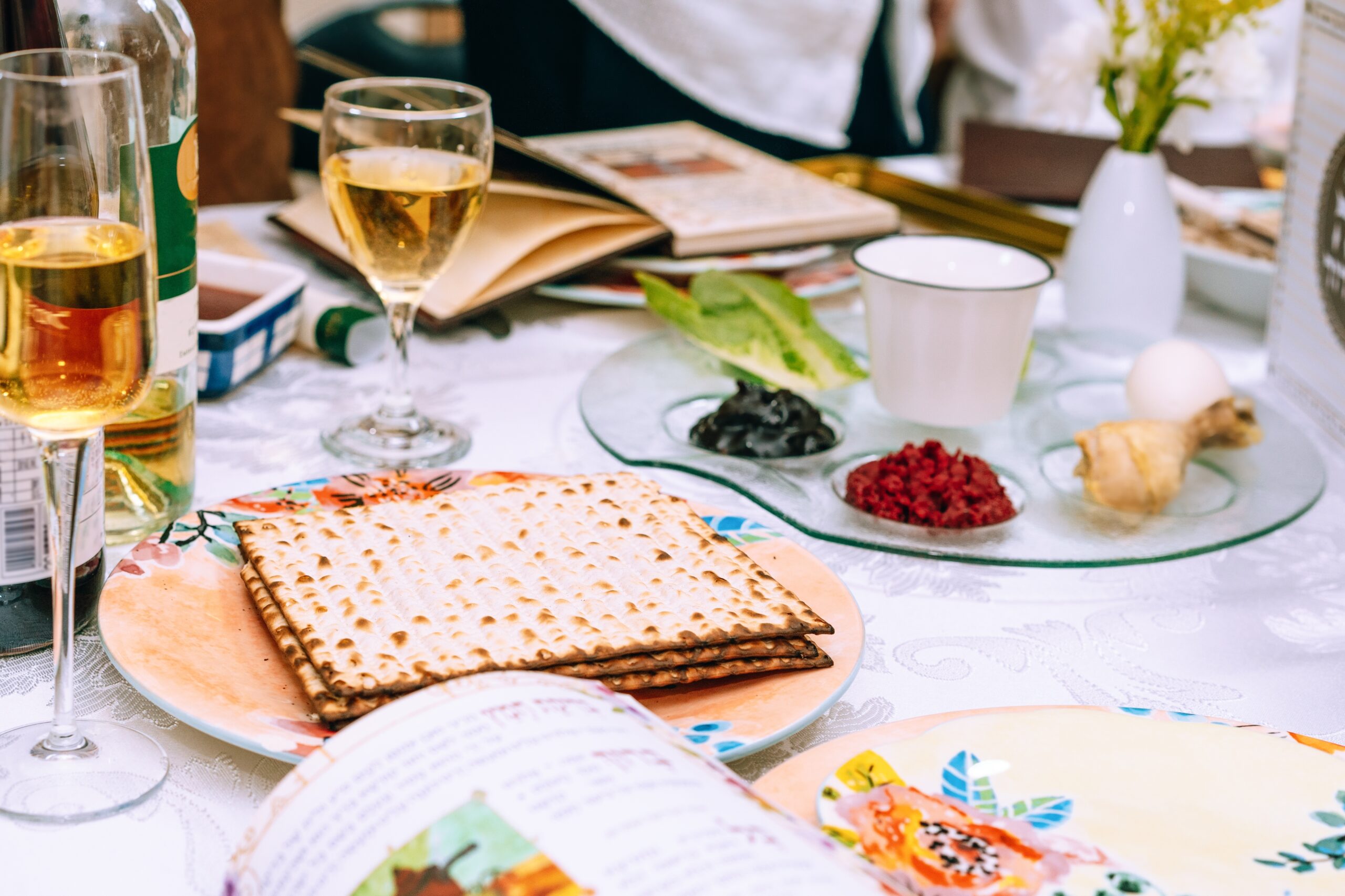
At the center of every Passover Seder table sits a plate unlike anything else in the religious world. Six items, carefully arranged, each one a compressed symbol carrying centuries of meaning. Nothing on it is decorative. Nothing is there by accident. Every item is a deliberate provocation — designed to make you ask questions, feel something, and connect to a story that Jews are commanded not merely to remember but to relive.
Here is what’s on the plate, what it means, and why it still matters.
Maror — Bitter Herbs
Traditionally horseradish, and not the mild kind. Sharp enough to sting the eyes and catch in the throat.
That’s the point. The Haggadah explains: the bitter herbs represent the bitterness of slavery — “they embittered their lives with hard labor, with mortar and bricks, and with all manner of labor in the field.” This isn’t symbolic bitterness. You eat the maror and for a moment your body understands something your mind has been told. You don’t just remember slavery. You taste it.
Before the very first Passover in Egypt, God instructed the Israelites to eat the lamb “with unleavened bread and with bitter herbs.” Three thousand years later, Jews around the world are still doing exactly that — same herb, same instruction, same intention.
Charoset — Sweet Paste
If maror is the hardest item on the plate to eat, charoset is the most deceptive. It looks appealing — a sweet, fragrant mixture of fruits, nuts, wine, and spices. It tastes nothing like suffering.
Which is precisely what makes it so effective. Charoset represents the mortar the Israelite slaves used to build Pharaoh’s cities. The sweetness is intentional: it softens the blow of the bitter herbs when the two are eaten together, just as small moments of sweetness sustained the Israelites through years of brutal labor. Life under oppression is rarely all darkness. It’s the mixture of sweetness and bitterness that makes it bearable — and makes it hard to leave.
At one point during the Seder, you eat them together in a sandwich, bitter and sweet in the same bite. That combination goes back to the sage Hillel, who lived in the first century. The same sandwich Jews have been eating for two thousand years.
Karpas — A Vegetable
Usually parsley or potato — something green and mild. By itself, it means very little. But the Seder doesn’t let you eat it by itself. You dip it in salt water, which represents the tears of the enslaved Israelites.
But here’s what makes it clever: this happens before the story even starts. Before the children have asked their four questions, before a single word of the Haggadah has been recited, something strange has already happened at the table — and strange things demand explanation. The Seder doesn’t lecture you into engagement. It provokes you into it. You’re already asking why before you even know you’re supposed to.
Maror (Chazeret) — A Second Bitter Herb
Most people notice only one bitter herb on the plate, but traditional Seder plates include two — typically horseradish for the first and romaine lettuce for the second. The romaine is used specifically for the Hillel sandwich, the combination of matzah and bitter herbs eaten together at a precise point in the Seder.
Why romaine? Because romaine lettuce starts sweet and turns bitter the longer it sits in the ground — a perfect metaphor for the Israelite experience in Egypt. They arrived as honored guests, the family of Joseph who had saved the nation. Only gradually did their situation curdle into oppression. Slavery didn’t announce itself. It crept in.
Z’roa — The Roasted Shank Bone
This is the item on the plate that requires the most explanation — because unlike everything else, you don’t eat it.
The shank bone represents the Passover lamb, the sacrifice every Israelite family brought to the Temple in Jerusalem on the afternoon before Passover began. Its blood was sprinkled on the altar. Its meat was roasted and eaten that night as the centerpiece of the Seder meal.
Since the Temple was destroyed in 70 CE, that sacrifice can no longer be brought. The shank bone sits on the plate as a reminder of what is missing — a placeholder for something the Jewish people have been waiting nearly two thousand years to restore. You can point to it, but you cannot pick it up. You can explain it, but you cannot eat it. The absence is the lesson.
Every year Jews eat a Seder that is, in a very real sense, incomplete. The meal without the lamb is like a sandwich without its filling — and Jewish tradition is entirely deliberate about making you feel that absence.
Beitzah — The Roasted Egg
The egg is the most misunderstood item on the plate. People assume it connects to spring, to renewal, to new life — and while those associations aren’t wrong, the Jewish meaning cuts deeper and in a more unexpected direction.
The egg represents the festival sacrifice brought to the Temple on each of the three pilgrimage festivals. But there is another layer. Eggs are the traditional food of mourners in Jewish practice — the first meal eaten by a family after a funeral. Many Ashkenazi Jews eat a hard-boiled egg at the Seder specifically as a sign of mourning for the destroyed Temple.
Here is the paradox the egg holds: we are celebrating liberation while simultaneously mourning what we have lost. The greatest night of freedom on the Jewish calendar is also shadowed by the awareness that redemption is not yet complete. Joy and grief sit on the same plate. That tension is not a contradiction — it is the honest posture of a people living between a redemption that has already happened and one that is still to come.
Matzah — The Three Pieces of Unleavened Bread
Matzah technically sits beside the Seder plate rather than on it, but nothing at the table carries more weight. Three pieces, wrapped or covered, placed within reach of the Seder leader.
Matzah is flour and water, mixed and baked within eighteen minutes before the dough can rise. The Torah calls it lechem oni — the bread of affliction. Most people assume this means it symbolizes the poverty of slaves. But Rabbi Judah Lowe argues that the Israelites weren’t eating matzah during their years of slavery — they ate it for the first time on the night they left. Matzah is not the bread of people who were enslaved. It is the bread of people who left now, so urgently that there was no time to wait for dough to rise.
Matzah is the taste of redemption that couldn’t wait.
Early in the Seder, the leader breaks the middle matzah and hides the larger half — the Afikoman. It will be the last food eaten that night, ensuring the taste of that urgent, faith-filled departure is the final thing on everyone’s lips.
Why It Still Matters
The Seder plate is not a museum exhibit. It is not a collection of ancient artifacts assembled for historical interest. It is a working instrument — designed to make abstract history into physical experience, to reach past the intellect and land in the body, the senses, the gut.
Every item does something to you. The bitter herbs sting. The charoset comforts. The salt water on your tongue is grief made literal. The missing lamb is an absence you feel. The egg holds joy and mourning in the same hand. And the matzah — flat, simple, urgent — is the taste of a people who trusted God enough to leave without packing.
Jews have been setting this plate for three thousand years. In Egypt, in Babylon, in Spain before the Inquisition, in the ghettos of Europe, in the displaced persons camps after the Holocaust, and tonight in Jerusalem, New York, and a hundred other cities around the world. The same plate. The same items. The same questions. The same story — lived, not just told.
Want to experience the whole Seder from the inside?
The plate is just the beginning. Passover from the Inside: A Jewish Guide for Christian Readers walks you through every step of the Seder — the Haggadah texts, the rabbinic debates, the songs, the prayers, and the living tradition behind all of it. Written by Shira Schechter, a Jewish scholar who has taught christian readers about Jewish tradition for many years, it doesn’t give you a simplified version. It gives you the real thing.