

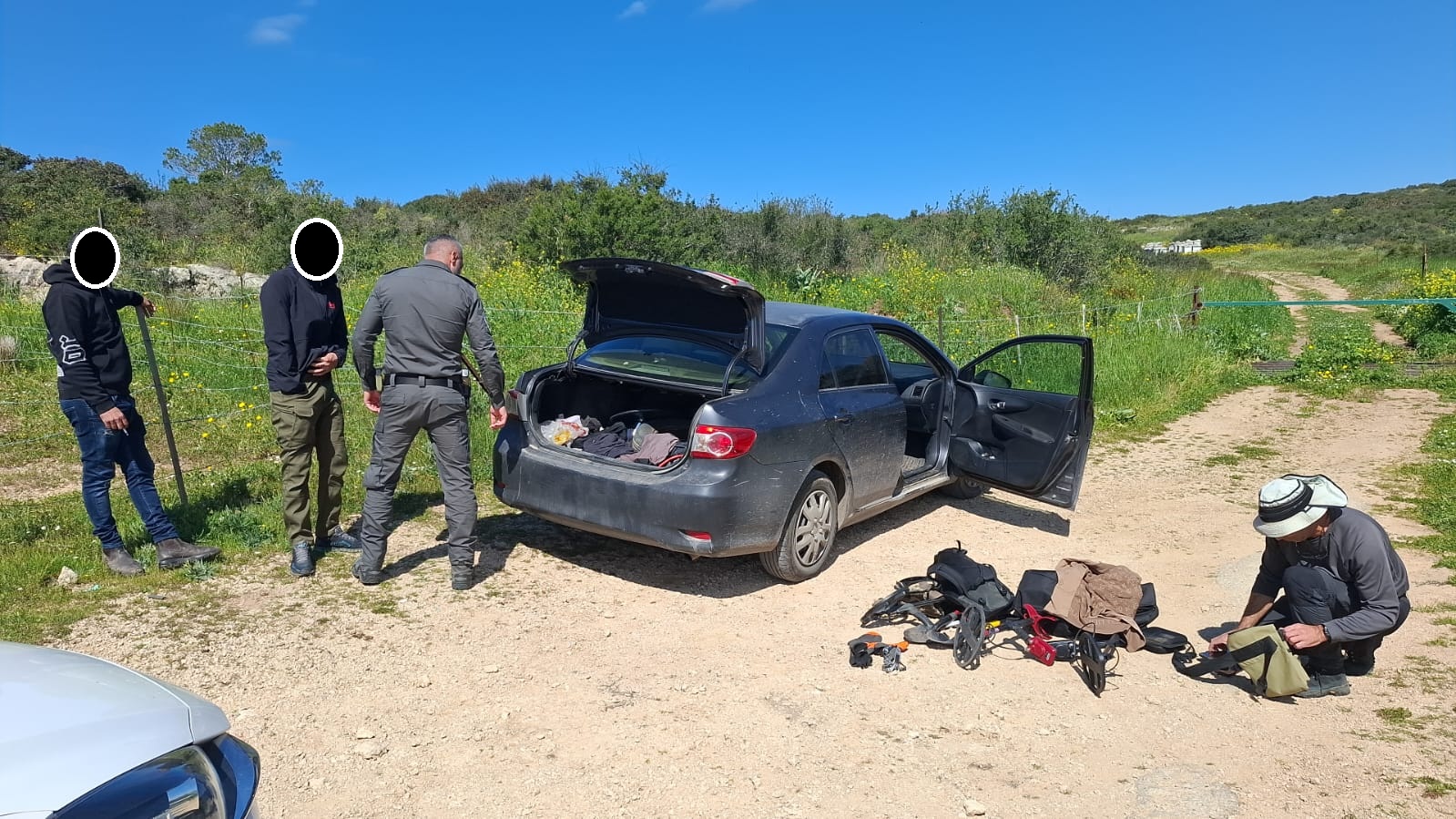
Israel Antiquities Authority inspectors, together with Israel Border Police forces, apprehended suspected antiquities looters at an active excavation site in northern Israel, even as missile sirens forced both officers and detainees to take shelter during transport.
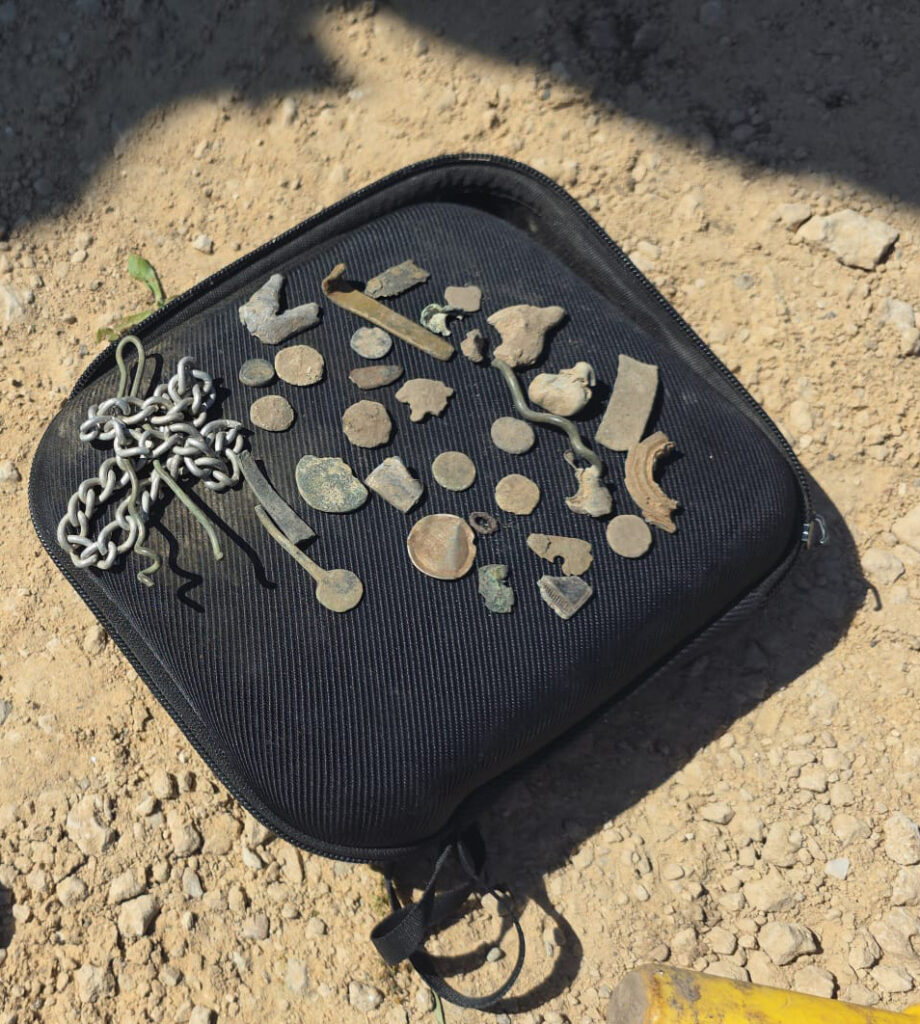
The ancient finds discovered with the suspects at Horvat Hadarim. Photo: Border Police Spokesperson
The suspects were caught at Horvat Hermesh, near the Elyakim Interchange, a site containing remains from the Roman and Byzantine periods, dating from the 1st century through the early 7th century CE. Inspectors from the Israel Antiquities Authority’s Northern Region Theft Prevention Unit arrived following intelligence and found two individuals inside a pit approximately two meters deep, conducting an unauthorized excavation adjacent to what appears to be an ancient oil press installation.
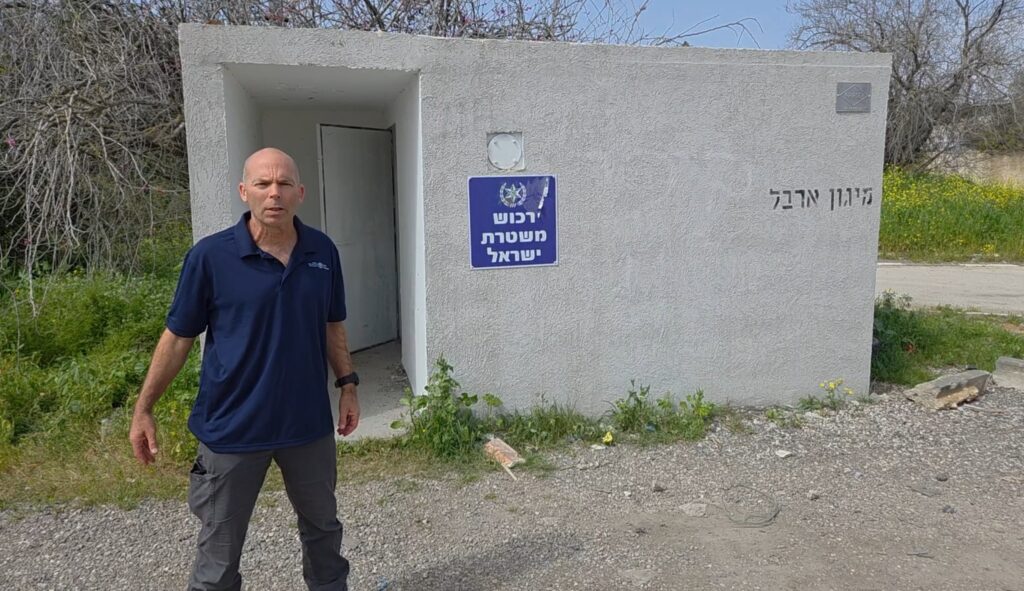
Israel Antiquities Authority inspector Nir Distelfeld beside the shelter. Photo: Eitan Klein, Israel Antiquities Authority
The suspects damaged archaeological layers and broke pottery artifacts during their excavation. Such finds are critical for dating and understanding settlement patterns in the region. After being detained, Border Police officers assisted in transporting the suspects to the Zikhron Ya’akov police station for questioning. During transit, a missile siren sounded, forcing the inspectors, officers, suspects, and civilians into a small roadside shelter, where approximately 30 people remained until the alert ended.
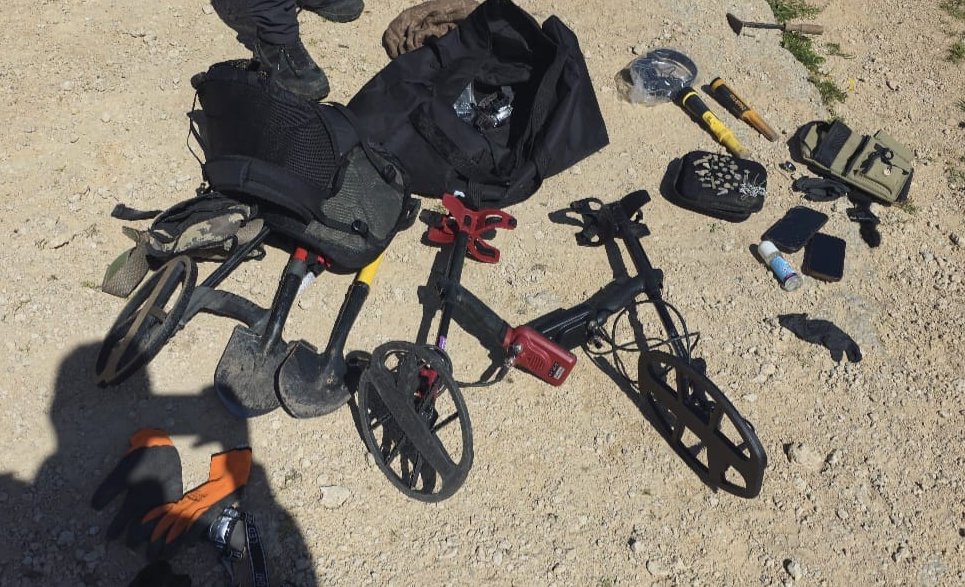
The equipment used by the suspects. Photo: Border Police Spokesperson
In a separate incident, enforcement teams operated at the Khorvat Drakhmon Nature Reserve along the Carmel Coast, where two suspects from the nearby town of Fureidis were caught using metal detectors and digging tools at the Horvat Hadarim antiquities site. The suspects were found in possession of artifacts believed to have been recently removed from the ground. The antiquities and equipment were confiscated, and the case has been forwarded for possible indictment.
According to Nir Distelfeld, Northern Region Supervisor of the Israel Antiquities Authority’s Theft Prevention Unit, “Surrealistically, even in such tense times, when security forces and citizens are faced with life-threatening issues, there are those who try to exploit the situation and search for antiquities in order become enriched, while harming Israel’s heritage sites. The Israel Antiquities Authority’s Theft Prevention Unit continues its activities on an ongoing basis, even during the war, with the aim of protecting the country’s cultural assets and past.”
Beyond financial motives, Israeli officials and archaeologists have increasingly warned that antiquities looting in Israel carries a deeper dimension. The destruction of archaeological layers does not merely remove objects from the ground; it erases the context that connects those objects to a continuous Jewish presence in the land. In doing so, looters effectively destroy evidence that anchors the biblical narrative in physical reality. In areas where the historical connection of the Jewish people to the land is contested, the loss of such evidence carries ideological weight, not just scientific loss.
Israeli Minister of Heritage Amichai Eliyahu said, “Antiquities robbers are not ordinary criminals, but rather saboteurs of history. They know full well that the archaeological finds in the Land of Israel are the infallible proof of our right to this land. Every pottery shard, every coin, and every relic testify that this has been our land and homeland since the days of our forefather Abraham.”
The scale of antiquities theft in Israel remains significant. The Israel Antiquities Authority reports that hundreds of looting incidents occur annually, particularly in remote areas where enforcement is more difficult. These crimes result in the permanent loss of historical data, as undocumented excavations destroy the context that gives artifacts their meaning.
The Bible places strong emphasis on preserving the inheritance of the Land. “You shall not remove your neighbor’s landmark, which the early ones have set, in your inheritance that you will inherit in the land that the Lord your God gives you to possess” (Deuteronomy 19:14). The Sages understood this as a prohibition not only against theft of property but against undermining the physical markers that define ישראל’s inheritance in the land.
The suspects remain under investigation, and authorities indicated that enforcement efforts will continue despite ongoing security challenges. In the view of Israeli officials, the fight against antiquities looting is not only about protecting artifacts, but about safeguarding the historical record that testifies to the Jewish people’s enduring connection to the Land of Israel.