
Every year, as Jews celebrate Purim, the story recorded in the Book of Esther reminds us that history is never merely political. Beneath royal decrees, shifting alliances, and geopolitical threats lies a deeper drama — the unseen hand of God guiding events toward redemption.
For believers watching today’s escalating tensions between Israel and Iran, the Purim story is not simply ancient history. It is a spiritual lens through which we can understand our present moment.
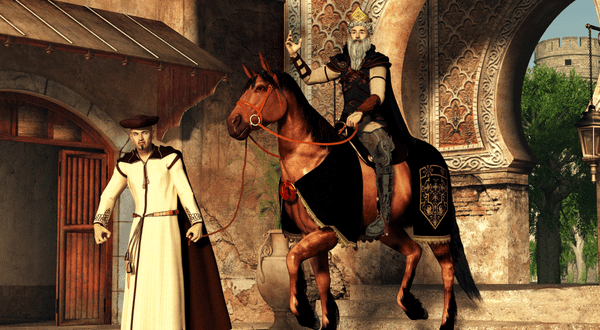
At the center of the Purim narrative stands Mordechai, a figure both heroic and surprisingly controversial. The scroll concludes with a curious statement: Mordechai was “great among the Jews and beloved by most of his brothers.” Jewish sages noticed something striking in that single word — most. Why not all?
One daring rabbinic teaching suggests that a minority criticized Mordechai precisely because he entered political life. Before rising to power in the Persian court, Mordechai was understood to be deeply devoted to spiritual pursuits — a man of study, prayer, and faith. Yet when the crisis came, he stepped into the messy world of governance, strategy, and national survival. Some believed that by engaging in politics, he had left behind a higher spiritual calling.
At first glance, this criticism seems almost unthinkable. After all, alongside Esther, Mordechai helped save the Jewish people from annihilation at the hands of Haman. Without political courage, there would have been no deliverance.
But the sages were not diminishing Mordechai’s greatness. They were revealing a deeper spiritual tension — one that remains alive today. When believers engage political reality, it can appear as though they have descended from the sacred into the ordinary. Yet Purim teaches the opposite: sometimes faithfulness requires stepping directly into history’s arena.
The Book of Esther is unique among biblical texts because God’s name never appears explicitly. There are no open miracles, no parted seas, no prophetic proclamations. Instead, salvation unfolds through diplomacy, timing, courage, and political maneuvering. Coincidences pile upon coincidences until the invisible becomes undeniable.
God is hidden — but active.
This hiddenness is precisely what defines our current age. Modern conflicts are analyzed through military capability, intelligence assessments, and international diplomacy. Analysts discuss nuclear thresholds, proxy militias, and deterrence strategies. Yet Purim reminds us that geopolitical struggles are never merely material conflicts. They are reflections of a deeper spiritual confrontation between forces aligned with life and forces aligned with destruction.
Ancient Persia, the empire of the Purim story, geographically overlaps with modern Iran. While history does not repeat itself mechanically, the parallels are difficult to ignore. Once again, a regime arising from that region openly declares hostility toward the Jewish state. Once again, the survival of the Jewish people becomes a global question. And once again, the outcome appears to hinge not only on military strength but on moral and spiritual resolve.
For Christians, this realization carries profound implications.
The New Testament teaches that believers wrestle “not against flesh and blood, but against spiritual forces.” Purim offers a Hebrew Bible illustration of that truth. Haman’s decree looked like ordinary imperial policy, yet behind it lay a hatred aimed at extinguishing God’s covenant people. The battle was political on the surface but spiritual at its core.
Mordechai understood this dual reality. He called Esther to act politically — to approach the king, influence policy, and risk her life — while simultaneously calling the people to fasting and spiritual repentance. Action and prayer were not opposites; they were partners.
This may explain why some struggled with Mordechai’s transformation. Humans often prefer spirituality that remains safely removed from public conflict. It feels purer to pray than to govern, holier to study than to strategize. Yet the Purim story insists that God sometimes works most powerfully through those willing to carry spiritual conviction into political responsibility.
In our time, many Christians wrestle with a similar question: should faith remain private and devotional, or should it engage global realities, including the fate of Israel and the threats posed by hostile powers?
Purim answers clearly. Silence in moments of moral crisis is not neutrality — it is abdication. Esther herself was warned that deliverance would come from another place if she refused to act, but she would miss her divine purpose. Faith does not remove us from history; it assigns us a role within it.
The lesson is not that politics itself is sacred. Politics remains imperfect, contentious, and often disappointing. Rather, the lesson is that God’s providence operates even through imperfect systems and flawed human decisions. What appears to be diplomacy may actually be divine positioning. What looks like a coincidence may be calling.
Today’s headlines may speak of military alliances and strategic deterrence, but believers should recognize a deeper narrative unfolding. The same God who worked behind palace doors in ancient Persia continues to guide history toward His purposes.
Mordechai’s critics saw only a man who left the study hall for the royal court. Heaven saw a servant willing to bring faith into the arena where history would be decided.
As Purim approaches, the question is not only what happened long ago. The question is whether we recognize the hidden hand of God in our own generation — and whether we, like Mordechai and Esther, are willing to stand faithfully at the intersection of prayer, courage, and history.
Because sometimes the most spiritual act is not retreat from the world, but faithful engagement within it — trusting that even when God seems hidden, He is already writing the ending.

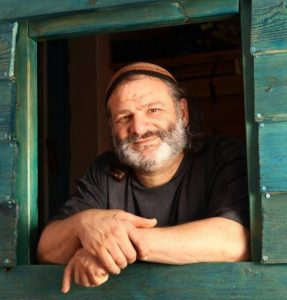
Rabbi Mark Fishman is the Manager of North American Engagement at Israel365, where he builds bridges between Jewish and Christian communities across the US to strengthen support for Israel. Formerly a synagogue rabbi in Montreal, he moved to Efrat, Israel in 2022.