




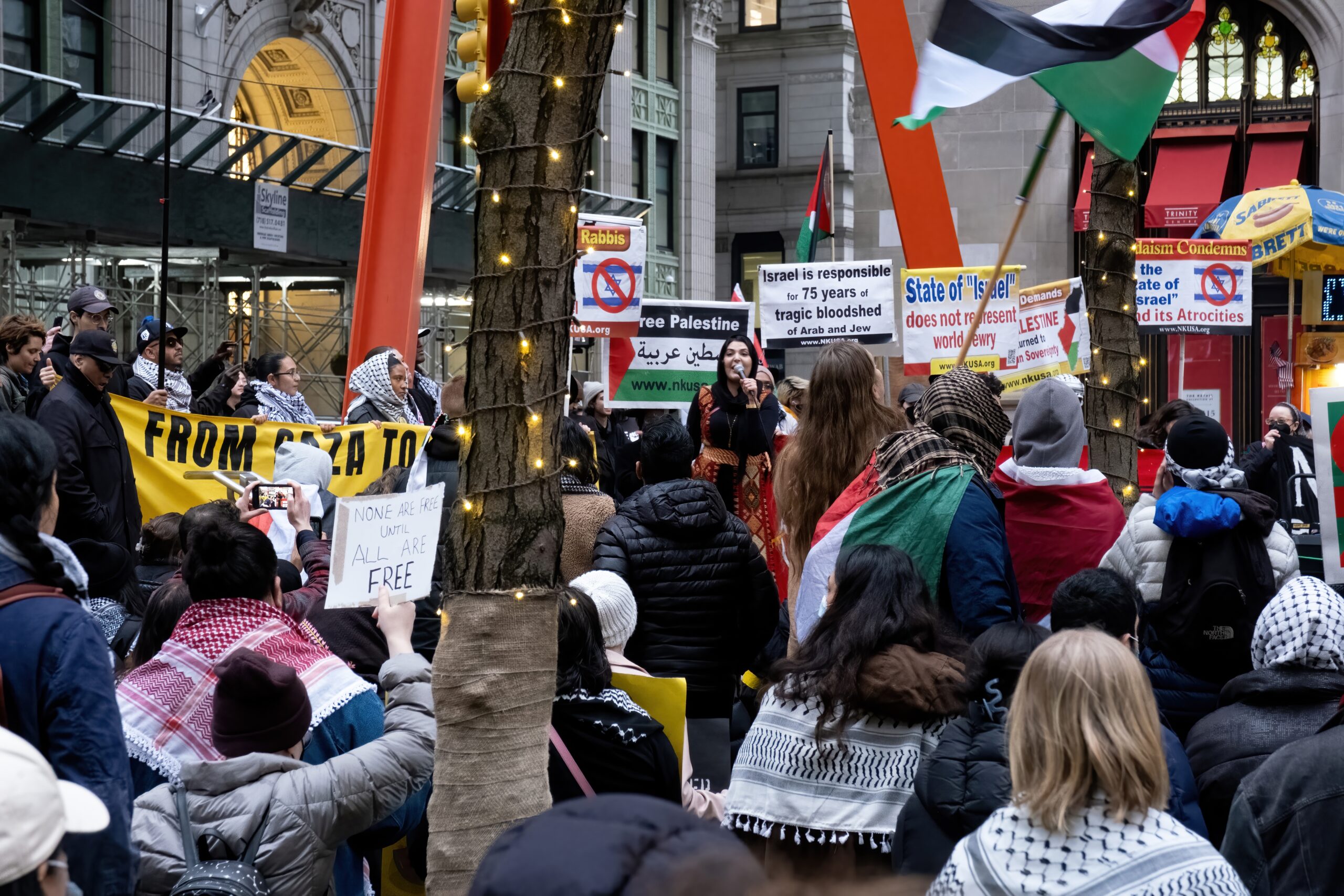
A New York activist known for defending what she calls “Palestinian resistance” ignited fresh controversy this week — not over Israel, but over dogs.
Nerdeen Kiswani, founder of Within Our Lifetime (WOL), posted on X that dogs have a “place in society” but “not as indoor pets,” describing the practice as “un-Islamic.” In a city with an estimated 600,000 dogs and more than $1.5 billion in annual pet-related economic activity, the comment drew immediate backlash.
Kiswani later attempted to walk back the statement, writing, “‘[Laughing] at the Zionists frothing at the mouth at this, thinking they’re doing something. It’s obviously a joke. I don’t care if you have a dog, I do care if your dog is s***ting everywhere and you’re not cleaning it.’” She added that she was “clearly trying to weigh in on an issue, unaware of the current NYC discourse where we’re collectively (jokingly) hating on dogs.”
Kiswani has spent more than a decade organizing anti-Israel demonstrations across New York City. Her organization, Within Our Lifetime, openly calls for the elimination of Israel and promotes the slogan “from the river to the sea, Palestine will be free,” widely understood as a call to erase the Jewish state.
On October 8, 2023, one day after Hamas terrorists invaded southern Israel, slaughtered 1,400 Israelis, and abducted more than 200 hostages, WOL called for a rally in New York “as we mobilize to defend the heroic Palestinian resistance, honor our martyrs and let the world know that NYC stands with Gaza.” Kiswani shared the post. The WOL website states that oppressed people “have the right to win their liberation by any means necessary.”
Her record stretches back years. In 2014, after terrorists affiliated with the Popular Front for the Liberation of Palestine murdered four worshippers in a Jerusalem synagogue with guns and meat cleavers, Kiswani shared a PFLP statement calling the attack a “natural response.” WOL has circulated material venerating PFLP and its leader, Leila Khaled, who hijacked TWA Flight 840 in 1969 and El Al Flight 219 in 1970. In 2022, Kiswani shared a meme declaring that Israel “will be wiped off the map inshallah.” The same year, she delivered a commencement speech at CUNY Law School attacking “Zionists” and condemning trips to Israel as “normalization.”
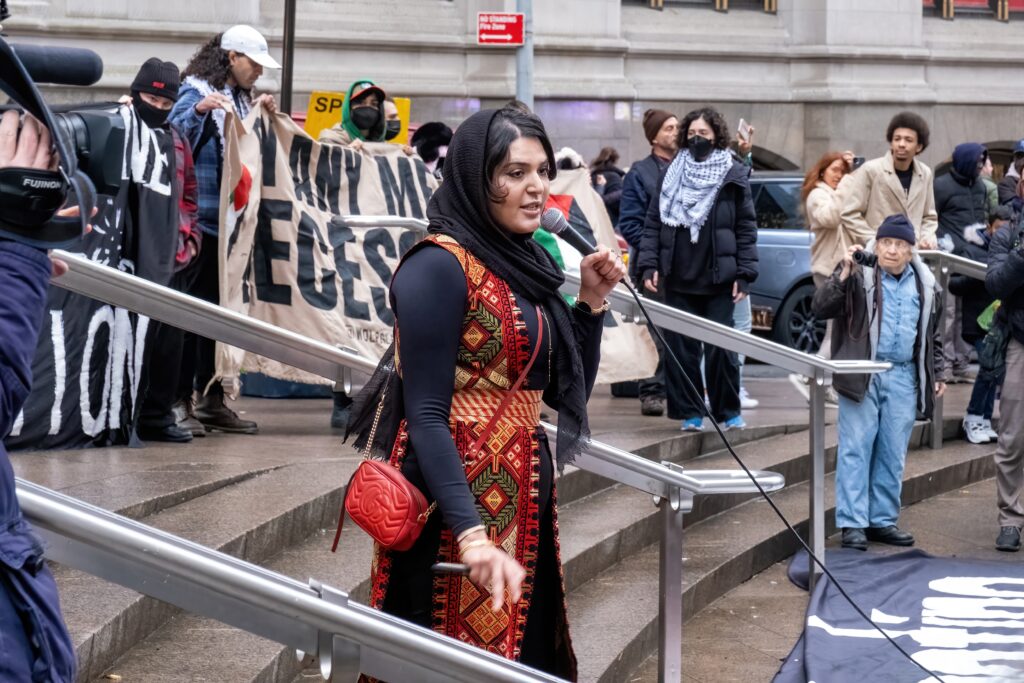
Kiswani’s relationship with State Assemblyman Zohran Mamdani has also drawn scrutiny. The two have appeared together at protests and share roots in New York’s anti-Israel activism. Mamdani has publicly supported Palestinian causes and criticized Israel, positioning himself within the same activist ecosystem that WOL leads in the streets.
In Islamic law, dogs are considered najis — ritually impure — by many scholars, particularly regarding saliva, which requires washing seven times, one with soil, if contact occurs. Dogs are permitted for guarding, hunting, and farming, but keeping them purely as indoor pets for leisure is widely discouraged. Kiswani’s remarks reflect that jurisprudential view, though framed in the context of New York’s pet culture.
Jewish law takes a different tone. The Bible records that even in moments of national redemption, animals are not vilified. “But against any of the children of Israel shall not a dog whet his tongue, against man or beast; that you may know that the Lord makes a distinction between Egypt and Israel” (Exodus 11:7). The verse underscores Divine protection over Israel, not hostility toward animals.
New York ranks first in the United States for “pet pampering,” according to a Forbes Advisor survey. Forty-two percent of New York dog owners throw birthday parties for their pets. Fifty-nine percent buy them clothes or accessories. Roughly one in seven city households has at least one dog.
Kiswani’s comment may have been labeled a joke after the backlash. Her record of endorsing violence against the Jewish state is not satire. Her activism is consistent, public, and documented. In a city where hundreds of thousands treat dogs as family members, her remarks are another reminder of the ideological worldview she represents — one that has long targeted the legitimacy of the Jewish state and those who support it.
