

Three weeks ago, Israel365 News published an article citing a Middle East Forum investigation documenting Mormon-affiliated charities transferring approximately $140 million to organizations with indirect links to Hamas. The investigation has forced a closer examination of a complex issue plaguing humanitarian organizations operating in Gaza: the near impossibility of delivering aid without engaging Hamas-controlled infrastructure. The findings expose a dilemma facing every major religious and humanitarian organization attempting to serve suffering populations in terrorist-controlled territories.
In a YouTube video discussion published last Wednesday, this reporter joined Jared Davies of the Christian Homesteader channel and Jasmin Rappleye, a Latter-day Saints researcher formerly with Scripture Central, to discuss the controversy. The conversation revealed both the sophisticated nature of Hamas’s charitable front operations and the extensive pro-Israel history of the LDS Church that predates modern Zionism by decades.
The Church of Jesus Christ of Latter-day Saints, which has maintained a century-long commitment to Israel and the Jewish people, faces questions about charitable partnerships that appeared legitimate at the time they were established. The investigation documents funding flowing through Globus Relief, a Salt Lake City-based charity run by senior church members, to Islamic Relief and other organizations whose branches have connections to Hamas officials in Gaza. LDS Charities donated $200,000 to MedGlobal in 2017, an organization whose CEO, Dr. Zaher Sahloul, was publicly praised by LDS President Dallin H. Oaks in a 2022 church conference as an example of faith-based humanitarian service.
The investigation traced complex funding chains. Globus Relief transferred $119 million to ten Islamist-affiliated recipients, according to tax return data. Islamic Relief, a leading recipient, operates branches that have been flagged by Dutch and German governments as having connections to Muslim Brotherhood networks. Lifting Hands International, another Mormon-run charity, provided nearly $20 million to Helping Hand for Relief and Development, which some governments identify as connected to Jamaat-e-Islami, a South Asian Islamist movement.
Rappleye examined the tax forms carefully. “When I first saw the article, I thought, ‘Oh, interesting. This is not necessarily my area of expertise.’ So I’m sure there’s just more going on under the surface. And the more I dug into it, the more I realized, okay, yeah, there’s a much bigger story here,” she said in the video discussion. “The biggest headline, like $140 million, was the thing that sounds like a lot, but first of all, I discovered that almost all of it, from what I could tell, was non-cash. It was in kind. So medical supplies, things like masks, things like gloves.”
The distinction matters. Davies reviewed the IRS Form 990 schedules for both charities. “When you look at schedule I for the 990, it shows there are two columns. One shows how much was given in cash and how much was given in non-cash donations,” Davies explained. “For them, they never gave any cash.” Lifting Hands International showed similar patterns. “For the last few years, there was some cash, but relatively speaking, it was pretty small. And then, before, just a few years ago, it was all just things like medical supplies and stuff like that.”
Rappleye emphasized another critical finding: “Most of that $140 million was actually coming from Globus Relief, which is a Utah charity, and there are members of the church who run that, but it is not run by the Church of Jesus Christ of Latter-day Saints officially in any capacity.” The distinction between official church operations and member-run charities became a recurring theme. “Lifting Hands International and Globus Relief are completely external third-party entities that are not officially overseen by church leaders or the church of Jesus Christ institutionally in any way, from what I could tell,” Rappleye said.
The points raised expose the fundamental challenge facing any humanitarian group working in Palestinian territories. Hamas controls the Gaza Ministry of Health, the distribution networks, and the bureaucratic infrastructure. Delivering medical supplies, food, or water requires navigating systems that Hamas directly manages or influences. This creates a maze of intermediary organizations, shell groups, and fronts that make tracking the ultimate destination of aid nearly impossible for even the most careful donors.
This reporter explained the mechanics to Davies and Rappleye: “Money is fungible. So if you’re giving, even if you’re giving in-kind donations, it frees up money for something else that might be nefarious.” The problem extends beyond simple accounting. “They layer the charities. It’s not like you’re giving to a guy who’s wearing a kaffiyeh and has a Kalashnikov. You’re giving to people who may have an obtuse, a multi-layered connection where, if you dig long enough, you’ll see that’s where it’s going to, it’s trickling down to. And it’s not so easy, and they’re very clever about it.”
Drawing on personal experience as a former IDF combat medic, this reporter described the deception firsthand. “I was a medic in the army, and one time I was serving in Ramallah when Yasser Arafat was there, it was his last year there. And I’m a I was a medic, and I’m a nice guy, I’d like to think. And I’m working at a checkpoint, and the Palestinian ambulances had to go through the checkpoint, and I understood the emergency, the immediacy. So I would try to like, you know, get them through as quickly as possible, and I would look at them. I’m like, ‘Okay, we’re working together, right?’ And they’re like, ‘Yeah.’ And then one time my officer was there, and he didn’t let them go through, and we caught them with weapons because ambulances are great for transporting equipment.”
The manipulation extends to humanitarian reporting itself. “Another time there was a huge riot and I literally saw in front of my eyes the ambulances being used to transport people who were fighting and then they would also pick up young people who were pretending t be wounded, put them into the ambulance, drive them away and I would literally with my own eyes see them get out of the ambulance and go back out to the riot.”
The complexity extends beyond simple delivery logistics. Organizations receiving funding through LDS-supported intermediaries include groups with troubling connections that were not apparent during initial vetting. Islamic Oasis, which received funding through these chains, has expressed support for extremist causes. Human Appeal, which received $12.5 million from Mormon sources, has been accused of overseas funding operations for Hamas student groups. The critical question remains whether these connections were visible at the outset or emerged only after years of operation.
The investigation also examined the church’s investment arm, Ensign Peak Advisors, which held over 200,000 shares in Türkiye Trend GYO, a Turkish real estate firm later identified by Israeli intelligence as part of Hamas’s investment portfolio worth over $100 million. The church maintains that a U.S.-based investment adviser bought the shares on its behalf without knowledge of Hamas ties—a claim that highlights how deeply Hamas has embedded itself in legitimate financial markets, making it difficult even for sophisticated investors to avoid inadvertent connections.
When Davies saw the Israel365 News article listing “news about the church under a section called terror watch,” his immediate response was to reach out. “I was like what, what is going on here?” Davies said. “So I reached out to him just to hopefully ease some of his concerns and to help him know what the church believes when it comes to the state of Israel.”
This reporter acknowledged the discomfort. “To be honest, I felt really uncomfortable because you and I have done interviews. And though I didn’t have any personal contact with the Church of Latter-day Saints or any Mormons before this, we were very open and honest. And I don’t see any theology or ideology within the Mormons that’s anti-Israel. Unlike some other faiths or communities that have an anti-Israel agenda and even an anti-Semitic agenda, I don’t think that exists among the Mormons. So I was surprised, but a closer look, I think I understood what was going on.”
This controversy appears particularly jarring given the Mormon church’s documented history of supporting Israel and the Jewish people. In 1841, Elder Orson Hyde of the Quorum of the Twelve Apostles climbed the Mount of Olives and offered a dedicatory prayer for “the gathering together of Judah’s scattered remnants, according to the predictions of the holy prophets.” Twenty years before Theodor Herzl’s birth, the Mormon church was already advocating for Jewish return to the Land.
“Now, O Lord! Thy servant has been obedient to the heavenly vision which Thou gavest him in his native land; and under the shadow of Thine outstretched arm, he has safely arrived in this place to dedicate and consecrate this land unto Thee, for the gathering together of Judah’s scattered remnants” (Orson Hyde’s Dedicatory Prayer, October 24, 1841).
The Mormon commitment to Israel extends beyond historical prayers. Davies read from the church’s Doctrine and Covenants during the video discussion: “In our church, we believed, we believe that temples have come back. In the first temple that was constructed in these times, what we call the last dispensation, it was the Kirtland, Ohio temple. And every temple has a dedicatory prayer. And this one we believe was given by Revelation and it’s become part of our scripture like one of the chapters of our book of scripture called Doctrine and Covenants.”
The prayer, given by Joseph Smith in 1836, includes explicit support for Jewish return: “We therefore ask thee to have mercy upon the children of Jacob, that Jerusalem, from this hour, may begin to be redeemed; And the yoke of bondage may begin to be broken off from the house of David; And the children of Judah may begin to return to the lands which thou didst give to Abraham, their father” (Doctrine and Covenants 109:62-64).
Davies emphasized the significance: “So with that first temple built in this dispensation, like that was part of the prayers for the Jews to begin to return to the land. And then that was back in 1836.”
Davies continued reading from the 1845 Proclamation of the Twelve Apostles: “In our church, so far there are six official proclamations. The most recent one was given in 2020. But the first one was to the British saints in the early days of the church that had just recently converted asking them to, hey, will you guys come gather to the United States and join the main body of the church? But the second one was like to the whole world.”
The proclamation stated: “We further testify that the Jews among all nations are hereby commanded in the name of the Messiah to prepare to return to Jerusalem and Palestine and to rebuild that city and temple unto the Lord and also to organize and establish their own political government under their own rulers, judges, and governors in that country.”
Davies added: “So from the very early days of the church we’ve held the belief that the Jews are supposed to gather in, right, make aliyah to Israel. And so that’s why when I saw that article, I thought maybe there were mistakes made, but the church has not sided with Hamas against Israel whatsoever.”
Davies explained the ongoing connection: “In 1841, one of our 12 apostles was sent to Israel specifically to dedicate the land for the return. His name was Orson Hyde. And that’s where we get this. I don’t know if you know about it, but on the Mount of Olives, there’s the Orson Hyde memorial garden.”
Davies continued: “Yeah. There’s a memorial on the Mount of Olives called the Orson Hyde Memorial Gardens, and it commemorates his trip, which, back then, was really difficult. It took him a while to get there, and my understanding is that he got sick along the way, but he went there specifically to dedicate the land for the return of the Jews.”
Davies cited academic research documenting the pattern: “BYU put out a paper which is really interesting. It’s called In the Footsteps of Orson Hyde. And this was the first time that I learned that there were multiple apostles sent in the subsequent years that were sent to dedicate the land, going from the first one, who was 1841, with Orson Hyde, going all the way until 1933 with J. Widtsoe. But there were maybe seven trips that were made.”
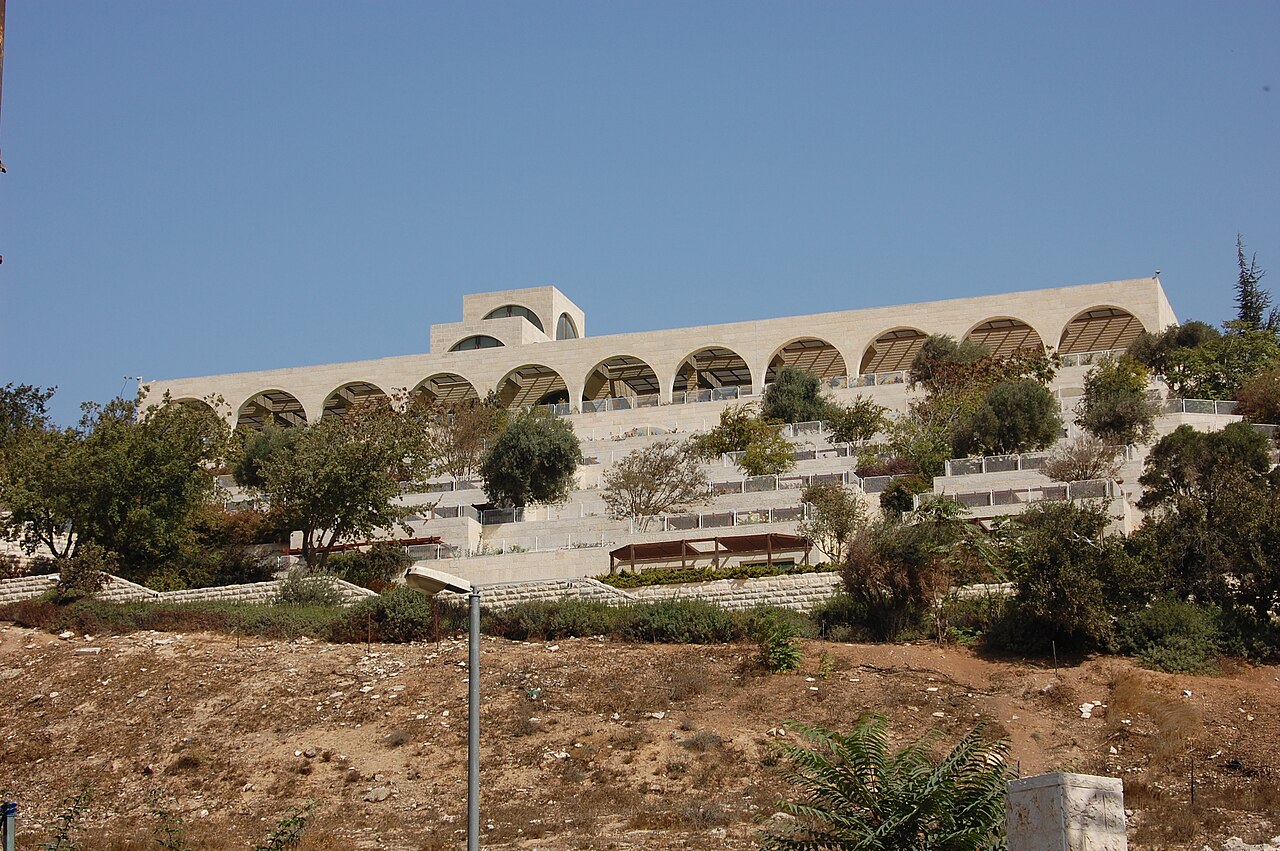
The church’s pro-Israel actions match its theological positions. The Orson Hyde Memorial Garden on the Mount of Olives was dedicated in 1979 with cooperation from Israeli and Arab officials. The BYU Jerusalem Center, established in 1988, maintains an ongoing presence in the city. Church leaders have met repeatedly with Israeli Prime Minister Benjamin Netanyahu and worked with Jewish organizations, including the American Jewish Committee and Magen David Adom.
In 2016, Elder Jeffrey R. Holland and Elder Quentin L. Cook joined former Senator Joe Lieberman and prominent Jewish leaders in Jerusalem to commemorate the 175th anniversary of Hyde’s prayer. Elder Cook specifically discussed joint humanitarian projects between Mormon and Jewish communities. The church has donated to Magen David Adom, partnered with Jewish refugee resettlement groups, and maintained interfaith dialogue.
Mormon scripture even rebukes Christians who fail to acknowledge their debt to the Jewish people: “What thank they the Jews for the Bible which they received from them? Yeah, what do the Gentiles mean? Do they remember the travails, and the labors, and the pains of the Jews, and their diligence unto me, in bringing forth salvation unto the Gentiles? O ye Gentiles, have ye remembered the Jews, mine ancient covenant people? Nay; but ye have cursed them, and have hated them” (2 Nephi 29:4-5).
The theological depth became clear during the video discussion. Davies explained: “We have a fundamentally different view, I think, when it comes to Jews. Like when you look at other Christians, because we still view the Jews as a covenant people, like that hasn’t gone away. They’re still a covenant people. So it’s the concept of Israel and being a chosen people. We do believe that you can join Israel, like you can be baptized into it essentially. You know, it’s like a full-body immersion in a mikvah. It’s a baptism, as we call it. But that Israel is meant to last forever as a people in tribes, and Judah’s not cast away.”
The contrast with replacement theology struck home. “Which was most of Christian history with the replacement theology,” this reporter noted. “Yeah, which is that we were on the outside and we had been replaced.”
This reporter’s response was unguarded: “I really have no words. I mean, there’s politics and there’s news reporting. I never would have published this article. I didn’t write it, by the way. But I’m responsible for the news that goes out. You were praying for us when no one else was. It was us against the world.”
Later in the discussion, the emotion returned: “I’m literally crying. You just so touched me right now. I the fact that your church was praying for the Jews to return in 1830. I have no words. Considering what we went through in Europe and what happened before and what happened after, the fact that there was a church praying for Israel. I have no words.”
Davies connected Mormon persecution to Jewish history: “We feel a very particular kinship to the Holy Land because there’s not just what happened in the past, but what we believe can happen in the future. And we believe that Christ will return, and that Israel will play a major part in that. And we have a great love kinship to the Jews, too, because of persecution. Not that we’ve received like even a fraction of what you have throughout history, but since the church was established, it’s been just nothing but persecution.”
He described the Missouri experience: “As far as I know, and I’m pretty sure about this, there hasn’t been any other religious group in the United States that had an extermination order signed by a governor of the state against them. The governor of Missouri at the time, Lilburn Boggs, issued an extermination order. It was legal to kill us if we didn’t leave the state. And so we’ve had a lot of people who have died here. There’s a famous incident called Haun’s Mill where 17 died. Like I said, it’s nothing compared to what the Jews have experienced. But like we’ve been driven from Ohio, Missouri, and then we were in Illinois for a while in a place called Nauvoo and driven out of there. And we had to go all the way across the plains all the way to Salt Lake.”
The church leadership conducted what appeared to be reasonable due diligence on these partnerships. LDS President Dallin H. Oaks publicly cited Dr. Sahloul and MedGlobal as positive examples of faith-based humanitarian service at a 2022 church conference. This public endorsement suggests the church leadership viewed these partnerships as legitimate charitable work after evaluating their mission and operations. The connections to problematic actors appear to be several degrees removed from the direct partnerships, buried in complex organizational networks that even experienced humanitarian professionals can’t decipher.
Rappleye detailed Globus Relief’s vetting processes: “I can’t speak necessarily for the official institutional church of Jesus Christ, but I know with Globus Relief in light of some of the stories that have come out, they have talked about how their own process of ensuring that the supplies go where they’re supposed to. They never give out cash. It’s always supplies. They require a delivery receipt with photographic evidence, and then detailed reports on how it was used. Now granted, those can be deceived, and you can be fraudulent in how you’re reporting back to the nonprofit about how you use those supplies, but at least those were the checks that they’ve stated they’ve tried to put in place to make sure that help is going where they intend it to go.”
The moral complexity emerged as a central theme. Rappleye asked: “Would your position be that it is not possible to provide relief to suffering in a place like Gaza without propping up the regime?”
This reporter responded carefully: “God forbid. otherwise I’d give up hope. You know, there’s an interesting question. I don’t think this applies to the Latter-Day Saints at all, but I think there comes a point at which the bad actors don’t even hide anymore, and if you continue to help them, you’re complicit. And I don’t think that’s the case with you at all. And I don’t think you were entirely foolish or naive, which is why you gave most of the aid in kind and not in cash, but UNRWA was absolutely complicit.”
The reporter distinguished between inadvertent support and intentional complicity: “There comes a point at which ignorance becomes complicity, and I think that’s absolutely something that anyone in the humanitarian space needs to be aware of and be so diligent in guarding against.”
Rappleye acknowledged the difficulty: “It’s absolutely heartbreaking and infuriating when people do weaponize empathy to actually fuel and funnel their own political agenda and ideology. There are lots of people who feel sympathy and empathy for people who are suffering, wanting to give, and then, if systems take advantage of that, that’s terrible. It is absolutely awful.” She continued: “Christians who feel a need to help the suffering in every part of the world, every country has suffering, every country has poor and needy, and we want to help as many as we can as possible.”
She described the ethical dilemma: “I think there’s a decent argument either way that we need to relieve suffering. If you feel like giving to any kind of charity that has any link to this area of the world is going to be complicit in the harm they’re causing, then I think that’s a reasonable position you can take. And if you’re someone who says yes, but I still want to help where I can, even though I know there’s a domino effect somewhere, heck, I think there’s a domino effect of using paper straws instead of plastic straws.”
This reporter emphasized the need for hardheaded charity: “I’ve been blessed to know a few philanthropists, very wealthy people who you wouldn’t know they’re very, very wealthy, but they give a lot of charity. These guys are smart, and they’re even a little bit hard. They’re tough. And unfortunately, we’re living in a world where you have to be if you want to do good, and if you want to really bring good into the world, you have to be very smart and tough. Otherwise, it’ll end up not doing good.”
The fundamental issue remains: humanitarian charities operating in Gaza face a binary choice. They can either refuse to work in the territory entirely, leaving millions of Palestinians without aid, or they can engage with the systems Hamas controls, accepting the risk that their resources will be diverted or that their presence will legitimize terrorist infrastructure. Most major international aid organizations, including United Nations agencies, face identical dilemmas.
The preference for in-kind donations over cash reflects this understanding. When Davies asked why the charities avoided cash transfers, this reporter responded: “You kind of knew if you give them cash, what are they gonna do?” The pattern holds across the board. “When you go through the list, it’s not just these different organizations like Islamic Relief and Muslim Aid. It was a bunch of like other organizations, too. Like here in the United States, across the board, it’s not cash for all these different organizations, with a few exceptions, with Lifting Hands International. For some reason, there were a few where they gave a little bit of cash, but pretty much across the board, whether it’s in Israel, the Palestinians, or here in the United States, it’s all it’s non-cash. Why don’t you give them cash? Because you know that their inclination is to misuse and abuse your goodwill, and that’s really what is happening.”
The reporter cited UNRWA as an example: “The United Nations Relief and Works Association is the number one employer in Gaza, and they would get the money from the United Nations, and it would be in dollars, but using dollars is illegal in Gaza. They had to exchange it, strangely enough. I think it was for Israeli shekels, for Israeli shekels, and the only people who were allowed to exchange money were Hamas. So they were right off the top, getting at least 10% of the UNRWA paychecks. So they’ve got these systems in place where they just know how to work every system, and they are using your goodwill. And as I said, you know that’s the game. That’s why you don’t give them cash. You know, it’s like you don’t give cash to a drug addict.”
But even in-kind donations face exploitation. This reporter explained: “You give them enough money for 100 wheelchairs and they buy 10.” The resale problem compounds the issue: “They might resell them. I wouldn’t put it past that.”
The Sages taught that feeding the hungry and caring for the sick represent core religious obligations. Yet they also understood that supporting those who seek Israel’s destruction violates the most basic principle of self-preservation. The tension between these values creates an impossible situation for organizations attempting to maintain both humanitarian commitment and political clarity.
The Mormon church has begun reviewing its charitable partnerships following the Middle East Forum investigation. LDS Charities operates under the church’s tax-exempt status and does not file public tax returns, which makes external auditing difficult but does not indicate intentional opacity. The church maintains internal oversight procedures for its humanitarian work, though the investigation suggests these procedures require strengthening to account for the sophisticated methods Hamas uses to infiltrate legitimate aid networks.
Rappleye emphasized the importance of distinguishing official church operations from member activities: “One thing that I’ve noticed in this conversation is Latter-day Saints are usually very careful to distinguish the official Church of Jesus Christ of Latter-day Saints from members of the church who do stuff. And I recognize that that distinction doesn’t always exist across other religious traditions because we tend to be a very centralized church. We have an institution, and that institution controls very tightly, you know, the curriculum and what happens. And so when we see these external nonprofits donating to these charities, well, they have nothing to do with us. They’re not us, but you know, they were members of the church.”
She noted the cultural difference: “I know from what I understand, correct me if I’m wrong, Judaism is not highly centralized. If we were to see charities run by Jewish people, and you say, oh, that’s a Jewish charity, that would make a little bit more sense. But for Latter-Day Saints, calling something a Mormon charity when it’s not run by the Church of Jesus Christ of Latter-day Saints just feels completely different to us. Pf there’s a nonprofit doing bad stuff, throw them under the bus, put them in jail, you know, stuff like that.”
She outlined the church’s vetting standards: “I would love to see, so I know that the church doesn’t work with any charities that aren’t already approved through COGAT or you know Israeli authorities, and they use Charity Navigator to help them vet. I imagine they also have other additional vetting ones. I would love to see COGAT highlight some of these concerns that these media outlets have about Islamic relief, about Muslim aid, and if those aren’t approved through Israeli authorities, let’s address that.”
This reporter affirmed the church’s diligence: “First of all, I’m stunned. You clearly did far more than your due diligence when vetting these. And I think that’s also because if you’ve been giving humanitarian aid and charity to organizations, you’re going to smarten up really fast because you’re going to be dealing with people who want to abuse that. And that’s what happened here. But I don’t see any culpability here.”
The Middle East Forum investigation serves as a warning for all organizations working in Palestinian territories to conduct even more rigorous vetting of their partners. The layers of intermediary groups, the shell organizations, and the difficulty of tracking funding make it easy for well-intentioned charities to inadvertently support terrorism despite reasonable precautions. Hamas deliberately exploits this complexity, using humanitarian need as cover for its financial networks. No organization can assume its initial vetting remains valid as partnerships evolve and organizations change leadership or direction.
The problem extends beyond Gaza-specific charities. This reporter observed a troubling pattern: “It seems like when you track NGOs there are NGOs they’re wonderful they’re beautiful until they get to Gaza, until they get to Israel and then all of a sudden these wonderful beautiful people they start aiding and helping Hamas literally and maybe it’s because Hamas they’re in charge so if you want to do any good you have to work with them or maybe they just don’t like Israel.”
He cited Doctors Without Borders as an example: “They do lovely work all over the world and we have videos of them transporting, transporting Hamas terrorists. A lot of the food that was going in was using the jeeps. You see the terrorists in the jeeps that these organizations have the NGOs have.”
The ideological component complicates matters further: “A lot of people want to do good when they’ve set up Israel as bad, Israel’s evil, and then anything they can do against Israel they’ll do. That’s not you guys.”
Rappleye asked about aid distribution outside the Middle East: “Most of the involvement I was able to track with both Globus Relief, Lifting Hands, and the Church of Jesus Christ was in things not in the Middle East. So things like relief for the hurricane in Haiti many years ago, relief for flooding in Pakistan, relief for people in the United States, just through that charity. So does it make a difference where that relief is actually going? Like if Globus donated medical supplies to Islamic Relief that then gave those medical supplies to a flood in Louisiana, is that still having, is that still supporting terror in the Middle East?”
This reporter acknowledged uncertainty but maintained vigilance: “I won’t pretend to know, but I will say this. It seems like when you track NGOs, there are NGOs that are wonderful, they’re beautiful until they get to Gaza, until they get to Israel, and then all of a sudden, these wonderful, beautiful people they start aiding and helping Hamas.”
The Mormon church’s century-old commitment to Jewish return and Israeli sovereignty remains authentic and well-documented. The church leadership has demonstrated genuine friendship toward Israel and the Jewish people through both theological teaching and practical action over generations. The documented flow of funds to organizations with indirect ties to Hamas appears to represent a failure of oversight rather than intent. The church now faces the task of demonstrating that its pro-Israel commitments extend to implementing the enhanced vetting procedures necessary to prevent even inadvertent support for terrorism.
This reporter stated plainly during the video: “I now I feel like I absolutely have a requirement to write an editorial about the article that I shouldn’t have published.” The recognition of the church’s authentic pro-Israel stance came through clearly:
The reporter concluded his assessment: “I don’t see any culpability here. Israel, we’re used to being so much on the short end of the stick, so demonized that we don’t really explain like we just shut down UNRWA. We just shut down the NGOs that we catch them red-handed… I really I do have to write an editorial response to the article that went out on Israel 365. You’ve explained to me how you’ve done your due diligence, and it’s really it’s wonderful.”
Davies offered a closing perspective: “I think it is very much like if I had just like a closing statement, the church tries its best to be politically neutral and help as many people relieve suffering, but they also completely condemn terrorism. And they try very hard to vet partners in the Middle East, but you know, we can always do better.”
This reporter agreed with the fundamental principle: “You can’t just sit by and watch what’s happening in Gaza and say, ‘I’m not going to help those people because it might get to Hamas.’ You have to help. I mean, even Israel, you have to help.”
The broader lesson applies to evangelical Christians and other groups supporting humanitarian work in Gaza. Proximity to need does not justify partnership with evil, but identifying evil within layers of humanitarian bureaucracy requires investigation capabilities beyond what most religious organizations possess. The complexity of aid distribution in Hamas-controlled territory demands heightened scrutiny and continuous monitoring. Organizations must accept that some environments are so compromised that humanitarian work requires extraordinary measures to avoid complicity—and that even extraordinary measures sometimes prove insufficient.
The Mormon church now has the opportunity to lead by example. Its historical support for Israel and theological commitment to Jewish restoration remain authentic and unquestioned. The documented evidence of funding flows to organizations with indirect Hamas connections reveals the sophistication of terrorist financing networks rather than Mormon malice. The church can demonstrate leadership by transparently investigating its charitable partnerships, severing ties with any compromised intermediaries, and implementing enhanced vetting procedures that other religious organizations can adopt.
Israel’s security and the defeat of Hamas terrorism require more than good intentions. They require allies who prioritize truth over comfort and accountability over reputation. The Middle East Forum investigation has provided valuable information that allows the Mormon church and other organizations to improve their vetting processes. The Mormon church’s pro-Israel commitments, demonstrated over 180 years, position it to lead the way in showing how religious organizations can maintain humanitarian work while ensuring that not a single dollar reaches those who seek Jewish destruction. This investigation represents not an indictment of Mormon intentions but a call to strengthen the systems that protect well-meaning donors from terrorist exploitation.

