By Grace Keathly
“It’s finally October 8th” has flooded my social media in recent weeks. “We can finally start healing” and “we can finally breathe,” a sentiment shared by Israelis, the Jewish diaspora, and friends and allies who have waited with bated breath for nearly two and a half years for the final hostage to be brought home.
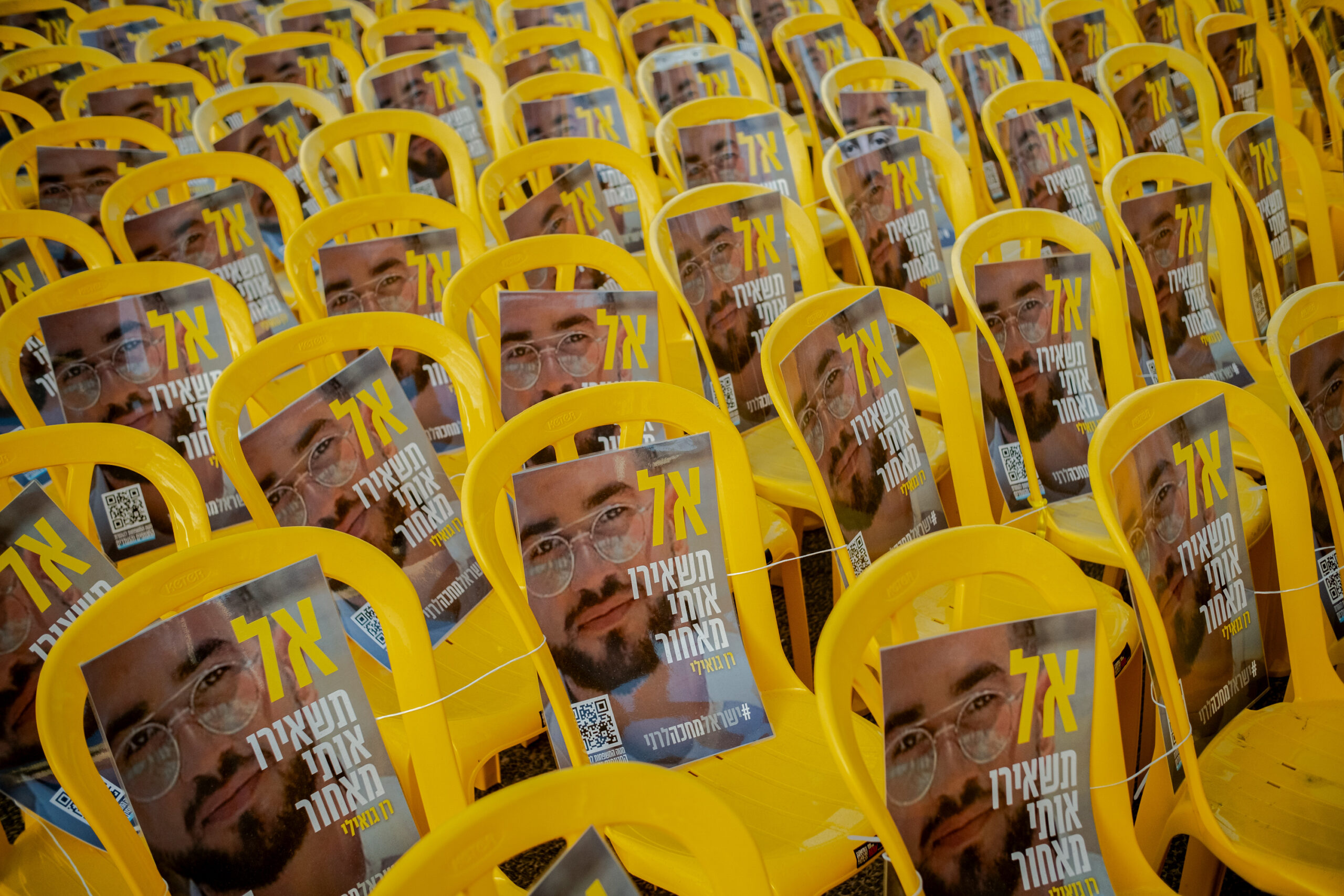
Last month, Master Sergeant Ran Gvili’s body was recovered and returned to Israel for burial, and for the first time in fourteen years, there are no hostages left in Gaza, a statement I honestly thought would take years to finally say.
Over the following weeks, reality has slowly begun to sink in. Elation mingling with tears. Setting aside hostage pins and dog tags. Feeling a weight, one that has been constant for the past two years, lifts slightly, even as it feels unfamiliar, almost wrong, after becoming second nature. And then the grief washes over again, as I reflect on what I have seen and witnessed and begin to ask what it looks like and means to be an advocate for Israel and the Jewish people in this new era and chapter.
As I reflect, there are a few moments that stand out most vividly when I think back on life after October 7th. The first is the day itself, the raw shock and horror as footage from Hamas body cameras slowly leaked into the public sphere. Images of Noa Argamani. Shiri Bibas, clutching her two young children, Kfir and Ariel. Truck beds filled with terrorists.
However, nothing prepared me for that night. Seeing a former classmate setting off fireworks in celebration. Cheering on murder, rape, and kidnapping under the guise of “liberation.” Seeing polished, aesthetic infographics depicting Hamas militants preparing to storm the Nova music festival. There was an eerie glee, not from estranged students on a college campus, but peers, contemporaries, and classmates.
The second moment came on the first anniversary of October 7th. I gathered with the Chicago community for a memorial service organized by the local Israeli consulate. We heard from survivors, honored those whose lives were taken too soon, and prayed and yearned, Jews and non-Jews together, for the return of the hostages. It was a moment of solidarity, layered with deep, aching pain, knowing we were free to return to our daily lives while others were not.
As a friend and I left the gathering and turned the corner to look for our ride, we were met by an approaching protest. Faces covered, keffiyeh-clad, armed with noisemakers and bullhorns, furious that people would dare mourn the loss of innocent life. We hurried into a nearby store, suddenly acutely aware of the hostage pins on our clothes. As we stepped inside, I heard a protester scream, “They’re never coming home. You hear me? They’re never coming back.” Again, this disconcerting glee and sense of triumph.
We broke down immediately sobbing and shaking, overwhelmed by anger and disgust, tinged with fear.
Today, I am proud to say these protestors were profoundly wrong. Israel did not leave her people behind. She stood strong and acted to protect her people against the most visceral of threats.
The final memory, almost exactly a year later, carried a very different tone. On October 8th 2005, Passages alumni, alongside young Christians and members of the Jewish community, gathered to hear from Mazal Tazazo, a survivor of the Nova Festival massacre. Before Mazal began to speak, an electric current seemed to fill the room. Whispers rippled through the crowd as word spread that a new deal, tentative but hopeful, had been announced: a ceasefire and the return of the remaining living hostages. Tears of joy were shed throughout the evening.
Together, we listened and bore witness to a survivor and to the horrors of October 7th, and alongside that pain emerged a fragile but unmistakable sense of hope, that a season of healing might soon become tangible.
I sat and spoke with a colleague from Survived to Tell, who shared in the relief of the announcement but also expressed a renewed urgency around advocacy. The dire reality of antisemitism had been forced into the public arena; its pervasiveness could no longer be denied. “We can’t lift our foot off the gas, not this time,” he said.
For two years, organizations across communities have built momentum in educating others about Israel and antisemitism. There is a moment for celebration, but it must serve as fuel for continued progress and sustained, on-the-ground work.
As we move further into 2026, the Christmas hymn O Holy Night has lingered in my mind, particularly the line, “the weary world rejoices.” That weariness feels deeply familiar. In recent months, a new and troubling layer of darkness has emerged. Antisemitic conspiracies have resurfaced and spread rapidly online, gaining traction across the political spectrum. Figures long known for spewing Jew-hatred have been welcomed into so-called “mainstream” discourse, while leaders with histories of hostility or disdain toward the Jewish people have risen toward positions of power. It has been concerning, confusing, and deeply disappointing at best.
In some circles, these developments were dismissed as merely “words” or “questions.” That dismissal became impossible to sustain after the horrific mass murder at Bondi Beach in Australia.
And yet, we have every reason to rejoice in the return of the final hostage, to witness this chapter close and to feel healing draw closer. My thoughts turn to Ecclesiastes 3: there is a time for war, and now we yearn for a time of peace; a time to weep and a time to laugh, a time to mourn and a time to dance. Still, the question lingers, how do we do this when antisemitism is on the rise, when Israel continues to bear the scars of war? I know friends, students, and colleagues ask the same.
My answer is this: now is the time to go to Israel. To celebrate with Israelis and your local Jewish community. To walk alongside them in the slow, uneven process of healing. To stand at the sobering site of Nova and then sit around a Shabbat table with a local family. It is a powerful expression of choosing life, day after day, in the midst of pain.
These shared experiences offer renewal and hope as we look toward the dawn of a new era, not only for Israel, but for the broader Middle East. For those who feel weary, it is good and right to acknowledge the weight. But do not forget to rest in the victories that are unfolding. Let them be fuel, to be reinvigorated, to speak up, to show up, and to continue forward together in support.
As we look toward healing, the responsibility of Christian leadership comes into sharper focus. This is a moment that calls believers to live out a faith rooted not only in compassion, but in courage and truth. Scripture reminds us that peace is built, not passively awaited, and that loving our neighbor requires action, not silence. Christian leaders, pastors, educators, and college students, must commit to confronting antisemitism clearly and consistently, investing in education, and standing visibly alongside the Jewish people.
There has been a term coined in the Jewish community for the reaction to the October 7th massacre, but more profoundly, the antisemitism tsunami that followed. “October 8th Jews” refers to a phenomenon of Jews who experienced a profound reawakening of their Jewish identity and connection to Israel.
We must be” October 8th Allies”, where these last over two years have profoundly reawakened us and our mission to be allies of the Jewish People and the State of Israel.
Our partnership in this moment matters. Relief must become resolve, and hope must be stewarded into faithful, sustained action that upholds life, dignity, and the call to be peacemakers in a broken world.
Grace Keathly is the Associate Director of Alumni Engagement at Passages Israel, a Christian organization dedicated to bringing students to Israel and equipping young leaders to support Israel and the Jewish People in communities across the United States. Grace has spent a total of three years living in Israel, two during her formative teenage years and one while completing her graduate studies, giving her a unique perspective on Israeli life during both times of peace and conflict.