




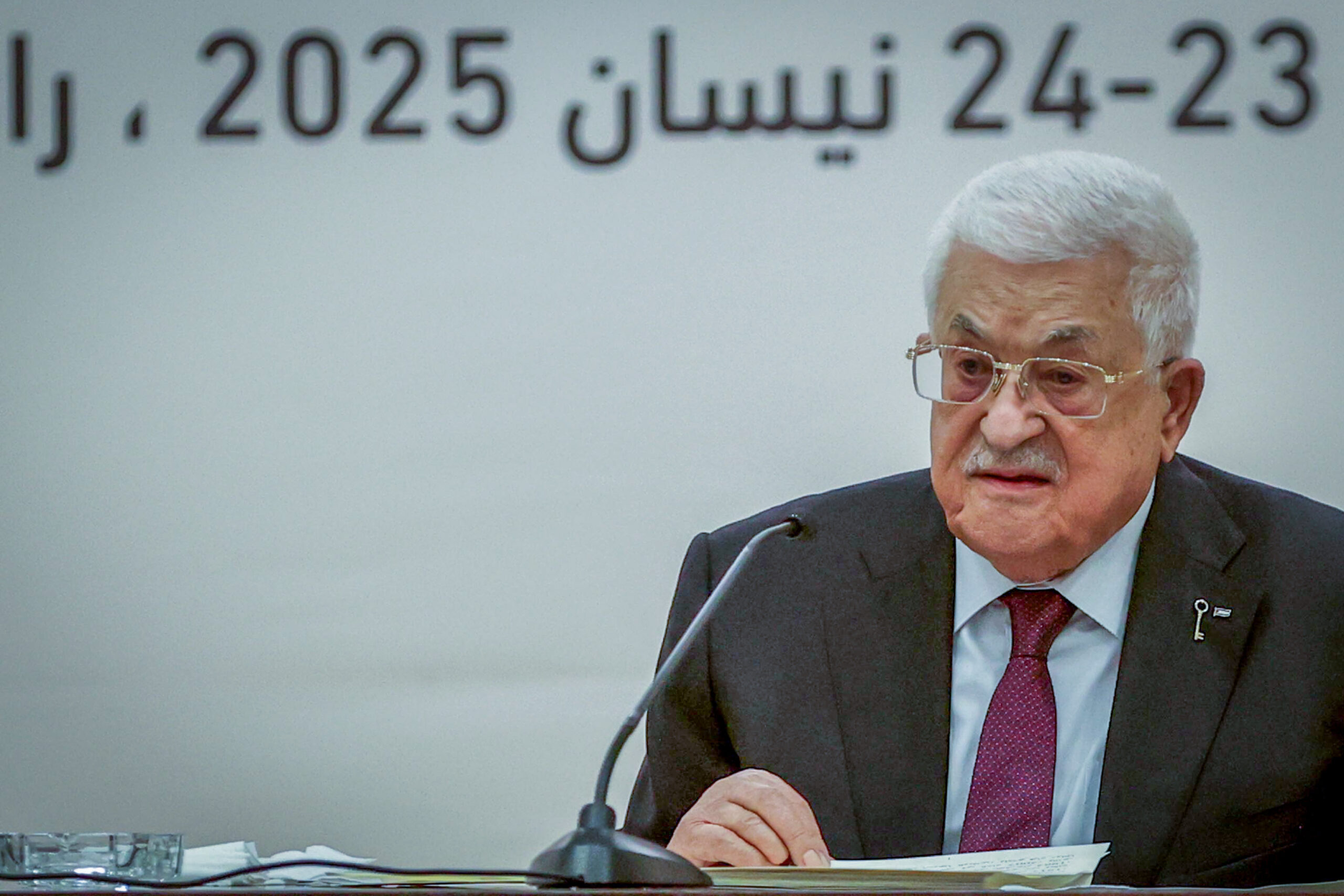
Palestinian Authority President Mahmud Abbas announced Monday that elections for the Palestinian National Council (PNC), the parliament of the Palestine Liberation Organization (PLO), will be held on November 1, according to the PA’s official news agency, Wafa. This will be the first time in history that members of the council are elected by direct popular vote. Previously, seats were either appointed or filled from within the PLO movement itself.
Abbas, who has held the presidency of both the Palestinian Authority and the PLO since 2005, issued a decree stating that elections would occur “wherever possible, both inside and outside Palestine, to ensure the broadest possible participation of the Palestinian people wherever they reside.” Despite this announcement, the PNC has not convened a session under Abbas since 2018. The council’s role is largely symbolic, overshadowed by the PLO Executive Committee, which wields actual decision-making authority.
The PNC is just one of several largely dormant political bodies controlled by Abbas. The PLO is supposed to serve as an umbrella organization representing Palestinians globally, while the PA functions as a transitional administrative body for Palestinians in the West Bank and Gaza. In practice, both have struggled with governance, legitimacy, and public trust. Abbas has repeatedly announced elections for the various political bodies under his control, but few of these elections have ever been carried out. The last PNC election, held in 2006, was not open to all voters, and the Palestinian Legislative Council, the formal parliamentary body for West Bank and Gaza Palestinians, has not convened since 2007 due to the split between Fatah and Hamas.
Even if the November election is held, its impact may be limited. The council rarely meets, with the last session occurring in 2018. Terror groups such as Hamas and Palestinian Islamic Jihad, both designated as terrorist organizations by Israel and the United States, are excluded from representation in the PNC. The PA’s central election committee has amended the election law to require all candidates to sign a statement endorsing the PLO’s “national program,” including recognition of Israel, renunciation of terrorism, and pursuit of a two-state solution—conditions that Hamas and other terror groups refuse to accept.
Abbas also set the date for the Eighth General Conference of Fatah for May 14, 2026, and the PA Cabinet announced municipal elections in the West Bank for April 25, 2026, while simultaneously banning Hamas from participation. The timing of these announcements comes shortly after the Palestinian Center for Policy and Survey Research reported that Fatah’s voter base in the West Bank fell from 23% to 14%, and that 76% of West Bank Palestinians said they did not trust the PA. Abbas’s own popularity is now reportedly trailing that of imprisoned Fatah terrorist Marwan Barghouti.
Mahmud Abbas has announced elections multiple times since becoming president in 2005, but most of them were never carried out. A review of PA and PLO history shows several high-profile examples:
- Palestinian Legislative Council (PLC) elections: Originally scheduled after the 2006 vote, Abbas postponed subsequent legislative elections repeatedly. From 2006 until now, planned PLC elections have been announced at least five separate times and never held, largely due to internal Fatah-Hamas divisions and security concerns.
- Palestinian National Council (PNC) elections: Abbas previously announced that the PNC would be elected in 2010 and again in 2018, but those elections never took place. The last PNC election before 2025 was in 2006, and even then, it was not open to all voters.
In total, across the PLC and PNC, Abbas has publicly announced at least six major elections that were never carried out. These repeated delays have reinforced widespread accusations of corruption and cronyism, as well as deep skepticism among Palestinians about the legitimacy of the PA.
For over twenty years, Abbas has remained at the helm of both the PA and PLO, consolidating power while Palestinian political institutions stagnate. Announcing elections has become a ritual of legitimacy rather than a path to actual political renewal. The upcoming PNC election, if it occurs, may again serve more as a declaration than a turning point, leaving the Palestinian people under a system that continues to fail them.
Polls conducted in recent years consistently show that Hamas’s popularity among Palestinians, particularly in the West Bank, is rising while support for the Palestinian Authority and Fatah continues to decline. A survey by the Palestinian Center for Policy and Survey Research in October 2025 found that Fatah’s voter base dropped from 23% to 14%, while a significant portion of the population expressed support for alternative leadership, including Hamas-affiliated figures. Trust in the PA is low, with 76% of West Bank Palestinians reporting that they do not believe the PA can effectively govern or represent their interests. Abbas’s personal approval has also fallen, trailing that of imprisoned Fatah terrorist Marwan Barghouti in hypothetical presidential polling.
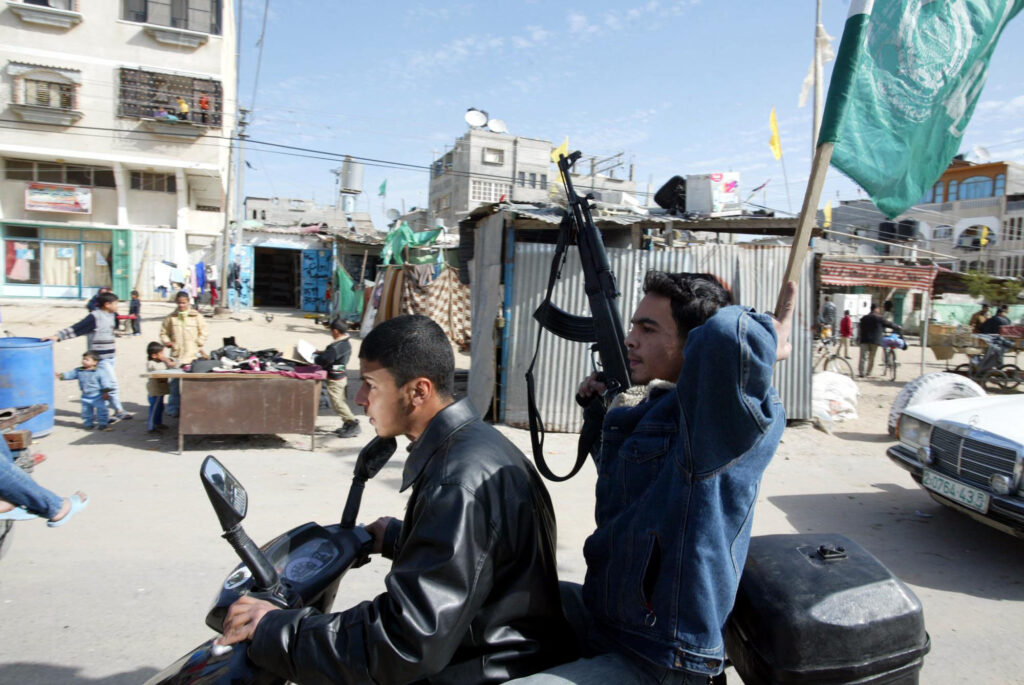
Hamas’s rise in popularity is not just theoretical; it translated into concrete political power during the 2006 Palestinian Legislative Council elections. In that vote, Hamas decisively defeated the PA’s Fatah party in Gaza, winning a majority of parliamentary seats. The result triggered a violent struggle for control, culminating in a bloody civil war between Hamas and Fatah in Gaza. Hundreds were killed, and Hamas established de facto control over Gaza, effectively sidelining the PA and demonstrating the organization’s ability to leverage both electoral success and armed force to impose its rule.
