

In an extraordinary act of collective moral clarity, more than one hundred of the world’s leading Holocaust and genocide scholars have issued a forceful rebuke against what they describe as the cynical corruption of one of the gravest words in human history: genocide. Their protest, articulated in a meticulously reasoned letter signed by 112 distinguished academics and institutional leaders from across five continents, condemns the misuse of the term by a group calling itself the “Lemkin Institute for Genocide Prevention”—an organization that, according to the Lemkin family itself, has no legal or moral authority to use the name of Raphael Lemkin, the jurist who coined the term genocide and gave it its precise legal meaning.
The letter represents far more than a technical dispute over semantics. It is a declaration of intellectual resistance against what the scholars describe as the weaponization of language, the distortion of international law, and the moral inversion of Holocaust memory. At stake, they argue, is not only the integrity of historical truth but the future credibility of human rights discourse itself.
Raphael Lemkin, a Polish-Jewish legal scholar who lost most of his family in the Holocaust, introduced the word “genocide” in 1944 to describe a specific crime: the intentional destruction of a people as a people. His concept was not rhetorical, emotional, or political—it was juridical, precise, and designed to create legal accountability for the systematic annihilation of national, ethnic, racial, or religious groups. Lemkin, who served as an adviser to the U.S. Department of War during World War II, devoted his life’s work to ensuring that the horrors he witnessed would be named, codified, and prevented through international law.
Lemkin’s efforts culminated in the Genocide Convention of 1948, a cornerstone of modern international law that defines genocide not by casualty numbers, but by intent, purpose, and policy. The convention established that genocide requires demonstrable intent to destroy, in whole or in part, a national, ethnic, racial, or religious group as such. This definitional clarity was Lemkin’s gift to humanity—a legal framework that would prevent the world from ever again claiming ignorance when systematic destruction of peoples occurred.
It is precisely this definitional clarity that the scholars say is now under attack.
The organization styling itself as the Lemkin Institute was established around 2021 without permission from Raphael Lemkin’s family. It has publicly accused Israel of committing genocide in Gaza, invoking Lemkin’s name to lend moral authority and legal gravitas to its claims. According to Joseph Lemkin, a member of the Lemkin family, the institute has no authorization to use the family name and no legitimate connection to Raphael Lemkin’s legacy.
“Members of our family were killed in the Holocaust, and Rafael Lemkin would be outraged by the use of his name and the abuse of the word genocide,” Joseph Lemkin stated.
Perhaps most telling is that the Lemkin family, along with Rabbi Marvin Hier, founder of the Simon Wiesenthal Center, filed a formal complaint with Pennsylvania authorities demanding that the Lemkin Institute for Genocide Prevention stop using his name because of the Institute’s repeated genocide accusations against Israel. They argue that these statements, combined with the use of Lemkin’s name, serve to advance a political agenda disconnected from his original legacy. The family, with legal backing from the European Jewish Association, petitioned Pennsylvania Governor Josh Shapiro and the state’s Bureau of Corporations and Charitable Organizations to intervene on their behalf, though the governor and state have not yet taken any action.
In their letter addressed to the Lemkin family, the scholars make clear that the issue is not merely unauthorized branding—it is historical and legal falsification.
“As scholars who have written about the Holocaust or other genocides, we share your family’s concern about extremists exploiting Raphael Lemkin’s name to attack Israel,” the experts, led by Rafael Medoff, director of the David S. Wyman Institute for Holocaust Studies, wrote. “Israel’s counter-terror campaign in Gaza is not genocidal, either in intentions or actions. The civilian deaths there are the result of Hamas embedding itself in residential areas and using the population as human shields.”
This sentence alone carries legal weight. It reflects not political advocacy, but legal reasoning rooted in international humanitarian law. The scholars distinguish between tragic civilian casualties in war and the crime of genocide, which requires demonstrable intent to destroy a people as such. They argue that collapsing this distinction is not only intellectually dishonest but morally dangerous.
The signatories of the letter represent a global cross-section of academic authority: genocide scholars, Holocaust historians, department chairs, legal theorists, and leaders of Holocaust remembrance institutions from Australia, Brazil, Canada, China, the Czech Republic, Finland, France, Great Britain, Israel, New Zealand, Poland, Romania, Switzerland, and the United States. Their geographic diversity underscores a crucial point: this is not a parochial or politically driven defense of Israel—it is an international scholarly defense of historical accuracy and legal integrity.
Dr. Rafael Medoff described the campaign in stark terms. “The false accusation of genocide in Gaza is nothing less than Holocaust-inversion,” he said. “The fact that extremists are exploiting Lemkin’s name to do so adds insult to injury.”
The phrase Holocaust inversion refers to a documented phenomenon in which Jewish historical trauma is reframed against Jews themselves—transforming victims of genocide into alleged perpetrators of the same crime. Scholars have long warned that such inversion does not merely distort history; it erodes the moral architecture that protects minority communities by hollowing out the meaning of atrocity itself.
Prof. Thane Rosenbaum, a human rights scholar and co-organizer of the petition, articulated the danger even more bluntly. “The false equivalency here is despicable,” he said. “The Lemkin Institute knows it, but they are banking on the public’s ignorance about the definition of genocide.”
The Lemkin Institute began accusing Israel of “genocide” just ten days after Hamas’s October 7, 2023, massacre. On October 17, 2023, the institute issued a statement saying it was “absolutely disgusted” by Israel’s response to the Hamas attack and argued that “Western nations have given Israel a green light to commit #GenocideinGaza,” even before the Jewish state launched its retaliatory ground operation in the territory.
“That green light has led to the horrific scenes of genocide in Gaza since the October 7, 2023, attack on Israel by Hamas,” the institute wrote. “Just today Israel struck the al-Ahli hospital in Gaza City as well as a [United Nations] school,” the notice added, accusing Israel of having caused the blast.
In reality, the blast came from a misfired Palestinian Islamic Jihad rocket—a fact later confirmed by multiple international intelligence agencies and independent investigations. The institute’s willingness to spread false information while invoking Lemkin’s name demonstrates precisely the kind of politically motivated distortion the scholars condemn.
The institute initially described Hamas’s attack as having “genocidal dimensions,” but it eventually altered the language to describe October 7 as an “unprecedented military operation against Israel”—effectively sanitizing the mass murder, rape, torture, and kidnapping of civilians.
By September 2024, the institute began casting doubt on reports that Hamas terrorists had raped Israelis. The organization framed these crimes as “stories of sexualized violence against Israelis,” contending that “the truth of the claim of instrumentalization and systematization of sexualized violence by Hamas cannot be determined from the evidence at this point.”
The institute instead wrote that reports of Hamas members’ having raped Israelis are “used by supporters of Israel globally to justify Israel’s actions since 7 October, including [sexual and gender-based violence] against Palestinians” and to distract from the Jewish state’s own supposed crimes.
“Israeli officials have framed Hamas as a specifically sexualized threat, referring to the group as ‘a rapist regime,'” the organization wrote. “Defining an adversary in terms related to sexualized violation is common within genocidal thinking.”
This denial of documented sexual violence against Israeli women stands in direct contradiction to testimony from survivors, medical examiners, and investigations by the United Nations itself, which confirmed that sexual violence was committed during the October 7 attacks.
Just last month, the institute’s executive director, Elisa von Joeden-Forgey, leveled the bizarre claim that Israel’s ongoing operations to root out Hezbollah forces in Lebanon are part of a “disgusting totalitarian sci-fi high-tech weapons experiment being conducted by the U.S., U.K., EU, Israel, Russia & China.”
“Perhaps even more so than the genocide in Gaza and the West Bank, where anti-Palestinian racism is shaping the violence into a very particular pattern, what’s going on in Lebanon is a harbinger of things to come everywhere,” von Joeden-Forgey wrote on LinkedIn. “The drone activity is particularly dystopian.”
The misuse of genocide accusations extends beyond the Lemkin Institute. In December 2023, South Africa brought a case against Israel before the International Court of Justice, accusing the Jewish state of violating the Genocide Convention. The case garnered international attention and has been widely cited by those seeking to label Israel’s military operations as genocidal.
What gets lost in the political noise is that the ICJ did not conclude that genocide had occurred—only that the claims warranted further examination—and it did not impose an immediate cessation of military operations. The court ordered Israel to take measures to prevent genocide and to ensure humanitarian aid reaches Gaza, but it explicitly did not find that Israel was committing genocide. This distinction matters legally and morally, yet it is routinely ignored by those wielding the genocide accusation as a political weapon.
Similarly, a resolution passed by the International Association of Genocide Scholars (IAGS) stated that Israel’s conduct meets the legal definition as laid out in the UN convention on genocide. The resolution has been sharply criticized on multiple grounds.
First, critics note that the IAGS resolution was passed by a membership vote rather than through rigorous peer-reviewed scholarly consensus, raising questions about its academic credibility. Second, the resolution failed to adequately address the role of Hamas in deliberately embedding military infrastructure within civilian areas—a war crime under international law that directly contributes to civilian casualties. Third, the resolution did not engage substantively with the legal requirement of genocidal intent, instead focusing primarily on casualties and humanitarian conditions. Fourth, many of the leading Holocaust and genocide scholars who signed the letter to the Lemkin family dispute the IAGS conclusion on precisely these grounds—arguing that conflating the tragic consequences of urban warfare with genocide undermines the term’s legal meaning.
The IAGS resolution represents exactly what the 112 scholars are pushing back against: the transformation of a precise legal category into a politicized accusation detached from its definitional requirements.
What makes this protest especially significant is not merely its scale, but its clarity. The scholars do not equivocate. They do not engage in rhetorical balancing acts. They assert, plainly and directly, that labeling Israel’s military actions as genocide is false, legally unsound, and historically perverse. They identify Hamas’s operational strategy—embedding within civilian infrastructure and weaponizing civilian populations—as the primary cause of civilian suffering, a fact documented by multiple international observers and war law experts.
This is not a denial of tragedy. It is a refusal to falsify its meaning.
The scholars’ letter also exposes a deeper crisis in contemporary discourse: the transformation of moral language into political currency. Words like “genocide,” “apartheid,” and “ethnic cleansing” increasingly circulate not as legal concepts but as emotive slogans, detached from their definitions and redeployed for ideological effect. In this environment, accusation becomes performance, and moral outrage replaces evidence.
By invoking Lemkin’s name without authorization, the so-called Lemkin Institute does more than mislabel a conflict—it appropriates a legacy built on intellectual rigor, legal precision, and moral seriousness. Raphael Lemkin devoted his life to ensuring that genocide would never again be trivialized, relativized, or politicized. To use his name to advance claims that contradict the very framework he created is a violation of everything he stood for.
There is also a deeper cultural implication. Holocaust memory has long served as a moral anchor in global ethics, shaping postwar human rights institutions and international law. When Holocaust language is distorted, its moral gravity erodes. When genocide becomes a rhetorical device rather than a legal category, it loses its power to mobilize real accountability where true genocides occur.
Real genocides—against the Yazidis, the Rohingya, in Darfur, in Rwanda—have struggled for recognition precisely because political interests, narrative manipulation, and definitional confusion delay action. When genocide becomes a universal accusation, it becomes a meaningless one.
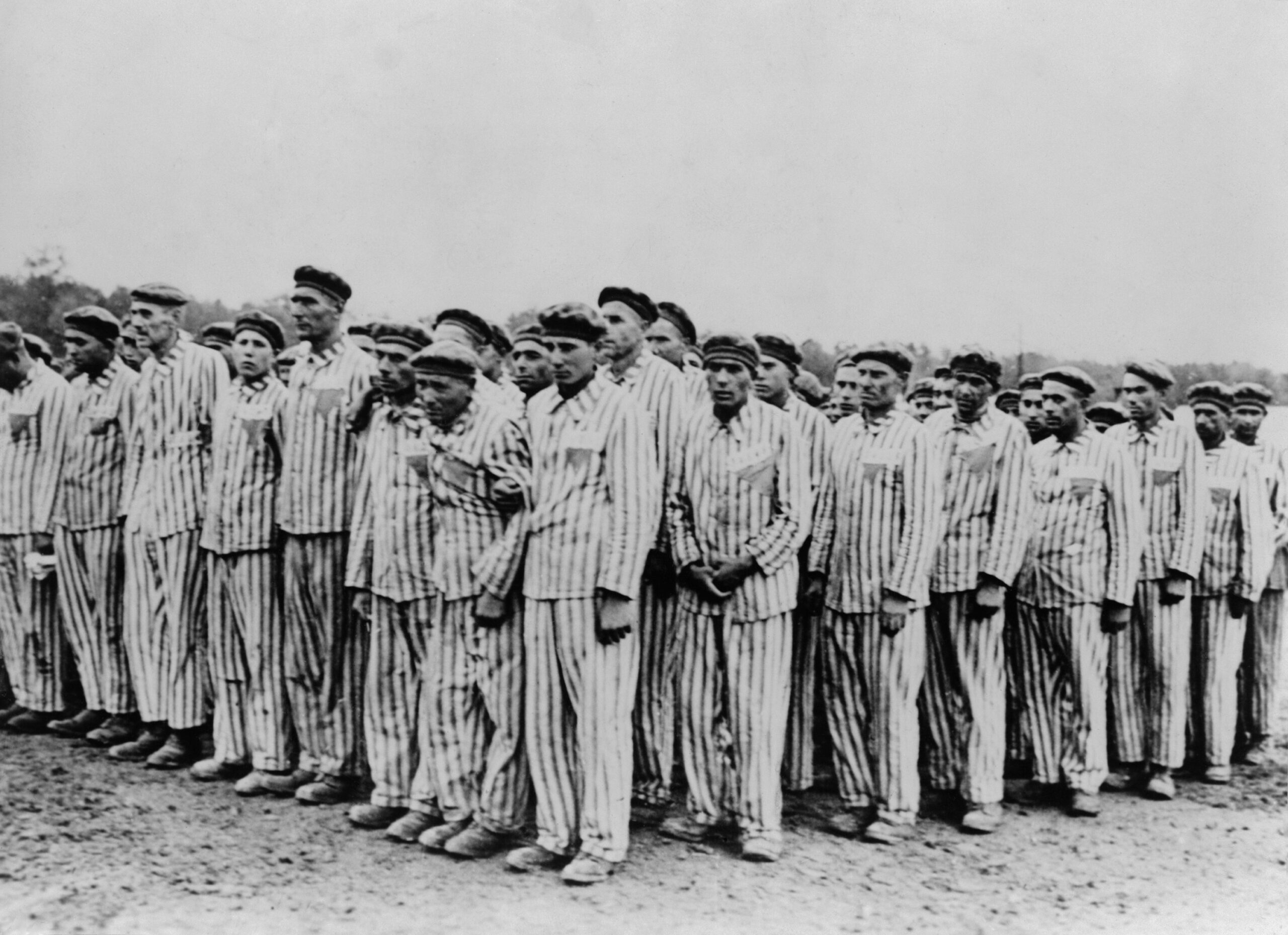
And the Holocaust, the Nazi attempt to genocide the Jewish people, is numerically on a different magnitude than what is taking place in Gaza. The German efforts at the “Final Solution” resulted in the murder of six million Jews, the genocide of two-thirds of the European Jewish population, reducing the global population from 16.6 million to less than 11 million by 1945. As of 2025–2026, the global Jewish population is still lower than it was in 1939. By comparison, there are about 14.8 million Jews alive today, according to the Pew Research Center.
The Jewish population in Europe has not and likely will never fully recover from the Holocaust.“During this time, the rest of the world’s population grew about twice as quickly,” Pew noted.
Before the Holocaust in 1939, the global Jewish population was approximately 16.6 million, representing about 0.8% to 0.83% of the total world population of roughly 2 billion. This population was concentrated in Europe, where Jews made up 1.7% of the continent’s population before the Nazis came to power. Jews currently account for a tiny 0.2% of the global population.
In comparison, the IDF recently announced that the Gaza death count from the two-plus-year war, sparked by Hamas’s October 7 onslaught, is around 70,000. The senior official said the actual breakdown of the Gaza death toll is still under review, and it is unknown exactly how many of the dead are members of terror groups and how many people died directly as a result of the fighting.
The population of Gaza was estimated at 2,1 million. Even if all of the fatalities were civilian, the total reperesents 3.3% of the population,a far cry from any other genocide.
The scholars’ protest is therefore not only about Israel or Gaza. It is about the survival of moral vocabulary itself. It is about preserving the difference between war and annihilation, between tragedy and extermination, between collateral harm and systematic destruction. The misuse of the term genocide does not elevate the suffering of Arabs in Gaza, they argue—it degrades the memory of actual genocides and sabotages the legal tools meant to prevent them.
What emerges from this moment is a rare phenomenon: academic consensus in an age of polarization. Across national, ideological, and institutional boundaries, these scholars converge on a single principle—that truth, especially historical and legal truth, must not be sacrificed to political fashion. Their letter stands as a defense not only of Israel’s right to self-defense against terrorism, but of intellectual honesty itself.
It is a reminder that words matter, that definitions matter, and that moral language cannot be severed from factual reality without becoming a tool of manipulation.
In the long arc of history, Raphael Lemkin’s legacy was never about slogans. It was about law. It was about accountability. It was about naming a crime so precisely that the world could no longer look away. To defend that legacy today is not an act of politics. It is an act of moral stewardship.
And in a world increasingly saturated with noise, distortion, and performative outrage, the scholars’ letter stands as something increasingly rare: a quiet, rigorous, and devastatingly clear assertion of truth.
