

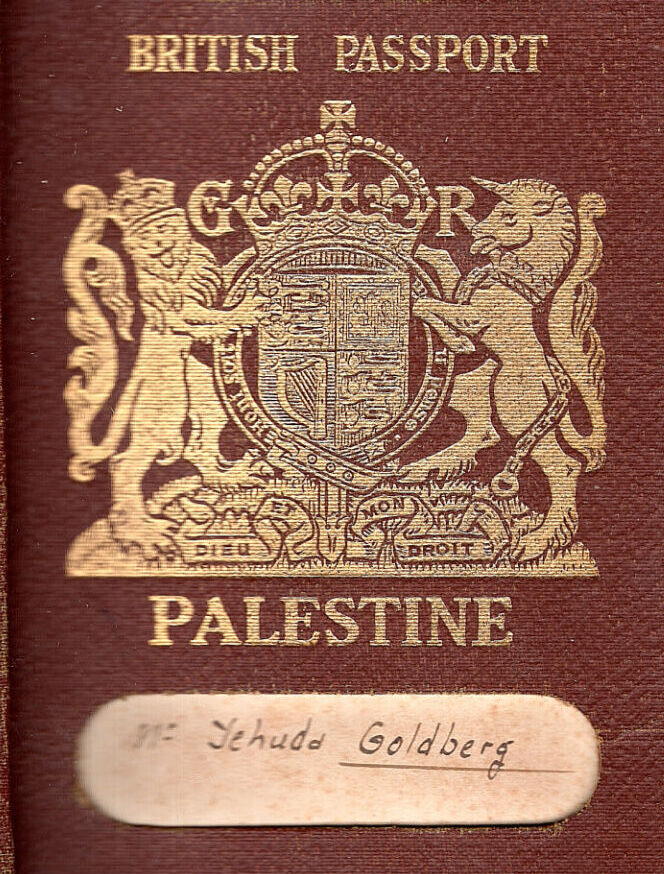
For centuries, the land between the River and the Sea had many names; however, in the modern era, the term ‘Palestinian’ was mainly used to refer to the Jews living there.
Why didn’t the Arab residents of the Land of Israel call themselves “Palestinians”? The answer is simple and might surprise many: for much of modern history, the term “Palestinian” mainly referred to Jews rather than Arabs. This is not just a political claim but a fact backed by Arab writings, British records, and current academic research.
One way to verify the historical existence of a nation is by examining its symbols, such as rulers, literature, currency, and political systems. However, no ancient Palestinian coins, manuscripts, or records of a Palestinian king have ever been found. If you haven’t come across such artifacts, there’s a simple reason: they do not exist because an independent Palestinian state has never existed in history. The absence of these items is not a coincidence. Throughout the region’s history, various empires—Egyptian, Assyrian, Babylonian, Persian, Greek, Roman, Byzantine, Islamic, Crusader, Mamluk, and Ottoman—have risen and fallen, but none have documented a sovereign Palestinian polity.
The region has gone by many names throughout history, but it has never been officially recognized as an independent Palestinian state. The origin of the name “Palestine” itself supports this point. In the mid-second century CE, after defeating the Bar Kochba Revolt, Emperor Hadrian aimed to disconnect the Jewish people from their land. He rebuilt Jerusalem as the pagan Roman city Aelia Capitolina and renamed Provincia Judaea to Provincia Syria Palaestina, referencing the long-extinct Philistines. The name was used as a tool of humiliation and erasure, not as a sign of a local nation. As I mentioned in my book A Bridge to Your Roots – An Evangelical Journey Through the Land of Israel (2025):
“Despite the Roman attempts to erase Jewish connections to the land, Jewish identity and memory persisted, underscoring the deep-rooted bond between the Jewish people and the Land of Israel. Hadrian thought that changing the name of the region would make the Jews forget about their homeland, but it had the opposite effect. The Jewish people persevered and kept praying to return to their land. They still do.”
Notable Islamic geographers, such as al-Idrisi, al-Muqaddasi, and Ibn Khaldun, considered the area part of al-Sham, or Greater Syria, and they do not mention a Palestinian kingdom or nation. This absence of reference aligns with the historical record: although the land had inhabitants, villages, and cities, there was no distinct Palestinian national identity.
By the late nineteenth and early twentieth centuries, the differences between various identities in the region became clearer. During this period, the term “Palestinian” was widely used internationally to specifically refer to the Jewish population in the area. In contrast, Arabs identified themselves by their localities— such as Jerusalemite, Hebronite, Nabulsi, or Jaffawi—or more generally as part of Syria or the Arab nation. This difference is also seen in the Ottoman census, which listed people by religion rather than by a national identity called “Palestinian.”
This understanding was so widespread that it influenced public debates. In 1911, when Christian Arabs in Jaffa launched the newspaper Falastin, they faced criticism from fellow Arabs for using a term that some believed was mainly associated with Jews and Zionists. Under pressure, the editors issued a clarification on the front page, stating, “We represent the Arabs of Southern Syria.” This controversy over the newspaper’s title clearly shows how foreign the term “Palestine” sounded to local Arabs at the time. Referring to the region as “Southern Syria” was significant; it reflected the dominant Arab nationalist view of the era, which saw the land as part of a larger Syrian or Arab identity rather than as a separate “Palestinian” identity.
This view was not isolated. In 1937, Auni Bey Abdul-Hadi, a prominent figure in the Arab Higher Committee and one of the leading Arab leaders of the time, testified before the British Peel Commission, stating, “There is no such country as Palestine. It is Southern Syria.” Similarly, at the Syrian-Palestinian Congress in Geneva in 1921, Arab leaders declared, “Palestine is an inseparable part of Southern Syria,” emphasizing that the very name “Palestine” was imposed by the British.
The Ottoman Empire further confirms this point. Although the term ‘Filastin’ was occasionally used in geographic descriptions, the Ottomans never officially designated ‘Palestine’ as an administrative region. Instead, the land was divided into separate districts, including Jerusalem, Nablus, and Acre. This division reflects the Ottoman view of the area as part of Greater Syria rather than recognizing it as a separate Palestinian entity.
Arab scholars generally agree on this perspective. When historians from the Arab world themselves acknowledge this point, it carries significant weight. Dr. Adel Manna, a prominent Arab-Israeli historian, states that during the British Mandate, the term “Palestinian” was primarily used to refer to Jews, while Arabs deliberately avoided using it. Additionally, Rashid Khalidi, one of today’s most influential Palestinian historians, admits that a distinct Palestinian national identity did not develop until the mid-20th century.
The British administration recognized a specific reality about the term “Palestinian.” In official British documents, “Palestinians” was consistently used to refer to Jews, shaping how the term was understood globally. Reports from the 1930s showed that Arabs “rejected the designation ‘Palestinian,’ which is primarily used by Jews.” This distinction appeared in official records, where the term “Palestinian Jews” was often used, while Arabs were simply called “Arabs,” “Muslims,” or “Christians.” This practice strengthened the idea among both Arabs and the international community that the term “Palestinian” mainly referred to Jews.
Before 1948, almost all institutions with the name “Palestine” were Jewish. The Palestine Post was renamed The Jerusalem Post, the Palestine Symphony Orchestra became the Israel Philharmonic, and the Palestine Electric Corporation was rebranded as the Israel Electric Company. In sports, the “Palestine” team that participated in the 1934 FIFA World Cup qualifiers was entirely Jewish and marched under a Star of David. The same was true for the “Palestine” delegation at the 1936 Berlin Olympics. Additionally, international relief organizations, such as the American Jewish Joint Distribution Committee, labeled their shipments as “Palestine Relief – Jewish Community.” None of these groups referred to Arabs as “Palestinian.”
What did Arabs call themselves? Between 1918 and 1948, Arab documents consistently used terms like “Arabs,” “Arabs of the country,” “Arabs of Southern Syria,” and “part of the Arab nation.” There is no mention of “Palestinian people,” “Palestinian nation,” or “Palestinian Arabs.” Even the phrase “the Arab people of Palestine” was purely geographic, like saying “the Arab people of Galilee.”
Even modern Palestinian leaders have acknowledged this important demographic fact. In a speech by Fathi Hamad, a senior Hamas member, broadcast on Al-Hekma TV (Egypt) on March 23, 2012, he said in Arabic: “We all have Arab roots, and every Palestinian in Gaza and throughout Palestine can prove their Arab heritage, whether they come from Saudi Arabia, Yemen, or elsewhere. Half of my family is Egyptian. We are all connected. More than 30 families in Gaza are called Al-Masri (“Egyptian”), and they may hail from Alexandria, Cairo, or Damietta. We are part of you! Brothers, half of the Palestinians are Egyptians, and the other half are Saudis. Who are the Palestinians?!”
The Egyptian infiltration into the Land of Israel started during the Egyptian occupation from 1831 to 1840. This infiltration grew more intense as a response to economic development driven by Jewish immigration in the late 1800s. It reached its peak in the early 1900s after the British built major industrial projects, including the Haifa refineries and a deep-water port, which were used for shipping refined Iraqi oil to the West. These migration waves significantly changed the region’s demographic makeup by the beginning of the Mandate period, as shown by the many Arab family names of Egyptian, Syrian, Lebanese, and Hejazi origins.
Given this history, it is clear why, in 1947, the United Nations described the two proposed partition entities simply as the “Jewish State” and the “Arab State.” This was because an Arab Palestinian nationality did not exist. Jewish leaders themselves never seriously considered naming the new nation “Palestine.” It was a foreign term, not an expression of ancient identity. Instead, they chose “The State of Israel,” a name rooted in Scripture, history, and continuity.
As I penned in my book A Bridge to Your Roots – An Evangelical Journey Through the Land of Israel (2025):
“During the deliberations leading up to the declaration of independence in 1948, various names for the new state were considered, including ‘Judea,’ ‘Zion,’ and ‘Eretz Israel.’ The name ‘Palestine’ was never considered, as it is a foreign name. The name ‘The State of Israel’ (Medinat Israel in Hebrew) was ultimately chosen to symbolize the continuity of the Jewish people’s connection to the land from biblical times to the present. This marked the end of Jewish usage of the term ‘Palestine.’ Local Arabs, who call themselves Palestinians, retained the term. Interestingly, Arabic has no phonetic equivalent to the ‘p’ sound in English, so its speakers use the name ‘Falastin’ instead.”
The choice of the name “Israel” instead of “Palestine” brought history full circle. In doing so, the Jewish people reclaimed the ancient identity that the world had always known them by. The Jewish people, who had referred to themselves as “Israel” in their Scriptures, prayers, and liturgies for thousands of years, restored this name for their state. The term “Palestinian,” originally used by foreign powers to describe Jews, faded from Jewish usage and was later adopted by Arabs.
This highlights a paradox of modern conflict: the word “Palestinian” originally referred mainly to Jews, was rejected by Arabs for decades, and was eventually embraced by them after Jews adopted their biblical name. Understanding this historical journey isn’t about denying anyone’s current identity; it’s about being honest with the historical record.
“One will say, ‘I am the Lord’s’; Another will call himself by the name of Jacob; Another will write with his hand, ‘The Lord’s,’ And name himself by the name of Israel.” Isaiah 44:5
This is not just a narrative; it is documented history. Shai Shvalb is an Israeli tour guide, speaker, and author of A Bridge to Your Roots – An Evangelical Journey Through the Land of Israel. He specializes in connecting Christian visitors to the biblical, historical, and cultural foundations of their faith through on-the-ground teaching in the Land of Israel.