



Scotland Yard has banned a Christian procession from entering London’s Whitechapel district, marking the second time in three months that British police have prevented the UK Independence Party from demonstrating in the heavily Muslim neighborhood of Tower Hamlets. The Metropolitan Police imposed Public Order Act conditions on January 24 to stop the “Walk With Jesus” march scheduled for January 31, citing fears that the Christian gathering would provoke violence from local residents and opposing groups.
Metropolitan Police Deputy Assistant Commissioner James Harman framed the ban in terms of public safety rather than politics or religious sensitivity. “We are not saying that the UKIP protest, in isolation, will be disorderly,” Harman explained in a statement. “But we do know that many will find it provocative and that provocation is likely to lead to an adverse local reaction.” He added that police “reasonably believe, based on the information available and on previous similar incidents, that the coming together of the UKIP protest with opposing groups who are hostile to its presence would be highly likely to lead to violence and serious disorder.”
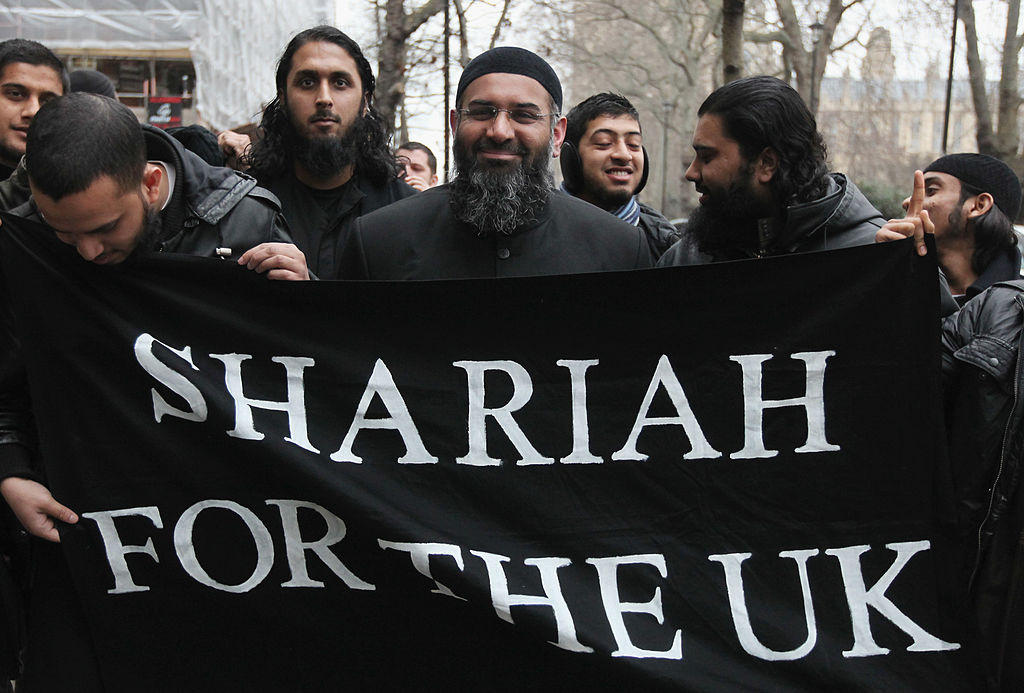
The police assessment stems from events in October 2024, when Scotland Yard similarly banned a UKIP demonstration called “The Mass Deportations Tour” from entering Tower Hamlets. That ban triggered a counter-demonstration in which hundreds of men from the local Bangladeshi community gathered in the streets wearing masks, balaclavas, and dark clothing. Video footage showed columns of masked men marching through Whitechapel, chanting “Allahu Akbar” (Allah is greater in Arabic). Former UKIP leader Nigel Farage described the scenes as “one of the most terrifying things” he had ever witnessed, comparing it to “a foreign invading army marching through our streets.”
UKIP promoted the January 31 event as a “Christian march” and invited participants to “join our parade in Whitechapel, worshipping Jesus, on the 31st of January the month dedicated to the holy name of Jesus.” The party’s official X account pinned the invitation to the top of its social media feed. When Scotland Yard announced the ban, UKIP responded: “The Met Police have once again showed they are controlled by the Islamists. Tower Hamlets is a No Go Zone.”
Tower Hamlets stands as one of London’s most demographically transformed boroughs. In the 2021 Census, more than 50% of its residents identified as Asian or Black, with almost 40% describing themselves as Muslim. Whitechapel has served as home to one of Britain’s largest Islamic populations for decades, making it a focal point in debates over immigration, integration, and religious pluralism in British society.
Deputy Assistant Commissioner Harman insisted the prohibition rested solely on public safety concerns. “It would be reckless to allow an event to go ahead when we understand there’s a risk of serious violence to members of the community and to our officers,” he said. “We are not doing so on the grounds of politics. We’re not even doing so on the grounds of whether people will be offended or not by their presence. We are doing so solely on our risk assessment for serious disorder.”
The senior officer outlined the police calculation behind the ban: “We can deploy significant numbers of officers to physically stand between the groups – a situation that will likely result in clashes between protesters and police and also between opposing groups. This risks injury to officers, protesters, and members of the public – which we see as preventable. Alternatively, we can use our powers under the Public Order Act to proactively impose conditions on the protest, preventing UKIP gathering in Tower Hamlets and avoiding an inevitable clash.”
Harman confirmed that anyone who defies the restrictions and attends the banned march would face arrest. He added that Scotland Yard had attempted to contact UKIP organizers in recent weeks but had received only “limited responses and limited engagements.” The police urged the party to collaborate on identifying an alternative venue, noting that the march could proceed if organizers agreed to a different route.
Scotland Yard’s ban establishes a precedent that religious processions can be prohibited based on the religious sensitivities of the neighborhood through which they seek to pass. This reverses the traditional assumption that citizens have the right to peaceful assembly and religious expression in public spaces, placing the burden on those exercising their rights rather than on those who threaten violence in response. The Metropolitan Police effectively conceded that maintaining order in Tower Hamlets requires preventing Christian religious expression rather than protecting it from hostile actors.


