


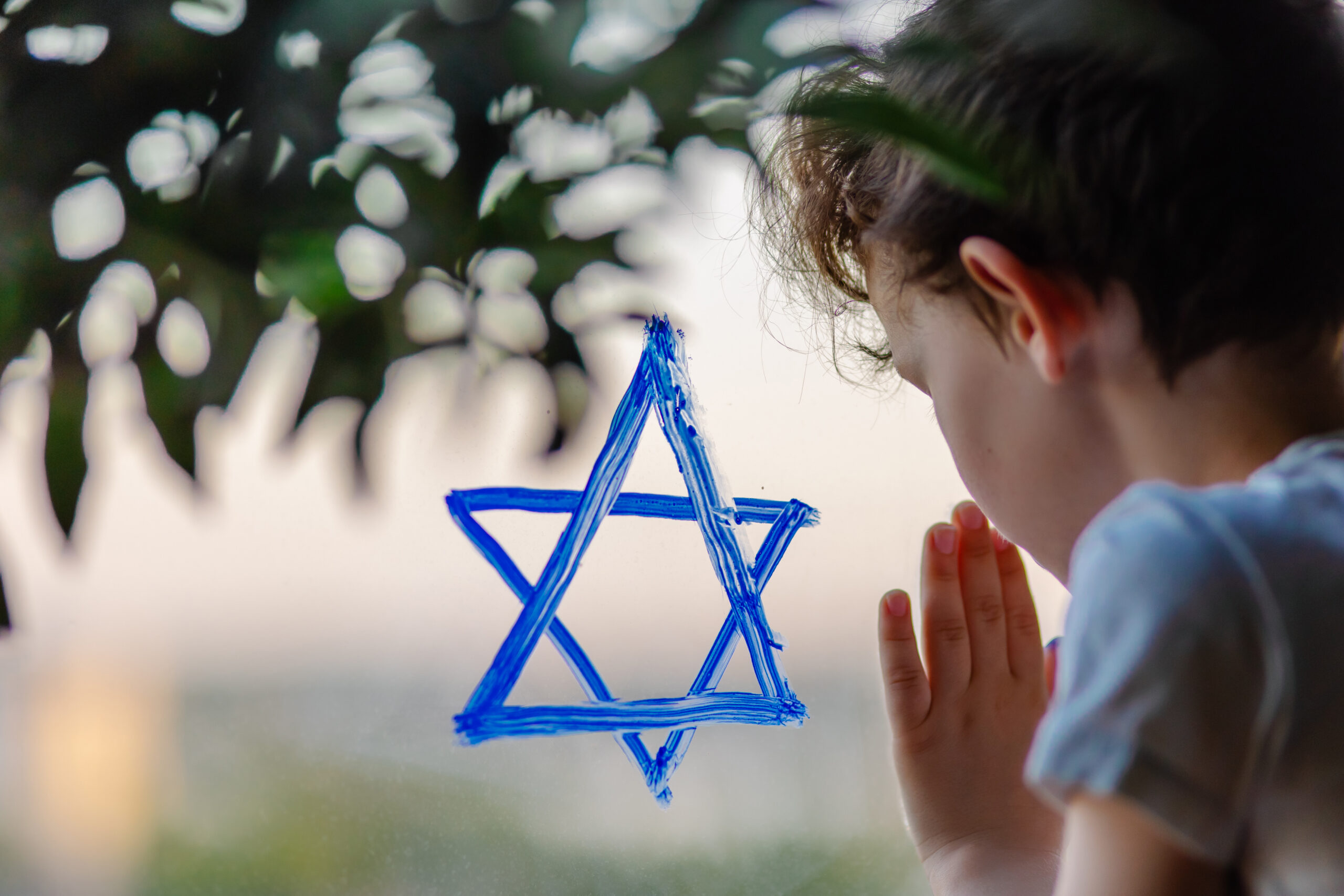
The Knesset delivered a decisive blow to Orthodox efforts to redefine Jewish identity in the Jewish state. On Wednesday, lawmakers voted 60-15 to reject the “Who is a Jew” bill sponsored by MK Avi Maoz of the Noam party. The proposed legislation sought to restrict official registration as a Jew to those converted through state rabbinical courts, effectively nullifying Reform and Conservative conversions for civil purposes. The overwhelming defeat exposed fractures within the right-wing coalition, with Likud voting against the measure and Religious Zionism and Otzma Yehudit members notably absent from the vote. Only the Haredi parties Shas and United Torah Judaism supported the bill.
The question at the heart of this legislative battle cuts to the core of Jewish statehood: Does halacha (Jewish law) or the secular courts determine Jewish identity in Israel?
Jewish law establishes a clear and unambiguous standard. A Jew is someone born to a Jewish mother or converted to Judaism by a recognized religious court in accordance with halacha (Jewish law). The Sages derived this matrilineal principle from Scripture. “You shall not intermarry with them: do not give your daughters to their sons or take their daughters for your sons. For they will turn your children away from Me to worship other gods, and God’s anger will blaze forth against you, promptly wiping you out” (Deuteronomy 7:3-4). The verse refers to “your children” when discussing the daughter marrying out, indicating that her children remain Jewish even when the father is not. The child of a Jewish father and a non-Jewish mother receives no such designation.
Conversion to Judaism requires acceptance of the commandments before a beit din (rabbinical court) of three qualified judges, immersion in a mikveh (ritual bath), and, for males, circumcision. The Sages set these standards to ensure that those joining the Jewish people understand and commit to upholding the covenant. Reform and Conservative movements abandoned these requirements, accepting verbal declarations of faith rather than mikveh immersion or commitment to the commandments. Orthodox authorities do not recognize these procedures as valid conversions.
The Law of Return, passed unanimously in 1950, grants every Jew the right to immigrate to Israel and obtain citizenship. The law initially did not define who qualified as a Jew. That changed in 1970 following two Supreme Court cases that forced the Knesset to clarify the matter.
The first case involved Brother Daniel (Oswald Rufeisen), a Polish Jew who converted to Catholicism during the Holocaust and later sought Israeli citizenship under the Law of Return. Though born to a Jewish mother and technically Jewish under halacha, the Supreme Court ruled in 1962 that a Jew who embraced Christianity could not be considered Jewish for immigration purposes. Israeli rabbinic authorities had supported his application on halachic grounds, but the Court rejected it. Brother Daniel became a naturalized citizen in 1963 through standard procedures.
The second case concerned Benjamin Shalit, a Jewish naval officer who married a non-Jewish Scottish woman. When Shalit attempted to register his children as Jewish by nationality while leaving the religion designation blank, the Ministry of Interior refused. The Supreme Court ruled 5-4 in Shalit’s favor in 1969, arguing that neither a clerk nor the Court itself could determine Jewish identity.
These cases prompted the 1970 amendment defining a Jew as “a person who was born of a Jewish mother or who has become converted to Judaism and who is not a member of another religion.” The amendment extended immigration rights to anyone with one Jewish grandparent, along with their spouses and children, regardless of whether those individuals qualify as Jewish under religious law.
The Brother Daniel case established a critical precedent: belief in Jesus constitutes conversion to another religion and disqualifies an ethnic Jew from making aliyah under the Law of Return. This standard applies regardless of halachic status. A person born to a Jewish mother who accepts Christianity loses the right to automatic Israeli citizenship, though they may naturalize through standard immigration channels.
In 2021, the High Court of Justice ruled that the state must recognize non-Orthodox conversions performed in Israel for immigration purposes under the Law of Return. The Court interpreted the phrase “who converted” to include Reform and Conservative conversions. This decision marked a departure from previous practice, which had recognized only Orthodox conversions performed by state rabbinical courts.
Rather than directly amending the Law of Return, which would spark intense political opposition, Maoz chose to circumvent the ruling by modifying the Population Registry Law. His bill would have required that registration as a Jew in official records be based solely on conversions recognized by state rabbinical courts. The bill also proposed restoring the nationality clause to Israeli identity cards, which was removed in 2005.
Following the vote, Maoz singled out National Security Minister Itamar Ben-Gvir for criticism. “Just a month ago, Ben-Gvir declared publicly, ‘We need to pass the Who is a Jew bill,'” Maoz said. Coalition sources told Arutz 7 that bringing the bill to a vote without sufficient support was counterproductive. “From the opposition, Maoz brought the bill forward when there was no majority,” they said. “It’s a move that harms the proposal, because now it is automatically postponed for six months.”
Maoz called the defeat a “historic missed opportunity” and pledged to continue fighting for Israel’s Jewish identity. “Today, it became clear who’s willing to stand behind their declarations about the Jewish character of the state and who runs away at the moment of truth,” he told local media.
Maoz told JNS on December 11 that “Religious law determines a Jewish person as someone born to a Jewish mother or someone who converted in courts of conversion recognized by a rabbi from the rabbinical establishment in accordance with halacha. For people from outside the country, if the conversion tribunal here recognizes the conversion they underwent, then fine—and if not, then not.”
A separate legislative effort has targeted the 1970 amendment that extends immigration rights to the grandchildren of Jews. In July 2025, the Ministerial Committee for Legislation postponed voting on a bill that would strip people with one Jewish grandparent of the right to immigrate to Israel. The amendment was designed to accommodate Jews from the Soviet Union, where intermarriage was common and Jewish identity was often severed by communist persecution.
Reversing this provision would create chaos for immigrants from Russia, the source of the majority of new immigrants in recent years. A spokesperson for Deputy Prime Minister Yariv Levin stated the bill would be reintroduced in three weeks.
The original 1970 amendment passed the second and third readings by a vote of 51-14 with nine abstentions. Then-Minister of Justice Yaakov-Shimshon Shapira presented the amendment amid fierce debate between Orthodox and secular Israelis, as well as non-Orthodox movements in the Diaspora. Religious parties objected that the amendment recognized Reform and Conservative conversions performed outside Israel.
The defeat of the “Who is a Jew” bill reflects the tension between halacha and secular law that has existed since Israel’s founding. The question is not merely administrative. It determines the character of the Jewish state and whether Jewish law or secular courts define membership in the Jewish people. The overwhelming vote against Maoz’s bill demonstrates that even within the right-wing coalition, there is no consensus on enforcing Orthodox standards for Jewish identity in civil matters. The 2021 High Court ruling stands, and Reform and Conservative conversions performed in Israel gain recognition for immigration purposes. The Knesset has postponed this confrontation, but it has not resolved it.
