

Israel’s story did not begin in 1948, and it did not unfold smoothly. Long before independence, the land was already shaped by waiting, restraint, and difficult choices. Some of the clearest evidence of that period can still be found along the Mediterranean coast.
Two places—Caesarea and Atlit—offer a striking window into those years. Together, they help explain how the modern State of Israel emerged not as an inevitability, but as the result of perseverance in the face of uncertainty.
Caesarea: when power assumed it would last
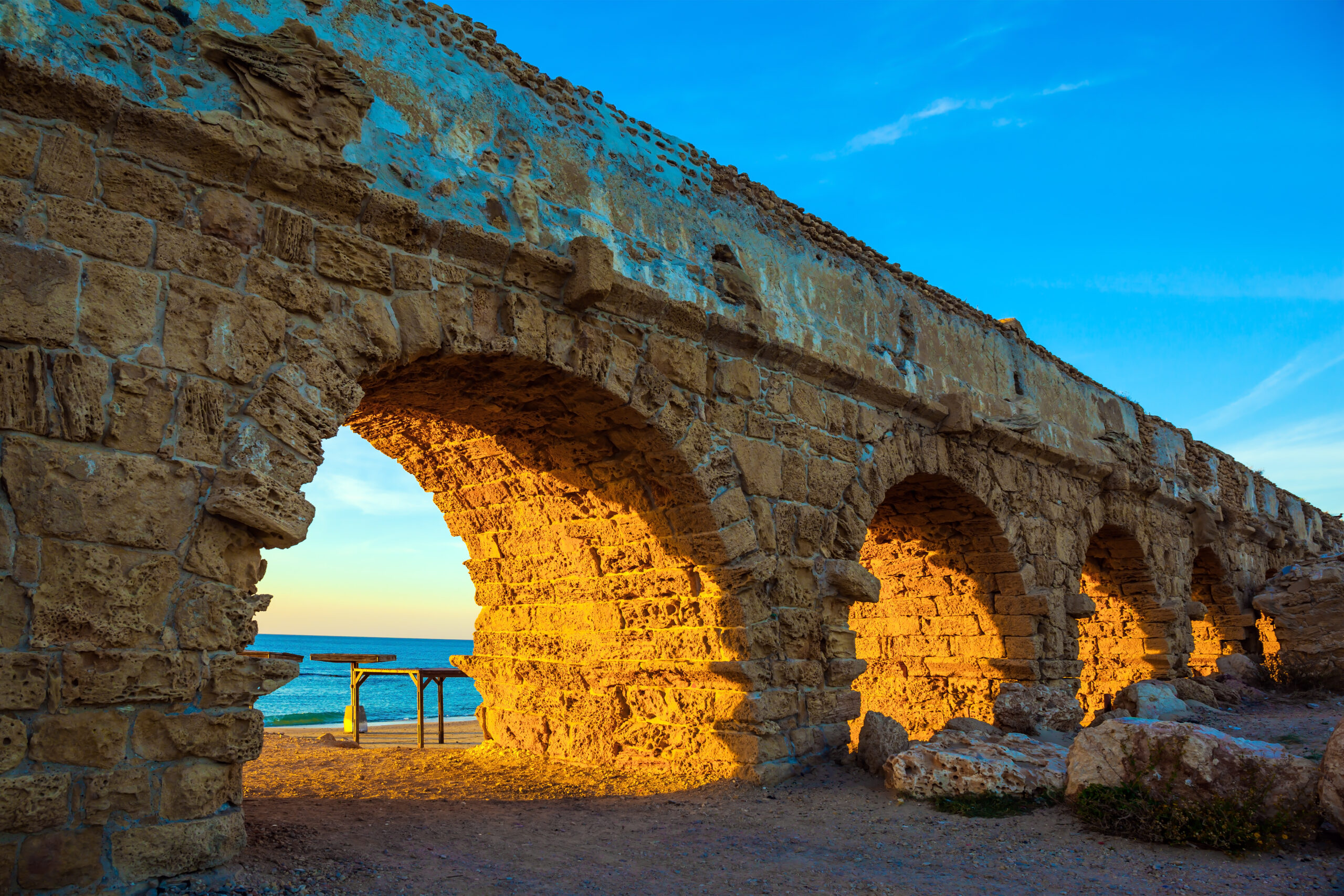
Caesarea was built to project confidence. Designed by Herod the Great in the first century BCE and engineered with Roman precision, the city embodied authority, permanence, and control. Its harbor was among the most advanced in the ancient world, and for centuries it served as a center of imperial governance along the coast.
Time tells a different story.
Walking through Caesarea today, the message is unmistakable. Columns lie broken. Palaces sit in fragments. The harbor that once symbolized mastery over the sea has surrendered to it. Caesarea no longer speaks of Roman greatness; it reveals Roman limits.
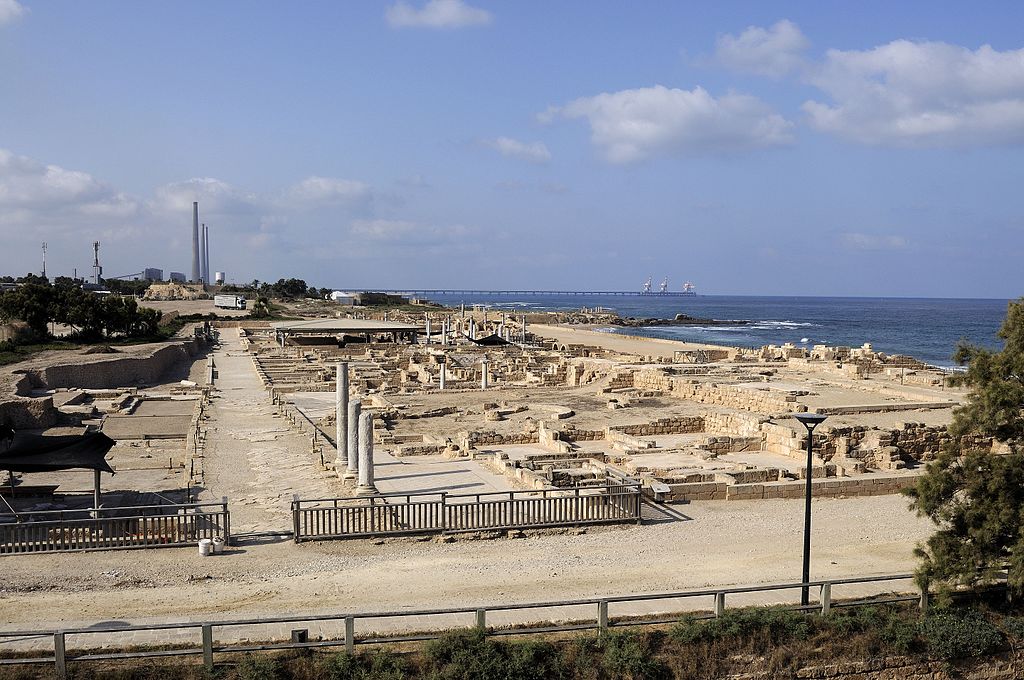
For readers familiar with Scripture, the lesson feels familiar—but seeing it in stone gives it weight. Empires rise convinced of their permanence and fade despite it. Power does not secure legacy. Caesarea makes that truth visible, not theoretical.
It also does something else. It strips away the assumption that history moves in straight lines. Control does not guarantee continuity. Strength does not ensure survival.
Atlit: the strength required to wait
A short distance south, Atlit tells a very different part of the story.
During the British Mandate, particularly in the 1930s and 1940s, Atlit served as a detention camp for Jewish refugees attempting to enter the land. Many had survived the devastation of Europe and believed they had finally reached safety. Instead, they were confined behind barbed wire, often for months, waiting for permission to move forward.
Atlit is not a place of spectacle. It is a place of restraint.
Its significance lies in the waiting it represents—the tension between arrival and acceptance, promise and fulfillment. You stand there and realize how fragile the return really was. Independence was not guaranteed. History could have turned another way.
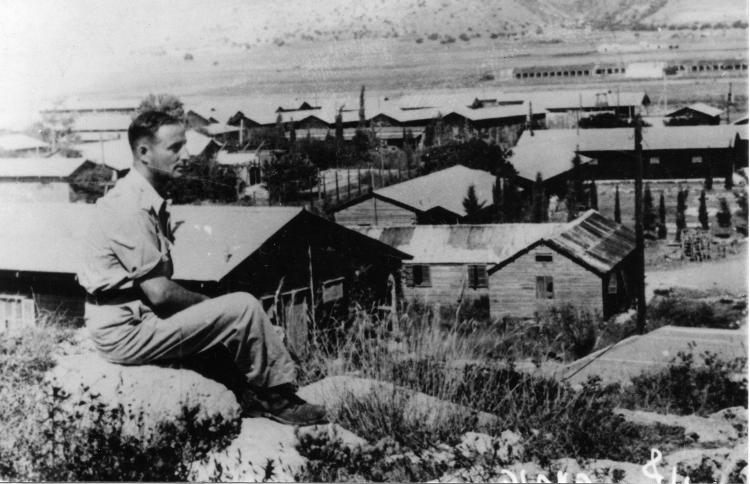
What defines Atlit is not suffering alone, but decision. Those held there chose to remain rather than retreat. They waited without guarantees, trusting that return, however delayed, was still worth pursuing. That quiet resolve became one of the unseen foundations of the future state.
Reading the pre-state years clearly
Caesarea and Atlit belong together because they tell complementary truths.
Caesarea shows what happens when power assumes it is permanent.
Atlit shows what happens when people refuse to give up, even without certainty.
Together, they challenge the idea that Israel’s emergence was inevitable. Independence did not arrive simply because time passed. It came through restraint, patience, and the willingness to endure unresolved seasons.
For people of faith, these sites deepen familiar themes. Scripture speaks often of waiting, return, and restoration. Caesarea and Atlit show what those ideas look like when lived out—slowly, imperfectly, and at great cost.
Why walking these places still matters
Many journeys to Israel focus on ancient biblical landmarks or modern achievements. Both are meaningful. But without the coastal story of the pre-state years, something essential is missing—the bridge between promise and realization.
That bridge becomes especially clear when these places are visited at the right moment.
From April 15–23, 2026, Israel365’s Heartland Tour of the Holy Land will walk this story during one of the most meaningful weeks on Israel’s calendar. The journey coincides with Yom HaZikaron (Israel’s Memorial Day, April 21–22, 2026) and Yom HaAtzmaut (Independence Day, beginning the evening of April 22 and celebrated on April 23).
Experiencing Caesarea and Atlit during that week—when Israel moves from remembering its fallen to celebrating its independence—changes how you hear their stories. Loss in Israel and the perseverance that followed stop being things you read about. They become personal.
If you can’t make the April 2026 dates, join us for one of our other tours: July 29–August 6, or September 24-October 2, 2026. Each journey offers a unique opportunity to walk the land and experience Israel’s profound history, faith, and resilience.
These places don’t try to explain Israel for you. They let you see it for yourself.
And when you walk the land at a moment like this, the past doesn’t feel distant. It feels connected—to the present, and to you.