


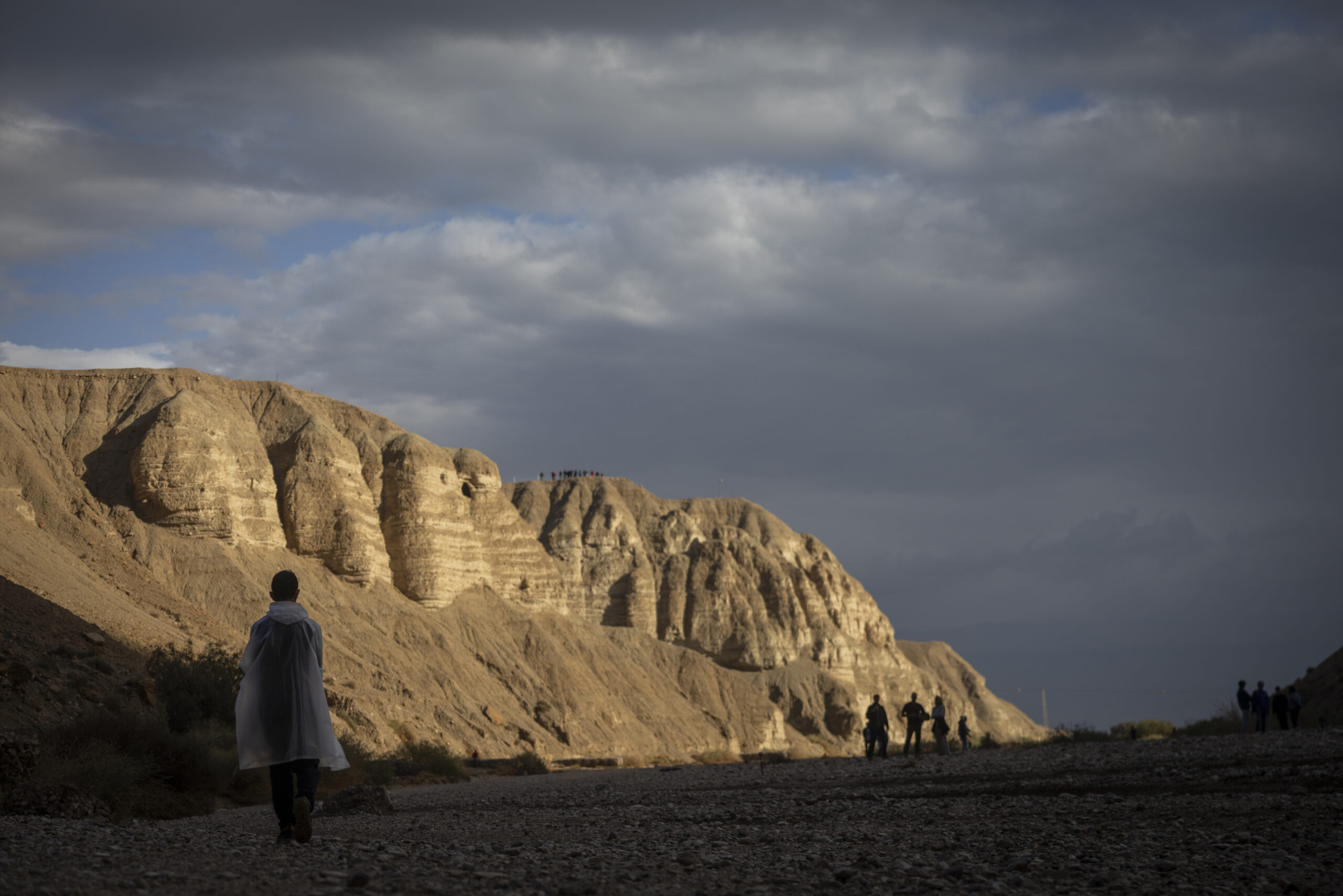
The Judean Desert is usually silent. Its riverbeds are empty scars in stone, reminders of water that once flowed and will again. This week, that silence was broken. After heavy rains in the mountains of Judea, a sudden flash flood tore through Nahal Qumran—the desert ravine that descends past the cliffs near the ancient settlement of Qumran and empties into the Dead Sea, manifesting the verse from Psalms (Tehillim 126) “Restore, O LORD, our fortunes like the dry riverbeds in the Negev”.
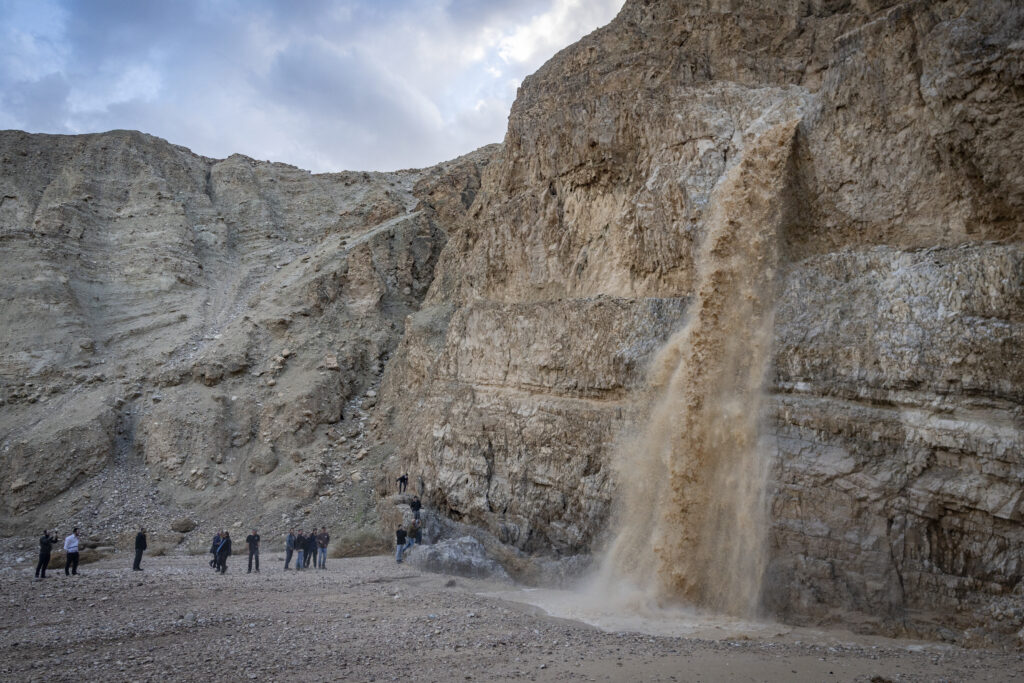
Nahal Komran—known in English as the Qumran Stream—runs through one of the most historically charged landscapes in Israel. The area is associated with the Second Temple–era Jewish community commonly identified with the Dead Sea Scrolls, manuscripts that preserved the Hebrew Bible with astonishing accuracy across millennia. The stream itself is normally bone-dry, its steep limestone walls and narrow passages shaped not by constant flow but by rare, overwhelming force. When rain falls in the Judean highlands, water gathers rapidly and funnels into the desert wadis, producing flash floods that can arrive without warning and with lethal power.
YouTube footage shows the first wave of the flood—a churning wall of brown water carrying rocks, branches, and debris—racing through the ravine. Israeli rescue authorities repeatedly warn that such floods are among the most dangerous natural events in the region. In recent years, hikers and travelers have been killed after entering riverbeds that appeared safe moments earlier. The Israel Nature and Parks Authority reiterated that no one should enter desert streams during or immediately after rain, even if the sky appears clear.
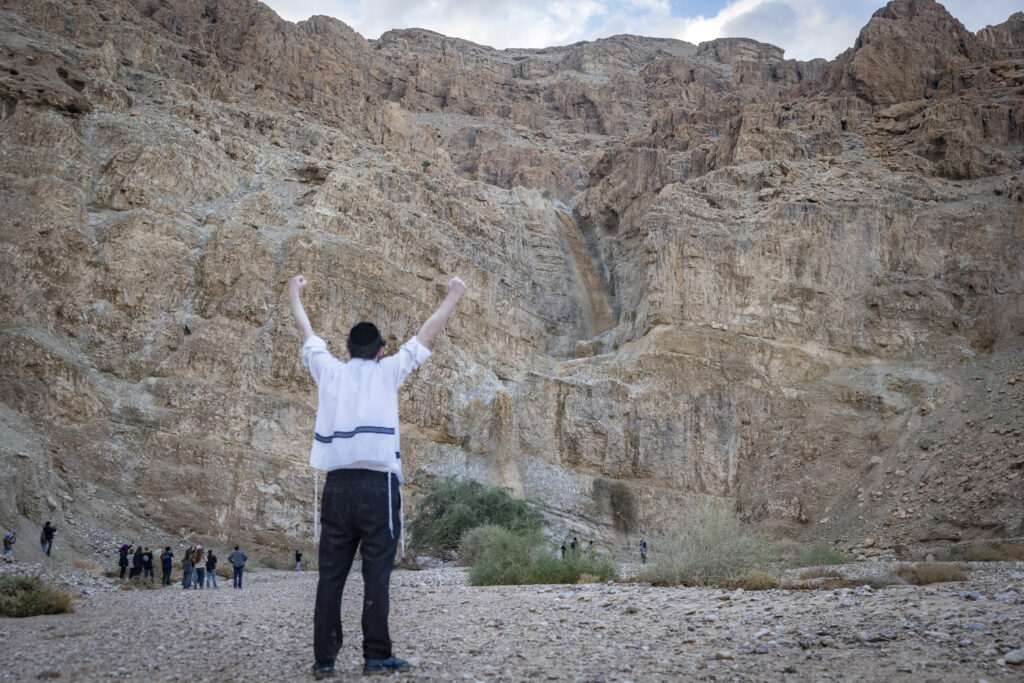
The visual drama of Nahal Komran filling with water invites a larger question that the Bible itself raises explicitly: why does Scripture repeatedly describe national redemption using the image of desert riverbeds suddenly overflowing?
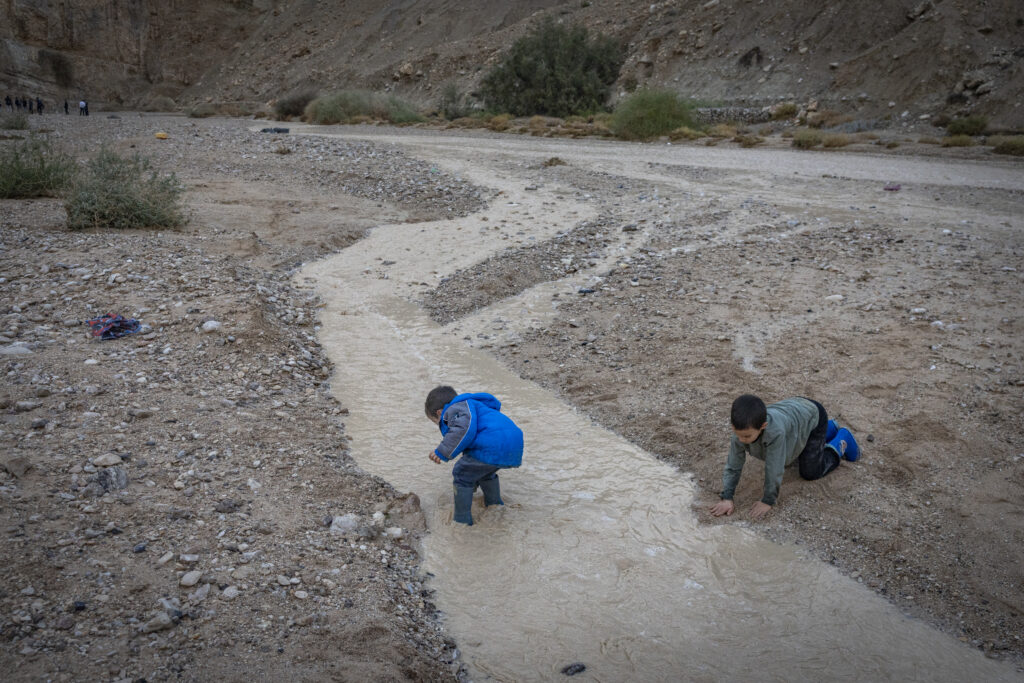
The answer appears directly in the words of King David: “When the LORD restores the captivity of Zion, we were like dreamers. … Restore our fortunes, O LORD, like streams in the Negev” (Psalms 126:1, 4). The Hebrew phrase afikei Negev—“channels of the Negev”—refers precisely to these dry desert riverbeds that remain empty for years and then, without negotiation or gradualism, are transformed by rushing water. The Sages explain that this image was chosen deliberately. Redemption, like a desert flood, does not require permission from those who deny it, nor does it unfold according to human comfort. It arrives with force, speed, and irreversible change.
This is not poetic abstraction. The Bible repeatedly treats the land of Israel as a living participant in Jewish history. Rain falls when Israel is restored to its land and withheld when it is driven out. Desert streams flowing again are not symbols invented by modern readers; they are the Bible’s own chosen language for national return and divine intervention. Isaiah states this with similar bluntness: “I will open rivers on barren heights, and springs in the midst of valleys; I will make the wilderness a pool of water, and the dry land springs of water” (Isaiah 41:18).
The location of this flood matters. Nahal Komran flows through territory liberated by Israel in 1967 and legally declared part of the State of Israel under Israeli administration. It is not a “disputed” landscape in the Bible, nor is it a temporary holding zone awaiting partition. The land responds to Jewish presence, just as Scripture says it will. The desert does not bloom because of diplomacy. It blooms because the people of Israel are home.
The floodwaters of Nahal Komran will recede within hours or days, leaving the channel dry once again. But the image remains: a desert that looks dead until the moment it isn’t. That is how the Bible describes redemption, and that is what unfolded this week in the cliffs above the Dead Sea. The water came suddenly, powerfully, and without apology. The land of Israel is doing exactly what Scripture said it would do.
