

October 7 should have destroyed Israel.
That was the intention of Israel’s enemies, and by every conventional military assessment, they nearly succeeded. Israel’s defenses were breached. Warnings were missed. Command structures faltered. Hamas launched an invasion it had planned for years, designed not as a raid, but as the opening move in a regional war meant to collapse the Jewish state.
And yet—Israel did not fall.
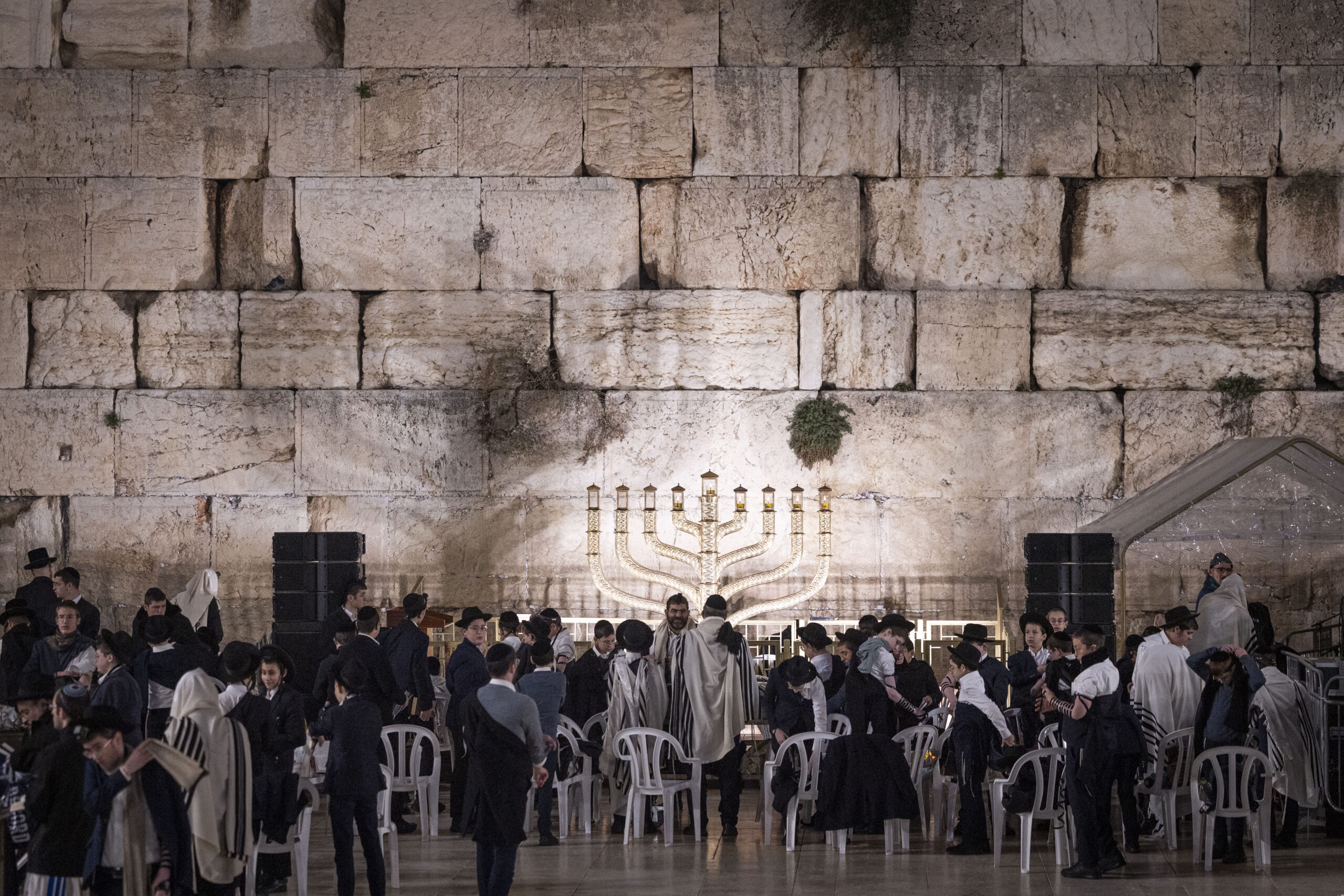
As Chanukah is celebrated—the festival that marks survival and victory against overwhelming odds—many Israelis are reflecting on the past two years of war. Among them is Rabbi Shmuel Eliyahu, Chief Rabbi of Safed, who has pointed to a series of distinct miracles during the war—specific moments when events unfolded in ways that sharply contradicted every expectation.
What follows are eight such moments, corresponding to the eight lights of Chanukah—eight turning points in the war that preserved Israel when destruction seemed inevitable.
Miracle 1: The War That Was Meant to Begin Everywhere at Once
October 7 was not designed to be a single-front attack. It was meant to be the opening strike in a coordinated regional war intended to destroy Israel in a matter of days. Hamas’ invasion from Gaza was only one piece of a much larger plan that depended on precise timing and total synchronization.
Hezbollah was supposed to launch a massive assault from the north. Iran was expected to fire waves of ballistic missiles at Israel’s cities and military bases. Forces in Yemen were meant to join in, while widespread unrest inside Israel and across Judea and Samaria would stretch the country beyond its ability to respond.
That war never began.
Despite years of preparation, the coordination between Israel’s enemies collapsed at the decisive moment. Hezbollah did not invade. Iran hesitated. Internal uprisings failed to materialize. Israel was struck brutally—but not surrounded, not overwhelmed, and not destroyed.
The attack that was meant to end Israel instead exposed a fracture in the alliance built to defeat it.
Miracle 2: The People Who Fought Without Orders
In the critical early hours of the attack, Israel’s military command structure was severely compromised. Senior officers were absent, intelligence assessments were incomplete, and formal orders were slow to arrive. Under normal circumstances, such conditions would have resulted in widespread paralysis.
Instead, soldiers reported to bases without being summoned, civilians took up arms to defend their communities, and small units reorganized themselves independently. This spontaneous response prevented Hamas from advancing far beyond the initial breach points and limited the scope of the massacre. What should have been chaos became an improvised but effective defense.
Miracle 3: The Sudden Reunification of a Divided Nation
In the months preceding the war, Israel appeared deeply divided. Political polarization was intense, and some reservists had publicly stated they would refuse service. Israel’s enemies openly cited these divisions as evidence that the country lacked the cohesion to withstand a prolonged conflict.
Once the war began, those divisions largely disappeared. Reservists returned in overwhelming numbers, including many who had previously declared they would not serve. Volunteers exceeded expectations, and Israeli society mobilized with remarkable speed. The internal fracture that Hamas and its allies had counted on never occurred.
Miracle 4: The Destruction of Hamas’ Illusion of Control
For years, Israel operated under the assumption that Hamas was deterred and primarily interested in economic stability. That belief shaped policy decisions that included allowing Gaza workers into Israel and permitting significant financial flows into the territory.
October 7 decisively ended that illusion. Despite international pressure, logistical challenges, and the complexity of urban warfare, Israeli forces dismantled Hamas’ military infrastructure across Gaza. Command centers were destroyed, weapons caches eliminated, and the extensive tunnel network—once seen as an almost insurmountable obstacle—was largely neutralized. A threat that had been treated as permanent was systematically removed.
Miracle 5: Hezbollah’s Command Blinded—and Nasrallah Reached Underground
Hezbollah was widely regarded as the one enemy capable of turning Israel’s war into a national catastrophe. With an arsenal measured in the hundreds of thousands of rockets and a hardened command network built to survive any strike, Hezbollah’s leadership assumed it could fight on its own terms and from deep underground.
Then the organization’s command-and-control system was hit in a way few modern militaries have ever experienced. In a coordinated operation, thousands of Hezbollah pagers and communications devices detonated almost simultaneously, disabling large numbers of operatives and throwing the organization into confusion at the exact moment it needed clarity. With commanders suddenly unable to communicate reliably, Israel exploited the disruption to strike missile stockpiles, targets, and leadership nodes while limiting civilian harm—an operational combination that stunned even experienced observers
The culmination was the strike that killed Hassan Nasrallah, deep underground, alongside senior leadership figures who believed their bunker was beyond Israel’s reach. In the space of a short campaign, Hezbollah’s leadership tier was decapitated and its ability to coordinate a large-scale assault was severely degraded—preventing the kind of nationwide devastation that had long been treated as inevitable in any full confrontation with Hezbollah
Miracle 6: Tens of Thousands of Missiles—and Israel Still Stood
Over the course of the war, Israel was targeted by an unprecedented volume of rocket and missile fire from multiple fronts. Hamas, Hezbollah, Iran, and Yemen launched tens of thousands of projectiles, including advanced ballistic missiles capable of leveling entire neighborhoods and causing mass casualties.
By every military estimate, Israel should have suffered devastating losses. Thousands of civilians should have been killed. Major cities, air bases, and critical infrastructure should have been crippled.
That did not happen.
The overwhelming majority of missiles never reached their targets. Israel’s defense systems intercepted thousands of incoming threats, while others malfunctioned or fell short. In several cases, missiles struck areas that had been evacuated only moments earlier. Casualties, though tragic, were a fraction of what experts had warned was inevitable.
Miracle 7: Iran Crushed Without a Ground War
For decades, Iran was considered immune to direct defeat. Analysts insisted that confronting it would require a prolonged regional war with devastating Israeli losses.
That belief proved false.
In an unprecedented campaign, Israel penetrated Iranian airspace, dismantled key missile and air-defense systems, eliminated senior leadership figures, and exposed the regime’s inability to protect itself. Targets long thought unreachable were struck at will. Not a single Israeli aircraft was lost, and no Israeli soldiers were killed.
Only after Israel had already broken Iran’s defenses did the United States fully enter the operation. The result was a strategic shock felt across the region. Iran’s claims of deterrence collapsed, its economy spiraled under renewed sanctions, and the regime was revealed as far weaker than it had portrayed itself to be.
Miracle 8: The Region Shifted—and Israel Emerged Stronger
This war was meant to isolate Israel and leave it weaker, poorer, and surrounded. The opposite happened.
As Israel pressed forward, long-standing threats across the region unraveled. Syria’s military infrastructure collapsed, removing a danger that had loomed over Israel’s northern border for decades. In Yemen, Israeli strikes broke the Houthis’ grip on the Red Sea, reopening critical shipping lanes and relieving pressure on global trade.
At the same time, Israel’s peace agreements held. Arab states that were expected to turn away did not. Instead, they quietly absorbed the reality that Israel was confronting forces that threatened them as well. Israel’s economy adapted under fire, terror funding networks were disrupted, and strategic assumptions that had governed the Middle East for a generation fell apart.
Israel entered this war facing destruction. It emerged with its position in the region fundamentally strengthened.
A Chanukah Reflection
Chanukah commemorates a time when the Jewish people survived not through numbers or power, but through events that should not have gone their way—yet did.
As Rabbi Shmuel Eliyahu teaches, miracles are often recognized only in hindsight. Looking back at the past two years, many Israelis see not just resilience and bravery, but repeated moments where destruction seemed certain—and was somehow averted.
Chanukah honors the miracles of the past—but also calls us to recognize those of our own time.