

Ben-Gurion University scientists say a newly identified population of immune cells may slow aging by clearing away damaged cells before they trigger disease. At the same time, the findings have revived long-standing Jewish discussions about what human life will look like when Mashiach comes. Modern biology and classical sources are now intersecting in a way that demands attention.
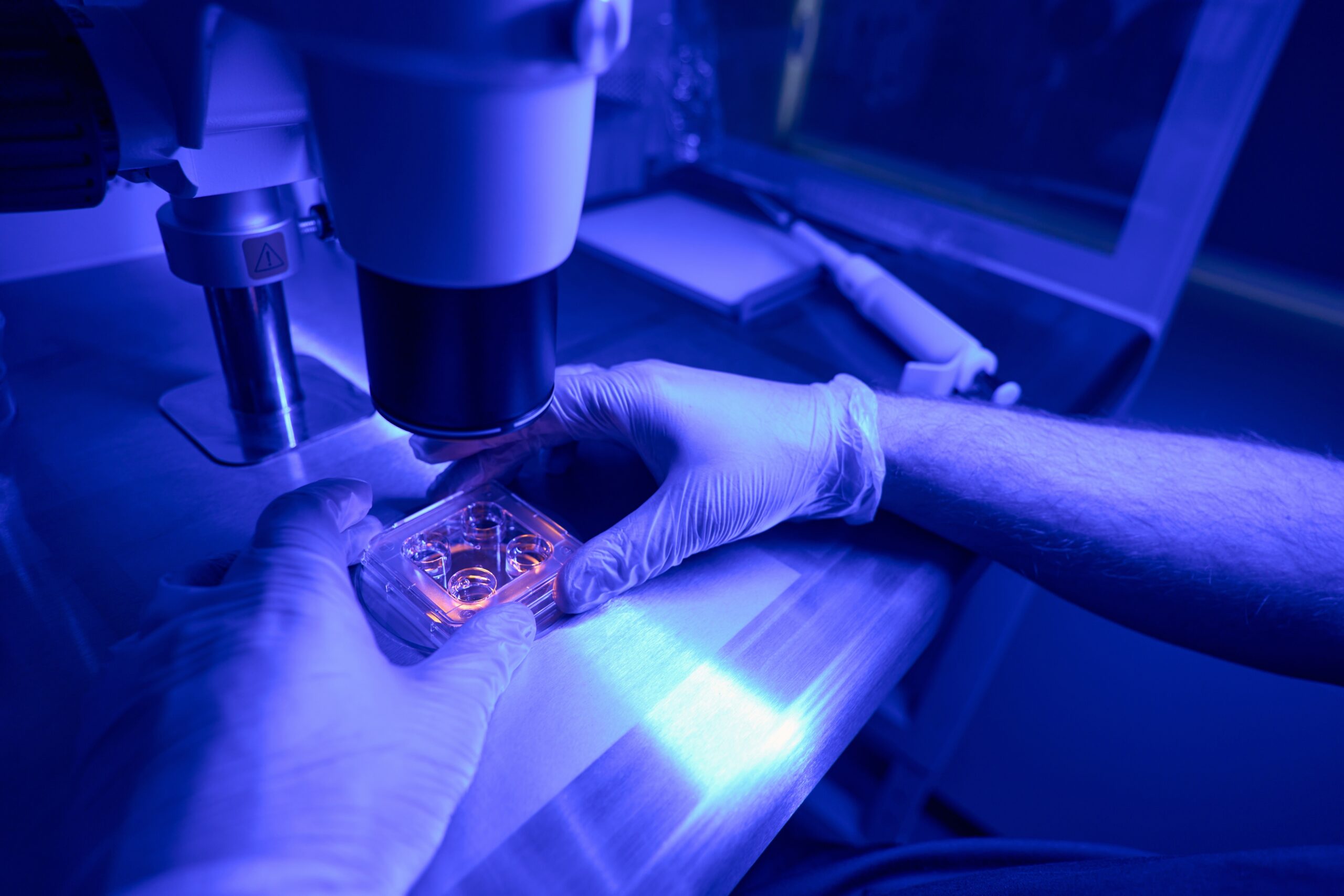
Prof. Alon Monsonego from Ben-Gurion University’s Shraga Segal Department of Microbiology, Immunology and Genetics, said his team has identified cytotoxic T helper cells, which are unusual lymphocytes capable of targeting senescent cells, the aging, inflammation-causing cells that accumulate over time. “The immune system deteriorates with time, and that process may dictate the pace of aging,” he said. “We found these cytotoxic T helper cells can be very effective in reducing the burden of senescent cells, allowing tissues to regenerate and recover.”
His team stumbled onto the significance of these cells only after a Japanese study reported that super-centenarians, people living beyond 100, had an abundance of them. The discovery sent Monsonego’s lab into a full-scale investigation that has now been published in Nature Aging. The paper was led by Dr. Yehezqel Elyahu, with contributions from Prof. Esti Yeger-Lotem of Ben-Gurion and Prof. Valery Krizhanovsky of the Weizmann Institute.
Monsonego explained that clearing senescent cells may be a key to preserving what researchers call “health span.” “It’s not enough to live to 90 with five different diseases,” he said. “We need to think about living healthy, not just living long.”
He said these cells accumulate naturally with age, contrary to earlier assumptions that late-life biological changes must indicate breakdown. Genetically modified mice that lacked these cytotoxic T helper cells lived shorter lives, a result Monsonego described as unambiguous.
The research suggests that healthy aging may depend on immune features we have barely begun to measure. “Our study suggests that the immune system of healthy older individuals may have properties which we weren’t aware of before,” he said. He has already begun studying immune profiles in “Blue Zones,” regions known for exceptionally long-lived populations.
Tel Aviv University neuroscientist Prof. Asya Rolls, who was not part of the study, said the findings indicate that aging may be more modifiable than assumed. “Strengthening this natural immune mechanism could eventually open new ways to slow down age-related decline and keep tissues healthier for longer,” she said.
Monsonego’s goal is to develop diagnostic tools to track these cells and, eventually, therapeutic strategies that could preserve human health decades earlier in life.
The Bible provides a clear foundation for extraordinary lifespans before the Flood. “And all the days of Methuselah were nine hundred sixty and nine years, and he died” (Genesis 5:27). Later generations lived far shorter lives. Yet, the Sages described a future in which the world undergoes both political restoration and spiritual refinement.
Maimonides (Rambam) wrote that the Messianic Age will unfold within the framework of natural law. He argued that the world will continue as it does today, with aging and death still present, even though Israel will regain independence and peace. In his view, the Messiah will die and be succeeded by his sons, demonstrating that mortality remains part of the human condition.
Other sources present a different picture. Midrashic and Talmudic teachings describe a transformed world in which suffering disappears and the physical world is elevated. These descriptions culminate in Techiyat HaMetim, the resurrection of the dead. Some commentators interpret these texts as indicating that human frailty, including aging, will be radically altered.
Rabbi Yosef Berger, rabbi of King David’s Tomb on Mount Zion, addressed the theological tension around scientific attempts to influence longevity. “If the intention is to prolong or save lives, it is indeed a blessed endeavor,” he told Israel365 News. “But if it is an attempt to usurp the place of God, to remove death from the world, that is like the generation that built the Tower of Babel to take the place of God in heaven. Life and death are from God, and the resurrection of the dead is an essential part of the Messiah. People who want to eradicate death actually want to erase the resurrection of the dead.”
Yuval Ovadia, whose films on Nibiru have a large following, believes that in the post-Messianic era, people will return to the lifespans described before Noah. He attributes this to cosmic changes triggered by the approach of a massive star and its accompanying system. “The Midrash states that God initiated the flood in the time of Noah by moving two stars,” he said. “This caused a shift in the poles of the world; the north became the south, dry land became oceans, and oceans dried up. Nibiru will shift the magnetic poles back to their pre-Noah state. As a result, people will live much longer, for hundreds of years, as it was described in the Bible before Noah.”
The scientific breakthrough at Ben-Gurion University does not claim to offer immortality. It does, however, reveal that the body contains mechanisms capable of slowing the very processes that make aging destructive. Whether this discovery aligns with Rambam’s natural Messianic vision or with the more supernatural teachings depends on which sources one emphasizes.