

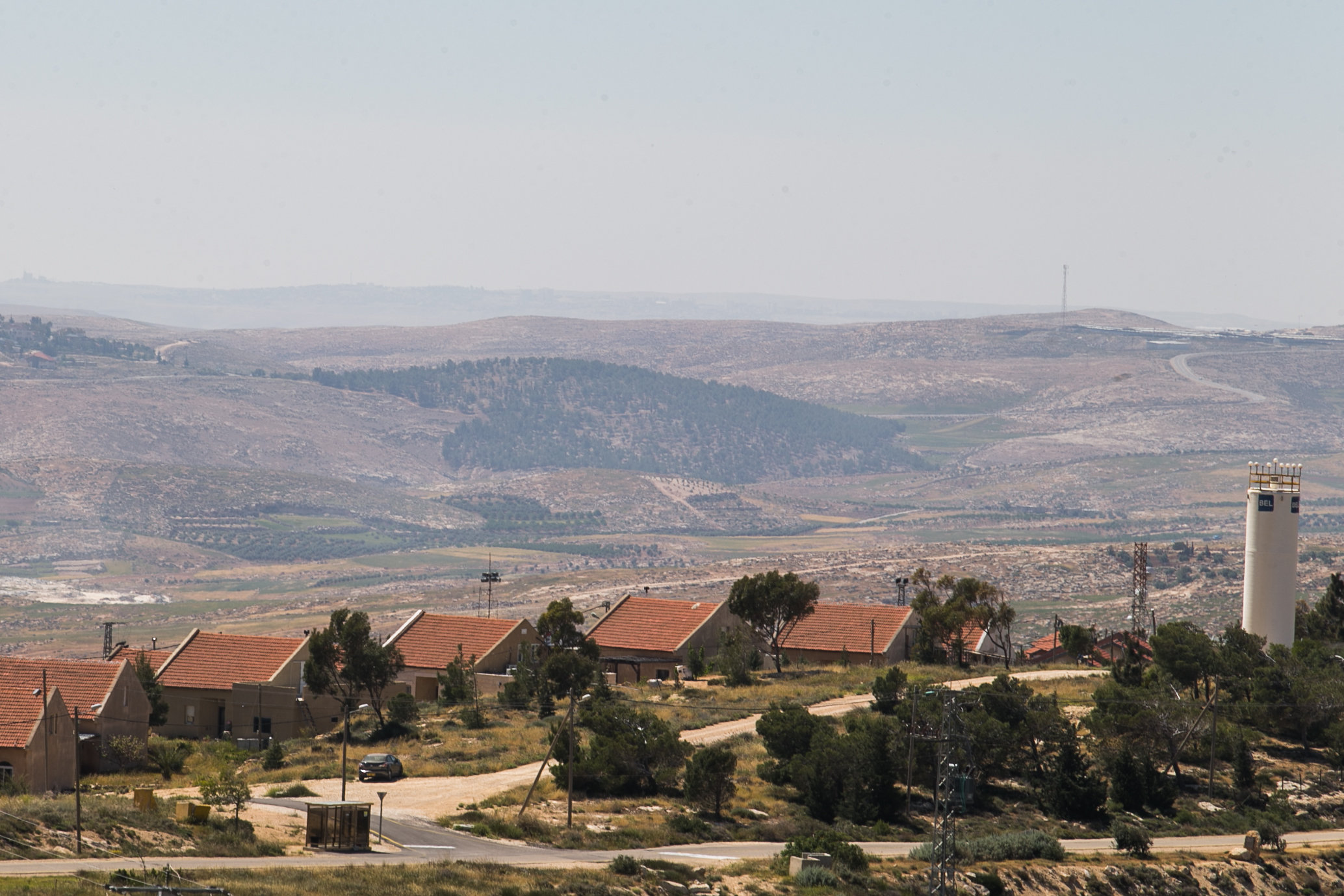
Regavim is demanding the immediate demolition of an illegal dam in the Har Hevron (Hebron) region after documenting what the organization describes as a deliberate and destructive attempt to seize land and divert Israel’s water resources. The Adoraim Reservoir, once a thriving ecological site and a draw for hikers, has been reduced to cracked earth. The water that sustained the area has been trapped behind an unauthorized dam built upstream in Wadi Duma, altering the landscape and triggering a direct challenge to Israeli governance.
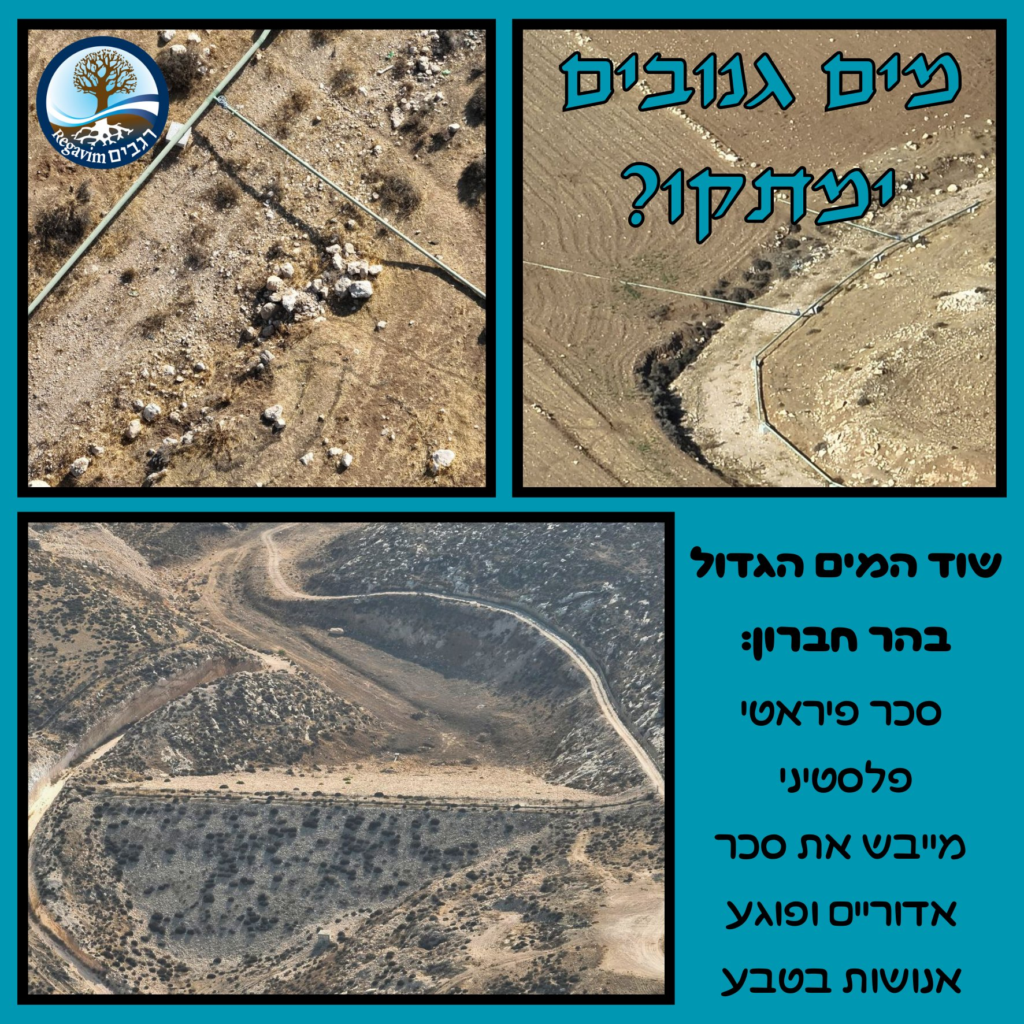
The scale of the project is not a backyard improvisation. Aerial photos show a full dam across the valley, a man-made reservoir, a surrounding fence, and an extensive irrigation network connected to agricultural plots created on hundreds of dunams now under the de facto control of the builders. The draining of the Adoraim Reservoir shocked residents who came to the site expecting water in a nature reserve under Israeli jurisdiction, only to find a dry basin.
Regavim’s formal petition, filed by Attorney Boaz Arzi, states that the project violates every relevant legal framework. It obstructs a natural waterway, alters a designated nature reserve, and exploits the Ottoman Land Law, which remains in force in Judea and Samaria. Under that law, agriculture can be a tool for land seizure: cultivate it long enough, and it becomes yours. The dam’s builders fenced off the new reservoir, diverted water for their crops, and created irreversible environmental damage through unregulated earthworks and the destruction of local habitats.
The organization emphasized that the diversion of water is also a breach of the Israeli-Palestinian Interim Agreement (Oslo II), which requires mutual approval for any water infrastructure projects. No request was submitted. No approval was granted.
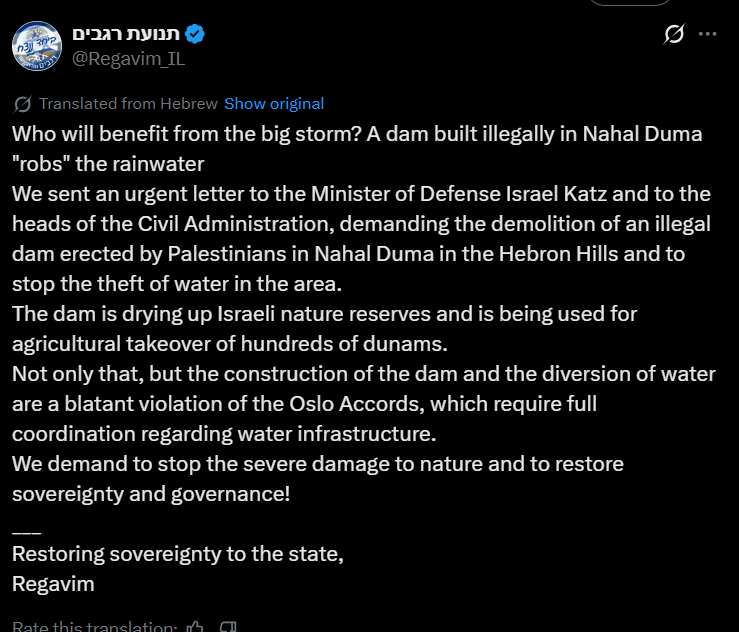
Regavim has become one of Israel’s most active watchdog organizations confronting illegal construction across the country, with a particular focus on Judea and Samaria. The movement documents violations, files petitions, and pressures authorities to enforce the law. Its teams have exposed widespread unauthorized construction spearheaded by the Palestinian Authority, much of it aimed at creating contiguous Arab control in strategic corridors. Israeli security officials have warned about the consequences: illegal roads and agricultural projects can provide cover for terrorist movement, weaken Israeli territorial control, and alter facts on the ground without any formal process.
Illegal Arab construction in Judea and Samaria has grown into a massive phenomenon. In some areas, it has expanded by thousands of new structures per year, including illegal homes, agricultural outposts, and road systems. The Civil Administration has reported that these projects frequently bypass safety standards, sewage regulations, and environmental rules. They also create security challenges: unregulated roads connecting villages and agricultural land have been used repeatedly by terrorists to evade Israeli forces, carry out attacks, and then disappear into terrain altered without oversight.
Water has become another tool in this struggle. Israel is routinely accused of denying water to Arabs, yet the Civil Administration has documented dozens of illegal wells drilled directly into the Mountain Aquifer. Those wells have contributed to salination, collapsing water pressure, and failures in supply lines shared by Jews and Arabs. Regavim argues that the Wadi Duma dam fits the same pattern: environmental harm masked as innocent agriculture.
Ro’i Drucker, Regavim’s Field Coordinator for Judea and Samaria, said that the Wadi Duma case is not a local dispute but a strategic maneuver. “The Palestinian Authority is engaged in large-scale, systematic exploitation of shared natural resources in Judea and Samaria, resulting in severe environmental damage. The Wadi Duma dam exemplifies this pattern: water intended for a protected Israeli nature site is being diverted for private use and to facilitate further territorial expansion. We call upon the responsible authorities to act decisively to end this serious ecological and legal violation and to reassert effective governance and environmental oversight in the area.”
The Bible places water at the heart of justice, blessing, and the integrity of the land. In Devarim (Deuteronomy), the verse states: “For the land that you are entering to possess is not like the land of Egypt… but a land of hills and valleys, which drinks water from the rain of heaven” (Deuteronomy 11:10–11). Control of water is control of the land itself. The Sages understood that diverting natural watercourses is an act with moral and territorial weight, capable of harming entire communities.
Regavim’s demand for immediate demolition is a call for Israel to enforce its own sovereignty, protect its environment, and confront a coordinated effort to seize strategic land by reshaping the landscape. The drying of the Adoraim Reservoir is not just an environmental story; it is a warning about the consequences of turning a blind eye to illegal projects that alter the map.