


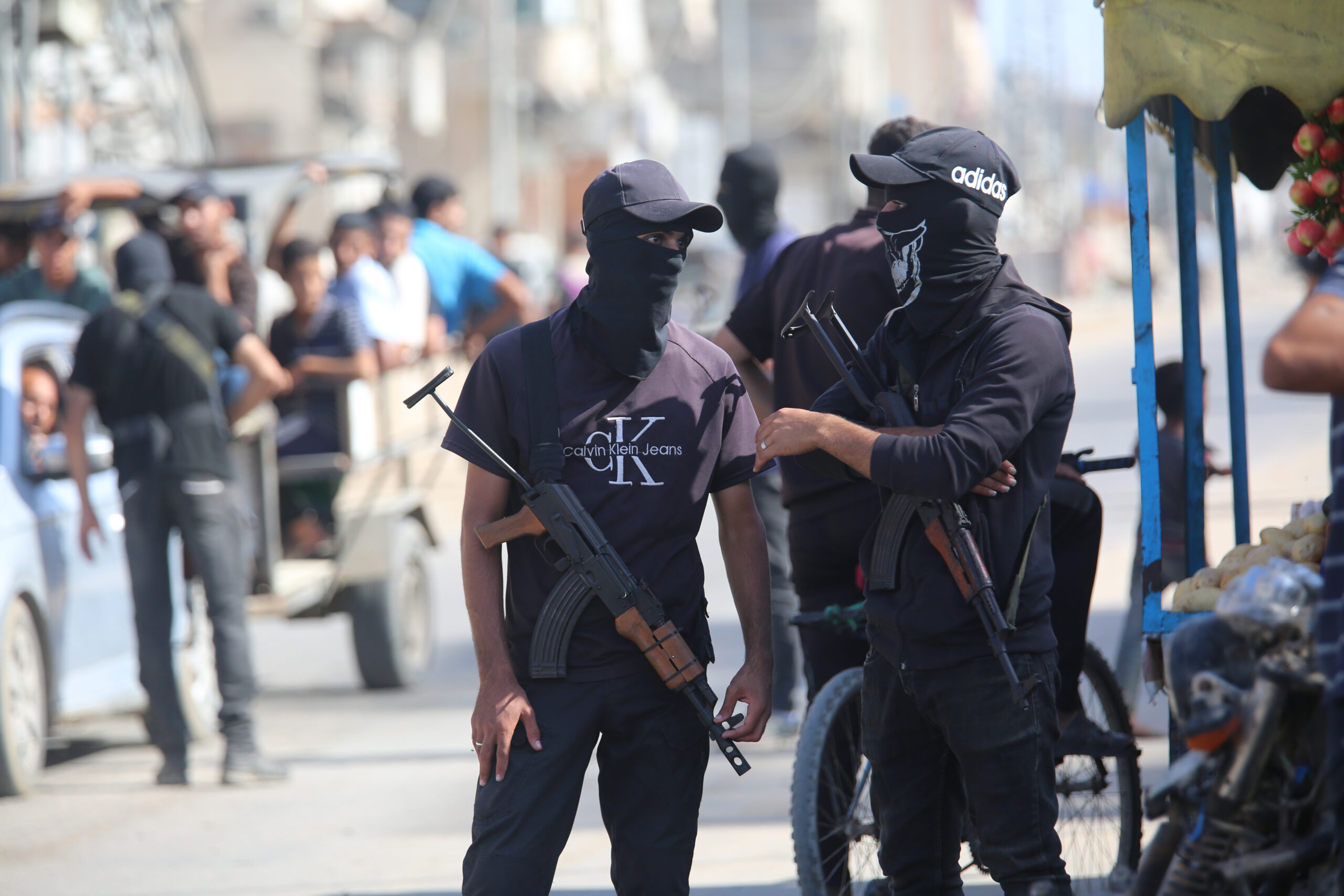
The ink on President Trump’s Gaza peace plan had barely dried when Hamas terrorist leaders delivered their response: a flat rejection of disarmament, a promise to continue the war against Israel, and a vow to prevent any international oversight of the Gaza Strip. Speaking from the safety of Istanbul and Doha, the terrorists made clear they have no intention of honoring the commitments they made when they agreed to the ceasefire deal last month. Hamas has proven itself to be precisely this kind of adversary—agreeing to terms only to buy time, recover strength, and prepare for the next assault.
Khaled Mashaal, Hamas’s political leader operating from exile, addressed a pro-Palestinian conference in Istanbul on Saturday with a message that stripped away any pretense of compliance. “The time has come for the ummah [the Islamic nation] to commit to the liberation of Jerusalem as the banner and symbol of freeing Palestine; to cleansing the blessed Al-Aqsa Mosque [Temple Mount]; and to reclaiming Islamic and Christian holy sites,” the terrorist declared. His message was not one of reconciliation but of renewed conquest.
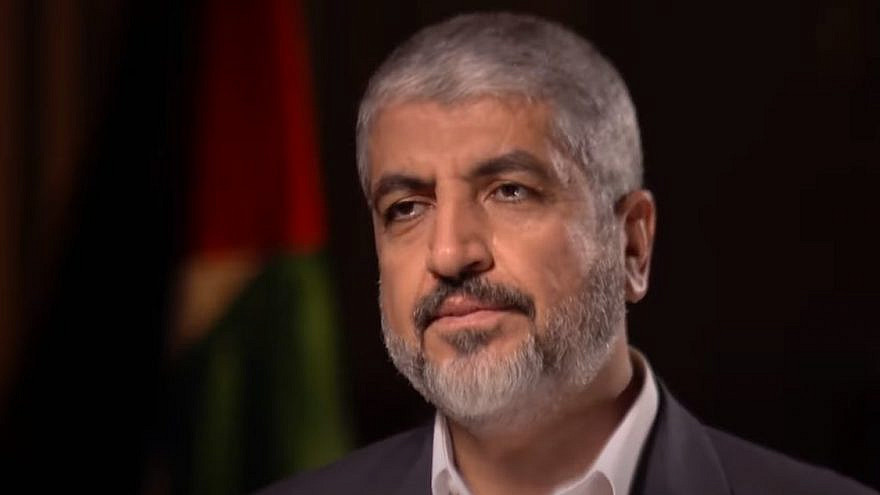
(Source: JNS)
Mashaal rejected the central requirement of Trump’s peace plan—Hamas disarmament. “Protecting the resistance project and its weapons is the right of our people to defend themselves,” he stated. “The resistance and its weapons are the ummah’s honor and pride. A thousand statements are not worth a single projectile of iron.”
The terrorist leader also dismissed the International Stabilization Force and Board of Peace that the United Nations Security Council authorized on November 17 to serve as the transitional government authority for Gaza. “All forms of guardianship, mandate and re-occupation of the Gaza Strip, the West Bank and all of Palestine” are rejected, Mashaal announced. “The Palestinian is the one who governs himself and decides for himself.”
Israel’s Foreign Ministry responded sharply, stating that Hamas was “making a mockery of President Trump’s peace plan” and that Mashaal’s remarks were in “direct contradiction of the core terms of the peace plan itself.”
Khalil al-Hayya, a member of Hamas’s top leadership in Gaza, reinforced Mashaal’s position in a Saturday interview. He told American envoys Steven Witkoff and Jared Kushner that Hamas would accept only border-monitoring forces, not any presence empowered to operate inside Gaza or dismantle the terror group’s arsenal. Al-Hayya claimed Hamas would surrender its weapons only “if the occupation ends”—a reference not to any particular territory but to Israel’s existence itself.
His office later clarified to Agence France-Presse that surrendering weapons “under the authority of the state” meant only a “sovereign and independent Palestinian state”—code for a terror state that would replace Israel.
Under the ceasefire agreement that went into effect last month, Hamas committed to returning the bodies of 28 hostages it was holding by October 13. The terror group slow-walked compliance, delaying the disarmament process scheduled for the second phase of the deal. Trump’s plan explicitly states that Hamas and other terrorists “agree to not have any role in the governance of Gaza, directly, indirectly, or in any form,” and that “all military, terror, and offensive infrastructure, including tunnels and weapon production facilities, will be destroyed and not rebuilt.”
Hamas is now making clear it will honor none of these commitments.
Israel faces mounting pressure from American mediators to move forward with the second phase despite Hamas’s defiance. Israeli officials warn that if Washington proceeds without the return of Sergeant First Class Ran Gvili—a police commando abducted on October 7 whose body Hamas has failed to locate—the terrorists will have no incentive to comply with future demands. A senior Israeli official expressed concern that Trump may announce a transition to the next phase regardless of whether Hamas meets its obligations.
Mashaal also outlined Hamas’s broader agenda: preventing Jewish presence in Judea and Samaria; freeing imprisoned terrorists from Israeli jails; building Arab unity against Israel; “pursuing” Israeli leaders globally; and promoting anti-Israel sentiment on campus, in media, and in politics. He boasted that “two years of war have passed, and all the weapons that came to the Zionist entity from all corners of the world have failed to impose their will on our people.”
The Hamas rejection exposes the fundamental flaw in treating Islamic terror organizations as legitimate negotiating partners. They view agreements not as binding commitments but as tactical pauses—opportunities to regroup, rearm, and resume attacks when the strategic moment arrives. Their openly stated goal remains the destruction of Israel and the establishment of Islamic rule from the Jordan River to the Mediterranean Sea.
Trump’s peace plan, backed by UN Security Council Resolution, envisioned an International Stabilization Force responsible for demilitarizing Gaza, including “the destruction and prevention of rebuilding of the military, terror, and offensive infrastructure, as well as the permanent decommissioning of weapons from non-state armed groups.” Hamas has now declared this vision dead on arrival. The terrorists have calculated that international pressure on Israel will eventually force concessions without requiring Hamas to give up anything of substance.
The Hamas charter provides unambiguous statements about the organization’s commitment to violence and rejection of negotiations. The original charter declares that peace initiatives, peaceful solutions, and international conferences are “contrary to the beliefs of the Islamic Resistance Movement.” Article 13 of the charter explicitly states this position, dismissing any diplomatic path to resolving the conflict.
Article 15 declares that jihad becomes “the individual duty of every Moslem” in response to what Hamas terms Jewish “usurpation” of Muslim land. The charter frames the conflict as a religious obligation requiring armed struggle.
The charter states flatly: “There is no solution for the Palestinian question except through Jihad.” This leaves no room for compromise or negotiation. Violence is presented as the only legitimate path.
The charter’s worldview “brings in its wake the refusal to recognize the State of Israel’s right to exist as an independent, sovereign nation, the waging of a ceaseless jihad against it and total opposition to any agreement or arrangement that would recognize its right to exist.”
The charter also claims all of Israel as Islamic waqf—a religious endowment that belongs permanently to all Muslims until Judgment Day. According to the charter, the land remains endowed as waqf for all generations of Muslims until the Day of Resurrection, and any violation of this Islamic law regarding the land is baseless. This theological claim means Hamas views any recognition of Israel or any peace agreement as a violation of Islamic law.
Hamas issued a revised document in 2017 that some observers hoped would signal moderation. It did not. While accepting a Palestinian state within 1967 borders as a possible interim step, the document simultaneously strives for “complete liberation of Palestine, from the river to the sea” and does not recognize Israel.
Hamas leader Khaled Mashaal stated explicitly in 2012: “The state will come from resistance, not negotiation. Liberation first, then statehood.” He added that Hamas would never recognize the legitimacy of Israeli presence in any part of the land.
The bottom line: Hamas has never abandoned its core ideology that Israel must be destroyed and that violence is the exclusive means to achieve this goal. Any tactical adjustments in language are designed to make the organization more palatable to international audiences while preserving its commitment to armed struggle. The current rejection of Trump’s peace plan is entirely consistent with Hamas’s charter and its consistent behavior over more than three decades.
Israel now faces a choice: accept Hamas’s mockery of the peace process and watch the terror group rebuild its capabilities under the cover of a fraudulent ceasefire, or insist that agreements have meaning and that terror groups must face consequences when they violate their commitments. The answer will determine not only Gaza’s future but also whether diplomatic agreements with Islamic terror organizations have any value at all.


