


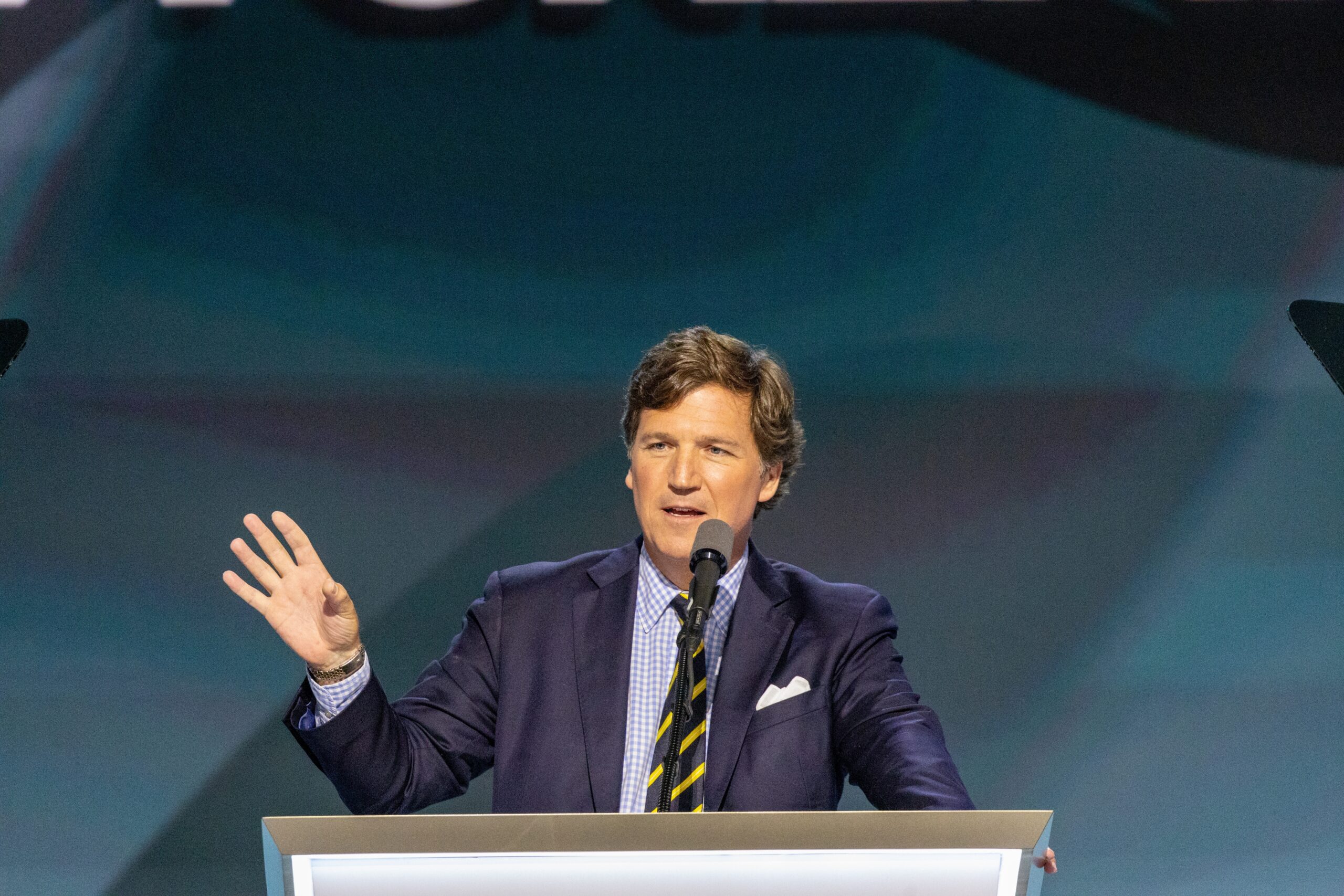
Tucker Carlson’s name appeared this week on a list no public figure seeks out. StopAntisemitism, a watchdog organization with more than 300,000 followers on X, included the conservative commentator among its finalists for “Antisemite of the Year,” an annual designation aimed at spotlighting individuals who amplify antisemitic ideology. His inclusion immediately intensified an already-fraught divide inside the conservative movement, where Carlson’s influence remains significant and deeply polarizing.
The nomination follows months of controversy surrounding Carlson’s interview with Nick Fuentes, the openly white nationalist activist whose Groyper movement has gained ground among segments of young Republicans. Carlson sat with Fuentes for two hours in October 2025, offering what many observers described as a friendly platform. Fuentes claimed that “organized Jewry in America” was a significant obstacle to a unified society; Carlson offered no objection and praised Fuentes several times. Senior Republicans, including strong pro-Israel voices, condemned the segment as legitimizing Holocaust denial and white nationalism.
Carlson’s own comments in that interview sparked additional outrage, including his claim that Christian Zionists such as Senator Ted Cruz and President George W. Bush suffered from a “brain virus” for supporting Israel. Cruz responded that Carlson was spreading a “dangerous poison” aimed at undermining America’s most enduring alliance in the Middle East. Carlson also repeated replacement-theology language during a recent broadcast, declaring, “There is no such thing as God’s chosen people. This is heresy. God does not choose a people who kill women and children.” Those remarks drew sharp condemnation from Jewish leaders who viewed them as both theologically hostile and politically charged.
StopAntisemitism explained its nomination of Carlson by stating that he has spent years “downplaying white supremacy” and promoting the “great replacement” theory, while turning extremist rhetoric “into broadcast-ready talking points.” His interview with Fuentes deepened the uproar surrounding the Heritage Foundation, where at least eight members of the Project Esther National Task Force to Combat Antisemitism resigned or threatened to resign over Heritage president Kevin Roberts’s decision to stand by Carlson and denounce his critics as a “venomous coalition.”
Fuentes himself reacted bitterly to the finalists’ list. The activist, who has previously been nominated by the group, complained on X that he felt snubbed, asking why he was not included this year. StopAntisemitism responded that it does not nominate individuals more than once, adding that Fuentes’ absence does not “erase his antisemitism” but instead allows space to highlight other figures who have spread anti-Jewish hate.
This year’s list stretches across the political spectrum. The group nominated Ms. Rachel, the popular children’s educator who has been outspoken about Palestinian suffering, claiming she “spread Hamas-aligned propaganda.” Actress Cynthia Nixon was included for her BDS activism and public statements on Gaza. Also named were mixed-martial-arts fighter Bryce Mitchell, a Holocaust denier; far-right personality Stew Peters; and social-media figures associated with the left-wing network The Young Turks. Last year’s recipient, Candace Owens, did not appear on this year’s list despite renewed controversy over her conspiratorial accusations involving Israel.
It’s that time of year – 2025 Antisemite of the Year.
— StopAntisemitism (@StopAntisemites) November 30, 2025
Vote for your top 3 candidates by Friday December 12th!https://t.co/Z03ndvnbcw pic.twitter.com/NfhRabnyjF
The modern spread of antisemitic narratives—whether through conspiracy theories, replacement theology, or denial of Israel’s legitimacy—revives the oldest hatred in new forms. Carlson’s nomination did not emerge from a single comment. It is the result of a pattern in which hostile ideas are elevated, normalized, and presented as serious commentary rather than fringe rhetoric. That pattern carries consequences far beyond one media figure.
StopAntisemitism’s contest is symbolic, but the ideas it identifies are real and measurable. Words from influential platforms shape public perception and give legitimacy to ideologies that once hid in the shadows. When those ideologies target the Jewish people, they strike at the heart of a biblical promise that has endured for millennia.

