




A Weizmann Institute team found what may be the faintest exploding star ever recorded. It defied a 30-year-old law of astrophysics and shone for seventy days, the same span the Zohar gives for the star that heralds the Messiah.
An international team led by Israel’s Weizmann Institute of Science has discovered what may be the faintest supernova ever recorded, a dying star that burned far longer than scientists believed possible. The findings were published last week in the journal Nature Astronomy, the Times of Israel reported.
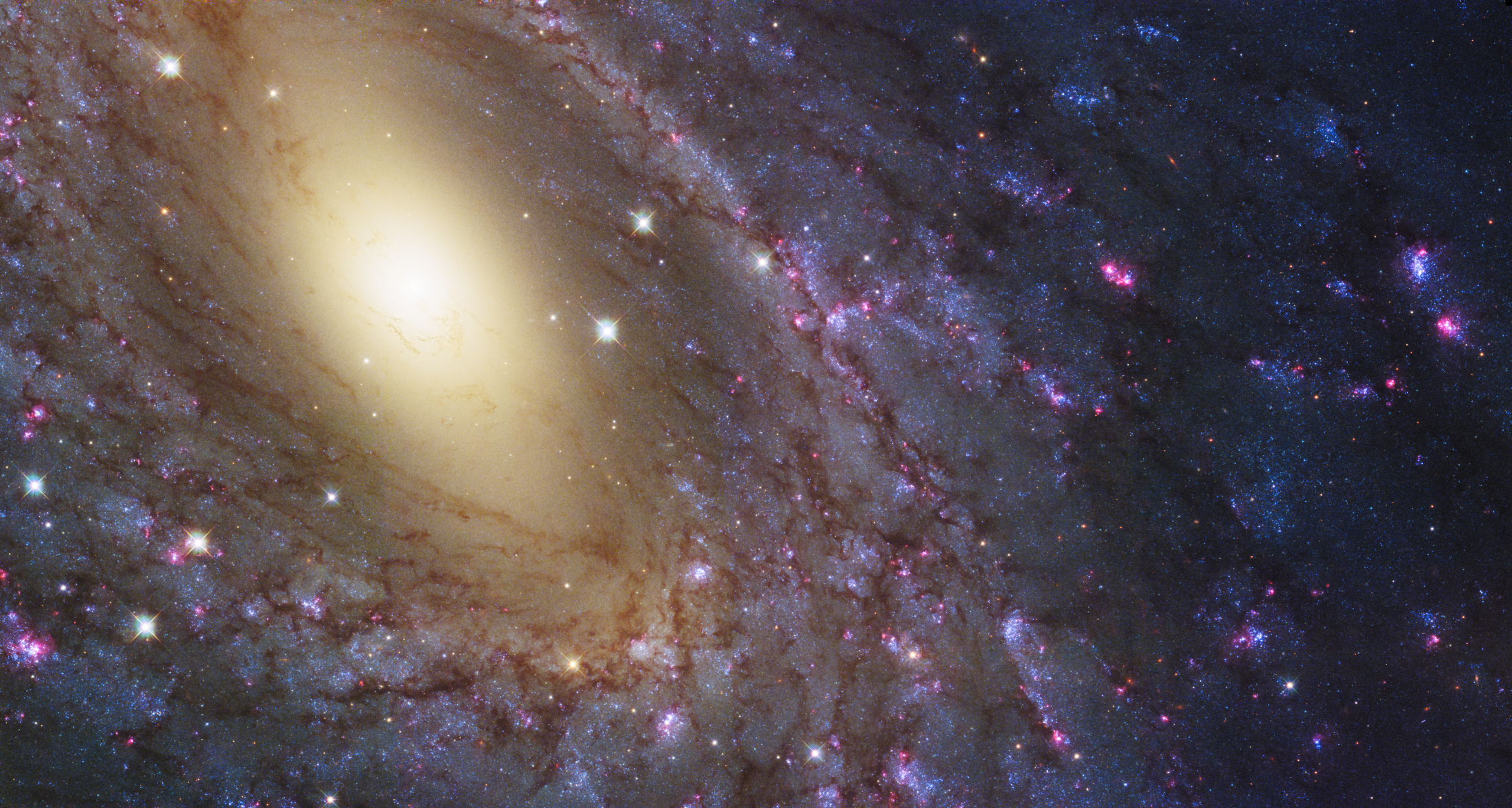
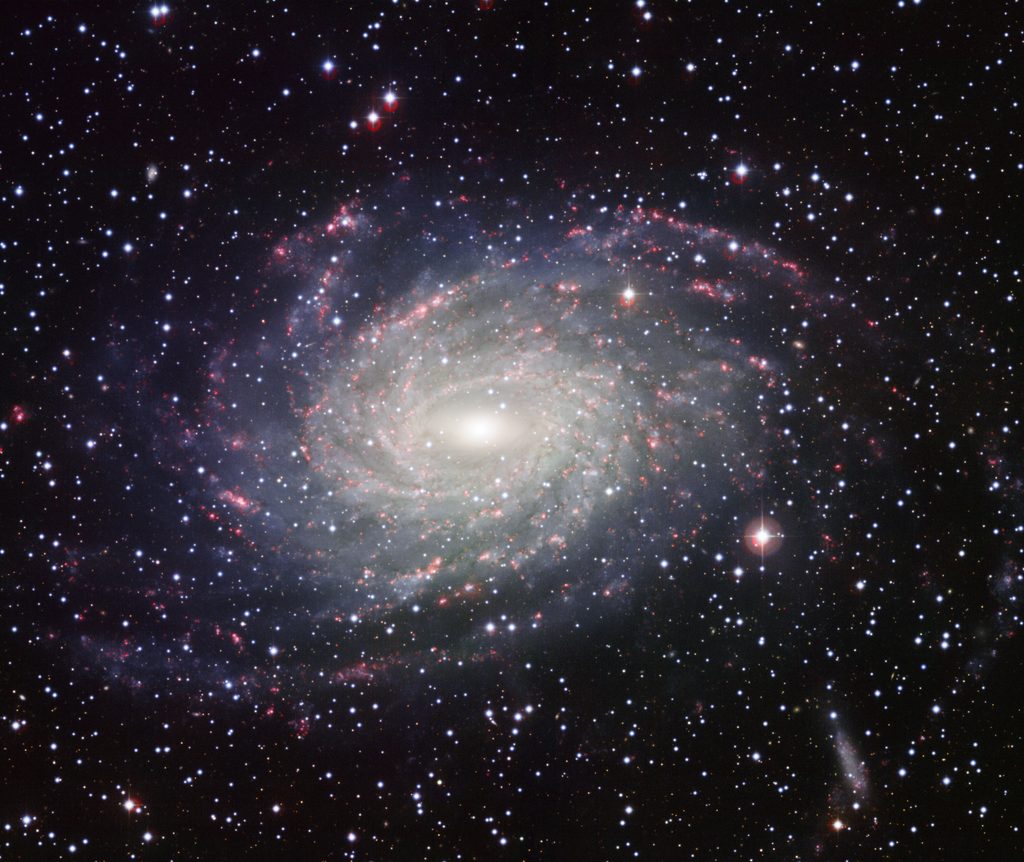
The exploding star, designated SN 2024vjm, lies in the galaxy NGC 6744, about 30 million light-years from Earth. It was first spotted by the BlackGEM telescope in Chile’s Atacama Desert, which scans the southern sky. Prof. Paul Groot of Radboud University in the Netherlands, who leads the international consortium operating the telescope, noticed a bright point of light that had been absent the night before and alerted astronomers around the world. Prof. Avishay Gal-Yam’s team at the Weizmann Institute identified it as a supernova. Weizmann doctoral student Erez Zimmerman is the study’s lead author, working with Prof. Eran Ofek and Prof. Boaz Katz.
The explosion was weak by the standards of dying stars. Its gas flew outward at about 3,000 kilometers per second, less than a third the speed of an ordinary supernova. Images of the same patch of sky taken by the Euclid space telescope 11 months earlier showed nothing at all. The researchers believe the blast involved a white dwarf, the dense remnant of a burned-out star, with a faint companion, or possibly two white dwarfs.
What stunned the scientists was how long the faint star held on. Under the Phillips relation, a rule astronomers have relied on for more than 30 years, a supernova this dim should have faded quickly. Instead, it stayed bright for seventy days, which Zimmerman called “a remarkably long time.” Radioactive nickel in the expanding cloud supplied the heat and light, and the team measured it using a method developed by Katz. The researchers say the discovery may help explain where the elements that build planets come from.
Seventy Days in the Zohar
For students of Jewish mysticism, the number seventy stands out. The Zohar, the foundational work of Kabbalah, describes in detail a star that will appear in the heavens before the Messiah is revealed. In the Torah portion of Balak (Zohar III, 212b), the Zohar teaches that God will rebuild Jerusalem and reveal a single fixed star, flashing with seventy points of light, leading seventy other stars, and the star “will shine and blaze for seventy days.” The passage specifies that the star will appear on a Friday, the 25th day of the sixth month, and will be hidden at the end of the seventy days.
A second passage, in the Zohar’s commentary on the Book of Exodus, describes a star rising in the east after the Messiah first appears, blazing in every color and surrounded by seven other stars. The surrounding stars wage war on it three times a day for seventy days, in full view of the whole world, before the star is hidden.
Israel365 News has reported on the Zohar’s star prophecies for years. In one report, Efraim Palvanov, a scholar of Jewish eschatology, explained that the association of the Messiah with the star of Jacob goes back to ancient times. In an earlier report, David Nekrutman, executive director of the Center for Jewish-Christian Understanding and Cooperation, said the Star of Jacob “is undeniably a strong part of Jewish eschatology.” Nekrutman predicted that the return of the Jewish people to their land would bring the end-of-days reading of the prophecy back to the forefront.
Balaam’s Star
The Zohar’s star grows out of a prophecy in the Book of Numbers. Balak, king of Moab, hired the non-Jewish prophet Balaam to curse the Israelites camped on his border. Each time Balaam opened his mouth, blessings came out instead. In his final prophecy, Balaam looked far into the future:
“I see him, but not now; I behold him, but not nigh; there shall step forth a star out of Jacob, and a sceptre shall rise out of Israel, and shall smite through the corners of Moab, and break down all the sons of Seth” (Numbers 24:17).
Maimonides, in his Laws of Kings (11:1), reads the verse as a two-part prophecy. “I see him, but not now” refers to King David. “I behold him, but not nigh” refers to the King Messiah. The Kochav Yaakov (Star of Jacob) became one of the central images of Jewish messianic hope. Christians know the verse well, and Israel365 News has reported on the debate among scholars over whether the Star of Bethlehem in the Gospel of Matthew draws on Balaam’s prophecy.
The verse also carries a warning. In 132 CE, Rabbi Akiva, the greatest sage of his generation, applied the prophecy to Shimon bar Kosiba, the commander of the revolt against Rome, and renamed him Bar Kokhba, “Son of a Star.” Three years later the revolt was crushed. Hundreds of thousands of Jews were killed, and Rome renamed the land to erase its Jewish identity. The Sages afterward called him Bar Koziba, “Son of Disappointment.” Stars have drawn false hopes before. Israel365 News reported in 2017 on astronomers’ prediction that two merging stars would light up the sky in 2022 as a new naked-eye star, a prediction rabbis connected to the Star of Jacob. The astronomers later withdrew the forecast after finding an error in their data.
Little by Little
The Weizmann star carries a different lesson, in its faintness more than its brightness. Telescopes almost missed it, and it outlasted every scientific expectation.
The Jerusalem Talmud (Berakhot 1:1) tells of Rabbi Chiya and Rabbi Shimon ben Chalafta walking through the Arbel valley, below the cliffs overlooking the Sea of Galilee, before dawn. When they saw the first glimmer of light breaking on the horizon, Rabbi Chiya said that the redemption of Israel comes the same way: kim’a kim’a, little by little. At first the light is barely visible, and then it grows stronger and stronger until it fills the sky.
The star also defied the rules. Scientists have predicted the behavior of supernovae for three decades, and this one behaved otherwise. The Talmud (Shabbat 156a) records a conversation between God and Abraham. Abraham, reading the stars, saw that he was destined to remain childless. God took him outside and told him to look at the heavens:
“And He brought him forth abroad, and said: ‘Look now toward heaven, and count the stars, if thou be able to count them’; and He said unto him: ‘So shall thy seed be'” (Genesis 15:5).
The Sages derived from this encounter the principle ein mazal l’Yisrael: Israel is not bound by the stars. Abraham’s descendants live above the laws of nature, guided directly by the hand of God.
The Jewish people who returned to their land after two thousand years of exile now run the observatories. Israeli scientists, working at an institute founded by Chaim Weizmann, the first president of the State of Israel, scan the heavens Abraham was told to count. They found a dim light, almost invisible, that burned long after the experts said it would go out. The Sages taught that redemption arrives exactly that way: faint at first, easy to miss, and impossible to extinguish.
