
A new book from the Vatican’s top doctrinal official reveals the late pope’s encounters with the devil and a two-year spiritual crisis. Jewish tradition places the gate of hell in Jerusalem
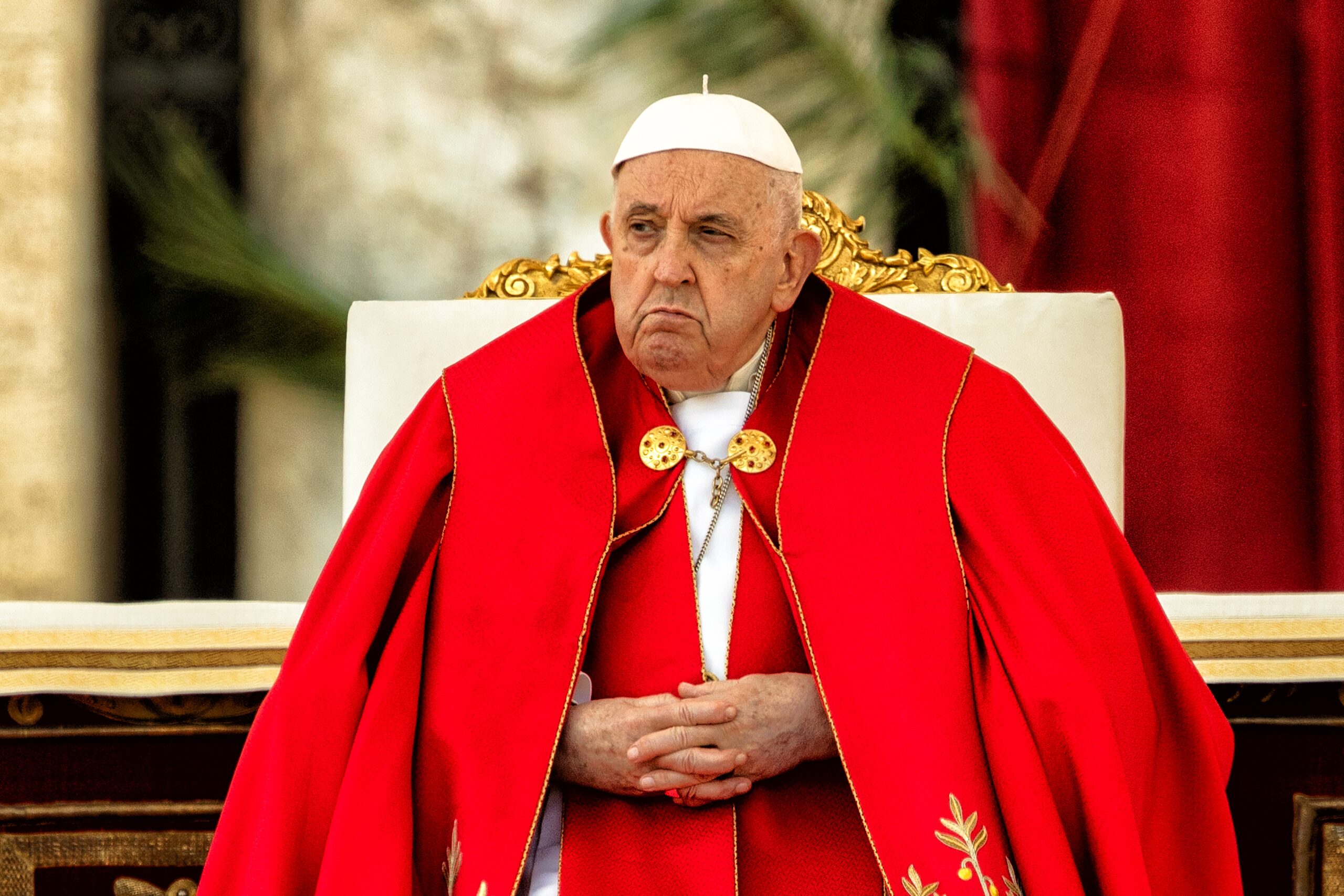
The late Pope Francis wrote in his private diary that he saw the devil three times and once saw the “gates of hell,” according to excerpts published by the Vatican this week. Two of the sightings occurred in Buenos Aires. The third came after his 2018 trip to Chile. In an entry dated January 24, 2021, Francis described that third encounter: “I saw him and heard his voice, triumphant, possessing everything.” He wrote that he could not forget the devil’s eyes from the earlier two sightings, or the “powerful raspiness” of his voice.
The book, “The Private Diary of Pope Francis,” was curated by Cardinal Víctor Manuel Fernández, head of the Vatican’s doctrine office, who is listed as its author. The 160-page volume spans entries from December 1992 through August 2024, eight months before Francis died in April 2025 at age 88. It is the first papal diary published since the 1960s. Pope Leo XIV approved the work and sent Fernández the box of texts.
“Once more the gates of hell”
The “gates of hell” entry stemmed from the worst scandal of Francis’ papacy. On June 7, 2018, he wrote that he “saw the entrance to hell. Pagan seduction in full force.” In the following two months, he wrote: “What shame and evil this has brought on the church!” and “Once more the gates of hell.”
The scandal involved Francis discrediting victims of Chile’s most notorious clerical abuser. After journalists challenged him on the return flight, he commissioned an investigation and concluded the victims were right. Catholics know the phrase from the Gospel of Matthew, where Jesus promises Peter that the gates of hell will not prevail against his church.
A pope in spiritual crisis
The diary also reveals a period of spiritual turmoil at the height of Francis’ papacy. He went through a spiritual crisis in 2021–22, tied to temptations to exercise power “omnipotently.” He overcame it by trusting in God’s mercy, which the diary dates to December 30, 2022. “I clearly heard the voice of the devil,” Francis wrote.
The crisis was hidden from the public. Fernández says it began on January 24, 2021, the date of the third devil sighting. Officially, the Vatican cited sciatica as the reason for canceled appearances, but Fernández says Francis was suffering from an intestinal problem. In July 2021, Francis had surgery to remove 33 cm of colon and spent 10 days in the hospital.
Francis wrote his most confidential thoughts in a code, which the book does not reproduce. The diary contains little about church affairs, and Fernández omitted entries affecting third parties. Francis wrote favorably of Robert Prevost, now Pope Leo XIV. He wanted the writings made public. “From this, you will all see,” he told Fernández.
The “angel of peace”
The published excerpts say nothing about Israel or the war against Hamas, although the diary runs through August 2024. Francis had plenty to say in public. His hostility to the Jewish state ran through his papacy, starting with his embrace of the Palestinian Authority’s leader.
In May 2015, Francis hosted Mahmoud Abbas at the Vatican. At the end of their audience in the Apostolic Palace, Francis gave Abbas a medallion that he said represented the angel of peace “destroying the bad spirit of war,” and told him the gift was appropriate since “you are an angel of peace,” as Israel365 News reported at the time. When confronted, the Holy See explained that this was a translation error and that the pope had intended to encourage Abbas to make peace with the Israelis. Other reports quoted Francis as saying, “I thought about you: may you be an angel of peace.”
The “angel” Francis honored was the man who paid salaries to terrorists. Abbas has defended the payments to the families of terrorists as “a social responsibility,” refusing international demands to end the practice. Critics pointed out at the time that Abbas is a Holocaust denier. Francis kept welcoming him anyway. He met with Abbas seven times at the Vatican. In 2021, he pressed Abbas on the two-state solution: the creation of an unprecedented Palestinian state inside Israel’s borders, militarized and ethnically cleansed of Jews, with its exclusively Muslim capital in Jerusalem, centered on Judaism’s holiest site, the Temple Mount.
After October 7, the hostility sharpened. In November 2024, Francis cited experts who described events in Gaza as having genocidal characteristics. Israeli Minister of Diaspora Affairs Amichai Chikli condemned the remarks, accusing him of trivializing the term genocide. Weeks later, Francis told the Vatican’s cardinals, “Children were bombed. This is cruelty. This is not war.” Israel’s Foreign Ministry answered that Israel was defending itself against the cruelty of Hamas terrorists “hiding behind children while trying to murder Israeli children,” while holding 100 hostages and abusing them.
That December, the Vatican put a Palestinian message at the center of Christmas. Francis unveiled a nativity scene gifted by two Palestinian artists, depicting the baby Jesus in a keffiyeh-wrapped manger and building on the false trope that Jesus was a Palestinian. The keffiyeh was removed several days later after the Vatican received backlash from Jewish groups. In January 2025, Francis called the humanitarian situation in Gaza “shameful” in an address to diplomats.
The diary shows a pope who watched for the devil’s hand in his own heart and in the abuse scandals of his church. Its published pages contain no word about the terrorists who murdered 1,200 Israelis on October 7, or the “angel of peace” who pays their families.
The satan in the Hebrew Bible
The pope’s account of a devil “possessing everything” is far from the figure who appears in the Hebrew Bible. There, ha-satan (the adversary) is an angel who answers to God and acts only with His permission. In the Book of Job, he appears among the heavenly court:
“And the LORD said unto Satan: Whence comest thou? Then Satan answered the LORD, and said: From going to and fro in the earth, and from walking up and down in it.” (Job 1:7)
The satan in Job cannot touch Job without God’s permission. He accuses, tests, and reports back. He possesses nothing.
The Sages describe him plainly. Reish Lakish taught in the Talmud, hu satan, hu yetzer hara, hu malach hamavet: Satan, the evil inclination, and the angel of death are one and the same (Bava Batra 16a). The adversary is the voice inside a person that urges him toward sin. In Jewish thought, the battle against Satan is the battle against one’s own inclinations. That makes Francis’ account of being tempted to wield power “omnipotently” sound familiar to readers of the Talmud.
The gate of hell in Jerusalem
Jewish tradition also has something to say about the “gates of hell.” The Hebrew word for hell, Gehinnom, is a place name. It comes from Gei Ben Hinnom, the Valley of the Son of Hinnom, which runs along the southern edge of Jerusalem’s Old City. In the days of the kings of Judah, idolaters burned their children there as offerings to Molech. Jeremiah condemned the practice and said the valley would one day be called the Valley of Slaughter (Jeremiah 7:31–32).
The Talmud teaches that Gehinnom has three entrances: one in the wilderness, one in the sea and one in Jerusalem (Eruvin 19a). The Sages derive the Jerusalem entrance from Isaiah, who speaks of the God “whose fire is in Zion, and His furnace in Jerusalem” (Isaiah 31:9). The same city that holds the gate of Heaven, the Temple Mount, holds the gate of Gehinnom in the valley below it.
Francis found the gates of hell in a scandal in Chile. The Bible locates them in Jerusalem, where the choice between the Temple above and the Valley of Hinnom below has stood for three thousand years.