
Gabriel Gordon argues that Jesus’ full humanity includes his Jewish peoplehood, the covenant, and the Land of Israel, which turns Tucker Carlson’s charge of “heresy” back on the anti-Zionists
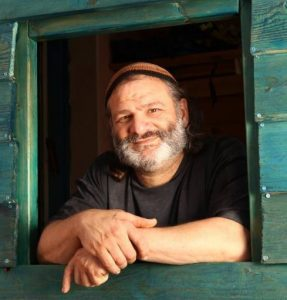
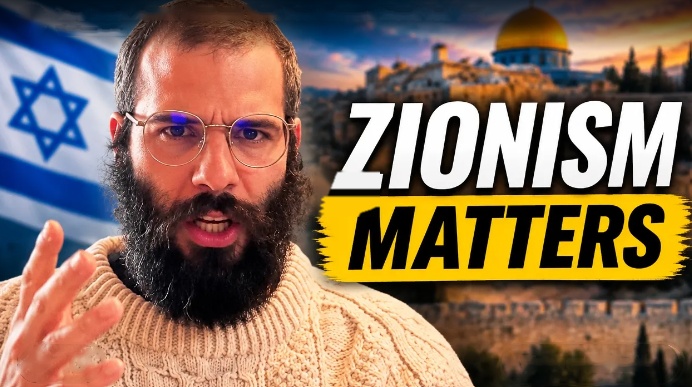
Tucker Carlson calls Christian Zionism a heresy. Gabriel Gordon, a theologian who trained in early Greek and Syriac Christianity, says Carlson has it backward. In a wide-ranging interview with Israel365 News, Gordon argued that Zionism is essential to Christianity. He went further: “A Christian who is not a Zionist is not a Christian.”
Gordon writes editorials for Israel365 News and has a background that is hard to sum up in one line. He describes himself as “an indigenizing and decolonizing Zionist post-missionary Jewish Anglican.” He belongs to Yachad BeYeshua, a global fellowship of Jewish Christians and Messianic Jews, and he attends a Conservative synagogue in Milwaukee. He holds a bachelor’s degree in anthropology from Oklahoma Baptist University, a master’s in biblical studies from Portland Seminary, and a master’s in historical theology from Marquette University. He has written three books and is working on four more. One of them takes on the question he answered in the interview.
Answering Carlson
Gordon’s starting point was the controversy that has split the American right. In an interview on October 27, 2025, Carlson declared that he “despises Christian Zionism more than anyone on earth,” calling it a “dangerous heresy” and a “brain virus infecting the church.” The interview was with Nick Fuentes, and Carlson said, “I dislike them more than anybody, you know, because it’s Christian heresy and I’m offended by that as a Christian.” Carlson later apologized for saying he despised “Christian Zionists” and called them “some of the nicest people I know,” but he did not retract his statement that Christian Zionism is Christian heresy and a brain virus.
“The way I have come to approach it is to say that it’s not antithetical, but it’s actually essential to Christianity from a theological point of view,” Gordon said.
Replacement theology as racism
Gordon began with supersessionism, which most Christians know as replacement theology. “It’s the idea that Israel, the Jewish people, were at one time the people of God,” he explained. “But as soon as Jesus came along, the covenant actually gets transferred from the Jewish people to the gentile church, and therefore now the church is the new Israel. The Torah, Jewish peoplehood, and the land all get transferred.”
Mainline denominations, including the Presbyterian Church (USA), the Episcopal Church, and the Catholic Church after the Second Vatican Council, have formally rejected supersessionism. Gordon called those statements incomplete. “They should have said that the Torah, Jewish peoplehood, and the land have not been superseded and transferred to the gentile church,” he said.
He also rejects the academic habit of treating replacement theology as something separate from Jew-hatred. “Supersessionism is a kind of racism towards Jews, because it sets up a peoplehood hierarchy,” Gordon said. “Every people can have the covenantal benefits and the promises that now belong to them. And the Jews are at the bottom of the hierarchy. They’re the only ones damned to wander the earth in exile perpetually. Racism towards Jews is not something of the 19th century. It’s inherently part of the supersessionist framework.”
Jesus’ “full humanity”
The core of Gordon’s argument draws on the doctrinal disputes of the early church. The church fathers condemned the Gnostics and the Docetists, who claimed Jesus only appeared to be human. Other heretics claimed he had a human body but no human mind or soul. The church fathers answered that whatever it means to be human, Jesus had to be, in every respect.
“Within Christian theology, if you don’t affirm his full humanity, you cannot be a Christian,” Gordon said. “This means we have to say he had an ethnicity, a peoplehood. There is no human that is a universal human blob that does not have an ethnicity, a peoplehood, a heritage.”
He noted that Cyril of Alexandria, Origen, and Augustine all acknowledged that Jesus and his first disciples were Torah-observant Jews. Origen lived among Jews in Caesarea in the third century CE. Gordon also cited Christian scripture. The Letter to the Hebrews, chapter 2, speaks of Jesus becoming like Abraham’s descendants in every respect. In the Gospel of John, Jesus tells a Samaritan woman that salvation comes from the Jews, and Gordon pointed out that the verb is in the present tense.
Gordon then turned to the Hebrew Bible to define what Jewish peoplehood contains. At the covenant ceremony before entering the land, Moses tells Israel:
“Be silent and hear, O Israel: this day you have become a people to the LORD your God.” (Deuteronomy 27:9)
“In the rabbinic tradition, on that day when the covenant is given, Israel becomes a nation, a people,” Gordon said. “The covenant is part of what it means to be part of the Jewish people. And central to the covenant is the land promise. It’s inseparable.”
He cited God’s promise to Abraham:
“And I will give to you, and to your seed after you, the land of your sojournings, all the land of Canaan, for an everlasting possession; and I will be their God.” (Genesis 17:8)
Gordon pointed to an odd agreement between the two traditions. The Sages read the covenant as the source of Israel’s nationhood. Christian writers from Macarius in the fourth century CE to Martin Luther in the 16th century made the same assumption and drew the opposite conclusion. Since they believed the covenant had passed to the church, they concluded the Jews were no longer a people. “Both the rabbinic and the Christian tradition share the underlying assumption that the covenant is what establishes nationhood,” he said.
A people married to its land
Gordon credited a Cherokee professor with pointing him to Isaiah, where the prophet describes the Land of Israel as a bride:
“You shall no longer be called Forsaken, nor shall your land any more be called Desolate; but you shall be called Cheftzi-vah [My delight is in her], and your land Be’ulah [Espoused], for the LORD delights in you, and your land shall be married.” (Isaiah 62:4)
“God marries the people of Israel to the Land of Israel,” Gordon said. “That is a very intimate way to talk about the people and the land, which is actually how all indigenous peoples around the world talk about their connection to the land.”
He tied this to the verse in Genesis that says husband and wife become one flesh, a verse Jesus himself quoted when he ruled against divorce. Gordon noted that in that debate Jesus sided with the stricter school of Shammai over the school of Hillel. “Theologically, as a member of the people of Israel, Jesus is actually married to the Land of Israel,” Gordon said. “If you reject Zionism, you reject the marriage of the people of Israel to the Land of Israel, which is inseparable, and you have to reject an element of his full Jewish humanity. He has a Jewish body. He is covenantal flesh.”
He reached his conclusion without hedging. “If you can’t affirm that, then you can’t affirm his full humanity, and therefore you’re not a Christian.”
Borders set by God
Gordon argued that the Bible gives every nation a land, while giving Israel’s land a unique place. Moses commanded Israel not to take land from Moab and Ammon. The Song of Moses says:
“When the Most High gave the nations their inheritance, when He separated the children of men, He set the borders of the peoples according to the number of the children of Israel.” (Deuteronomy 32:8)
The curses at Mount Ebal include “Cursed is he who moves his neighbor’s landmark” (Deuteronomy 27:17). Gordon cited the Book of Jubilees, a Second Temple text, which tells of Noah’s sons drawing lots for the lands of the earth and swearing an oath against trespassing on each other’s borders. Shem’s descendants received the Land of Canaan. He also cited the 19th-century Italian Orthodox rabbi Eliyahu Benamozegh, who taught that God scattered humanity at Babel so that different lands would shape different peoples.
“Land creates peoplehood,” Gordon said. “This is why Zionism and Judaism cannot be divorced. The Land of Israel is what makes the people.”
That makes replacement theology a colonial theology, in his words. “If you’re saying that the land God gave us, that created us, is now revoked, then you’re setting yourself up to justify stealing other people’s lands.”
Hanukkah as a “decolonial holiday”
Gordon went after Jewish anti-Zionists with the same reasoning. He compared Hanukkah to Lakota Indians retaking the Black Hills, their holy place, and cleansing it of foreign influence. “It is a radical holiday in which we’re celebrating the kicking out of Greek imperialists, Greek colonizers, from the land, and that allows us to rededicate the Temple,” he said. “It wasn’t possible unless we kicked them out first.”
Gordon said Jewish anti-Zionism is “an internalization of anti-Jewish racism.” “Can you imagine Lakota Indians, Cherokee Indians, the Maori saying, ‘The land is not part of our identity’?” he said. “That’s what Jews are doing when they say, ‘I’m an anti-Zionist.’ They’re taking the ideology of their oppressors and colonizers and internalizing it.”
Indigenous leaders have taken the opposite position. A group of indigenous leaders from around the world opened an embassy in Jerusalem to recognize Jews as indigenous to Israel and counter rising antisemitism in the aftermath of the Oct. 7 massacre. The embassy, created by the Indigenous Coalition For Israel and spearheaded by Jerusalem Deputy Mayor Fleur Hassan-Nahoum, is located on the campus of the Friends of Zion Heritage Center in the Nahalat Shiva district of central Jerusalem. Gil Haskell, Chief of State Protocol for Israel’s Foreign Ministry, announced that it was the 100th embassy to be opened in the Jewish state. Gordon said he has met several of its representatives.
He explained Western anti-Zionism in terms of guilt. He pointed to a “Free Palestine” flyer on a neighbor’s house in progressive Milwaukee. “If they really believed in indigenous rights, they would give their house back to the specific native tribe whose land that was, and they would make aliyah [immigration] back to Europe,” he said. “So they take a people that are not indigenous and fictitiously create them into an indigenous people to get rid of their own sense of guilt. And who better to scapegoat than the Jews.”
The “Palestinian Jesus”
Gordon took on the effort to recast Jesus as a Palestinian social-justice figure, an image promoted by liberation theologians. Pope Francis gave it the Vatican’s stamp in December 2024, when a Bethlehem nativity scene with the infant Jesus lying on a keffiyeh went on display.
“The term Palestine is a Greco-Roman imperialist term. It’s not the term of an indigenous people,” Gordon said. “He’s not a white Jesus, he’s not a black Jesus, he’s not a Chinese Jesus, he’s not a Palestinian Jesus. He’s a Jewish Jesus. Human beings are not chameleons.”
He gave the liberation theologians partial credit. “Their impulse is correct. The God of the Exodus wants to free people that are oppressed and give territorial restoration,” Gordon said. “When God says to Pharaoh, ‘I’m going to kill your firstborn son because of how you treated My firstborn son Israel,’ I don’t know how you get more political than that. But they shoot themselves in the foot. Their claim that God wants national restoration for other peoples has to be rooted in the Jewish belief that the Messiah’s role was the territorial restoration of Israel.”
Gordon said the early followers of Jesus held exactly that belief. He pointed to the Book of Acts, where the disciples ask Jesus whether he will now restore the kingdom to Israel. Gordon noted, as Abraham Joshua Heschel did, that Jesus did not correct their definition of the Messiah’s role. He told them only that the timing was not theirs to know. Gordon said that same promise is now being fulfilled. “I don’t know how any Christian can look at what happened in 1948 and think, ‘Maybe this isn’t happening.'”
He saved his harshest words for the progressive evangelical activist Shane Claiborne, whom he called “a heretic theologian” who is “recycling all the old libels” about Israel. “Your theology, that says the Messiah didn’t come to bring territorial restoration and to crush the enemies of Israel, is actually a colonialist, imperialist theology that fits better with the Romans,” Gordon said.
Bethlehem and the Temple Mount
Near the end of the conversation, Gordon raised a point he had first heard on Israel365 News: if Jesus were born today, he would be an Israeli. Israeli civilian law bars Israelis from entering Bethlehem, which is under Palestinian Authority control. “His Jewish parents coming to Bethlehem to give birth would not have been allowed in, because they would have been Israelis,” Gordon said.
The interview then went one step further. The Jew from Nazareth who went up to the Temple for the biblical festivals would be forbidden to pray on the Temple Mount today.