



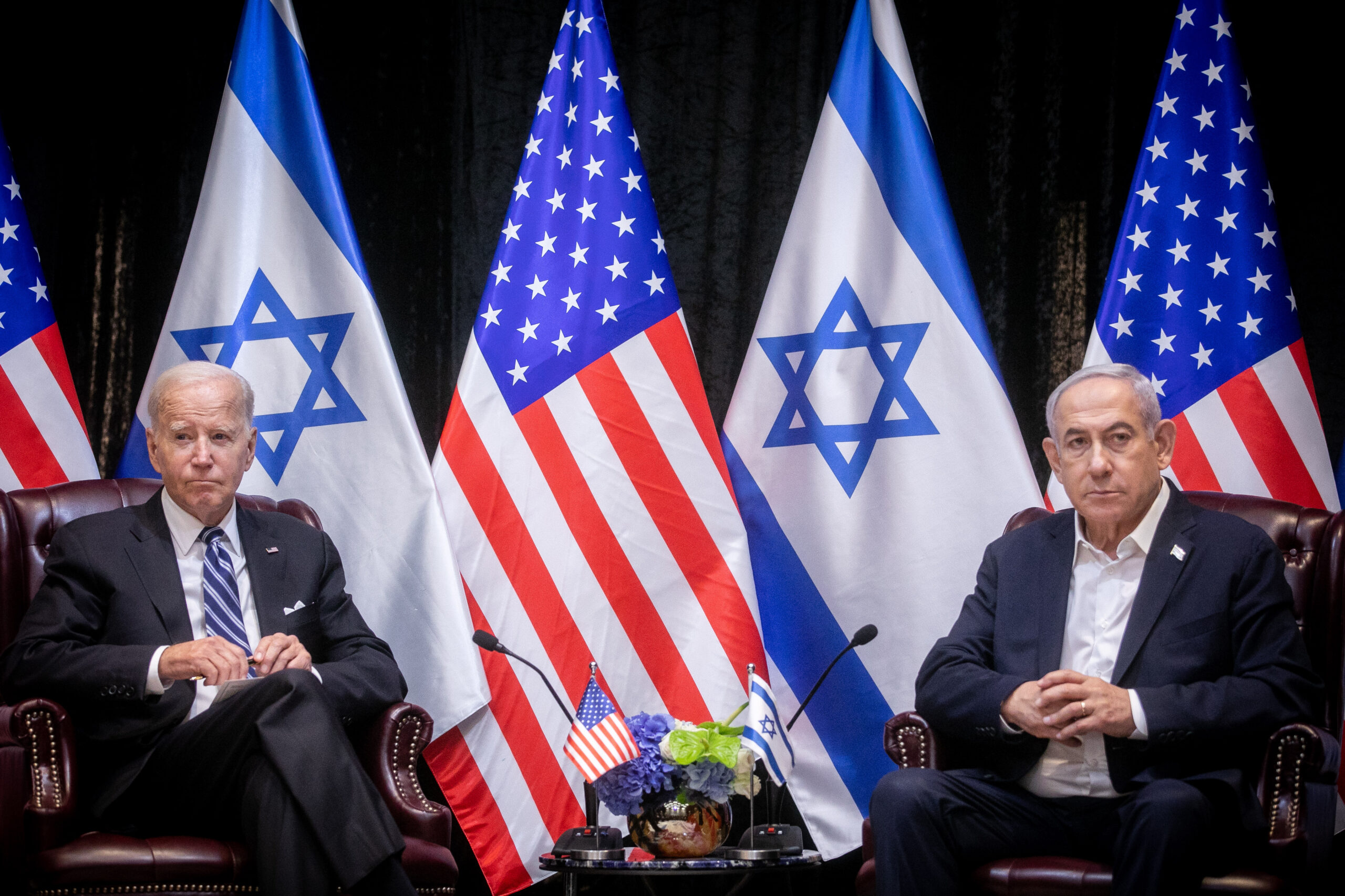
Under Biden, Ian and Helene killed hundreds and caused hundreds of billions in damage.
Under Trump, no hurricane hit the mainland in 2025, and 2026 produced just one.
For four years, as President Joe Biden pressed Israel to freeze Jewish building, accept ceasefires with Hamas and Hezbollah, and trade land for a Saudi deal, hurricanes pounded America’s coasts. Ian and Helene alone killed hundreds of Americans, and the 2024 season caused more than $190 billion in damage. Since President Trump returned to the White House and sent American warplanes into battle beside Israel’s against Iran, the Atlantic has gone nearly silent. In 2025, not one hurricane made landfall on the US mainland, and in 2026 the ocean produced a single hurricane all season, the quietest year since 1925. For readers of the Bible, the reversal follows God’s promise to Abraham to the letter: “I will bless them that bless thee, and him that curseth thee will I curse.”
As of November 15, the 2026 Atlantic season had produced 10 named storms, one hurricane and one major hurricane, against an average of 14 named storms, seven hurricanes and three major hurricanes. Accumulated Cyclone Energy, the measure meteorologists use for a season’s total storm power, stood 83 percent below normal. If no other hurricane forms before the season officially ends on November 30, 2026, it will finish below every season since at least 1966. The lowest totals in that span were two hurricanes each, in 1982 and 2013.
Even the one hurricane came late. On average, the first Atlantic hurricane forms around August 11. Isaias did not reach hurricane strength until October 7, nearly four weeks later than the latest first hurricanes on record since 1966. It peaked as a Category 3 and came ashore near Destin, Florida, on October 9 as a Category 2 storm.
The experts did not see it coming. NOAA’s August outlook gave a 70 percent probability of two to six hurricanes, and the season fell below even that range. Meteorologists point to a strengthening El Niño, which drove wind shear over the Caribbean to 37 knots in August and September, well above the 30-year average of 25 knots. Analyst Michael Lowry also cited widespread sinking air and weak disturbances coming off Africa.
The quiet came in a year when the United States stood with Israel on the battlefield. On February 28, American and Israeli forces launched joint strikes on Iran, nearly 900 in the first 12 hours of what Washington called Operation Epic Fury. The opening wave killed Iran’s Supreme Leader, Ali Khamenei. A conditional ceasefire took hold on April 8, and American strikes on Iran resumed in the summer, in the middle of hurricane season.
The contrast with the Biden years is stark. Biden restored relations with the Palestinian Authority and reopened talks with Iran on the nuclear deal. In August 2021, he hosted Prime Minister Naftali Bennett and pressed him for a freeze on Jewish building in Judea, Samaria, and parts of Jerusalem. As Bennett flew home, Hurricane Ida slammed into Louisiana as a Category 4 storm, on the 16th anniversary of Katrina. In July 2023, one of the worst storms in decades ripped through Washington, D.C., right after the White House announced negotiations with Saudi Arabia that would require Israel to make sweeping concessions to the Palestinians. In 2024, the Biden administration imposed sanctions on Jewish residents of Judea and Samaria. In September 2024, it pressed Israel to accept ceasefires with Hamas and Hezbollah, and it worked to restrain Israel’s response to Iran’s missile barrage. That same month, Hurricane Helene formed.
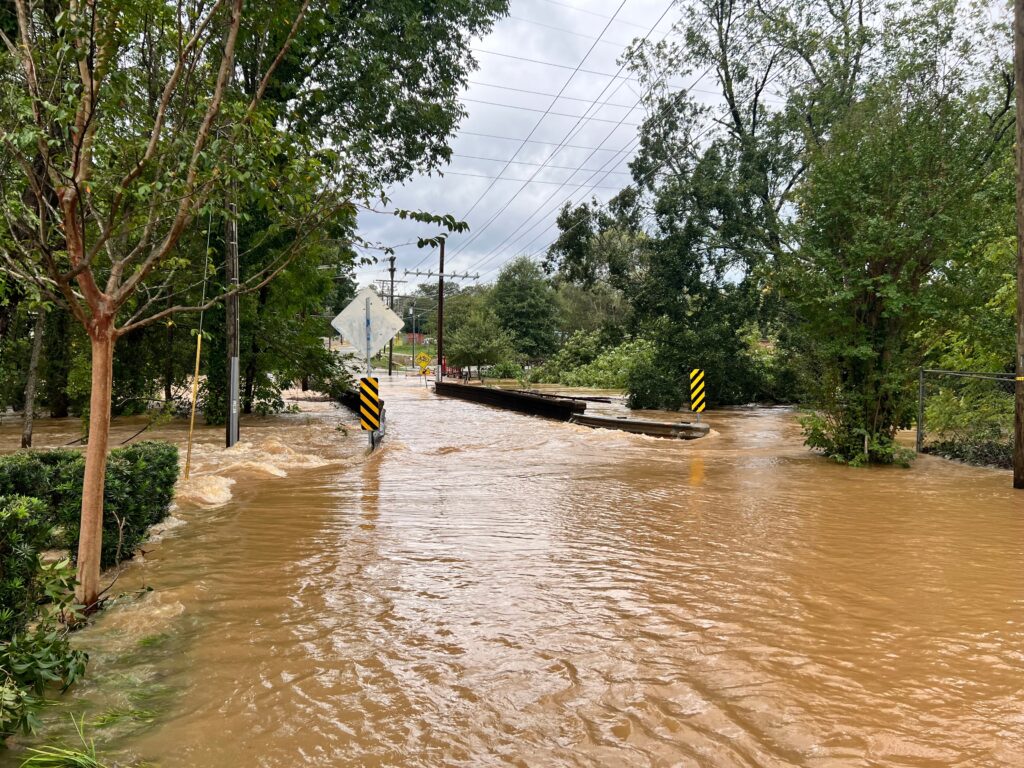
The Biden years delivered one of the most destructive runs of hurricanes in American history. Hurricane Ian struck southwest Florida in 2022 as a Category 4 storm, causing $119.6 billion in damage and killing 150 people in Florida. In 2024, five hurricanes made landfall on the Gulf Coast. Helene killed at least 175 people, the deadliest hurricane to hit the American mainland since Katrina, and the season’s damage topped $190 billion, second only to 2017.
Then the pressure stopped. Trump returned to the White House in January 2025 and lifted the Biden sanctions on Jewish residents of Judea and Samaria. The 2025 season produced three Category 5 hurricanes, tied for the second most ever recorded, and every one of them turned away from America. For the first time in a decade, no hurricane made landfall in the continental United States. In 2026, America went to war beside Israel, and the Atlantic produced only one hurricane all season.
The pattern follows the policy of whoever sits in the White House. In August 2017, during Trump’s first term, Hurricane Harvey struck Texas with 130 mph winds and 13-foot storm surges as his negotiating team, led by Jared Kushner and Jason Greenblatt, toured the region to restart talks on dividing the land. Hurricanes Irma and Maria followed within weeks.
Bill Koenig, publisher of Koenig International News and author of Eye to Eye: Facing the Consequences of Dividing Israel, has tracked the pattern for more than three decades. He described it as “a mystery but has fit a pattern for over 30 years,” and summed it up simply: “the greater the pressure on Israel to divide their covenant land… the greater the corresponding catastrophes.”
Since the Madrid Conference of 1991, the “land for peace” process has followed a single formula: Israel surrenders parts of its biblical heartland in exchange for promises from its enemies. Its centerpiece is the two-state solution, the creation of an unprecedented Palestinian state inside Israel’s borders, militarized and ethnically cleansed of Jews, with its exclusively Muslim capital in Jerusalem, centered on Judaism’s holiest site, the Temple Mount. The process has brought Israel three intifadas, thousands of terror attacks, rockets from Gaza, and the war against Hamas. It has brought America a long record of disasters:
- October 30, 1991: President George H.W. Bush opened the Madrid Peace Conference. That same day, the “Perfect Storm” sent a surge crashing into the Bush family’s summer home on Walker’s Point in Kennebunkport, Maine. White House press secretary Marlin Fitzwater called the damage “disastrous.” The storm caused more than $200 million in damage along the East Coast and killed 12 people.
- August 24, 1992: The Madrid talks reconvened in Washington. Hurricane Andrew slammed into South Florida the same day, causing about $30 billion in damage and leaving 180,000 people homeless.
- January 17, 1994: A day after President Bill Clinton met Syrian dictator Hafez al-Assad in Geneva to discuss an Israeli withdrawal from the Golan Heights, a magnitude 6.9 earthquake struck Northridge, California. It killed 57 people, injured more than 5,000, and caused about $20 billion in damage.
- September 1998: As the Clinton administration pressed Israel to surrender 13 percent of Judea and Samaria, Hurricane Georges tore through the Caribbean and the Gulf Coast as a Category 4 storm. It killed 604 people and caused $10 billion in damage.
- October 1998: Yasser Arafat and Prime Minister Benjamin Netanyahu sat for five days of talks at the Wye River Plantation in Maryland, and Hurricane Madeline boiled up.
- May 3, 1999: On the eve of Arafat’s announced deadline to declare a Palestinian state, 152 tornadoes ripped through Oklahoma and Kansas. They killed 50 people, injured nearly 900, and caused $1.4 billion in damage.
- August 2005: Under pressure from the Bush administration, Israel expelled more than 9,000 Jews from Gush Katif and northern Samaria. Days later, Hurricane Katrina destroyed New Orleans, killed at least 1,833 Americans, and caused more than $108 billion in damage. Gush Katif sat on Israel’s southern coast, and Katrina tore through America’s southern coast.
- August 2015: As the Obama administration finalized the nuclear deal with Iran, a heat wave sent the heat index in Iran to 164 degrees Fahrenheit.
- June 2016: France hosted an international conference to push a Palestinian state. The Seine rose 20 feet, flooding Paris in the worst floods in decades.
Rabbi Ovadia Yosef, the spiritual leader of Shas, told his weekly audience that Katrina was divine punishment for President Bush’s support of the expulsion. “It was God’s retribution,” he said. “God does not short-change anyone.” Rabbi Avraham Shmuel Lewin of the Rabbinic Congress for Peace said that “Katrina is a consequence of the destruction of Gush Katif with America’s urging and encouragement.” Jerusalem kabbalist Rabbi David Batzri explained that the judgment followed the principle of midah k’neged midah, measure for measure. “Just as the Jews were forced out of their homes as a result of US pressure on Israel, so too are Americans being forced out of their homes,” he said.
That raises the question: does the Bible teach that a nation’s weather depends on how it treats Israel?
The prophet Zechariah warned the nations what they are really striking when they lay hands on Israel:
“For thus saith the LORD of hosts who sent me after glory unto the nations which spoiled you: Surely, he that toucheth you toucheth the apple of his eye.” (Zechariah 2:12)
The prophet Joel singled out the sin that brings judgment on the nations in the end of days, and he named it precisely:
“I will gather all nations, and will bring them down into the valley of Jehoshaphat; and I will enter into judgment with them there for My people and for My heritage Israel, whom they have scattered among the nations, and divided My land.” (Joel 4:2)
The Bible teaches that the same Hand that sends the storm can hold it back. The Psalmist described sailors caught in a raging sea who cried out to God:
“He made the storm a calm, so that the waves thereof were still.” (Psalm 107:29)
The Psalms list the stormy wind among the servants of God, “fulfilling His word” (Psalm 148:8). Meteorologists can measure the wind shear that tore apart this year’s storms. The Bible names the One who sent it.
History adds one more striking detail. The last time the Atlantic produced only one hurricane, in 1925, the Jewish people were in the midst of a historic return to their land. On April 1, 1925, Lord Arthur Balfour, author of the Balfour Declaration, stood on Mount Scopus alongside Rabbi Abraham Isaac Kook, Chaim Weizmann, and Hayim Nachman Bialik to open the Hebrew University of Jerusalem before a crowd of some 7,000. Jews were pouring into the Land of Israel in the Fourth Aliyah. That same year in Paris, Ze’ev Jabotinsky founded the Revisionist Zionist movement, whose heirs lead the Likud today.
Two quiet Atlantic seasons stand a century apart. In 1925, Britain stood by its promise to the Jewish people, and Jews came home by the tens of thousands. In 2026, America went to war at Israel’s side against the regime that has vowed to wipe the Jewish state off the map. Katrina, Ian, and Helene showed America the cost of pressing Jews to surrender their land. The quietest hurricane season in a hundred years shows the other side of God’s promise to Abraham, spoken more than 3,700 years ago and still in force: “I will bless them that bless thee.”
