Abraham’s father, Terah, sold idols. One day he left his son in charge of the shop, and a customer came in to buy a god. Abraham asked the man how old he was. Sixty, he answered. “You are sixty years old,” Abraham said, “and you bow down to an idol that was made yesterday?”
The man left in embarrassment. Then Abraham smashed every idol in the shop except the largest one, and placed the club in its hands. When his father returned, Abraham told him the big idol had broken all the others. “Idols can’t move!” Terah protested. “Then why do you worship them?” Abraham asked.
Furious, Terah handed his son over to Nimrod, the “mighty hunter” of Genesis 10, who ruled over Babylon. Nimrod ordered Abraham to bow down to fire. Abraham refused, so Nimrod had him thrown into a burning furnace. Abraham walked out unharmed.
If you have never heard this story, you are not alone. It is not in Genesis. It comes from the Midrash, the ancient Jewish teachings that read the Bible closely and draw out the meaning between its lines. The Sages noticed details most readers pass over. In Genesis 15:7, God tells Abraham, “I am the Lord who brought you out of Ur of the Chaldees.” In Hebrew, ur means fire. The Sages read the verse as a hint that God had once rescued Abraham from a fire. Not every such story is meant to be read literally, but each one teaches something true about the text and the man at its center.
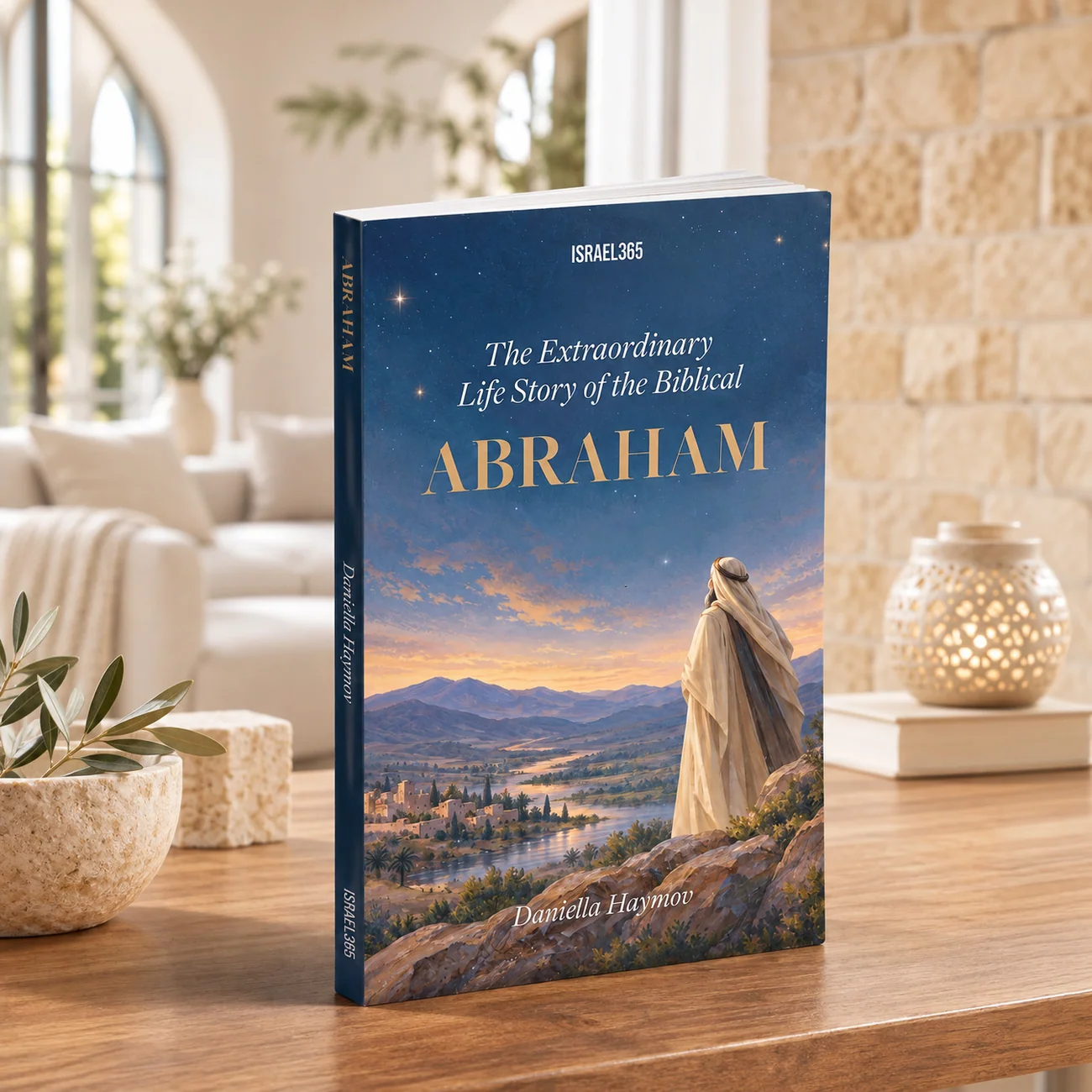
In The Extraordinary Life Story of the Biblical Abraham, newly published by Israel365, Daniella Haymov gathers dozens of these traditions from the Midrash and from great commentators like Rashi, Maimonides and Nachmanides, with footnotes identifying the source of each one. For readers who know Abraham only from a plain reading of Genesis, the book opens a door to a far richer portrait, built on centuries of careful study of the text.
One of the most fascinating questions the book takes up is one the Bible never directly answers. Abraham grew up in a world full of idols, and his own father sold them. How did he come to believe in one God? The Sages’ answer begins at his birth. Nimrod’s astrologers warned that a child born to Terah would threaten the king’s rule, so Terah hid his son in a cave. There, at three years old, Abraham stepped outside and looked up at the sky. He prayed to the sun until it set, and then to the moon until it faded at dawn. Neither, he realized, had any power of its own. Someone higher must be directing them both. Abraham found God by looking honestly at the world around him.
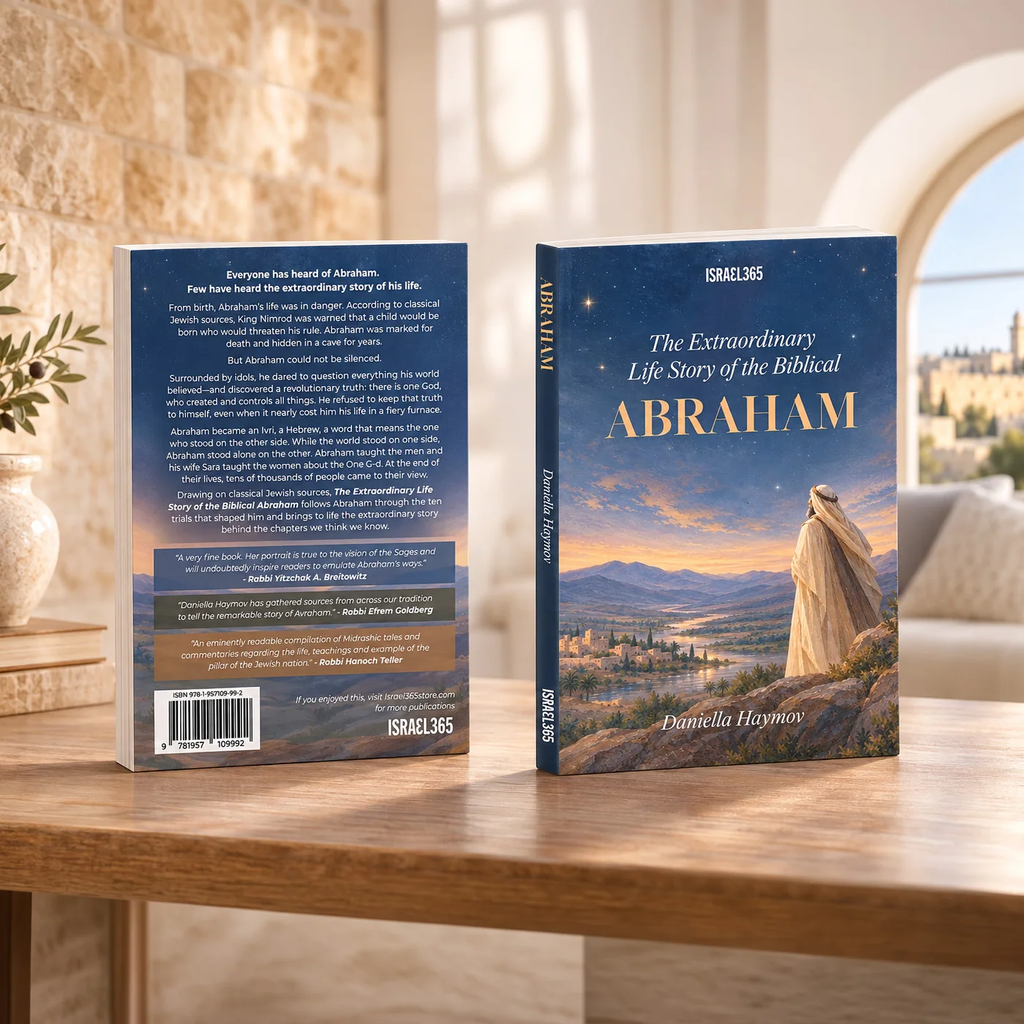
Jewish tradition teaches that God tested Abraham ten times, and Haymov builds the book around those ten trials, from the cave of his childhood to the binding of Isaac on Mount Moriah. Abraham walked into Nimrod’s furnace before God had ever spoken to him. Years later, when God finally did speak and commanded him to leave his homeland, He would not even tell Abraham where he was going. Abraham went anyway. Genesis says that “Abraham believed the Lord, and He counted it to him as righteousness.” Haymov’s book shows how much that belief cost him.
The book is full of details that make well-known scenes come alive. Three days after his circumcision, in terrible pain, Abraham sent his servant out to search for guests, because being unable to give hurt him more than his wound. At Mount Moriah, the 37-year-old Isaac asked his father to bind him tightly, so that he would not flinch from the knife and disqualify the offering.
Some of the book’s most moving pages concern Abraham’s descendants. In Genesis 15, God makes a covenant with Abraham, and Abraham cuts animals in half to seal it. Birds of prey swoop down on the carcasses, and Abraham drives them away. The Bible does not explain this strange detail, but the Sages do. The birds of prey represent the nations that would try to destroy Abraham’s children in every generation. Abraham driving them off is God’s promise that his children would outlast them all. Anyone who has watched Israel survive its enemies in our own time will find that promise hard to forget.
The book is written for readers of every background. Haymov, a high school teacher, explains Hebrew words like hineni and Jewish practices like the shofar and the shiva mourning period simply and clearly. Christian readers who love Genesis will discover how the Jewish people have read Abraham’s story for thousands of years. Jewish readers will find the Midrashim they half-remember from childhood, gathered in one place and beautifully retold.
Most of us met Abraham as children, in a few short chapters of Genesis. This book lets you meet him again: the boy in the cave, the idol-smasher in Nimrod’s furnace, the old man climbing Mount Moriah with his son. You will come away understanding why Jews and Christians alike still call him the father of faith, and you may find your own faith a little stronger for it.
The Extraordinary Life Story of the Biblical Abraham by Daniella Haymov is available now from the Israel365 Store.