


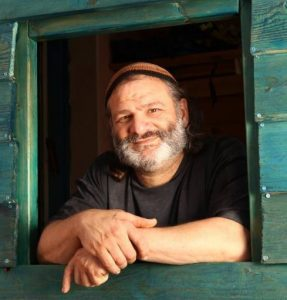

“What if I told you that one of the greatest signs of Messiah may not be something that suddenly appears in the sky?” Rabbi Aron Sokol asked in a recent lecture from his home in Beit Shemesh. “What if the greatest sign is that the entire world is slowly being prepared for him right in front of our eyes?”
Artificial intelligence may be the clearest example. In barely three years, machines have gone from clumsy chatbots to systems that write, reason, design and diagnose alongside human beings. Rabbi Ofer Davidov, an Orthodox businessman who made his first millions selling jewelry online in the internet’s earliest days, said in a video that this leap is unlike anything he has seen. “It’s a big jump from the internet. Trust me when I say this,” he said. “Something big, big, big is happening as I’m recording this video, and this is a preparation for the Mashiach.”
Rabbi Sokol puts the change in historical terms. “Take a person who lived 2,000 years ago and drop him into the world of 200 years ago,” he said. “Much of life would still be recognizable. People traveled with animals. They lit their homes with fire.” Now take someone from 200 years ago and bring him into today’s world. “He would think that he had entered into another universe,” Rabbi Sokol said. “And now we are entering into a world in which machines can reason with us. AI writes with us, designs with us, diagnoses with us, and perhaps one day performs enormous portions of human labor.”
“Human beings were intelligent thousands of years ago,” he added. “Why did this enormous explosion of knowledge wait until this particular stage in history?”
The Six Hundredth Year
The Zohar answered that question nearly 2,000 years ago, and it found the answer in the story of Noah’s Flood:
“In the six hundredth year of Noah’s life, in the second month, on the seventeenth day of the month, on the same day were all the fountains of the great deep broken up, and the windows of heaven were opened.” (Genesis 7:11)
The Zohar reads the verse as a prophecy about the sixth millennium of the Hebrew calendar. “In the sixth century of the sixth millennium, the gates of supernal wisdom will be opened,” along with the wellsprings of lower wisdom, “preparing the world to be elevated in the seventh millennium.” The six hundredth year of the sixth millennium is the Hebrew year 5600, which corresponds to 1840 CE. moshiach.com
Rabbi Sokol compares the process to the hours before Shabbat. “Think about the image, Friday afternoon. The day is not over yet. Shabbat has not arrived yet. But everything begins changing because Shabbat is approaching,” he said. “The house changes. The food changes. The clothing changes. The atmosphere changes.”
The year 1840, he noted, “sits remarkably close to the beginning of the modern scientific and industrial explosion that created the world we now inhabit. Jewish tradition described a dramatic opening of knowledge as part of the world’s preparation for the future, and that opening is exactly what modern civilization experienced.”
An essay on Moshiach.com, based on the teachings of the Lubavitcher Rebbe, describes both openings. The upper wisdom flowed through Chassidism, which brought the inner dimension of Torah to ordinary Jews through the Baal Shem Tov and his disciples. The lower wisdom became modern science. In the messianic age, the essay says, the world will be understood as an expression of God, and science is moving toward that recognition by showing that all existence comes from a single source. “For science is discovering the face of G-d.” moshiach.com
The Flood waters that once destroyed the world now return in a different form, as fountains of knowledge preparing it for redemption. Artificial intelligence is the latest of them.
Clouds or a Donkey
The prophets give two very different pictures of the Messiah’s arrival. Daniel sees “one like unto a son of man” coming “with the clouds of heaven” (Daniel 7:13). Zechariah sees a king “lowly, and riding upon an ass” (Zechariah 9:9).
“So which one is it?” Rabbi Sokol asked. “Does Messiah arrive through open miracles, or does redemption emerge through the normal processes of history?”
The Talmud (Sanhedrin 98a) answers that both are possible. If Israel is worthy, the Messiah comes on the clouds of heaven. If not, he comes humbly on a donkey, through the slow work of history. “We have been trained to imagine redemption as God interrupting history,” Rabbi Sokol said. “But perhaps redemption can also be God revealing what history was moving toward all along.”
“A prophecy can be supernatural in origin and natural in execution,” he said. He cited the teaching of the Sage Shmuel, codified by the Rambam, that “there is no difference between this world and the days of Messiah except our subjugation to the nations.” Redemption, Rabbi Sokol explained, can arrive gradually. “Dawn does not arrive because someone turns on the sun. The darkness slowly becomes lighter until suddenly you realize that night is gone.”
Miracles Through Machines
On that natural path, technology becomes the vehicle for prophecy. Isaiah promised: “Then the eyes of the blind shall be opened, and the ears of the deaf shall be unstopped. Then shall the lame man leap as a hart, and the tongue of the dumb shall sing” (Isaiah 35:5–6).
“Traditionally, these words sound miraculous,” Rabbi Sokol said. “But think about the world we are entering. Medicine restores sight. Technology restores hearing. Machines allow people who cannot walk to walk. Devices give voices to people who cannot speak.”
The Talmud (Shabbat 30b) records Rabban Gamliel’s teaching that in the future, the Land of Israel will produce finished cakes and fine wool garments. Rabbi Sokol explained that this describes a world “in which production becomes so effortless that finished products appear almost without human labor.”
“To someone living 2,000 years ago, a modern supermarket would look supernatural,” he said. “You walk into a building and food from every continent is sitting on shelves waiting for you. You press a button and clothing arrives at your house. Machines plant, harvest, package and distribute food.”
The Rambam describes the messianic era as a time when “all delicacies will be commonplace like dust.” The Midrash teaches that the exiles “will fly [to Israel] on the heavenly clouds.” A second Moshiach.com essay points out that air travel and modern food distribution have made both descriptions literal, and concludes that someone from 150 years ago would believe the Messiah had already arrived. moshiach.com
“The miracle of the future may not always be that nature stops behaving naturally,” Rabbi Sokol said. “The miracle may be that human beings finally discover what God placed inside nature from the very beginning.”
The Courtroom Without a Judge
Chaim Ben David has seen the courtroom of the future. “In the days to come soon, I believe that all judges will be computers,” he told an audience in a lecture titled “AI: Miracle or Monster”. “I would rather have an AI as a judge than a human judge.”
His reasoning comes straight from the Talmud. Tractate Ketubot (105b) tells of the Sage Rabbi Yishmael ben Rabbi Yosei, whose sharecropper brought him a basket of produce from his own field every Friday. One week, the worker came on Thursday. He had a case pending before Rabbi Yishmael, and the Sage immediately recused himself, saying he could no longer judge impartially.
“You can see how fine the line is,” Ben David said. “With an AI, on the other hand, the AI just doesn’t care. And what are you going to offer an electronic computer as a bribe? You know, more tasty electricity.”
His AI judge is also connected to every camera and phone record in the country. Ben David described a defendant who claims he was in Taiwan on the night of a crime, only to have the AI reply that its surveillance cameras show him at an ATM outside a Tel Aviv bank at 2 a.m. “It’s very difficult to lie to a judge who’s so connected,” he said. AI judges, he concluded, are “bringing truly miraculous improvements to the legal system… they’re moving us closer to the Torah ideal.”
Machines now weigh more evidence in a second than a human judge could weigh in a lifetime. That raises a question the prophet Isaiah answered more than 2,700 years ago: when the Messiah comes to judge the world, will he need the tools of data and evidence?
He Shall Not Judge by the Sight of His Eyes
Isaiah describes the Messiah’s gifts:
“And the spirit of the LORD shall rest upon him, the spirit of wisdom and understanding, the spirit of counsel and might, the spirit of knowledge and of the fear of the LORD.” (Isaiah 11:2)
The next verse describes how he will judge:
“And his delight shall be in the fear of the LORD; and he shall not judge after the sight of his eyes, neither decide after the hearing of his ears.” (Isaiah 11:3)
Rabbi Sholom Zirkind devoted an episode of his Classic Take podcast to this verse under the title “Will Moshiach Use AI to Make Decisions?” He focuses on a single Hebrew word, vaharicho, translated “his delight.” The word can come from ruach, spirit, or from rei’ach, smell.
The Talmud (Sanhedrin 93b) reads it as smell: the Messiah will “smell and judge.” The Talmud then tells of Bar Kochba, who led the second-century CE revolt against Rome and claimed to be the Messiah. “The Sages said, ‘Okay, if you’re Messiah, let us check if you have this quality of being able to judge by your sense of smell,’” Rabbi Zirkind recounted. When the Sages saw that he could not, they rejected him and put him to death. “We see over here the centrality of the quality of Messiah that he will judge with a sense of smell,” Rabbi Zirkind said.
The Metzudat David explains that smell represents knowledge that comes without effort. “It’s not like he’ll have to sit and hear all the testimony and read all the data and then figure out what’s going on,” Rabbi Zirkind said. “It’s just like when you smell something, it’s just a sniff.”
The Malbim reads the word as ruach and goes further: the Messiah will become so spiritual that he will set aside his physical senses entirely, because they can deceive. “He could have the biggest lawyers and cross-examination of evidence,” Rabbi Zirkind said, “but ultimately, as everybody knows, nothing is foolproof. You could make mistakes. You could misunderstand what you saw, or definitely what you heard.”
The Talmud (Berachot 43b) explains why smell carries this weight. The Sages derive the blessing over fragrance from the last verse of Psalms: “Let every thing that hath breath praise the LORD” (Psalms 150:6). The Hebrew reads kol haneshama, “every soul.” Food nourishes the body, the Sages explained, while fragrance delights the soul. The Maharsha concludes that smell is the most spiritual of the senses.
The Zohar tells of the yanuka, a spiritually gifted child who smelled from the Sages’ garments that they had not yet recited the Shema that day. “When it’s a tzaddik, a righteous person, there’s the fragrance of Gan Eden, of the Garden of Eden, that envelops him,” Rabbi Zirkind said. A person with that sensitivity can sense “Is it holiness? Is it pure? Is it authentic? Is he saying the truth?”
Chassidic teaching adds that smell reaches the core of the soul. A person who has fainted cannot be revived with food or drink, but a sharp scent can wake him. The Messiah, Rabbi Zirkind said, will sense the essence of every person, including the circumstances that led him astray. “He’ll be able to get to the essence of things,” he said.
Rabbi Sokol drew the same picture of the Messiah. “Isaiah describes him as someone who does not judge merely by what his eyes see or ears hear,” he said. “He penetrates through the falsehood and hypocrisy that dominate human society, and gradually the world begins seeking his wisdom. People do not follow him because they are hypnotized. They follow him because the answers that he gives work.”
Ben David’s AI judge rules by what its cameras see and its recordings hear. Isaiah’s Messiah rules by what no camera can record. “AI, as great as it might be, is good to process data,” Rabbi Zirkind said. “Obviously it’s not foolproof, as we all know, and definitely doesn’t provide us with the sense of smell that Moshiach will have.”
Rabbi Davidov put it in terms of King Solomon, who asked God for wisdom above wealth. “Mashiach will be smarter than King Solomon,” he said. When the Messiah arrives, the tech titans who believe they have reached the summit of human knowledge will feel “like nothing, like zero.” He compared them to the builders of Babel: “We thought we made it. We thought we got to the top of high technology. Migdal Bavel. We built a tower.”
A Child That Has Not Eaten From the Tree
Ben David acknowledges what the machine lacks. He calls AI “a new creation… an entity that has not eaten from the tree of knowledge of good and evil.”
“It doesn’t know the difference between good and evil. Those are human concepts,” he said. “It knows true and false. It knows what happens if you do this and it knows what happens if you do that. But is it good to do this, or is it evil?”
He compares humanity’s position to God’s. In the Bible, God told Israel, “See, I have set before thee this day life and good, and death and evil” (Deuteronomy 30:15). “Now we face the same dilemma,” Ben David said. “We are setting before the AI good and evil. We’re giving it the whole corpus of our literature with all its good and all its bad, and we’re not identifying what is good and what is bad.”
“An AI is a tremendous amplifier of imperfections and of good,” he warned. His solution is to train it on “a book that’s not written by a human being,” the Bible together with the teachings of the Sages. “What it doesn’t need is 300 billion pages of internet,” he said.
Rabbi Sokol sees the same danger at the scale of civilization. “The same science that can cure disease can create weapons capable of killing millions,” he said. He cited a teaching that the messianic age emerges in a generation capable of destroying itself. “Previous generations could destroy cities. Our generation can imagine the destruction of civilization,” he said. “Human beings have reached a level of power where our moral maturity has to catch up with our technological ability.”
Knowledge Covering the Earth
A viewer asked Rabbi Zirkind whether AI fulfills Jeremiah’s prophecy of the messianic age:
“And they shall teach no more every man his neighbour, and every man his brother, saying: ‘Know the LORD’; for they shall all know Me, from the least of them unto the greatest of them, saith the LORD.” (Jeremiah 31:33)
AI “definitely could be used for good in a tremendous way, and it could help spread the knowledge of Moshiach throughout the world,” Rabbi Zirkind answered. “Ultimately the AI has its limitations, as we all know. We still need Messiah to come and teach us and bring the world to that state where we’re not going to need any more teachers,” when “godliness will be revealed to all.”
Until then, the lesson is personal. “Today’s day and age, when we’re holding right before Moshiach comes, sometimes the borderline between good and evil could be very, very skinny,” Rabbi Zirkind said. “Just using intellect is not always sufficient.” A person committed to God needs a spiritual sense of smell, the ability to sense that “something is fishy over here” even when the data says nothing is wrong.
Rabbi Davidov framed the same challenge for his viewers. “What are you using this AI for?” he asked. “You can be on the good side, be on the bad side. I decided to be on the good side.”
Don’t Predict. Prepare.
Rabbi Sokol warned against turning every headline into prophecy. “Does that mean I give you a date for Messiah? No. Does it mean that every headline is prophecy? No,” he said. “But there is something equally dangerous about looking at everything happening around us and refusing to see anything at all. We are living through an entire constellation of developments described throughout the messianic tradition.”
“The goal of Judaism is not to hide from the future,” he said. “It is to enter the future carrying the Torah with us.”
When the Messiah comes, Rabbi Sokol said, there will be two kinds of people. One kind spent their lives “chasing whatever the generation told them was important.” The other kind “held on. Not people who were perfect, not people who never struggled, not people who had every answer, just people who refused to let go of truth.”
“The question is not only when Messiah will come,” he said. “The more personal question is: who will I be when he does?”
The Rebbe gave the answer in a single sentence: “Moshiach is ready to come now, we all must only do something additional in the realm of goodness and kindness.” moshiach.com
The fountains of the deep have opened, and the machines will keep getting faster. Isaiah’s Messiah will need none of them. He will stand before a person, take one breath, and know the truth.

