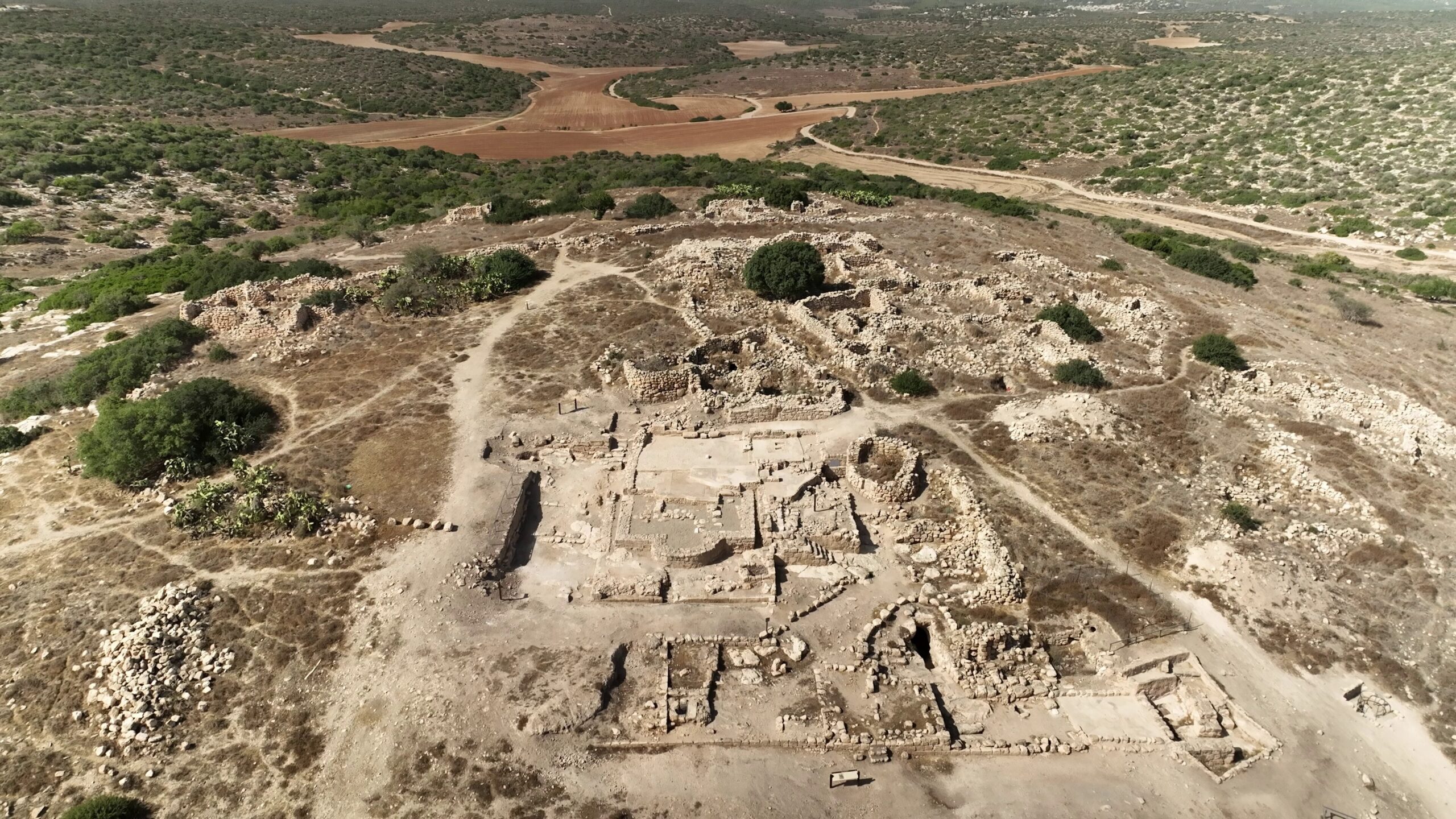
Two thousand years after Jewish fighters carved hiding tunnels under a Judean village to fight Rome, the site at Horbat Burgin is open to visitors. It sits in the same hills where a fugitive David gathered his men in the cave of Adullam.
Beneath the rolling hills of the Judean Foothills, Jewish rebels once crouched in tunnels cut from solid rock, waiting for the Roman legions. This past weekend, their hideout was opened to the public.
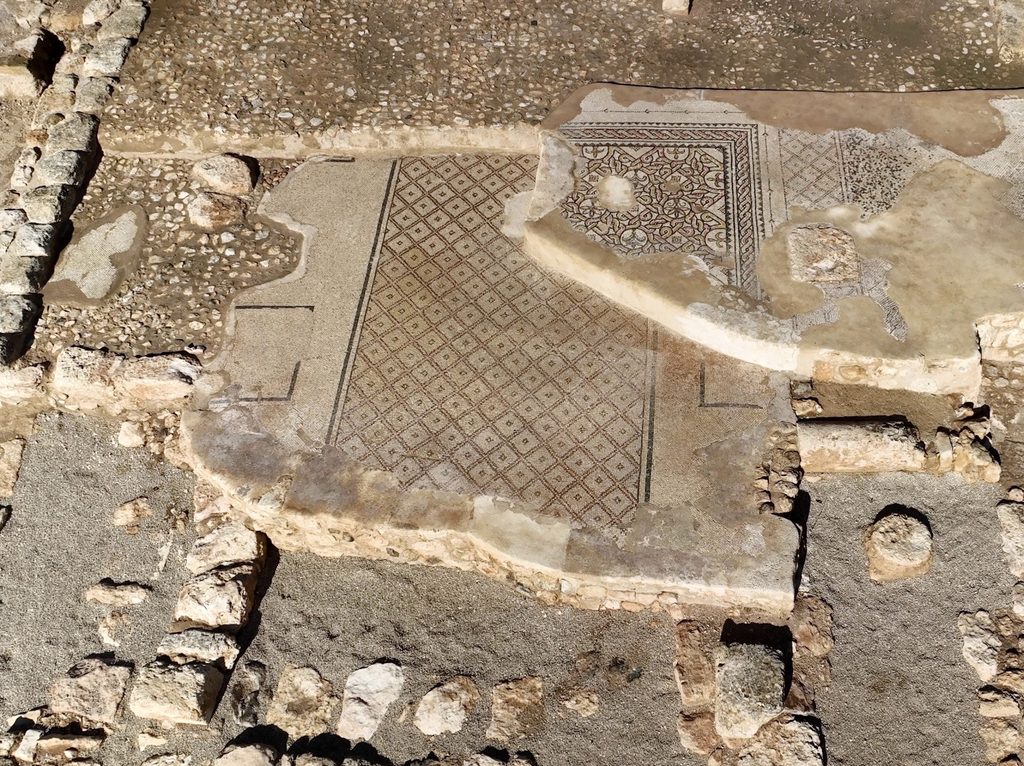
An archaeological complex at Horbat Burgin (the ruins of Burgin) in Adullam–France Park was inaugurated at a ceremony jointly held by Keren Kayemeth LeIsrael–Jewish National Fund (KKL-JNF), the Israel Antiquities Authority, and the Mateh Yehuda Regional Council. The site features underground hiding tunnels used by Jewish rebels some 2,000 years ago, along with a Byzantine church floored with colorful mosaics. The opening follows years of excavation, conservation and development.
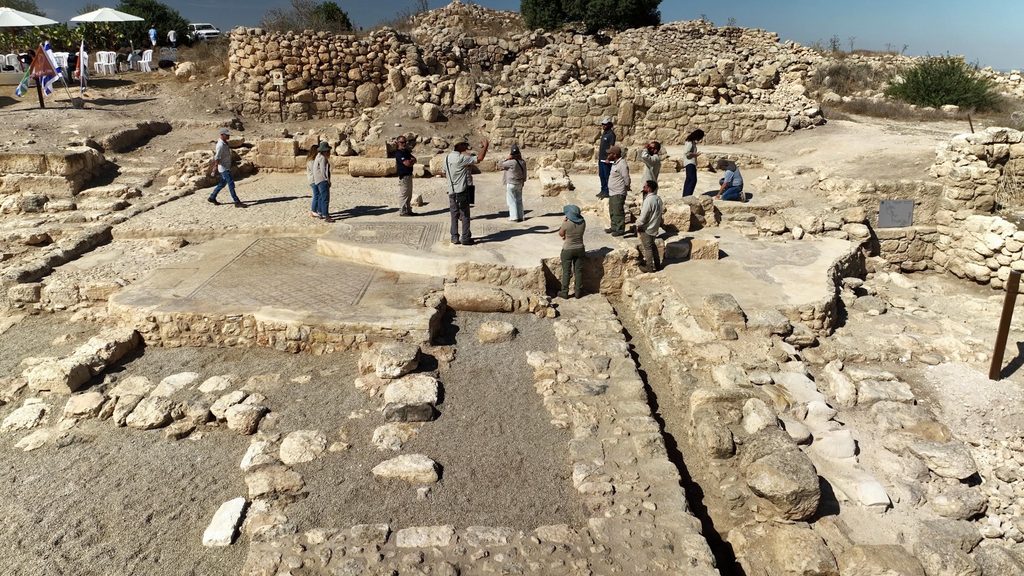
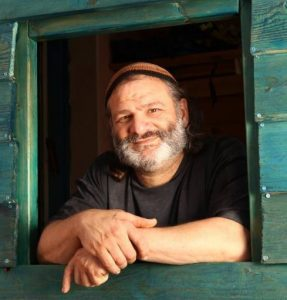
“Horbat Burgin is the largest ancient settlement in the area, both in its extent and in the scale of its surviving remains,” said Dr. Amir Ganor, the site’s excavator and director of the Israel Antiquities Authority’s Antiquities Theft Prevention Unit.
A Village Prepares for War
Excavations by Dr. Ganor, Alon Klein, and Dr. Peter Gendelman of the Israel Antiquities Authority revealed a settlement that remained continuously occupied from the Second Temple period through the Ottoman period. During the Second Temple era, a large Jewish village occupied the hilltop. Researchers have proposed identifying it with Caphar Bish, a village mentioned by the first-century historian Flavius Josephus.
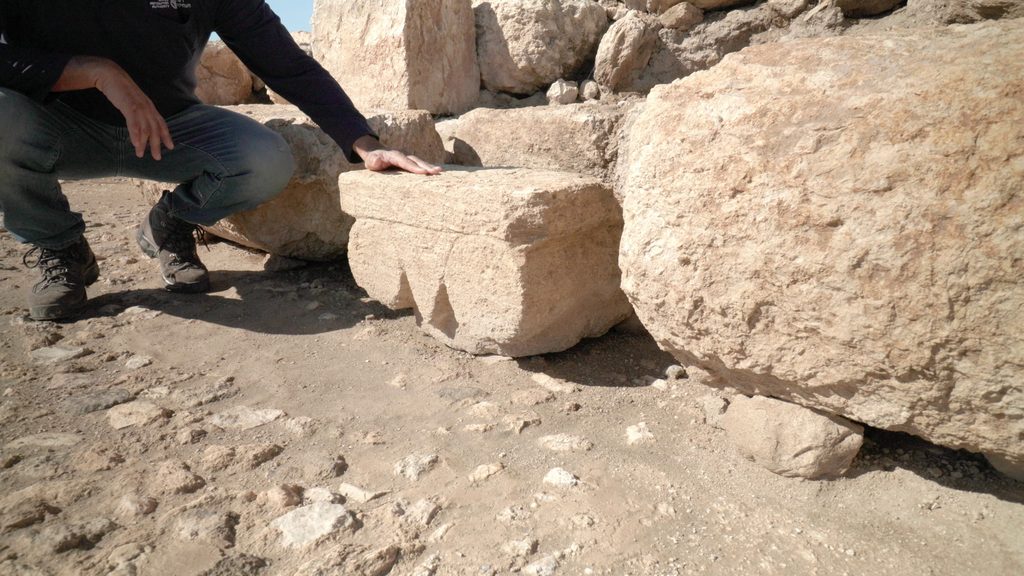
In the Early Roman period, the villagers prepared for war with Rome. They hewed extensive networks of hiding tunnels into the bedrock beneath their homes. The settlement was damaged and destroyed during the Bar Kokhba Revolt of 132–135 CE, the last great Jewish uprising against Rome.
The Roman historian Cassius Dio described this exact strategy. He wrote that the Jewish rebels avoided meeting the Romans in open battle. Instead, they fortified positions across the country with tunnels, so they would have places of refuge when hard pressed and could move unseen underground. They pierced the passages from above at intervals to let in air and light. Archaeologists have found hundreds of these hiding complexes across the Judean Foothills, and Horbat Burgin is one of the largest settlements among them.
After the revolt was crushed, a pagan population settled among the ruins. They built new structures above ground and carved elaborate burial complexes below. In the Byzantine period, a church with colorful mosaic floors and a monastery rose on the site. Numerous columbaria (dovecotes for raising pigeons) and winepresses show that the villagers lived from pigeon breeding, farming, and wine.
Saved From the Looters
The site nearly did not survive to be seen. “For years, the site suffered from intensive antiquities looting,” Ganor said. “Looters broke into burial caves and underground hiding systems and damaged buildings above ground.”
He credited the rescue to a long campaign by Israel Antiquities Authority inspectors and KKL-JNF personnel. “It was only through intensive efforts,” Ganor said, “including enforcement operations and the apprehension of looting gangs, the initiative to establish Adullam Caves Park, excavations undertaken in response to looting, and the opening of the site and park to visitors, that further damage was halted. The site was saved, and now, following conservation work, it can be enjoyed by the public.”
The Cave of Adullam
The park takes its name from one of the Bible’s most famous hideouts. When King Saul hunted him, the young David fled to these same hills:
“David therefore departed thence, and escaped to the cave of Adullam; and when his brethren and all his father’s house heard it, they went down thither to him” (I Samuel 22:1).
The next verse describes who joined him there: everyone in distress, everyone in debt, and everyone bitter of soul. About four hundred men gathered around David in the caves of Adullam. That ragtag band of outcasts became the core of the army that would found the Kingdom of Israel and make Jerusalem its capital.
A thousand years later, Jewish fighters went underground in the same region, again outnumbered and again hunted by an empire. Rabbi Akiva, the greatest sage of his generation, saw their leader, Shimon Bar Kosiba, as the King Messiah. He called him Bar Kokhba, “son of the star,” after Bilaam’s prophecy that “there shall step forth a star out of Jacob” (Numbers 24:17). The revolt ended in catastrophe. Rome renamed the land Palestina to erase its Jewish identity and barred Jews from Jerusalem.
The tunnels at Horbat Burgin outlasted the empire that destroyed the village.
“A Tangible Lifeline”
Minister of Heritage Rabbi Amichai Eliyahu drew a direct line from the rebels to the modern state. “The discoveries at Horbat Burgin bear living witness to our deep roots in this land, our enduring attachment to it, and our unceasing struggle for it,” he said. “The tunnels dug by Jewish rebels two thousand years ago in their struggle against the Romans are not merely pages of history, but a tangible lifeline connecting our people’s past heroism with our sovereignty and national rebirth today.”
“We will continue to develop these heritage sites,” Eliyahu added, “so that every young person in Israel can walk the trails, visit the sites, and draw from them national pride and inner strength for generations to come.”
KKL-JNF Chairman Eyal Ostrinsky said: “The story of Horbat Burgin is the story of our land. Our responsibility at KKL-JNF is not only to protect nature and forests, but also to safeguard our historical heritage and make it accessible to the public.”
Avishai Cohen, head of the Mateh Yehuda Regional Council, described the region in biblical terms. “Mateh Yehuda is the land of the Bible, a region where history, heritage, and landscapes together tell the story of the Jewish people over thousands of years,” he said. “Opening the site to the public allows the local community and the younger generation to grow up with pride in their roots and a deep connection to the land.”
Ami Shahar, deputy director-general for built heritage conservation at the Israel Antiquities Authority, said that uncovering finds “is the beginning of a journey, one that continues with preserving this heritage for future generations. Together, we are transforming the history of the Land of Israel into a tangible experience, inviting families and visitors to connect directly with the past.”
The Children of the Rebels Return
Rome believed it had ended the Jewish story in Judea. The empire leveled the villages, sold the survivors into slavery and stamped a foreign name on the land. The tunnels of Horbat Burgin sat silent for nearly two thousand years, raided by looters and forgotten by the world.
Today Jewish families can walk down into them as citizens of a sovereign Jewish state. The descendants of the rebels are excavating, preserving, and opening the site, while Israel Antiquities Authority inspectors and KKL-JNF rangers are protecting it. The struggle that began in David’s cave at Adullam and went underground with Bar Kokhba has resurfaced.