



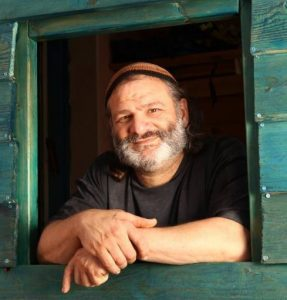

Mor Shamli saw an Egyptian police officer murder her husband, Alon, the day after the October 7 massacre and spent three years demanding a justice that never came. Her death adds a fifth victim to an attack whose gunman has yet to stand trial, and the Bible warns what happens to a nation that leaves such blood unanswered.
Mor Shamli watched an Egyptian police officer shoot her husband, Alon Shamli Hy”d, during their vacation in Alexandria on October 8, 2023, one day after the Hamas massacre. The letters Hy”d abbreviate the Hebrew prayer Hashem yikom damo, “may God avenge his blood,” which Jews attach to the name of anyone murdered for being a Jew. It is a prayer that God Himself will answer for the blood. Mor spent the next three years demanding that someone answer for Alon’s blood. On Friday, at 35, she died. The gunman, arrested at the scene with his service weapon, has still not been sentenced.
“Mor was murdered along with Alon in Egypt,” her parents, Ilan and Shoshi Cohen, said. “She continued living, but she could not bear the pain and the loss of her husband, Alon. She had no desire to live. She was simply living but dead, until today, when she is no longer with us.”
“Her soul was murdered there in Egypt,” they added, “and today she has simply died before her time.”
Ynet called Mor the fifth victim of the Alexandria attack. She joins a growing list of Israelis whose names never appear in the official casualty counts: survivors, widows, parents, and partners who outlived the terrorists’ bullets and could not outlive the grief.
The Bible commands a strange ritual for a murder no one solved: the elders of the nearest city must break the neck of a young heifer in a barren valley, wash their hands over it, and publicly swear their innocence. Why would God demand that respected leaders defend themselves over a crime they never committed, and what does that ritual say about a nation that lets the murder of its citizens fade into silence?
“The bullet that struck Alon’s heart struck mine too”
The shooting took place near Pompey’s Pillar, one of Alexandria’s best-known tourist sites. An Egyptian police officer turned his service weapon on a group of Israeli tourists, killing Alon Shamli Hy”d, 34, a Hapoel Tel Aviv youth coach and physical education teacher from Bat Yam, and Amnon Bezalel Hy”d, 64, a 40-year veteran of the Israel Police. Hagai Efrat Hy”d, 83, a former Hapoel Jerusalem soccer manager from Rishon LeZion, died of his wounds on October 19. The group’s Egyptian tour guide, Sayed Kamel al-Khawalqa, was also killed.
‘The killer was never punished’: The forgotten Egypt terror attack and its tragic fifth victim
— Ynet Global (@ynetnews) October 30, 2026
Mor Shamli, 35, dies three years after witnessing her husband's murder in Egypt; her family calls her the attack's fifth victim, while s…https://t.co/0U9i1fEhOI pic.twitter.com/6OaDqqQVb8
Mor sat beside her husband as he lay bleeding for up to an hour before help arrived, according to Kikar HaShabbat. She was officially told of his death only some 12 hours later, at the local hospital. Mor told the Kan public broadcaster that the Egyptian hospital deceived her, performed an autopsy on Alon without her permission, and would not let her contact Israeli authorities.
In January, Mor announced to her Instagram followers that she intended to end her life through an assisted suicide program in Switzerland. She did not go through with it at the time, according to the Times of Israel, and her announcement set off false rumors that she had already died. In her posts, she described the grief that had consumed her since the attack. “The pain is unbearable. You wouldn’t believe how many tears the heart and eyes can produce,” she wrote. “My life ended there in Egypt on October 8, 2023, when they murdered us. The bullet that struck Alon’s heart struck mine too.”
She wrote that she had spent two years fighting for “at least a minimum of justice, but I failed. Our country failed in that.” She began signing her age as “34-2,” subtracting the years since Alon was taken from her.
Death on request, even without terminal illness
Four Israeli news outlets reported Mor’s death, and none confirmed how she died. i24NEWS stated that the circumstances were unclear and that reports did not confirm whether she went through with the plan she announced in January. Her family has asked for privacy.
Her announcement pointed to a practice that has spread far beyond the dying. Switzerland has permitted assisting a suicide since 1942, as long as the helper acts without selfish motives, and Swiss law sets no requirement that the person be terminally ill. Dignitas, the best-known Swiss organization, became a global destination because it accepts foreigners. Assisted suicide and euthanasia are illegal in Israel, yet Dignitas data cited by Israeli media show 146 Israelis traveled to Switzerland to die between 1998 and 2023, with numbers rising in recent years.
In Belgium, the practice has already claimed a terror survivor. Shanti De Corte was 17 when Islamic State terrorists bombed Brussels Airport on March 22, 2016, killing 32 people. She was standing in the departures hall with classmates waiting for a school trip to Italy, and walked away without a physical scratch. The trauma never left her. “That day broke her. After that she never felt safe,” her mother, Marielle, told Belgian broadcaster VRT. After years of depression and post-traumatic stress, two psychiatrists approved her request, and she was euthanized on May 7, 2022, at age 23. Belgian neurologist Paul Deltenre complained to prosecutors that the decision was premature, arguing that her treatment options had not been exhausted, and prosecutors opened an investigation. Critics called her the 33rd victim of Belgium’s deadliest terror attack.
In the Netherlands, Zoraya ter Beek, a physically healthy 29-year-old suffering from depression, autism, and borderline personality disorder, was euthanized on May 22, 2024, after her psychiatrist told her nothing more could be done. Dutch psychiatric euthanasia cases rose from two in 2011 to 138 in 2023, then jumped roughly 60 percent to 219 in 2024. Thirty of those were aged 18 to 30, and one was between 16 and 18. Damiaan Denys, a professor of psychiatry at Amsterdam University Medical Center, warned of an enormous recent increase in requests for euthanasia among psychiatric patients, especially young people under 30.
A list that keeps growing
In Israel, Mor’s death fits a pattern the country has watched since October 7. Roei Shalev, wounded at the Nova festival, survived by lying motionless for hours and playing dead. His partner, Mapal Adam, was murdered. He took his own life in October 2025, days after the second anniversary. Shirel Golan, another Nova survivor, died by suicide in October 2024, according to reports quoting her family. Yelena Giler, 56, whose son Slava was murdered by Hamas terrorists at Nova, also died by suicide, Hebrew media reported.
In August, Bar Bechor Asraf, 30, of Sha’arei Tikva, became another. His family said he tried to drive toward the festival on October 7 to reach his girlfriend, Liron Barda, but was turned back before he arrived. Liron, the festival’s bar manager, stayed to treat the wounded despite her family and friends begging her to flee, until Hamas terrorists murdered her. His mother, Bracha, said Liron was “his listening ear. Everything to him.”
At an April 2024 Knesset hearing, Nova survivor Guy Ben Shimon testified that there had been “almost 50 suicides among the Nova survivors.” The Health Ministry said it had no statistics supporting the claim. The research on bereaved families leaves no room for doubt. A University of Haifa national study found that nine months after October 7, bereaved Israelis showed probable PTSD at 29.5 percent and depression and anxiety at 37.3 percent each, compared with 19.2, 22.4 and 21.5 percent among those who had not lost a loved one. Among the non-bereaved, symptoms declined over time. Among the bereaved, they did not decline at all.
Three years without a trial
Egypt has never officially named the Alexandria gunman, though Arabic-language reports identified him as Mohammed Abdel-Magid. In July, Mor told Kan’s Reshet Bet radio: “The killer who was caught that day still hasn’t been punished. At first, I was told he was awaiting sentencing. Now I’ve been told his trial will only take place in another three months. It really feels like they’re making a mockery of us.”
She fought for years to bring Alon’s clothes home. Israel’s Foreign Ministry finally told her, “Too much time has passed. They no longer have them. They’ve already thrown them away.” Mor said the ministry behaved “as if they’re merely a go-between for me and the Egyptians.”
Al Jazeera, a day after the killings, blamed the victims, claiming the Israelis provoked the officer by posing with an Israeli flag. Israelis who survived the shooting flatly denied it, saying the group had worked to hide their nationality the day after October 7.
Blood under a peace treaty
The Alexandria attack took place 44 years after Israel and Egypt signed their peace treaty in March 1979, under which Israel handed over the entire Sinai Peninsula. The gunman was an officer of the Egyptian state, carrying a government-issued weapon, assigned to protect tourists.
Egyptian security officers have murdered Israelis under that treaty before. On October 5, 1985, Suleiman Khater, an Egyptian policeman stationed at the Red Sea beach resort of Ras Burqa in Sinai, opened fire on Israeli vacationers, killing three adults and four young children. Five-year-old Tali Griffel survived only because her mother, Anita, shielded her with her own body. Witnesses said Egyptian police at the scene refused to help the wounded and held an Israeli doctor and other tourists at gunpoint to keep them from treating the victims, who were left to bleed to death.
The Egyptian press responded much as Al Jazeera did in 2023. Papers claimed the Israelis were spies photographing military sites, that they had torn and spat on an Egyptian flag, or that the tourists had attacked the policeman. Opposition politicians and journalists hailed Khater as a hero, and rallies in his honor broke out at Egyptian universities. Egypt did not formally apologize to the victims’ families or agree to compensate them until early 1989.
In June 2023, four months before Alexandria, Egyptian security officer Mohammed Salah crossed into Israel and murdered Staff Sgt. Ori Yitzhak Ilouz Hy”d and Sgt. Lia Ben-Nun Hy”d of the Bardelas Battalion at their guard post, then killed Staff Sgt. Ohad Dahan Hy”d of the Caracal Battalion before he was shot dead.
Jordan offers a sharp contrast. On March 13, 1997, three years after Israel and Jordan signed their peace treaty, Jordanian soldier Ahmed Daqamseh opened fire on seventh- and eighth-grade girls from the AMIT Fuerst School in Beit Shemesh during a class trip to the Island of Peace at Naharayim, a joint Israeli-Jordanian tourist site on the Jordan River. He murdered seven girls, aged 13 and 14.
Three days later, Jordan’s King Hussein came to Israel, sat with the bereaved families during shiva, the seven-day Jewish mourning period, visited the wounded girls in the hospital, and offered compensation. Standing beside Prime Minister Benjamin Netanyahu, he apologized on behalf of his kingdom and told the parents their daughter was like his own daughter.
Even that justice proved partial. A Jordanian military tribunal ruled Daqamseh mentally unstable, sparing him the death penalty. In 2011, Jordan’s justice minister called him a hero and demanded his release, and in 2014, the Jordanian parliament voted to set him free. He walked out of prison in March 2017 after 20 years to a hero’s welcome.
Mor Shamli “35-3” 💔:
— Gal G., Adv 🇮🇱 (@ICK_GalG) October 31, 2026
Just one day after the start of the genocidal Hamas-led invasion of Israel, and while Israel was fighting for its life- during an organized tourist trip to Egypt 🇪🇬 , 3 Israeli tourists were murdered in Alexandria, Egypt, by an Egyptian police officer.… pic.twitter.com/kVDAFJiEq1
Egypt has offered the families of Alexandria far less. President Abdel Fattah el-Sisi has made no gesture to the families and refuses to meet Netanyahu at all. Israel has no ambassador stationed in Cairo. Three years after the attack, the gunman has not even stood trial.
The heifer in the valley
As mentioned, the Bible addresses exactly this situation in Deuteronomy 21. A body is found lying in a field, and no one knows who struck the blow. The judges measure the distance to the surrounding cities, and the elders of the nearest city take a heifer that has never worked, bring it down to a rough, uncultivated valley, and break its neck. This is the eglah arufah, literally “the heifer whose neck is broken.” The elders then wash their hands over the animal and make a public declaration:
“And they shall speak and say: ‘Our hands have not shed this blood, neither have our eyes seen it.’” (Deuteronomy 21:7)
The Sages immediately saw the difficulty. The Mishnah (Sotah 9:6) asks how anyone could imagine that the elders of the court are murderers. Their answer defines the entire ritual. The elders are declaring that the victim never came to them in need and was sent away without food, and that they never saw him leave and let him go without an escort. The city’s leaders swear they did everything in their power to protect a traveler passing through their territory. Responsibility for innocent blood reaches far beyond the man who pulled the trigger. It reaches every authority whose neglect left the victim exposed.
A peace treaty is a nation’s promise of exactly that escort. Egypt signed it, then sent its own officers to stand guard over Israeli tourists with loaded weapons. The same obligation runs inward. A society that leaves a traumatized survivor to sink, or hands her a path to death, has sent the traveler off without bread and without accompaniment.
The ritual ends with a plea: “Forgive, O LORD, Thy people Israel, whom Thou hast redeemed, and suffer not innocent blood to remain in the midst of Thy people Israel” (Deuteronomy 21:8). Innocent blood left unanswered remains b’kerev, “in the midst” of the nation. It stays among the people until the people deal with it.
That declaration was available only to elders who could say it truthfully. Mor Shamli wrote that her country failed her. Elders who cannot look a grieving widow in the eye and say they did everything to bring her husband’s killer to judgment, and everything to carry her through her grief, cannot wash their hands of the blood.
Justice, justice you shall pursue
Five chapters earlier, the Bible gives the command that drives all of this:
“Justice, justice shalt thou follow, that thou mayest live, and inherit the land which the LORD thy God giveth thee.” (Deuteronomy 16:20)
The Hebrew is tzedek tzedek tirdof, literally “justice, justice you shall chase.” The verb tirdof is the language of pursuit, of running after something that is getting away. Justice that waits in a ministry inbox for answers from Cairo is justice standing still.
The verse attaches a condition: l’ma’an tichyeh, “so that you may live,” and inherit the land. Rashi, the great 11th-century commentator, explains that the appointment of proper judges is enough to keep Israel alive and settled on its land. The Bible ties the nation’s survival and its hold on the land directly to its pursuit of justice.
The price of silence
The Bible spells out what happens when a nation lets blood go unanswered:
“So ye shall not pollute the land wherein ye are; for blood, it polluteth the land; and no expiation can be made for the land for the blood that is shed therein, but by the blood of him that shed it.” (Numbers 35:33)
Maimonides, codifying this law in the 12th century, rules that a court may not accept ransom from a murderer even if he offers all the money in the world, because the life of the victim belongs to God and the land can be atoned for no other way.
The Bible records what that pollution looks like. In the days of King David, the land suffered three straight years of famine. David sought God’s answer and received it: “It is for Saul, and for his bloody house, because he put to death the Gibeonites” (2 Samuel 21:1). Saul had been dead for years. The Gibeonites were a foreign people living under Israel’s protection. The blood had gone unanswered for a generation, and the entire nation paid with hunger until David’s government dealt with it.
The first murder in history teaches the same lesson. God confronted Cain: “What hast thou done? the voice of thy brother’s blood crieth unto Me from the ground” (Genesis 4:10). The Mishnah (Sanhedrin 4:5) points out that the Hebrew says d’mei achicha, “the bloods of your brother,” in the plural. The Sages explain that Cain spilled the blood of Abel and of every descendant who would never be born. A murderer kills far more than one person. The bullets fired in Alexandria in October 2023 claimed their fifth victim last Friday.
Egypt in the prophecy
The prophet Joel named the nation that would answer for Jewish blood in the end of days:
“Egypt shall be a desolation, and Edom shall be a desolate wilderness, for the violence against the children of Judah, because they have shed innocent blood in their land.” (Joel 4:19; Joel 3:19 in most English Bibles)
The verse describes innocent Jewish blood shed b’artzam, “in their land.” Joel saw Jews murdered on Egyptian soil and Egypt held accountable for it. Two verses later, the prophet closes his book with God’s promise: “And I will hold as innocent their blood that I have not held as innocent; and the LORD dwelleth in Zion” (Joel 4:21). The blood of Israel that the nations refuse to answer for, God Himself will answer for.
“We remain here”
Mor’s uncle, Nahum Israeli, wrote on Friday that a crack opened in the family’s hearts three years ago and has only widened. “We remain here to lick our wounds, mend what has been broken and preserve life,” he wrote.
His words carry the second half of the eglah arufah. The elders swore they had fed the hungry traveler and escorted him safely on his way. Israel owes that same care to every widow, every bereaved parent, and every survivor who walked out of the Nova festival alive: the bread, the escort, and the hand that refuses to let go.
The Egyptian officer who opened fire in Alexandria is still waiting for a trial date Cairo keeps moving. The elders of Israel cannot wash their hands over that blood. The Bible commands them to chase justice down, for Alon Shamli Hy”d, for Amnon Bezalel Hy”d, for Hagai Efrat Hy”d, and for Mor Shamli a”h, aleha hashalom, “peace be upon her,” so that the nation may live and keep the land God gave it.
If you or someone you know is struggling, help is available. In Israel, call ERAN at 1201 or the NATAL helpline at 1-800-363-363. In the US, call or text 988.
