A senior Iranian lawmaker called on Thursday for the Islamic Republic to authorize the use of nuclear weapons if the United States attacks Iran again, the latest and most explicit in a growing chorus of nuclear talk from inside the regime. Mohammad-Saleh Jokar, chairman of the Iranian parliament’s Internal Affairs Committee, made the demand as Washington and Jerusalem weigh a renewed military campaign against Tehran after the US midterm elections.
“I ask the Islamic Republic’s authorities, in defense of the country and for the purpose of deterrence, to permit the use of deterrent weapons, including nuclear weapons, in the event of a US attack on Iran,” Jokar said, according to Iran International. He also urged Tehran to suspend its cooperation under the Nuclear Non-Proliferation Treaty (NPT) if American forces strike, and warned that any country allowing US forces to use its territory or airspace for an attack would face a harsh response and pay a heavy price.
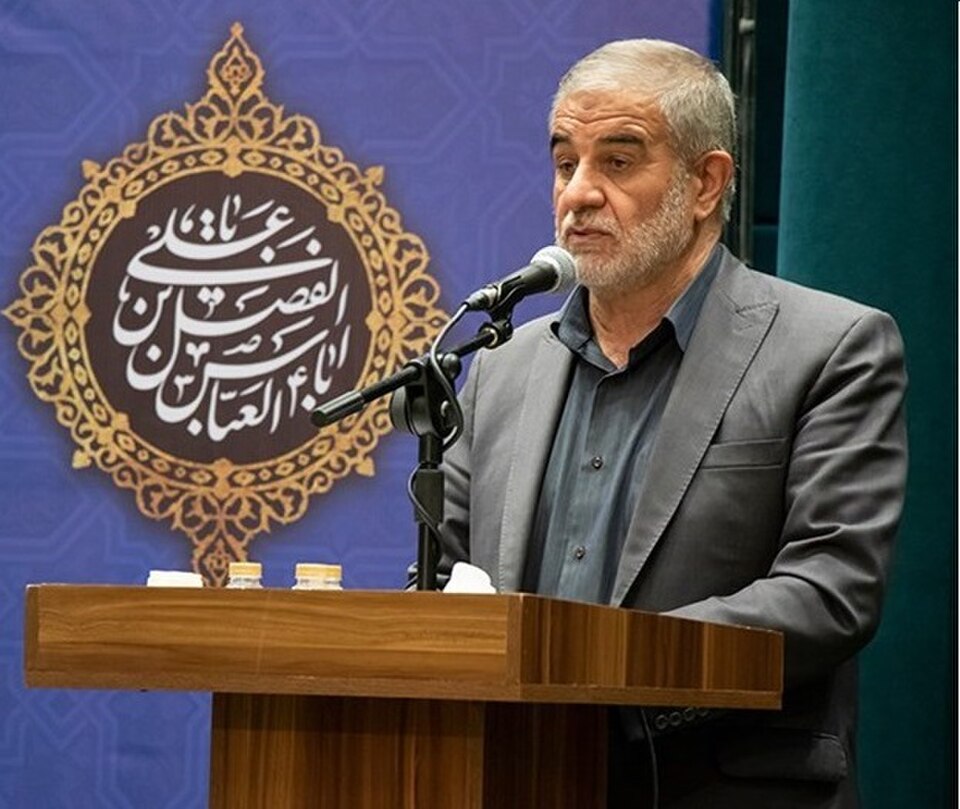
Iran officially denies seeking nuclear weapons, and Jokar did not claim the regime possesses one. His call to “permit the use” of such weapons nonetheless marks a sharp escalation in the public rhetoric of Iran’s leadership.
Threats from every level
Jokar’s statement caps a week of threats from Tehran. On Sunday, after President Donald Trump endorsed Prime Minister Benjamin Netanyahu and declared that “we will soon finish the job” in Iran, Foreign Minister Abbas Araghchi taunted Trump on social media, warning that Iran has unfinished jobs of its own. He accused the Israeli prime minister of manipulating Washington. “Netanyahu is driving America into another war to stay out of jail,” Araghchi wrote.
Later that day, Islamic Revolutionary Guard Corps (IRGC) spokesman Hossein Mohabbi threatened that any attack on Iran’s energy infrastructure would turn Israel into scorched earth forever and drive its Jewish population into the Sinai Desert. X removed the post for violating its rules. Iran’s new defense minister, Mehrdad Ahlaghki, warned that if Trump drops a single bomb on Iran, American troops in the region would be carried out on stretchers.
The threats come as the United States and Israel reportedly prepare to resume strikes. The New York Times reported this week that the two countries have drafted plans for a short, intensive round of attacks after the November 3 midterm elections that could hit Iranian energy sites, nuclear facilities, and missile and drone arsenals.
The nuclear drumbeat
Jokar is far from alone. The Financial Times reported on October 19 that calls to quit the NPT and build a bomb are growing among Iran’s hardliners. One regime official told the paper that since Supreme Leader Ayatollah Ali Khamenei was killed in the opening strikes of the war in February, support inside the regime for acquiring nuclear weapons has soared from near zero to more than 50 percent. A spokesman for parliament’s national security committee said last month that a new supreme leader could issue a new ruling on Khamenei’s 2003 religious edict prohibiting nuclear weapons.
In August, Mohsen Rezaei, secretary of Iran’s Supreme National Security Council, said American attacks had led Iranians to ask a new question. “Why shouldn’t we develop a nuclear weapon so that nobody can attack us?” he said. On September 12, hardline lawmaker Hossein-Ali Haji-Deligani announced an emergency bill to withdraw from the NPT and called for Iran to conduct the tests needed to build a bomb as soon as possible, declaring that “today the country needs nuclear deterrence.” President Masoud Pezeshkian has repeatedly insisted Iran is not seeking nuclear weapons, arguing that Iran would never have joined the NPT if it intended to build them.
A record of striking America and its hosts
The Islamic Republic has targeted Americans since its first year in power. Nine months after the 1979 revolution brought Ayatollah Ruhollah Khomeini to power, regime-backed students stormed the US Embassy in Tehran on November 4, 1979, and held 52 Americans hostage for 444 days, releasing them only minutes after Ronald Reagan was sworn in as president on January 20, 1981.
Jokar’s threat against countries hosting US forces carries weight because Iran has acted on it since the first day of the current war. Hours after the US-Israeli offensive began on February 28, Iran fired waves of ballistic missiles and drones at American bases and the countries that host them, killing at least six American personnel. On March 3, the IRGC claimed to have destroyed the US air command headquarters at Isa Air Base in Bahrain with 20 drones and three missiles. CBS News has reported that Iranian attacks forced US troops to abandon Camp Buehring in Kuwait at the start of the war.
Iran’s missiles fell on Gulf cities as well as military bases. The United Arab Emirates has absorbed more Iranian fire than any other country, intercepting more than 550 ballistic missiles, 2,265 drones, and 29 cruise missiles by May, according to its Defense Ministry. In the war’s opening days, Iran targeted the airports in Dubai and Abu Dhabi, killing one person at Abu Dhabi’s Zayed International Airport, and an Iranian drone set fire to the US consulate in Dubai. In March, an Iranian missile killed a civilian in his car outside Abu Dhabi, a drone strike sparked a fuel tank fire near Dubai International Airport, and drones set oil facilities in Fujairah ablaze. Iranian strikes hit buildings across the Bahraini capital of Manama, including the Juffair district that houses the headquarters of the US Navy’s Fifth Fleet. On March 29, the IRGC struck aluminum plants in Bahrain and Abu Dhabi, injuring eight workers. Saudi Arabia, Kuwait, Qatar, and Oman have all come under fire, with Iranian strikes hitting Saudi oil refineries and Kuwait’s international airport. On March 26, Saudi Arabia, the UAE, Kuwait, Bahrain, Qatar, and Jordan issued a joint condemnation of Iran’s attacks on their territory and infrastructure.
The ceasefire brought no relief. Hours after the US and Iran announced a truce on April 8, Iranian missiles and drones struck the UAE, Bahrain, Kuwait, Qatar, and Saudi Arabia. On July 12, following US strikes on southern Iran, Iran launched simultaneous waves of attacks on Qatar, the UAE, Bahrain, Kuwait, Oman, and Jordan, injuring three people in Qatar, among them a child. Iran fired a ballistic missile at a US air base in Kuwait in May, and three US Army soldiers were killed in a missile attack on Muwaffaq Salti Air Base in Jordan in July. On August 30, after US strikes on Larak Island, Iran fired missiles at two American bases in Jordan. On September 8, after the US struck five Iranian tankers, Iran launched scores of ballistic missiles at Muwaffaq Salti, severely damaging an A-10 attack jet and lightly damaging about eight F-15E Strike Eagles.
Iran’s leaders are now openly discussing nuclear weapons while their missiles keep landing on American bases and Arab cities, and the IRGC is threatening to send the Jewish people back into the desert. What does the Bible say about Persia’s role in the final war against Israel?
Persia marches with Gog
The prophet Ezekiel describes a war at the end of days in which a coalition led by Gog, of the land of Magog, invades the restored nation of Israel. Among the first nations Ezekiel names in Gog’s alliance is Persia, the ancient name for Iran:
“Persia, Cush, and Put with them; all of them with shield and helmet.” (Ezekiel 38:5)
The prophecy specifies the timing. Gog comes against a people “that is brought back from the sword, that is gathered out of many peoples, upon the mountains of Israel” (Ezekiel 38:8), a Jewish nation returned from exile to its land. For most of history, that description fit no reality. Today, Persia’s leaders speak openly of nuclear fire and threaten to drive the Jews out of the land.
Ezekiel also describes how the war ends. God answers the invaders Himself: “And I will plead against him with pestilence and with blood; and I will rain upon him, and upon his bands, and upon the many peoples that are with him, an overflowing shower, and great hailstones, fire, and brimstone.” (Ezekiel 38:22) The purpose of the war, Ezekiel says, is to reveal God’s sovereignty to the world: “And I will magnify Myself, and sanctify Myself, and I will make Myself known in the eyes of many nations; and they shall know that I am the Lord.” (Ezekiel 38:23)
The IRGC’s threat carries an irony its authors likely missed. The Sinai Desert is where the Jewish people received the Bible and from where they marched into the Land of Israel. The road from Sinai runs one way. The prophet Amos recorded God’s final word on the matter:
“And I will plant them upon their land, and they shall no more be plucked up out of their land which I have given them, saith the Lord thy God.” (Amos 9:15)
Persia has threatened the Jewish people before. In the days of Queen Esther, a Persian official named Haman obtained a royal decree to destroy every Jew in the empire, and the Jews celebrate his downfall every year on Purim. The ayatollahs now speak of nuclear weapons and a forced march into the desert. Ezekiel saw them coming, named them among Gog’s allies, and recorded how the story ends, with fire and brimstone falling on the invaders and the people of Israel planted in their land forever.