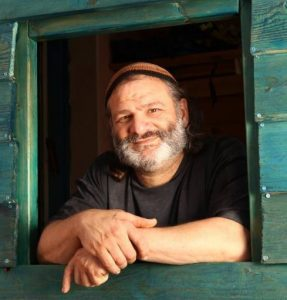
On the Universal Zionist podcast, attorney Michael Decker tells Rabbi Tuly Weisz that Israel offers far more pathways for non-Jewish friends than most people realize, and that demand has never been higher.
Most people assume the gates to Israel open only for Jews. Michael Decker spends his working life proving otherwise.
Decker runs Decker, Pex, Levi Law Firm, one of the largest immigration firms in Israel and the address many non-Jews turn to when they want legal status in the Jewish state. His firm handles visas to the United States, European passports for descendants of Jews, and a steady flow of cases for people who want to live, work, study, or invest in Israel. Since October 7th, the flow has become a flood.
Israel365 will host a free webinar with immigration attorney Joshua Pex on Israeli citizenship, residency, and visas for investors, volunteers, and clergy on Wednesday, October 21 at 1:00 p.m. Eastern. Register at https://israel365.com/passport.

“I get four times more queries from people who want to make aliyah than ever before,” Decker told Rabbi Tuly Weisz on the latest episode of the Universal Zionist podcast.
So who actually qualifies?
A Law Older Than the State
The Law of Return sits at the heart of Israeli immigration. Decker calls it the closest thing Israel has to a constitutional cornerstone, the legal expression of David Ben-Gurion’s promise in the Declaration of Independence that Israel would be a home for Jews from every corner of the world.
The policy predates 1948. The Jewish Agency ran immigration for decades under the British Mandate, always subject to British approval. Holocaust survivors sat in refugee camps because London refused to let them in. Statehood turned the Agency’s policy into binding law, and the original version contained a single principle: every Jew may immigrate.
That raised the question that still echoes through Israeli courts. Who is a Jew?
In the years after the Holocaust, many answered with a grim formula. If you were Jewish enough for Hitler, you were Jewish enough for Israel. The Nuremberg Laws condemned people with a single Jewish grandparent, and Israel’s immigration policy came to mirror that reach. A 1970 amendment extended eligibility to the children and grandchildren of Jews and to their spouses, and the law has barely changed since.
Weisz hears from these people regularly. “I’m not necessarily Jewish, but my grandfather was Jewish,” they tell him. “I have a very Jewish-sounding last name and we’ve been targeted by antisemitism.”
The Englishman Who Discovered He Was Jewish
Decker described a client from England, nominally secular, now in his 40s. His mother was born out of wedlock and adopted by a non-Jewish family. Late in life she learned that her biological mother was fully Jewish, reconnected with the Jewish community, and died as a Jew, buried under a gravestone bearing a Star of David. A rabbi confirmed her lineage in writing.
That makes her son Jewish by Jewish law, and Israeli case law holds that adoption by a non-Jewish family does not erase eligibility under the Law of Return.
“He cannot convert even if he wanted to,” Decker said. “You don’t convert someone who is already a Jew.”
The man always knew about his mother’s return to her roots. October 7th and the wave of anti-Israel protests across Britain pushed him to pursue his own.
Beyond the Law of Return
Israel also has room for people with no Jewish ancestry at all. Decker walked through several options:
- Work visas for experts. Israel imports specialists for major infrastructure projects like its new rail lines, and the high-tech sector recruits multilingual workers from around the world.
- Spousal status. Decker sees at least one new client every day seeking to bring a foreign spouse to Israel, many of them partners of the roughly one million immigrants from the former Soviet Union who arrived through a Jewish grandparent.
- Volunteer visas. Decker wants this category expanded. Volunteers often become lifelong ambassadors for Israel. Weisz pointed to former Congresswoman Michele Bachmann, who picked oranges on a kibbutz at 17 and threw her political weight behind Israel after October 7th because she knew the communities under attack.
- Investor visas. After years of negotiation, Israel signed a reciprocal agreement with the United States. Israelis can now obtain American E-2 investor visas, and Americans can obtain Israel’s B-5 visa. The requirement is a real investment, typically several hundred thousand dollars in a business with genuine risk and a sound business plan. Real estate and stock portfolios do not qualify. The B-5 allows applicants to bring family and workers and can lead to residency over time.
Righteous Among the Nations
Weisz raised a pathway few people know about. In 1953, the Knesset passed the Yad Vashem Law, which established the museum and created the category of Righteous Among the Nations for non-Jews who rescued Jews during the Holocaust. The tree-planting ceremonies are the famous part, but the recognition carries legal weight that extends to children and grandchildren.
Yad Vashem has recognized roughly 23,000 rescuers. Their descendants now number in the hundreds of thousands, many of them in a Europe that feels less stable every year.
Decker confirmed a clear policy exists. Descendants of recognized rescuers can work in Israel and eventually receive residency, and Yad Vashem still accepts new applications for recognition, even for rescuers who are no longer alive. Citizenship requires meeting additional conditions under the Citizenship Law, but residency is within reach.
A Visa for the Ger Toshav
This summer, Samaria Regional Council head Yossi Dagan and Binyamin Regional Council head Israel Ganz announced honorary citizenship for Christian Zionists who stand with Judea and Samaria. The gesture was symbolic, and they asked Weisz to explore how to give it legal force.
That research led him to rabbis in Israel who propose a visa for the ger toshav (resident non-Jew), the biblical category of a non-Jew who lives among Israel and keeps the seven Noahide laws.
“Israel, even according to the Torah, was not only for the Jewish people,” Weisz said. “When Abraham lived here, it wasn’t only Jews here. When King David and King Saul were here, there were a lot of non-Jews.”
The Bible commands Israel to love the stranger in its midst:
“The stranger who resides with you shall be to you as one of your citizens; you shall love him as yourself, for you were strangers in the land of Egypt: I am the Lord your G-d” (Leviticus 19:34).
The same framework draws a hard line. A community that rejects the basic universal code, that supports murder and terror, has no right to live in the land. Decker endorsed the idea and called for legitimate government pressure to make it policy.
Weisz sees strategic value as well. Twelve countries recently moved against Israel over Judea and Samaria, largely to placate domestic constituencies. “If they knew there were thousands and thousands of people who had a legal connection to the State of Israel, it would make it much harder for countries to punish Israel,” he argued.
Won’t This Dilute the Jewish State?
Weisz posed the obvious objection himself. The world has dozens of Muslim and Christian countries and only one Jewish state.
Decker answered with numbers. Nearly 20 percent of Israel’s citizens are Muslim, a far higher share than any European country, and Israel manages better than many of them. He insists on a strong Jewish majority. Within the non-Jewish population, though, he wants more people who love the country. He pointed to Yoseph Haddad, the Arab Christian IDF veteran and pro-Israel advocate now entering politics, and to the 185,000 Christian Arabs in Israel.
For Weisz, Israel’s Christians are the textbook ger toshav. They believe in the G-d of the Bible and the Ten Commandments. “Strengthening the relationship with the gerei toshav here in Israel will only strengthen the Jewish nature and Jewish identity of Israel,” he said.
Loving Israel Too Much
Decker closed with a frustration. Frequent visitors get grilled at Ben Gurion Airport for coming too often. South Korean students who love Israel stretch three-year degrees into seven, and the Interior Ministry refuses to extend their visas. Decker regularly petitions the courts on their behalf.
“Their whole sin was that they love Israel so much,” he said.
Israel faces a world full of loud enemies, and Decker believes the country needs to do a far better job welcoming its friends.
Israel365 hosts a free webinar with immigration attorney Joshua Pex on Israeli citizenship, residency, and visas for investors, volunteers, and clergy on Wednesday, October 21 at 1:00 p.m. Eastern. Register at https://israel365.com/passport.
Decker, Pex, Levi Law Firm. screens all inquiries for legal eligibility before scheduling consultations. Michael Decker can be reached at mdecker@lawoffice.org.il.
Legal Disclaimer: This content is published in partnership with Decker, Pex, Levi Law Office for informational and promotional purposes only. Israel365 does not provide legal advice, nor does this article represent an official endorsement or legal opinion of Israel365. Immigration laws and regulations vary and change frequently; nothing in this article should be relied upon as a substitute for direct legal counsel. Always consult a licensed attorney regarding your personal background and immigration status.