



An Iranian convert who goes on a Christian satellite channel to tell how he found faith may soon pay for it with 31 to 74 lashes. Last week Iran’s parliament approved Article 22 of a bill titled “Countering the Infiltration of Foreign Intelligence Services and Governments or Entities,” which makes it a crime for Iranian citizens to give interviews to, or hold conversations with, any media outlet or “media figure” that the Ministry of Intelligence has publicly designated as hostile. That list already names the leading Persian-language Christian broadcasters.
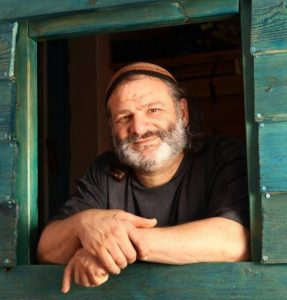
“Anybody connected to us, anybody working for us, anybody supporting us, even appearing on our channel, even going and doing a like on our social media, is a criminal, officially criminal,” said Hormoz Shariat, founder of the Dallas-area Iran Alive Ministries, in an interview with Peter Wooding of the Global News Alliance.
The ayatollahs are fighting a war against a television signal. That raises a question with roots going back 2,500 years to the Persian court of King Darius: what happens when an empire writes a law forbidding people to pray?
Flogging for an Interview
Under Article 22, violators face six months to two years in prison, fines, deprivation of social rights, and flogging, according to FCNN, a Persian Christian news outlet. Officials of the Islamic Republic are explicitly exempt. A regime spokesman can appear on a “hostile” channel, while a convert who shares his testimony on Mohabat TV can be flogged for it. The bill must still clear further legislative steps, including Guardian Council approval, before it becomes law.
The vote puts teeth in a list the Ministry of Intelligence made public in July, naming the evangelical networks Sat-7, Nejat, Seven, and Mohabat TV alongside BBC Persian and Iran International. Iran Alive reports that its channel was also designated. Any “cooperation” with listed outlets, including sending them photos or videos, can already be prosecuted under the espionage law passed after Iran’s 12-day war with Israel in 2025. At least five Christians have been charged under that law, receiving combined sentences of more than 40 years in prison. The law’s official title names the target: the “Intensification of Punishment for Espionage and Cooperation with the Zionist Regime and Hostile States.” It classifies cooperation with Israel and the United States as “corruption on earth,” a capital offense.
Shariat said the regime’s aim is fear. “Another law, another fear. That’s how they control the people of Iran, passing laws and making it harder to follow [Jesus], so easier persecution,” he said. He added that satellite viewers remain beyond the regime’s reach. “The signal goes over the heads of the mullahs into people’s homes, and the government cannot stop it, and you cannot prove that you are watching it.”
Bibles Banned in Prison
The broadcasts matter because Iran has shut down nearly every other avenue for Christian worship. Since 2009, churches that offered services in Persian have been forced to stop, and pastors who kept ministering to converts in their homes have been arrested and imprisoned along with the converts themselves. Only Iran’s historic Armenian and Assyrian communities may worship, and they are barred from sharing their faith. In August, guards were posted outside a seized Tehran church to keep worshipers out.
Last week, Lida Alexani, a 58-year-old grandmother and wife of Iranian-Armenian pastor Joseph Shahbazian, was summoned to begin a 13-year sentence for “deviant proselytizing contrary to the holy religion of Islam.” Her husband is already serving a 16-year sentence for leading a house church. The couple and three converts in the same case were collectively sentenced to more than 70 years.
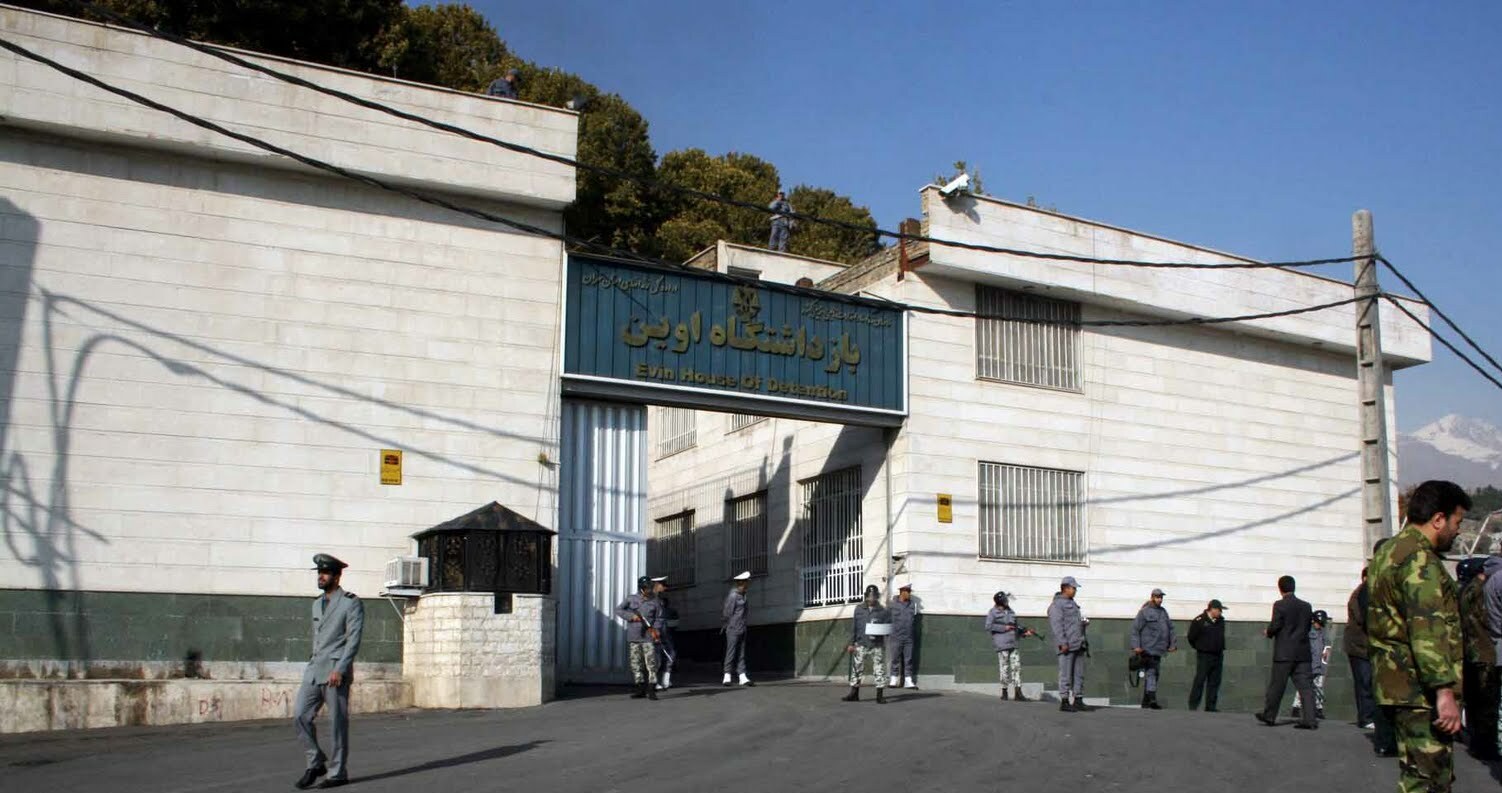
The wife of an Iranian-Armenian pastor who has been in Evin Prison since February last year has now been summoned to begin her own prison sentence.
— Article18 (@articleeighteen) October 9, 2026
Lida Alexani, a grandmother who recently celebrated her 58th birthday, is the wife of Joseph Shahbazian, who is serving a 16-year… pic.twitter.com/EbMpYfhzkb
In Tehran’s Evin Prison, Catholic convert Ghazal Marzban, serving more than nine years, launched a hunger strike in September after being denied a Bible. Prison authorities told her that only Iranians born Christian, and not converts, may possess one. A judge reportedly ordered her to sign a letter of repentance and recant her faith on video, or face execution for apostasy. In July, she suffered a fractured hand in a prison beating, and in August she published a letter describing being raped in a Ministry of Intelligence detention center.
The regime frames all of this as counterespionage. After the 2025 war, the Ministry of Intelligence rounded up more than 50 Christians and branded them “Mossad mercenaries” trained by churches in the United States and Israel. Edwin Abnous of Heart4Iran, whose Mohabat TV has broadcast into Iran for 20 years, said the regime claims the Christian channels preach Zionist theology favoring Israel. The persecution has failed to stop the movement. Open Doors and the US State Department estimate that 500,000 to 800,000 Christian converts live in Iran, while Open Doors ranks Iran the world’s 10th worst persecutor of Christians.
Evangelicals call their mandate the Great Commission, referring to Jesus’ final instruction to his followers to bring his teachings to every nation. For an Iranian convert who believes his neighbor’s salvation depends on hearing that message, silence carries a higher cost than prison.
Imagine waking up to strangers entering your home, taking your Bible, questioning your faith, and then disappearing you without explanation.
— Imtiaz Mahmood (@ImtiazMadmood) May 26, 2026
For one Christian woman in Iran, that fear reportedly became reality.
Ghazal Marzban, a Christian convert in Tehran and former prisoner… pic.twitter.com/OCxorXLoj5
Windows Toward Jerusalem
The Bible records the first time a Persian king made prayer a crime. Officials at the court of Darius, jealous of Daniel, persuaded the king to sign an irrevocable decree, dat Madai u’Faras, a “law of the Medes and Persians,” forbidding anyone to petition any god or man other than the king for 30 days, on pain of the lions’ den.
“And when Daniel knew that the writing was signed, he went into his house—now his windows were open in his upper chamber toward Jerusalem—and he kneeled upon his knees three times a day, and prayed, and gave thanks before his God, as he did aforetime.” (Daniel 6:11)
Daniel could have prayed behind closed shutters, and the law would never have caught him. He opened his windows toward Jerusalem in full view of his enemies. The Sages built Jewish law on his defiance. In the Talmud (Berakhot 31a), it is derived from this verse that a person prays in a room with windows, faces Jerusalem, and offers tefillah (prayer) three times each day. The daily structure of Jewish prayer was forged in an act of civil disobedience against a Persian ban on worship.
Persia’s other weapon appears in the book of Esther, where Haman never accuses the Jews of a crime. He accuses them of answering to a different law, dateihem shonot, “their laws are diverse,” and therefore of disloyalty to the king (Esther 3:8). Tehran repeats the charge when it calls house churches “Mossad mercenaries.”
Both stories end with the decree turned against its author. Darius ordered his entire kingdom to tremble before the God of Daniel, and Haman hanged on his own gallows. The Islamic Republic can flog the people who speak on Christian television and jail the ones who pray, but the signal keeps crossing the border, over the heads of the mullahs and into living rooms whose windows face Jerusalem. The ayatollahs will learn what Darius learned.
