

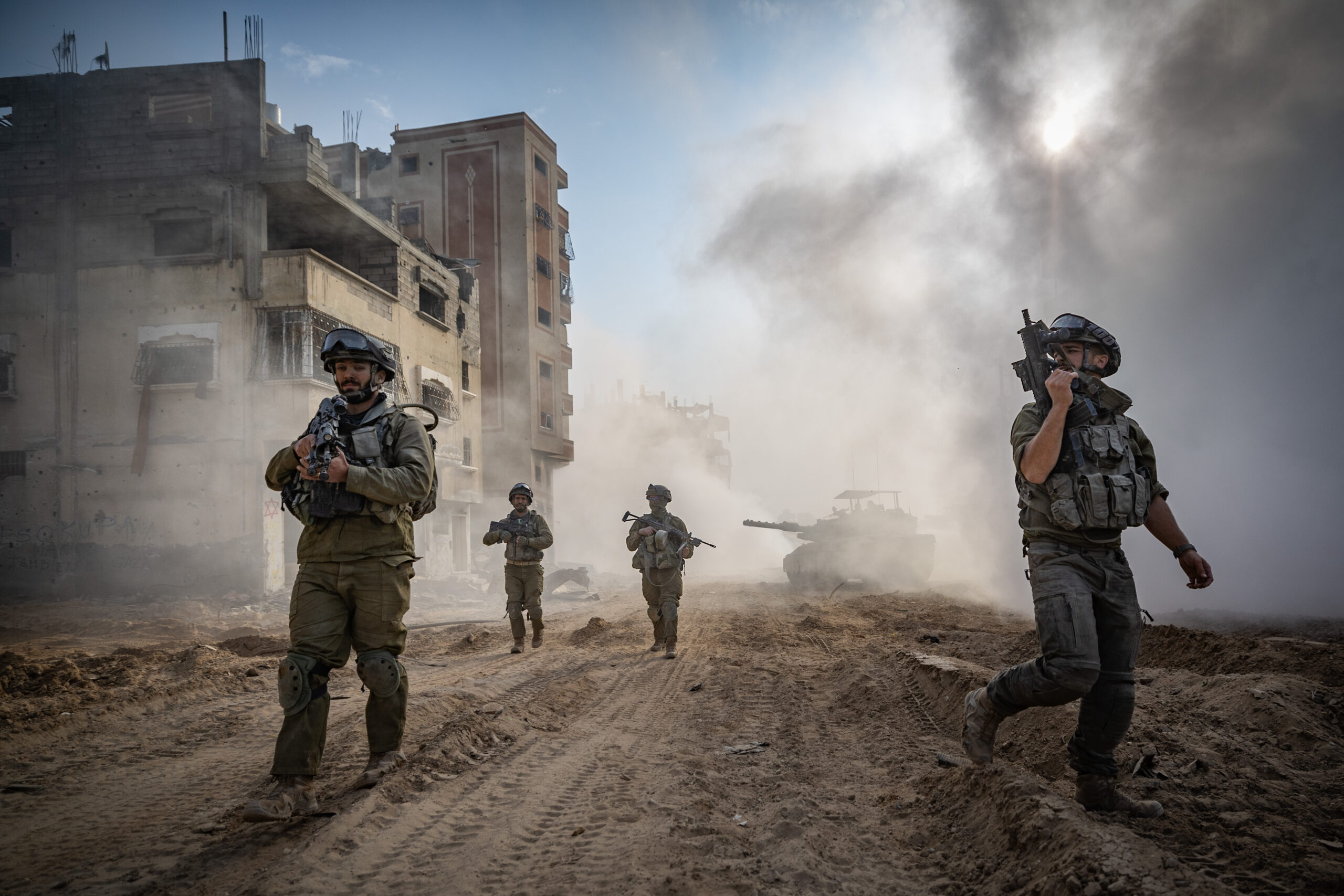
On October 7, 2023, Israel lived through the darkest day in its modern history. Hamas terrorists murdered more than 1,200 people in southern Israel, among them more than 40 Americans, and dragged 251 hostages into Gaza. The war that followed sent tens of thousands of IDF soldiers into the most dense and booby-trapped urban battlefield on earth. Three years later, the US Army has published a 78-page study of what Israel’s military medics learned in that war, with a clear message for American commanders: learn from the Israelis.
The report, Israeli Defense Force Medical Lessons Learned, was produced by the US Army’s 68th Theater Medical Command in Europe and Africa with editorial support from the Center for Army Lessons Learned at Fort Leavenworth, and published on April 30, 2026. Its authors, Col. Benjamin Baker, Lt. Col. Angelina Gerardo, and Dr. Jacob Stoil, drew on IDF presentations at the 2025 Shoresh Military Medical Meeting and a week of interviews with Israeli medical personnel. They spoke with everyone from paramedics who treated the wounded on October 7 to divisional surgeons, theater chief medical officers, and special forces medics.
Their central finding: the IDF cut the death rate among its wounded nearly in half, from 14.8 percent in the 2006 Second Lebanon War to 7.1 percent in 2024. The drop came even as the wounds grew far worse. The share of casualties with severe injuries nearly tripled, from 8 percent to 23 percent.
The IDF’s case fatality rate, the report found, is lower than what US forces achieved in counterinsurgency operations in Iraq and Afghanistan.
“Israel’s wars continue to provide a critical real-world battle lab,” the authors wrote. Their conclusion was blunt: “The time for preparation is now.”
A Doctor in Every Company
The numbers reflect a battlefield medical system built for speed. During the 2006 war, a casualty waited 10 to 25 minutes for an advanced life support provider. In the Gaza war, that wait shrank to between zero and four minutes. Ninety-five percent of wounded soldiers reached a civilian hospital within 47 minutes.
“Now advanced life support can reach a casualty immediately or within 4 minutes,” a senior IDF battlefield medicine specialist told Fox News. He said that having “a doctor in every company allows the IDF to make critical decisions early on.”
Helicopter crews became part of the system. The IDF’s “Black Cat” extraction teams cut the time a rescue helicopter spent on the ground from 51 seconds to 29. The Army report put it plainly: “Evacuation is not an afterthought, it is a tactical effort and an all-domain priority.”
Israeli medics also kept supplies moving under fire, using civilian infrastructure, drones, and all-terrain vehicles. They recorded casualty care on ruggedized tablets in real time, so the data could shape tactics, equipment, and policy while the war was still being fought. “Every relevant medical officer on the chain can see the patient data. This system had very good results,” the IDF specialist said. “The case mortality rate is the best index for quantifying care.”
Blood on Their Backs
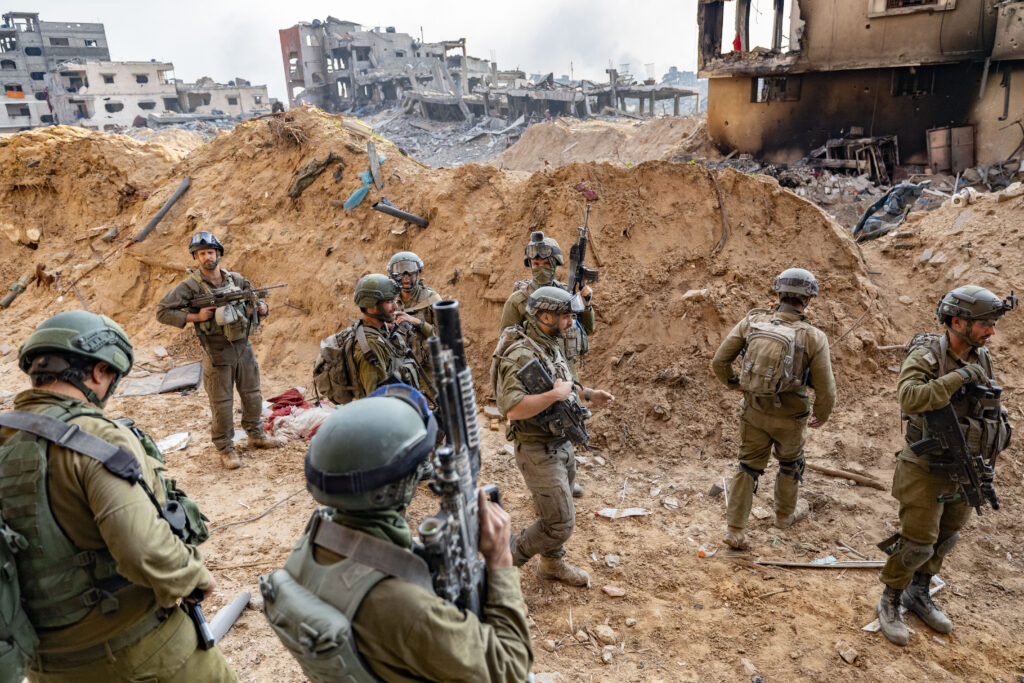
The single greatest change was blood. Since 2013, the IDF has made stopping hemorrhage its top priority. The IDF specialist said Israel was the first medical organization to give plasma at the point of injury “instead of salt and water.” In the Gaza war, medics carried units of whole blood forward in refrigerated packs on their backs so transfusions could begin in the field before evacuation. The method “saved significant numbers,” the specialist said.
According to the Army report, whole blood became the IDF’s preferred resuscitation fluid at battalion level and above, followed by freeze-dried plasma. The time from injury to whole blood fell from 20 minutes to five. Among the most critically wounded soldiers, survival was tied most closely to early whole blood or plasma.
Dr. Marc Siegel, senior medical analyst for Fox News and clinical professor of medicine at NYU Langone, pointed to “battlefield advances based on the latest technologies that have been developed in Israel, including surgical techniques.” He also cited NexoBrid, an Israeli-developed treatment for severe burns.
The Army report was candid about the cost of that progress. “Despite Israel’s preparations, it had to undergo a painful process of transformation in contact,” the authors wrote.
Healing the Unseen Wounds
The Army also credited Israel’s care for the unseen wounds of war. The IDF trained commanders to recognize psychological injury and placed mental health officers on the front lines. According to the report, that proactive approach produced significantly lower rates of post-traumatic stress than expected. Forward preventive medicine teams, disease surveillance, and food safety protocols kept soldiers healthy enough to fight.
A Two-Way Street
The knowledge has always moved in both directions. Israel’s prehospital trauma care grew out of American research. Studies of civilian trauma systems in the United States found that time spent on procedures at the scene delayed the surgery that saves a bleeding patient. A landmark Houston study found that holding back intravenous fluids until bleeding was controlled lowered mortality. In a 2008 review of the evidence in the journal Critical Care, trauma surgeons Barbara Haas and Avery Nathens concluded that trauma systems “should focus on efficient and rapid means of transport, rather than on field interventions.” They noted that “accruing evidence from the military experience points to the importance of early, definitive operative intervention among severely injured patients with exsanguinating hemorrhage.”
Israel built that “scoop and run” principle into its system and then refined it. In the early 1990s, it trained some 3,700 physicians in the American College of Surgeons’ Advanced Trauma Life Support program, and the IDF Medical Corps expanded the course into its own Combat Trauma Life Support program. The IDF also drew on a 2012 American study of US battlefield deaths in Iraq and Afghanistan.
In the Gaza war, the IDF combined rapid evacuation with the one field treatment the evidence most strongly supports: blood. According to the US Army report, IDF medics cut field intubations from 3.5 percent of casualties to 0.9 percent and needle chest decompressions from 2.9 percent to 0.2 percent, while bringing whole blood to the wounded in as little as five minutes. Survival among the most critically injured tracked with early blood, more than with airway procedures.
“It was a joint collaboration, and American officers came to learn from the IDF,” an IDF spokesman said.
Light Out of Darkness
Israel’s most painful war produced a medical system that the most powerful army in the world now wants to copy. What does the Bible say about a nation that brings light to the world from the depths of its own darkness?
The prophet Isaiah defined Israel’s mission in a single phrase, l’or goyim, “a light of the nations”:
“It is too light a thing that thou shouldest be My servant to raise up the tribes of Jacob, and to restore the offspring of Israel; I will also give thee for a light of the nations, that My salvation may be unto the end of the earth.” (Isaiah 49:6)
Isaiah’s vision reaches past the restoration of Israel. A redeemed Israel exists to benefit the whole world. The Hebrew word for salvation in the verse, yeshuati, comes from the same root as hoshia, to rescue. Israel’s light is practical. It saves lives.
The prophet Micah shows where that light shines brightest:
“Rejoice not against me, O mine enemy; though I am fallen, I shall arise; though I sit in darkness, the LORD is a light unto me.” (Micah 7:8)
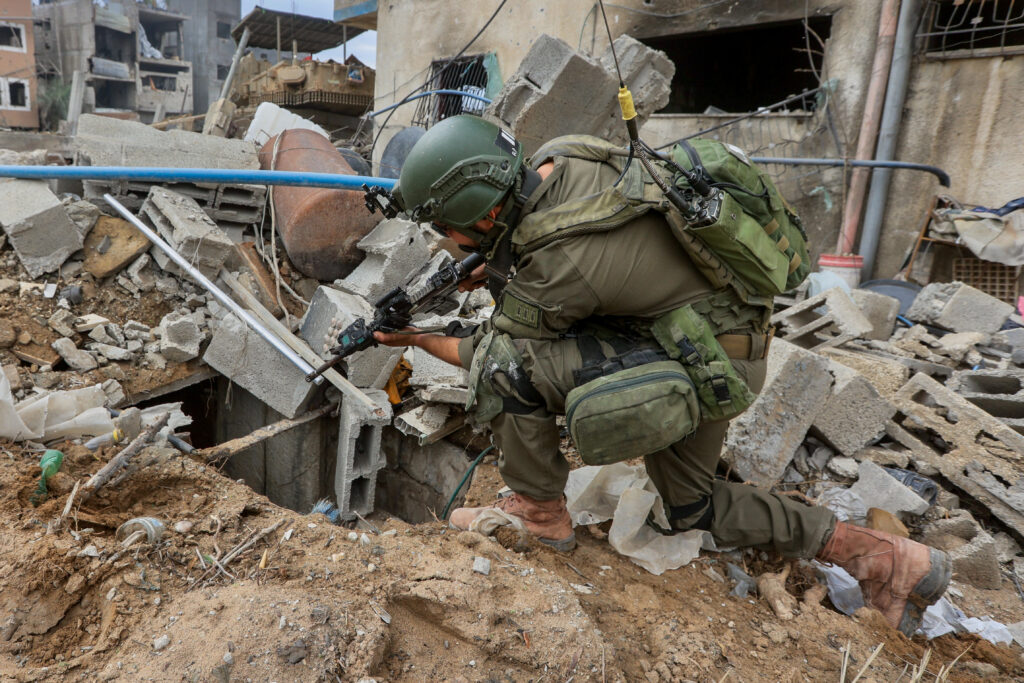
Micah expects the fall. His promise is that Israel will rise from it, and that God’s light reaches Israel in the very place of darkness. October 7 was that place. Israel’s enemies celebrated in the streets of Gaza, Ramallah, and Western capitals. Out of that darkness came medics carrying blood on their backs into Gaza’s tunnels and rubble, and a system of care that now has US Army medical commanders taking notes.
Isaiah describes the moment the nations take notice:
“For, behold, darkness shall cover the earth, and gross darkness the peoples; but upon thee the LORD will arise, and His glory shall be seen upon thee. And nations shall walk at thy light, and kings at the brightness of thy rising.” (Isaiah 60:2-3)
The Sages taught that saving a single life carries infinite weight. The Mishnah (Sanhedrin 4:5) states that “whoever saves a single life, Scripture considers it as though he saved an entire world.” The principle of pikuach nefesh, the saving of life, overrides nearly every other commandment in Jewish law, including Shabbat. Israel’s combat medics have lived that teaching under fire. If America adopts their methods, the lives they save will include American soldiers on battlefields far from Gaza.
An Ally That Pays Its Way
The Army report holds a warning for American commanders. In a war against a near-peer enemy, US forces probably will not match Israel’s evacuation speeds, and medics will have to keep wounded soldiers alive for long periods with scarce supplies, especially blood. “Simply possessing clinical and tactical skills is insufficient,” the authors wrote. The lessons Israel learned at a terrible price are lessons America may need in its next war.
Critics in Washington describe American aid to Israel as charity. The Army’s own report describes an ally whose hard-won experience gives American soldiers a better chance of coming home alive. The promise to Abraham still holds: “And I will bless them that bless thee… and in thee shall all the families of the earth be blessed” (Genesis 12:3).
Israel’s enemies set out on October 7 to bury the Jewish state in darkness. Three years later, the IDF has given the world a battlefield medical system that keeps the wounded alive and a model for the US Army. Micah wrote it long ago: though I sit in darkness, the LORD is a light unto me.