




In 2021, Amichai Chikli won a seat in Israel’s parliament, the Knesset, as a member of Yamina, a party whose name means “Rightward” in Hebrew. Its voters chose it for one reason: to keep Israel’s government firmly on the right.
Then the party’s leader, Naftali Bennett, went the other way. To become prime minister, Bennett joined forces with Israel’s left-wing parties and built a government that could survive only with the votes of Ra’am, an Islamist party with roots in the Muslim Brotherhood, the same movement that gave birth to Hamas.
Chikli refused to go along. He voted against his own party leader’s government, and Yamina branded him a defector.
Chikli left Yamina and joined Likud, the party of Prime Minister Benjamin Netanyahu, where he now serves as a government minister. Last week, at Israel365 News’ English-language election town hall, he warned that Israel’s opposition is preparing to make the same deal again, and that it fits a pattern now spreading across the Western world.
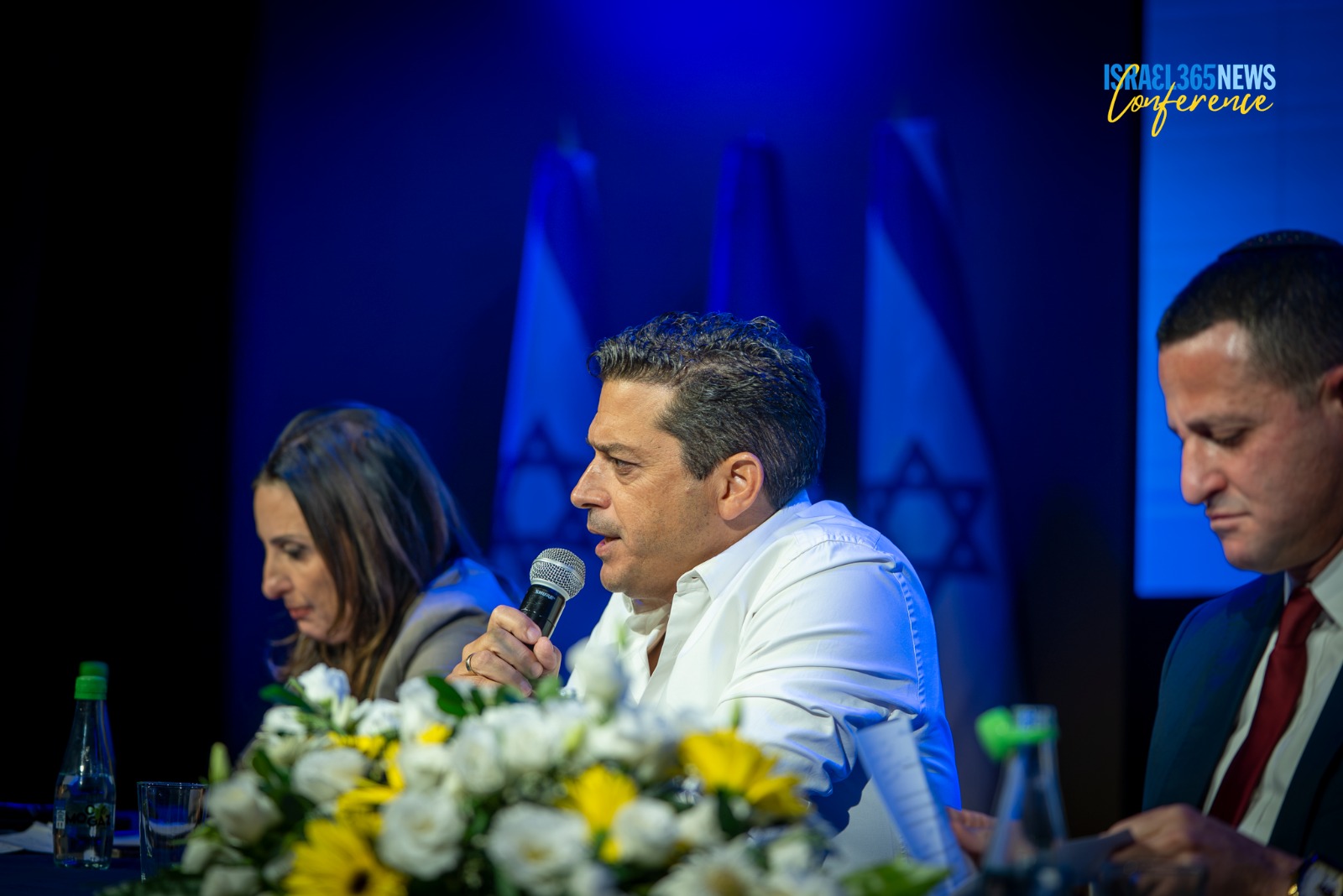
“Everywhere on earth we see the same pattern. We see the so-called center parties aligning with the Islamist forces. We see it in Britain. We see it in France. We see it even in the U.S.,” Chikli told the packed hall. Israel’s opposition leaders, he charged, “are leading us with their eyes wide open to a dual national state here within Israel, with the Islamist parties. They’re not hiding it.”
A “dual national state” is Chikli’s nightmare: an Israel that is no longer the Jewish state, but a country shared by two nations, where Arab parties that reject Zionism help decide how Israel defends itself and what kind of country it becomes.
Americans have watched a version of this unfold at home this fall. In Michigan, the Democratic nominee for the U.S. Senate says Israel’s government is as evil as Hamas. In New York, the mayor marked the anniversary of October 7 by accusing Israel of genocide. In America, that pattern means politicians who side with Israel’s enemies winning elections. In Israel, Chikli warns, it means something far more dangerous: an Islamist party tied to the same movement that produced Hamas helping to run the country, with a say over the very army that is fighting Hamas.
To grasp the danger, it helps to understand how Israel picks its leaders. Israelis do not vote for a prime minister directly. They vote for parties, and whoever can assemble a coalition holding 61 of the Knesset’s 120 seats forms the government.

A poll released last week by Israel’s i24NEWS gave Netanyahu’s camp 60 seats, one short of a majority. The opposition camp stood at just 48. The Arab parties held 12. That leaves Netanyahu’s challengers with only one possible path to power: the Arab parties.
The man leading that challenge is Gadi Eisenkot, a former chief of staff of the Israeli army whom most Israelis see as a man of the left. Eisenkot has called for a government with a “Zionist majority,” but he has never ruled out relying on the Arab parties. Avigdor Lieberman, a former defense minister who takes a hard line on security but has made toppling Netanyahu his personal crusade, sat in the 2021 government that depended on Ra’am. And Bennett, now running again, says that after October 7, partnering with Arab parties is off the table. Yet last November, when asked to promise exactly that, he hedged. “If there are a lack of mandates,” meaning Knesset seats, “we will have to make compromises on a thousand things, and that will be very bad.”
Ra’am’s leader, Mansour Abbas, is not worried. He says he is confident he will eventually “reach agreements” with Bennett, Eisenkot and Lieberman.
For Chikli, the fight is personal. Asked at the town hall why Israelis should trust Netanyahu after the failures of October 7, he answered by pointing at his former boss. “Five years ago there were elections, and I was in a different party, a party named Yamina. The leader of this party broke every single promise to the voters and decided to join the left-wing parties.”
Then he asked the audience to imagine October 7 under “the, I don’t know if you can call it leadership, of Lapid and Bennett.” Could they stand up to pressure from President Biden? Could they take the war to Hezbollah, Iran’s terror army in Lebanon? Could they strike Iran and bring America into the fight?
Chikli has been hammering Bennett for months. When Bennett admitted to breaking one campaign promise, Chikli shot back on social media: “The fact is you broke all your promises. You deceived and tricked the people who trusted you.” He called the gas field deal that the Bennett-Lapid government signed with Lebanon a “surrender agreement to Hezbollah.” In a February radio interview, he called Bennett “a person untrustworthy in the deepest way there is,” a man who manages to lie even about his lies.
Chikli concedes that the Bennett government did not last long enough to pass radical left-wing policies. What frightens him is the precedent. “He deceived, cheated and lied to the voters.” A politician who did it once, Chikli warns, will do it again the moment he finds himself a few seats short.
Ra’am presents itself as a practical Arab party focused on crime, housing and jobs in Arab towns. Its history tells a different story.
The Muslim Brotherhood, founded in Egypt in 1928, seeks to bring the world under Islamic rule. Hamas describes itself as the Brotherhood’s branch in the Palestinian territories. Israel’s own Islamic Movement was founded in 1971 by Abdullah Nimr Darwish, working with Hamas founder Ahmed Yassin. In the 1990s, the movement split in two. Israel outlawed its northern branch in 2015 over its ties to Hamas. The southern branch went into politics, and Ra’am is its party.
For years, Ra’am answered to a Shura (consultation) council, the kind of religious leadership body that runs Muslim Brotherhood movements around the world. Abbas himself acknowledged an “ideological connection” to the Brotherhood. Ra’am’s platform demands the Palestinian “right of return,” which would flood Israel with millions of descendants of Arab refugees and end its Jewish majority. And according to Mordechai Kedar of Bar-Ilan University, a leading expert on the Brotherhood, a charity linked to Ra’am was caught sending large sums of money to Hamas. “So who can believe what they say?”
Last December, Abbas suddenly announced that Ra’am would cut its ties to that religious council and become an ordinary, nonreligious party. The timing raised eyebrows. Just weeks earlier, Netanyahu announced plans to outlaw the Muslim Brotherhood in Israel, a move that could have banned Ra’am itself. Kedar dismissed the makeover as taqiyya, an Islamic concept that permits a Muslim to hide his true beliefs when under threat. In other words, Ra’am changed the way it presents itself to survive. It did not change its beliefs.
Chikli also spelled out what such a partner would cost Israel. In the Negev, Israel’s southern desert, illegal construction has spread for decades across state land, and the government struggles to enforce the law even now. Since October 7, Israel’s army also holds buffer zones inside Gaza, southern Lebanon and Syria that keep terrorists away from Israeli towns. In Gaza, the edge of that zone is known as the “yellow line.” With an Islamist party holding the keys to the government, Chikli warns, Israel would have to give up both.
Chikli’s warning about the West was not abstract. In Britain, the ruling Labour Party has turned sharply against Israel, and the Green Party just passed an anti-Zionist resolution. In Brussels, the European Parliament voted last week to urge the European Union to list the Muslim Brotherhood as a terror organization, even as Europe’s left drifts the other way.
In America, the clearest test is Michigan, where Abdul El-Sayed won the Democratic nomination for the U.S. Senate in August with the backing of Bernie Sanders and Alexandria Ocasio-Cortez. Two weeks after October 7, before Israel’s ground troops even entered Gaza, El-Sayed accused Israel of genocide. Asked on CNN whether Israel’s government is as evil as Hamas, he answered, “Yes.” This week, he walked away from a reporter who asked why he issued no statement marking the third anniversary of the massacre. Democrats consider the seat a must-win in their fight to control the Senate.
In New York, Mayor Zohran Mamdani marked the anniversary of October 7 by accusing Israel of an “ongoing genocide.” Israel’s ambassador to the United Nations, Danny Danon, compared it to turning September 11 into a day of mourning for al-Qaeda.
In London and New York, this alliance threatens Jewish communities. In Jerusalem, it could decide who commands Israel’s army.
Chikli’s demand for the next government is simple: “First and foremost, a Zionist government that will not accept Islamist or Palestinian nationalist parties as part of their coalition.”
In 2021, Amichai Chikli stood nearly alone when he refused to sit with Ra’am. On Oct. 27, he is betting that Israeli voters remember why.

